2024 is destined to be an extraordinary year. After three years of dormancy, Web3 has finally ushered in the beginning of a new bull market cycle. In this new cycle and new narrative, what fresh blood is pulsing beneath? Let's focus our attention on the Asian financial center and the "heart" of Asian Web3 - Hong Kong. Over the past year, regulation, innovation, and capital have been racing forward here, allowing the entire industry to find a delicate balance between innovation and standardization.
The new narrative is intricate, and hot topics are emerging one after another. This article will review the top 10 buzzwords in Hong Kong's Web3 field in 2024, providing a glimpse into the rise and development of the industry over the past year.
1. Native Compliance - "No wild paths, just clear paths"
In 2024, the whole world is pursuing Web3 compliance, and the era of "regulatory arbitrage" is gone for good.
Unlike the "open first, then modify" approach in the US and other regions, Hong Kong has embarked on a new path of "rules first, innovation follows". From VASP, CBDC, and Hong Kong dollar stablecoins, to virtual asset spot ETFs and the Ensemble sandbox program, each piece of legislation and each pilot project is a phased achievement of the Hong Kong regulatory authorities actively exploring in coordination with local financial institutions.

More importantly, Hong Kong's regulation, long known for its prudence, has completely "shifted gears and accelerated" in 2024. Whether it was the Hong Kong Monetary Authority issuing 4 VASP licenses in one fell swoop in December, or the global debut of the ETH spot ETF, this "steady yet fast" pace is enough to glimpse that Hong Kong's regulation has achieved a good balance between prudence and openness.
If Web3 is a game, then in 2024 Hong Kong not only has mapped out an upgrade path, but has also compiled a "beginner's guide", welcoming the new players about to enter the field.
2. BTC Asset Allocation - "Countries and companies are 'hoarding coins'"
What virtual assets to invest in 2024? BTC, which has risen 150% throughout the year, must be one of the answers. In the second half of 2024, the US took the lead in launching a coin-hoarding race, with Trump's BTC strategic reserve plan directly upgrading Bitcoin to a "national strategic material", triggering imitation by countries like Brazil, Poland, and Japan.
With the policy in place, the capital market quickly followed suit. Throughout 2024, institutional investors collectively purchased 859,454 BTCs, with MicroStrategy, a long-term BTC investor, taking the lead by adding nearly 250,000 BTCs this year, earning a staggering $20 billion and firmly securing the position of BTC whale.
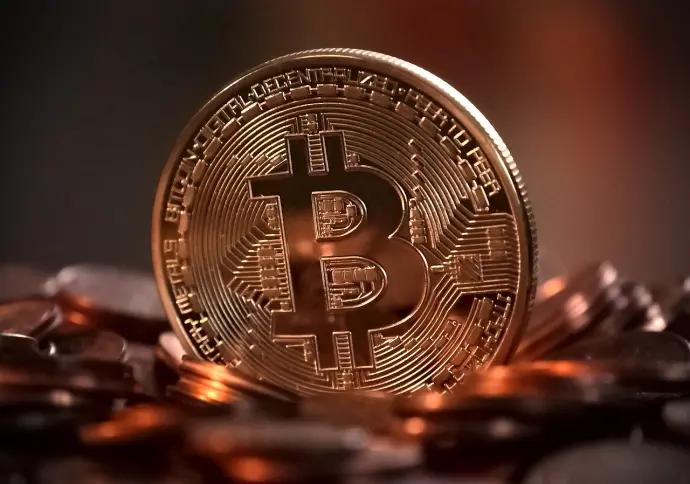
A "coin-hoarding craze" has swept the globe, and corporate institutions are not lagging behind either. Hong Kong-listed company Boyaa Interactive (HK.0403) directly announced that it holds 2,641 Bitcoins and 15,445 Ethers, and quickly exchanged 14,200 ETHs for 515 BTCs, a smooth and seamless operation; Nano Labs (Nasdaq:NA) even teamed up with HashKey Exchange to invest $50 million in BTC assets. As of the time of writing, Nano Labs already holds $5.5 million worth of BTC. Corporate coin-hoarding is done in one fell swoop, worthy of being a textbook case. Additionally, it is understood that companies like Guofuchuangxin and Coolpad Group have also quietly followed suit, taking an early position in the Bitcoin reserve battlefield.
3. Virtual Asset Spot ETFs - "Old tools, new tricks"
ETFs have long been commonplace in the traditional financial market, but when they "merge" with virtual assets, they become the game-changer in the 2024 Web3 market. In January 2024, the US approved the first BTC spot ETF, triggering a market frenzy. While other countries were either cautious or just starting to consider it, Hong Kong reacted swiftly, not only launching BTC spot ETFs, but also taking the lead in introducing ETH spot ETFs, securing a foothold in the Asian market.
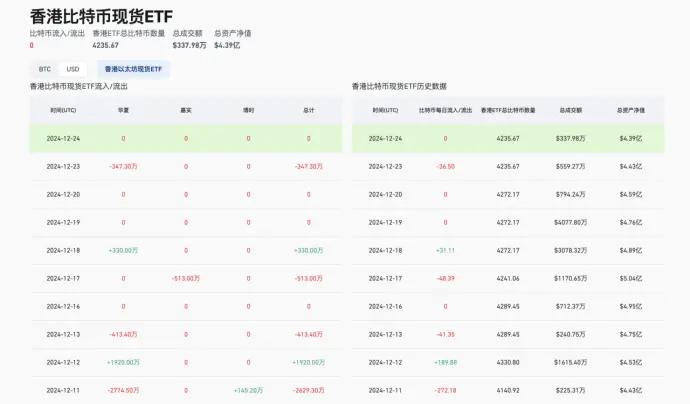
Currently, the Hong Kong market has 3 BTC spot ETFs and 3 ETH spot ETFs, launched by top-tier institutions such as Hua Xia, Jiashi, and Bosera. According to Coinglass data, as of the time of writing, the total net asset value of Hong Kong's BTC spot ETFs has reached $439 million, and the net value of ETH spot ETFs is $63.56 million. Although still lagging behind the US in scale, Hong Kong's virtual asset spot ETFs have quickly begun to carve out market share through innovation and vitality, paving the way for subsequent capital inflows. In July, Hong Kong welcomed Asia's first Bitcoin inverse product - the CSOP Bitcoin Futures Daily (-1x) Inverse Product; in November, the HKEX launched a series of virtual asset indices, including reference indices and exchange rates for BTC and ETH, bringing more financial instruments to the virtual asset market.
Virtual asset spot ETFs have not only opened the doors of Hong Kong's traditional financial market, but are also the starting point for Hong Kong's Web3 capital frenzy.
4. Stablecoins - "The top player in cross-border payments, the 'darling' of regulation"
Mainstream stablecoins like and , with their "hard power" of 1:1 pegging to the US dollar, have long been the "top player" in the cross-border payment field. Whether it's crypto trading, payroll settlement, or commodity payments, the presence of stablecoins is ubiquitous. But "the more famous, the more troubles", and the repeated de-pegging risks have made them a key focus of global regulation.
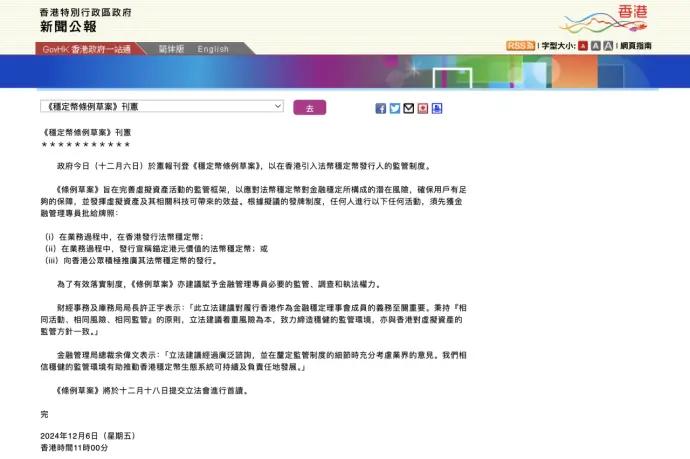
In June 2024, the EU's Stablecoin Regulation came into effect, immediately opening the curtain on global regulation. Hong Kong did not hesitate, firing on all cylinders from the beginning of the year: in February, it released a consultation on fiat stablecoin regulation, in March it launched the "Stablecoin Sandbox" program, in July it published a consultation summary, and in December it directly introduced the Stablecoin Regulation... The Legislative Council's KPIs are laid out clearly.
What's more interesting is that the first batch of sandbox players includes well-known companies like JD Digits, Circlet Innovation Technology, Standard Chartered Bank (Hong Kong), , and HKT, instantly turning the stablecoin sandbox into an "exclusive club".
For now, Hong Kong's regulatory focus is on Hong Kong dollar stablecoins, but this move has also stabilized the market and taken Hong Kong's digital asset rules to the next level. As for the globally thriving and US dollar stablecoins, will Hong Kong consider opening them up? The story is not over yet.
5. VASP Licenses - "Only with a license can you open up shop"
To play in the virtual asset trading market, a VASP (Virtual Asset Service Provider) license is the "entry ticket". Previously, the US, Singapore, Dubai, and the EU have all made licensed operation the mainstream trend. As an Asian financial center, Hong Kong's VASP licenses are also ready.
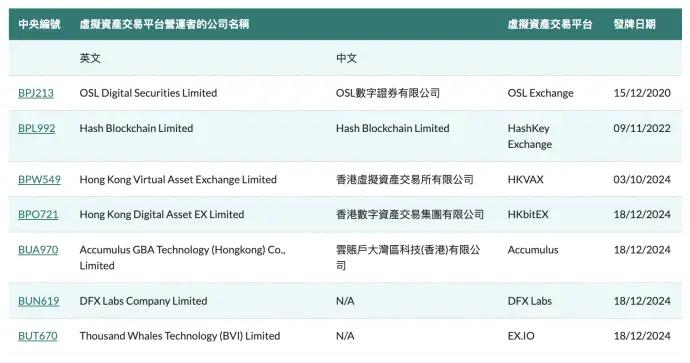
Currently, the licensed and operational platforms in Hong Kong have grown to 7, namely , , , , , , and . These "model students" not only need to strictly comply with the requirements of the Anti-Money Laundering Ordinance (AMLO), but have also passed the multi-level review of the Hong Kong Securities and Futures Commission (SFC).
Efforts are rewarded, and licensed operation is more favored by the market. For example, has seen its overall platform assets exceed HK$10 billion in 2024, with cumulative trading volume reaching HK$580 billion, ranking among the top 10 centralized exchanges globally. Although there are still more platforms waiting for review, the SFC has already formulated a clear licensing procedure roadmap. By 2025, it is believed that more platforms will be licensed and enter the market.
6. PayFi - "Is it old wine in new bottles, or a new round of payment revolution?"
In 2024, PayFi (Payment Finance) has become the new darling of the Web3 circle. Seemingly just moving payments onto the blockchain, PayFi has actually boosted the efficiency of cross-border payments, upgrading the traditional "turtle-speed remittances" to "instant settlements".
Here is the English translation of the text, with the content inside <> retained and not translated:If there is a widely recognized and enduring mainstream narrative in the Web3 industry, it must be the key proposition of mass adoption. PayFi is an important practitioner of this narrative. In a broad sense, PayFi belongs to the RWA track, but its ambition goes far beyond that. Behind it is the leveraging power of blockchain on the massive real-world assets - in the payment sector alone, the total scale of sub-markets such as credit cards, trade finance, and cross-border payments exceeds $40 trillion, while PayFi is currently only deploying in the "long tail market" of traditional finance, with huge potential.
The core value of PayFi lies in connecting the blockchain capital pool with the off-chain financial demand. This connection is not easy, requiring the integration of multiple forces: first, it must be in a relatively loose regulatory environment and a crypto-friendly city operation; secondly, institutions with financial strength and the ability to provide full-chain compliance support from infrastructure to KYC, deposit and withdrawal, and liquidity management are not many, only a few licensed institutions have this capability, such as HashKey Exchange, the largest licensed virtual asset exchange in Hong Kong.
Hong Kong may become the "financial hotbed" for PayFi. As one of the global financial centers, Hong Kong has a huge cross-border capital demand, mature financial infrastructure, and policy support such as the "Ensemble" plan and stablecoin regulation. The industry's red carpet is being laid in Hong Kong.
7. Traditional institutions rushing in - "Old money becomes new nobility"
Although virtual asset spot ETFs have provided a path for traditional capital to enter Web3, indirect investment is not as lucrative as direct profit-making, right? Seeing the crypto bull market at the beginning of the year, the traditional financial giants in the US made a fortune by issuing BTC spot ETFs. In contrast, Hong Kong brokers, with their millions of users, are still guarding the seemingly frigid stock market - more than 10,000 Hong Kong stocks have a daily trading volume of less than HK$10,000.
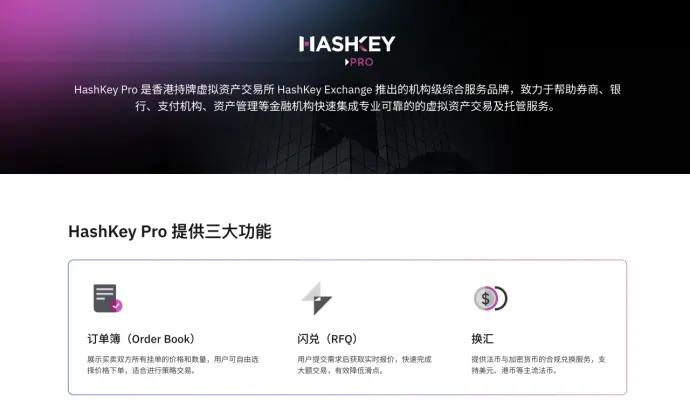
Thinking outside the box, why not bring users to participate in Web3? So, the traditional brokers in Hong Kong have finally "rushed in". Traditional brokers like Victory Securities and Eddid Securities, internet brokers like Futu and Tiger, and even foreign giants like Saxo Securities have all obtained the Type 1 license upgrade from the Hong Kong Securities and Futures Commission and quickly deployed their virtual asset businesses. To "avoid detours", they have chosen to partner with the local licensed exchange HashKey Exchange, integrating the institutional-level comprehensive service HashKey Pro, and quickly enabling the deposit, withdrawal, and trading of virtual assets such as BTC and ETH. In just a few months, they have driven a HK$5 billion trading volume.
The entry of brokers has not only brought in traffic, but also brought their professional advantages into Web3 - risk control, compliance, and old customer relationships can quickly pull traditional stock investors into the world of virtual assets. The most anticipated is that if the Web3 market further breaks through in 2025, relying on their inherent advantages, Hong Kong brokers may even bring global "old money" into the field, fully connecting the traditional finance and virtual asset markets.
8. OTC regulation - A billion-dollar market may be "tightened"
"Deposit and withdraw in Hong Kong", the hundreds of offline conversion shops have attracted more people to come. Especially for institutions and high-net-worth individuals with transactions often exceeding hundreds of millions, OTC trading is not only flexible, but also provides higher privacy and liquidity. As a result, the Hong Kong OTC market has been thriving. According to statistics, there are about 200 offline OTC trading shops and 250 active online service providers in Hong Kong, with an annual trading volume of nearly $100 billion.

Behind the prosperity, there are undercurrents. In recent years, a number of OTC robbery incidents and the false propaganda of OTC promoters in the JPEX incident have exposed the compliance shortcomings and potential money laundering risks in the OTC market. In response, the Hong Kong government has quickly "caught up", releasing the "Regulatory Proposals for Over-the-Counter Virtual Asset Transactions" in February, planning to "tighten" the OTC market. According to the latest news, the regulatory plan will be consulted and legislated in 2025/2026, and the Customs and the Securities and Futures Commission are closely cooperating on this project.
Opinions in the industry are polarized - some are worried that short-term regulation will cool the market, while others are optimistic about the long-term trust dividend brought by regulation. After all, without a "license", the market is just "free-range"; with regulation, Hong Kong's OTC market can grow from a "wild kingdom" to a compliant center trusted by global capital, and embrace greater growth.
9. Conferences - "A national fitness program"
Conferences have always been the "national fitness program" of Web3, and Hong Kong has become the sports capital this year. Counting 2024, there are no less than 50 major events in Hong Kong, ranging from discussions on virtual asset regulation to the practical application of blockchain technology, from the code surfing of technical geeks to the strategic dialogues of business leaders, covering a wide range of Web3 topics.
Large-scale summits like WOW Summit, FORESIGHT 2024, Hong Kong Web3 Carnival, FinTech Week, technical forums like Solana Hacker House HK and HashKey Hackerhouse Tachyon, not to mention the countless small salons and cocktail parties... The most typical one is the Hong Kong Web3 Carnival. The venue is nearly 9,000 square meters, and the event lasts for four days. In addition to the main venue, there are nearly 200 peripheral activities around the event. Roughly estimated, the offline cumulative participation exceeds 50,000 people, attracting more than 300 globally renowned speakers and over 100 popular projects to exhibit. Next February will also see the first Consensus event held in Hong Kong, and the Web3 Carnival at the end of April.
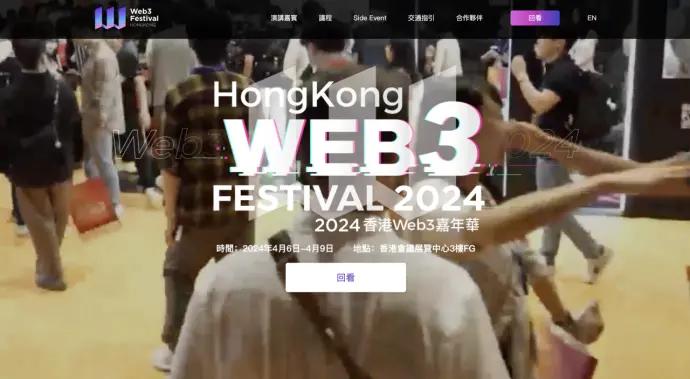
The industry never stops, and the conferences will continue. In 2025, the heat will continue.
10. Front store and back factory - "Shenzhen-Hong Kong combination, a new chapter of Web3"
In 2024, the stage of the Chinese Web3 center has shifted from the previous Shanghai, Hangzhou and other places to Hong Kong. And the "front store and back factory" model is a unique skill of the Hong Kong-Shenzhen combination. This combination not only brings out the industry advantages, but also creates a unique style for the Greater Bay Area.
The "front store" is Hong Kong's strength. As one of the world's top international financial centers, Hong Kong has an efficient capital market, an open business environment, and continuously improving virtual asset regulatory policies. From the endless international industry events, to the localized and clear policy guidance, to the powerful policy support such as the HK$10 billion Innovation and Technology Venture Fund and the Special Visa Scheme, as well as the excellent financing environment, for Web3 companies, landing in Hong Kong means standing at the forefront of the global market.
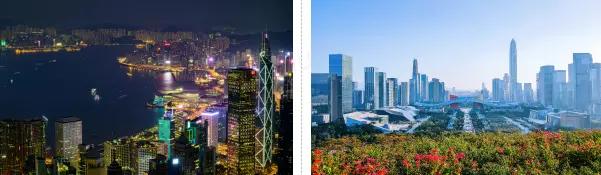
The "back factory" Shenzhen's trump card is its strong R&D capabilities, complete industrial chain, and extreme cost control, providing an ideal environment for the incubation of Web3 projects. Therefore, many Hong Kong Web3 companies prefer to deploy their technical teams in Shenzhen, where blockchain underlying technology development, hardware equipment production, and some operational aspects can be quickly tested and implemented. In 2024, the Hong Kong Cyberport has also strengthened cooperation with multiple technology parks in Shenzhen, making the flow of resources between Hong Kong and Shenzhen more smooth.
This "front store and back factory" model has formed a "brand + technology" closed loop, helping Web3 companies unleash their huge potential and enter the global market. In 2025, Hong Kong is worth looking forward to.