
After a year of economic fluctuations and interest rate volatility, traders are looking to the upcoming economic data for clearer direction. Specifically, the market will focus on whether the Federal Reserve will continue its cautious monetary policy. Any unexpected results in employment and inflation data could trigger market volatility and affect the flow of capital - including the choice to invest in digital assets.
Economic Outlook in Early 2025: Key Trend Analysis
Central Bank Policy: Tighten First, Then Observe
The Fed's Dynamics | In 2024, the Fed cut interest rates multiple times, with the latest adjustment to the 4.25%-4.5% range. Although the inflation level has retreated from its peak, it is still above the 2% target. According to the latest forecast, the Fed may cut rates twice more in 2025, a total of 50 basis points. Impact on Bit: Higher interest rates will increase borrowing costs, which may reduce the market's interest in high-risk assets (including Bit). However, if future data continues to show a decline in inflation, the market may see a more accommodative environment.

Image Credit: Yahoo Finance
The ECB's Dynamics | In 2024, the ECB maintained a hawkish stance, continuing its high-interest rate policy to address persistent inflation. If future inflation data does not show significant improvement, the ECB is likely to continue tightening its policy, putting pressure on risk assets, including Bit.
Inflation: Still the Focus
Global inflation, although showing signs of easing, is still above the targets of major central banks. The US | Core inflation remains stubborn, driven by wage growth and housing costs. Europe | The pace of inflation decline is slower than expected, making the market more focused on the possibility of further ECB rate hikes. Impact on Bit: High inflation may lead more people to view Bit as a "store of value" tool, especially assets like BTC. However, the tightening policies adopted to combat inflation may reduce market liquidity, which could limit the upside potential of the Bit market.
Global Economic Growth: Moderate but Steady
The US | The latest data forecasts the US economic growth rate in 2025 to be around 2.1%, slightly higher than the previous 2%. This growth rate, although steady, is not enough to drive a full market rebound. Europe | Affected by high inflation and geopolitical risks, the economic outlook in Europe remains weak. China | China is implementing targeted policies to stimulate the economy, which should support global demand. However, the pace of recovery still faces some uncertainty.
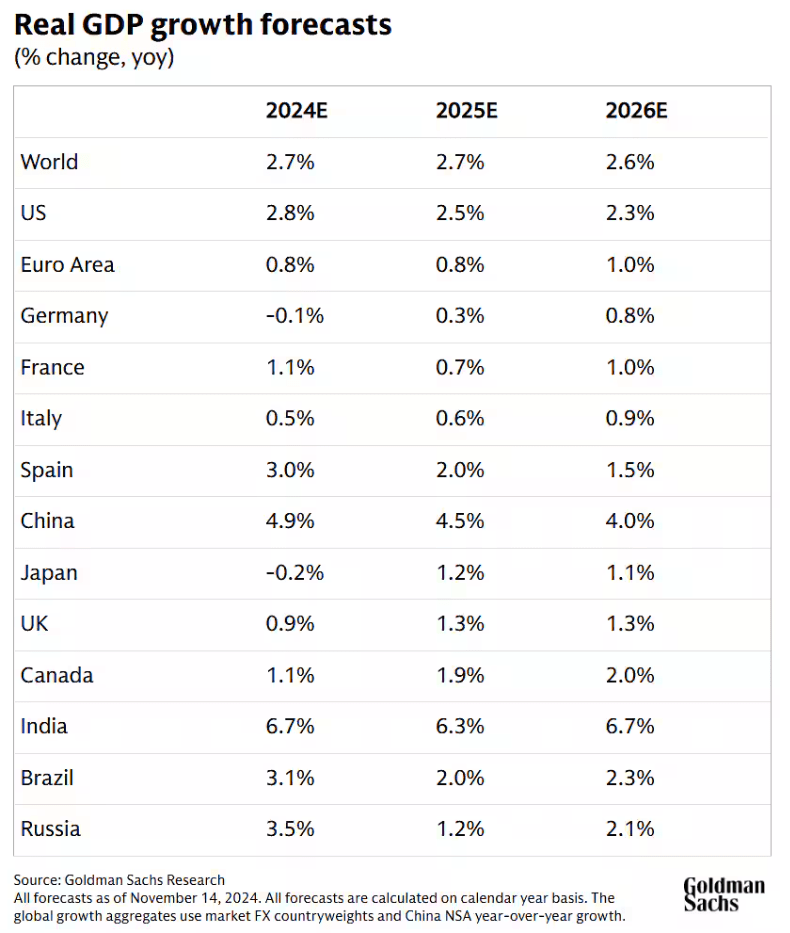
Image Credit: Goldman Sachs
Geopolitical Risks: An Undeniable Variable
The Current Situation | Tensions between the US and China in trade and technology remain high. The Ukraine war and conflicts in the Middle East continue to put pressure on the energy market and global supply chains. Impact on the Bit Market: In times of heightened tensions, Bit and other cryptocurrencies are sometimes seen as safe-haven assets. However, in the short term, the performance of the Bit market often fluctuates in sync with other risk assets.

Image Credit: Visual Capitalist
Unique Drivers of the Bit Market
Technological Breakthroughs | The ETH upgrade, new DeFi trends, and the integration of AI and blockchain may become market catalysts. Institutional Participation | As regulations become clearer, traditional financial institutions are increasingly interested in Bit, which will provide long-term growth momentum for the market. Central Bank Digital Currencies (CBDCs) | Many central banks are accelerating the launch of digital currencies, which may drive the adoption of Bit, but could also pose some competition to existing Bit assets.
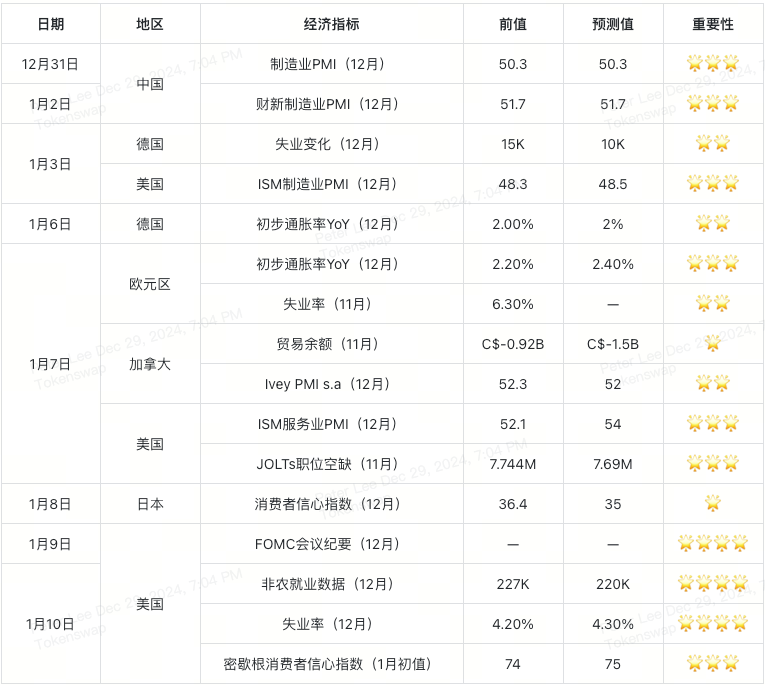
Key Data Releases (December 31, 2024 - January 10, 2025)
Week 1: December 31, 2024 - January 3, 2025
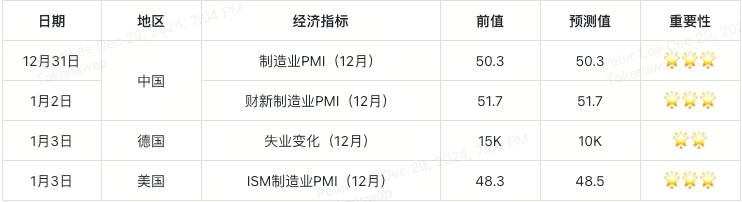
China Manufacturing PMI
Forecast: 51.8
Why Important: PMI is an important indicator of manufacturing activity, with readings above 50 indicating expansion and below 50 indicating contraction. The Caixin PMI focuses more on private enterprises and is one of the barometers of the Chinese economy.
Potential Impact: If the data performs strongly, it may boost market confidence in the global economy, and this optimistic sentiment may also be transmitted to the Bit market.
German Unemployment Change
Forecast: +10K
Why Important: Germany is the "backbone" of the European economy, and the stability of the labor market directly affects the economic confidence of the Eurozone.
Potential Impact: If the unemployment number is lower than expected, it may enhance investors' confidence in the European market, thereby boosting the risk appetite in the Bit market.
US ISM Manufacturing PMI
Forecast: 48.5
Why Important: A reading below 50 indicates a contraction in manufacturing activity, which is often seen as a signal of economic weakness.
Potential Impact: If the data is weaker than expected, the market may be concerned about a slowdown in the US economy, which could put pressure on risk assets, including Bit.
Week 2: January 6, 2025 - January 10, 2025
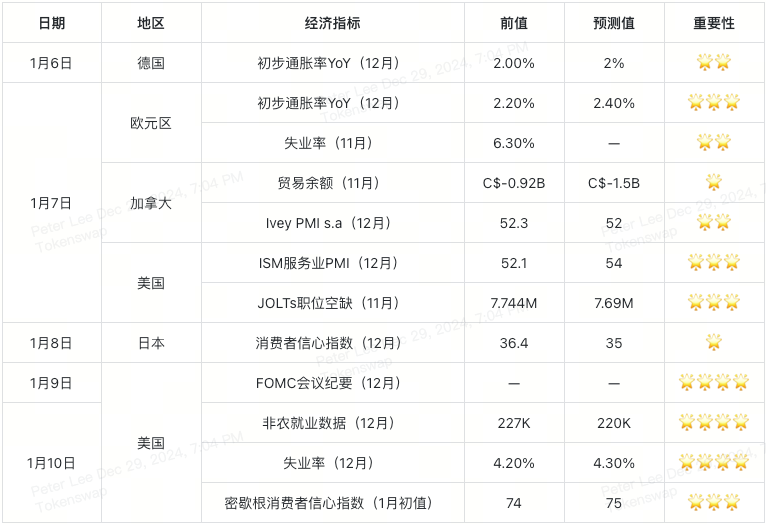
German Inflation Rate (December)
Forecast: 2.0% YoY
Why Important: German inflation data will confirm whether the ECB faces further pressure to raise rates. Lower inflation may support a more dovish policy stance, which would be positive for risk assets, including Bit.
Potential Impact: The market will observe whether the inflation data shows signs of cooling.
French and Italian Inflation (December), Eurozone Unemployment Rate (November)
Forecast: France 1.6%, Italy 2.3%
Eurozone Unemployment Rate: 6.3%
Why Important: A decline in core country inflation indicates easing price pressures, and a stable unemployment rate shows economic resilience. These factors shape the policy expectations for the ECB.
Potential Impact: If the inflation rate declines, it may boost investor confidence, but data that exceeds expectations may raise concerns about tightening policies.
US FOMC Meeting Minutes (December)
Why Important: Traders will closely examine the minutes to understand the Fed's policy outlook for 2025, particularly the likelihood of interest rate adjustments.
Potential Impact: Any changes in the policy tone may trigger short-term volatility.
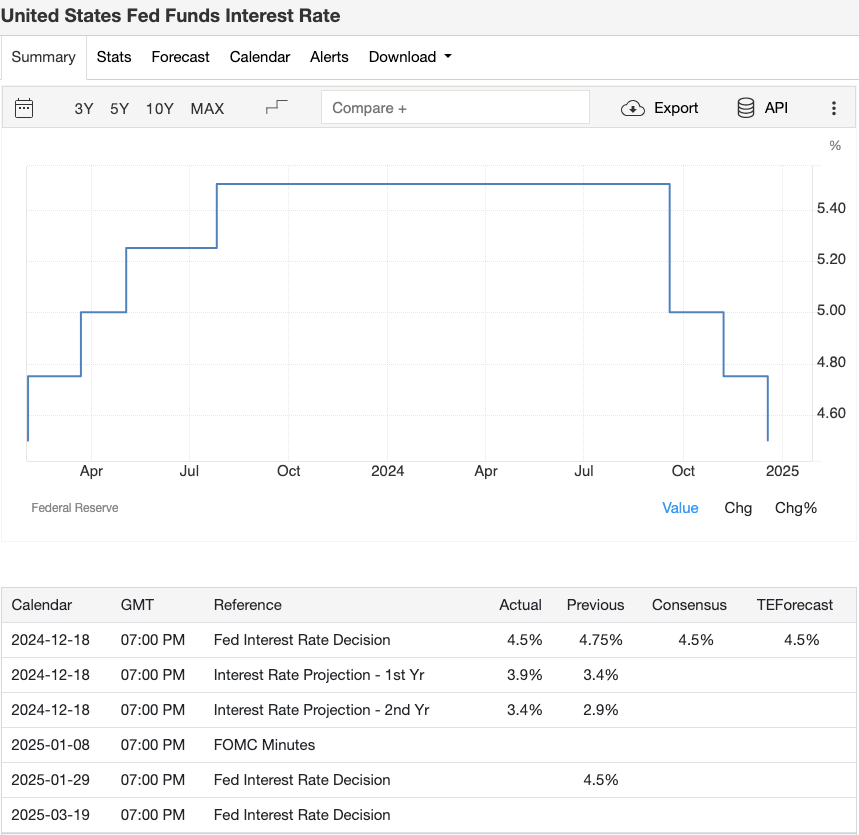
Image Credit: Trading Economics
Trade Balance and Labor Market Data
Trade Data
Australia: Forecast at A$5.953B
Germany: Forecast at €13.4B
Why Important: Strong trade surpluses indicate a healthy economy, which may have a positive impact on the sentiment in the Bit market.
Potential Impact: Positive trade data may drive risk sentiment and lead to an increase in Bit asset prices.
Labor Market Data
Canada's unemployment rate (December): forecast 6.8%
US non-farm payroll data (December): forecast 220K
US unemployment rate (December): forecast 4.3%
Why it's important: Employment data directly impacts central bank decisions. If the data is weak, it may strengthen market expectations for an accommodative policy, which would be positive for the Bit cryptocurrency market.
Potential impact: Non-farm employment exceeding expectations may briefly push up the US Dollar, but weak data may increase market expectations for an accommodative policy, thereby driving Bit prices.
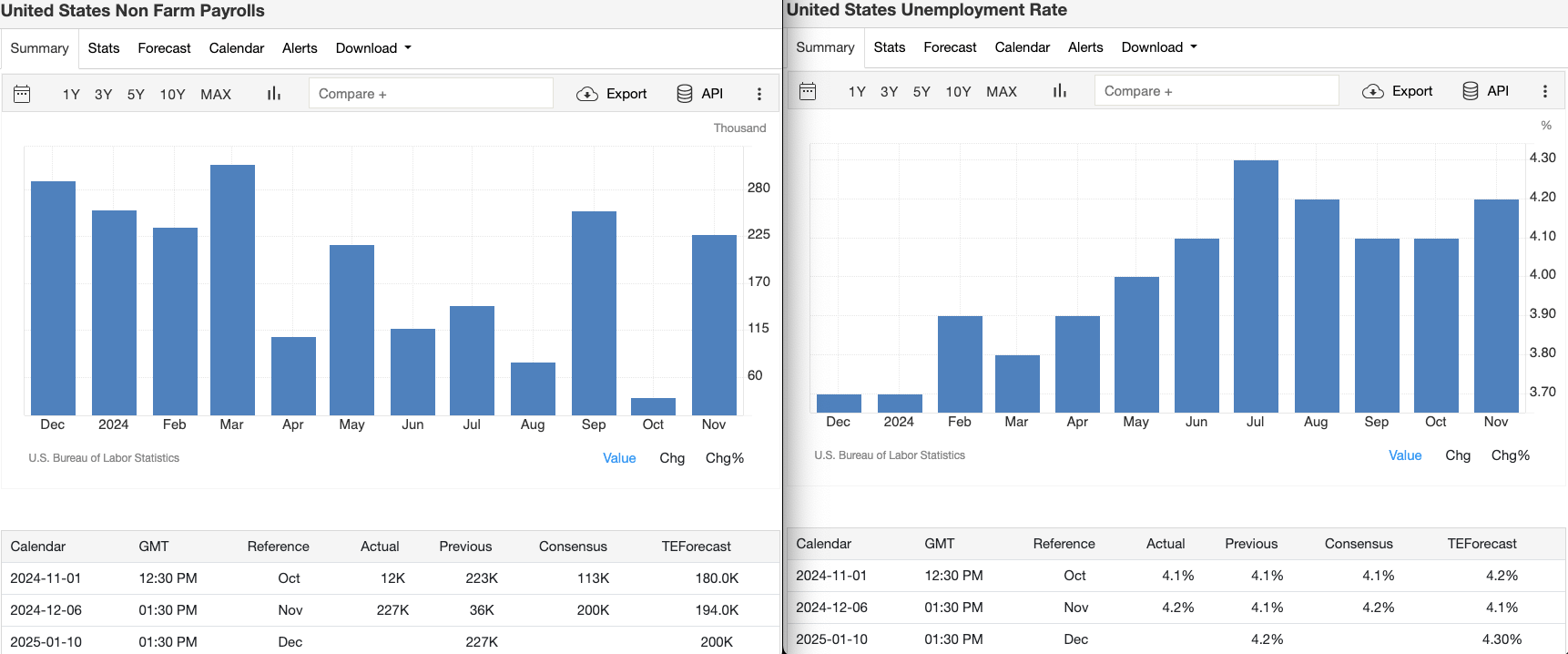
Image Credit: Trading Economics
Michigan Consumer Confidence Index (early January)
Forecast value: 75
Why it's important: Consumer confidence reflects expectations for the economy. Higher confidence may encourage more risk-taking investments, while weaker confidence may lead to a more cautious market sentiment.
Potential impact: The consistency of consumer confidence with employment data will be a focus for investors.
Crypto Traders' Strategic Priorities
Monitor China's Economic Developments
If China's manufacturing PMI data exceeds expectations, it may boost global market sentiment and lead to capital inflows into the Bit cryptocurrency market.
However, if the data performs poorly, it may weaken market risk appetite and put pressure on Bit assets.
Watch for Economic Indicators in the Eurozone
Germany's employment data and the inflation rates in Germany, France, and Italy will influence the European Central Bank's policy direction.
Dovish policy signals may boost market risk sentiment, benefiting risk assets including Bit.
Focus on Fed Signals
The FOMC meeting minutes and data such as ISM PMI and non-farm payrolls will be the market's focus.
If the Fed hints at rate cuts, it may create upside opportunities for the Bit market; hawkish signals may trigger short-term market volatility.
Interpret Trade Data
Positive trade data from Germany and Australia often reflects strong global economic demand.
This risk-on market environment may instill more confidence in the Bit market.
Consumer and Labor Market Confidence
Robust North American labor data and consumer confidence can help boost market sentiment and support Bit asset performance.
If the data is weak, it may trigger a short-term market adjustment, but could pave the way for future accommodative policies, creating long-term positives for the Bit market.
Manage Market Volatility
The concentrated release of data may lead to significant market volatility.
It is recommended to use stop-loss orders to manage risk, diversify your portfolio to reduce single-asset exposure, and closely monitor changes in market liquidity to ensure robust trading.
Global Risks and Market Sentiment Analysis
Geopolitical Risks
Current hotspots: The US-China trade and technology conflicts, the Ukraine war, and tensions in the Middle East remain major uncertainties, particularly impacting the energy market.
Impact on Bit market: During heightened geopolitical tensions, assets like Bit are sometimes seen as a safe haven. However, when risk-off sentiment prevails in the broader market, Bit may decline along with other high-risk assets.
Consumer Behavior
Why it's important: Consumer confidence and holiday spending data are important barometers of economic vitality. If consumer confidence is low, it may dampen the willingness of retail investors to enter the Bit market.
Indicators to watch: The Michigan Consumer Confidence Index and whether it is consistent with employment and inflation trends.
Regulation and Central Bank Digital Currencies (CBDCs)
Current situation: Major economies are accelerating the development of regulatory frameworks for Bit, which may enhance institutional investors' trust in Bit assets. Meanwhile, multiple countries are testing or launching CBDCs.
Impact on Bit market: Clearer regulatory policies may attract more capital into the market, while ambiguous or overly strict regulations may undermine market confidence.
Market Liquidity
Influencing factors: Central bank policies and specific events in the Bit market (such as token unlocks and blockchain protocol upgrades).
Importance: Insufficient liquidity can exacerbate market volatility, while ample liquidity can provide support and help drive price appreciation.
Energy and Commodities
Why it's important: Fluctuations in oil and gas prices directly impact the costs for consumers and businesses, affecting inflation and interest rate trends. Higher energy prices may also impact the profitability of Bit mining.
Expectations for the Market in Early 2025
The Fed's Next Move
Current status: After multiple rate cuts by the Fed in 2024, it is expected to cut rates by a total of 50 basis points in 2025. The December FOMC meeting minutes will further clarify its policy direction.
Impact on Bit market: If the Fed signals a dovish stance, it may boost market risk appetite, leading to an appreciation of Bit assets. However, a hawkish tone in the minutes may trigger short-term sell-offs.
Inflation Trends
Current status: Data on inflation in Germany and the Eurozone will reveal the extent of easing price pressures.
Impact on Bit market: If inflation declines more than expected, market expectations for accommodative monetary policy may strengthen, benefiting risk assets including Bit.
Resilience of the Labor Market
Current status: US non-farm employment data and the unemployment rate will reveal the state of the labor market, while Canadian data will provide a supplementary perspective on the North American economy.
Impact on Bit market: Strong employment data may temporarily bolster the US Dollar, putting pressure on Bit. However, if the data is weak, it may increase market expectations for an accommodative policy, providing long-term positives for Bit assets.
China's Economic Recovery
Current status: China's PMI data will reflect whether fiscal policies have effectively stimulated economic growth.
Impact on Bit market: If China's economy performs strongly, it will boost global market confidence and commodity demand, which could also extend to the Bit market.
Internal Drivers of the Bit Market
Current status: Technological advancements, increased institutional adoption, and a clearer regulatory environment are shaping the future of the Bit market.
Impact on Bit market: Even in the face of macroeconomic challenges, developments such as the ETH upgrade, a DeFi revival, and AI-driven project growth may create growth opportunities for the market that are independent of traditional economic cycles.