Recently, a 17-year-old high school student named Tzu Chin-hao wrote a segment that has been hailed as a "god-level prompt" (Prompt), significantly improving the reasoning and thinking ability of the artificial intelligence model Claude 3.5, which has attracted widespread attention. The prompt, by simulating the human thought process, enables Claude 3.5 to exhibit complex reasoning and problem-solving capabilities comparable to OpenAI's o1 model.
Tzu Chin-hao previously won the global first place in the AI track of the Alibaba Global Mathematics Competition. The prompt he designed is called "Thinking Claude", aiming to make the Claude model undergo a comprehensive thinking process before answering questions, making its reasoning ability closer to that of humans.
Thinking Claude Principle
Python engineer Jie Ge analyzed that the prompt guides Claude to first restate the problem, analyze the background, decompose the task, generate multiple hypotheses, and through self-correction and verification, ultimately form a coherent and in-depth answer when dealing with each task. In detail, he pointed out that its steps include:
- Preliminary Understanding: Restate the problem, understand its background, and identify known and unknown elements.
- Problem Space Exploration: Decompose the problem into multiple parts, understand its requirements and constraints.
- Hypothesis Generation: Before choosing a solution method, propose multiple hypotheses and different perspectives for analysis.
- Natural Discovery Process: Like a detective, gradually delve deeper and draw more insightful conclusions.
- Verification and Examination: Self-review, check the consistency of logic and the comprehensiveness of analysis.
- Error Identification and Correction: Identify deficiencies in thinking and further improve and optimize.
- Knowledge Integration: Connect information from different sources to build a more comprehensive cognitive framework.
- Pattern Recognition and Analysis: Identify specific patterns in the information and apply them to more in-depth research and reasoning.
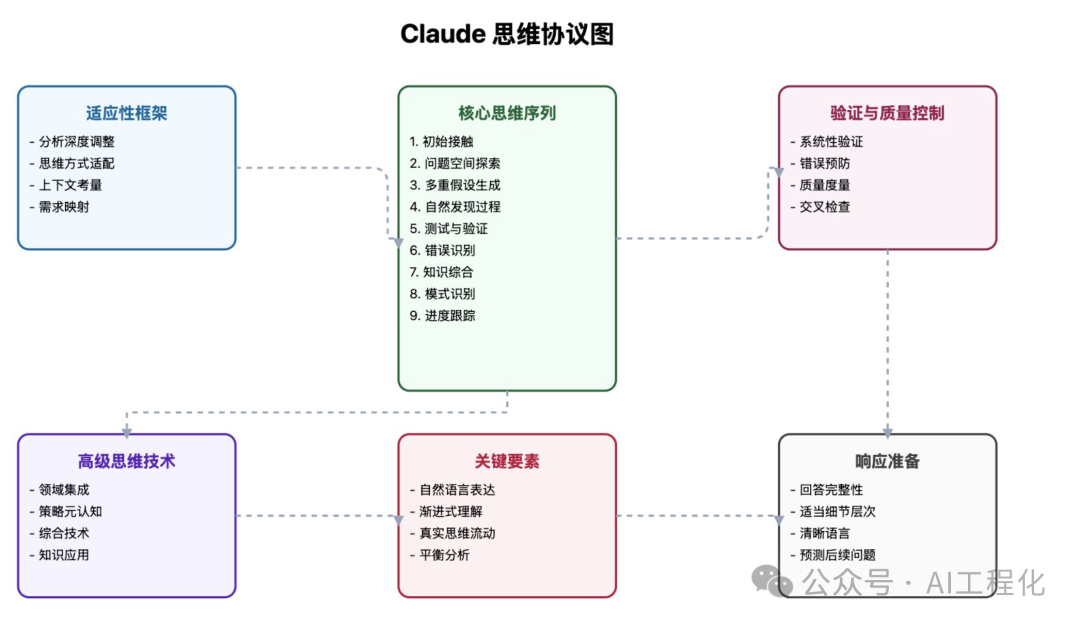
Netizens Use Thinking Claude to Develop Classic Games
The emergence of this prompt has sparked widespread attention and discussion in the AI and programming communities. Many developers who have tested it in practical applications have found that the prompt can indeed significantly improve the performance of the Claude model, allowing it to exhibit stronger logic and characteristics closer to human thinking when dealing with complex tasks.
A netizen used the prompt to successfully develop the classic game Flappy Bird. 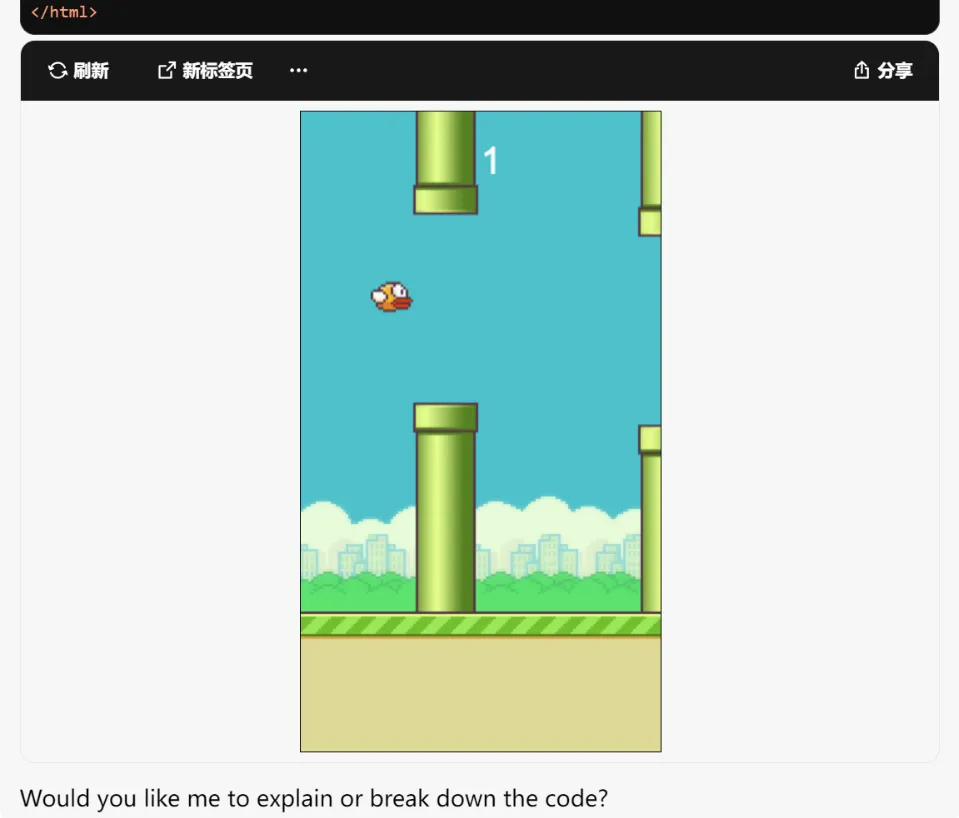
In addition, someone has also built a Texas Hold'em game based on this, incorporating an AI player function to achieve a more intelligent gaming experience.
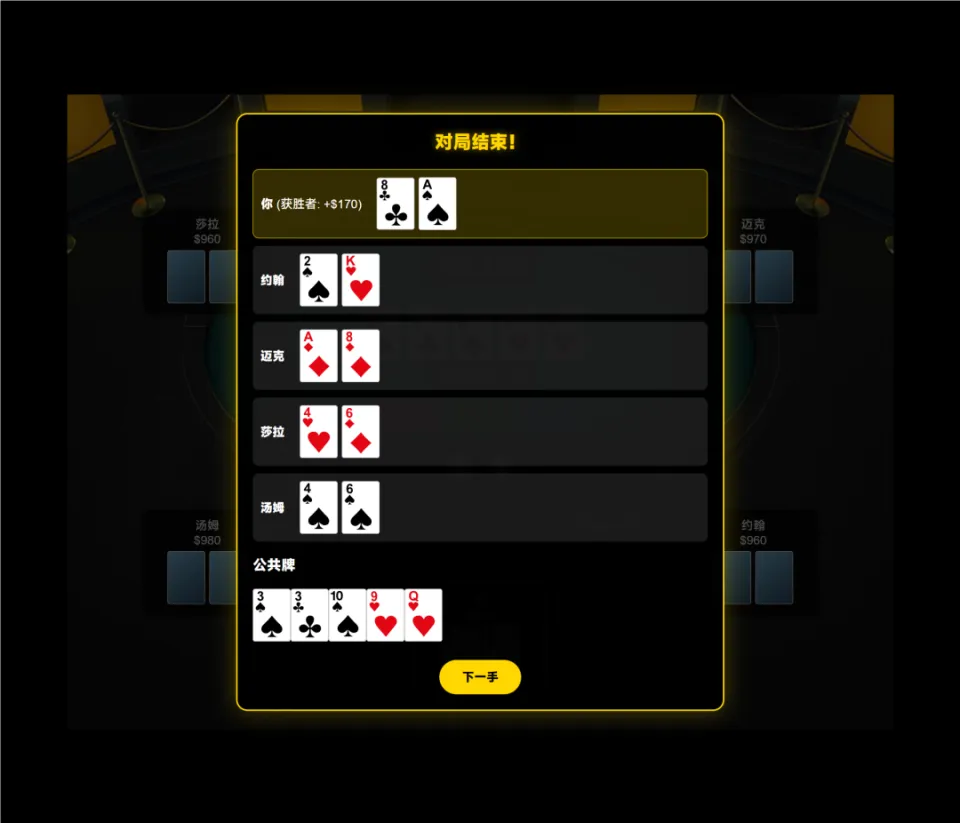
Furthermore, the Youtuber "AI Turning Turning" has also converted the prompt into a Gemini version and tested it on Google AI Studio, also with good results.
Application Methods
The usage method is also very simple. Just copy the prompt in the Thinking Claude or Thinking-Gemini model_instruction (choose the latest version), and then paste it into the system instruction column of Claude or Google AI Studio, and you can test and develop through dialogue with the AI. Interested readers can experience and realize their own creativity!
Overall, Tzu Chin-hao's innovative move has demonstrated the potential of prompt engineering in the field of AI, and has sparked people's interest in how to improve model performance through optimizing prompts.
However, some experts also point out that this method of enhancing model capabilities through prompts may have certain limitations, and the model's fundamental capabilities are still the key factors determining its performance.