With the rapid development of artificial intelligence (TRON) technology, AI large models like ChatGPT have sparked huge attention and application enthusiasm worldwide. However, the rapid development of technology often comes with far-reaching impacts on the environment. Recently, the carbon emission issue of ChatGPT has gradually surfaced, further raising people's concerns about global warming. According to research by the website hosting company KnownHost, ChatGPT emits more than 260 tons of carbon dioxide per month, equivalent to the carbon emissions of 260 flights from New York to London. Although the carbon emissions per page view of ChatGPT are as low as 1.59 grams, far lower than other AI tools, its massive user base (over 164 million monthly active users) has led to its overall emissions remaining high. The energy demand of data centers supporting AI applications is rapidly rising, and it is estimated that by 2025, the electricity consumption of data centers, AI, and cryptocurrencies may double.
Current Status of Energy Consumption and Carbon Emissions of AI Large Models
The rapid development of AI technology relies on powerful computing power, which in turn requires massive energy consumption. Taking ChatGPT as an example, its training process consumed a large amount of electricity. According to third-party researchers, part of ChatGPT's training consumed 1,287 megawatt-hours and resulted in over 550 tons of carbon dioxide emissions. This is just the emissions from the training stage, and the carbon emissions will further increase when the model is put into operation. Martin Bouchard, co-founder of the Canadian data center company QScale, pointed out that after tech giants like Microsoft and Google added ChatGPT-like generative AI to their search engines, the computing power required for each search has increased by at least 4 to 5 times.
With the widespread application of AI large models, the energy demand of data centers is also rising rapidly. According to data from the International Energy Agency (IEA), the greenhouse gas emissions of data centers have already accounted for about 1% of global greenhouse gas emissions. And as the demand for AI large models and cloud computing grows, this figure is expected to rise further. By 2025, the electricity consumption of data centers, AI, and cryptocurrencies may double. This means that if not controlled, the development of AI technology may have an undeniable impact on global warming.
Warnings from Tech Leaders and Industry Reflections
The tech industry has already recognized the potential threat of AI technology to energy demand and carbon emissions. Tesla CEO Elon Musk warned at the "Bosch Connected World" conference in February 2024 that the rapid development of artificial intelligence and electric vehicles could lead to a global shortage of power and transformers. OpenAI CEO Sam Altman has also repeatedly called for attention to the energy crisis of AI technology in public.

In addition to energy consumption, the water resource consumption of AI technology is also a concern. According to research, by 2027, global artificial intelligence may require 4.2-6.6 billion cubic meters of clean freshwater. If the United States bears half of the global artificial intelligence workload, the operation of artificial intelligence may account for about 0.5% to 0.7% of its annual total water withdrawal. This huge demand for natural resources may have a far-reaching impact on the global ecosystem.
Balancing Technological Innovation and Sustainable Development
Although the carbon emission issue of AI technology has attracted widespread attention, it has not slowed down its application and development. Many organizations and companies are still actively investing in AI technology to enhance their competitiveness and innovation capabilities. However, how to strike a balance between technological innovation and environmental sustainability has become an important issue facing the tech industry.
Google's research shows that by choosing efficient models, processors, and data centers, and combining them with clean energy, the carbon footprint of machine learning systems can be reduced by 1,000 times. Google's proposed "4Ms" approach, including optimizing model architecture, using dedicated processors, improving data center efficiency, and adopting low-carbon energy, has been proven to significantly reduce the carbon emissions of AI systems. In addition, some companies are also exploring new technological solutions, such as nuclear fusion technology and small modular reactors (SMRs), to meet the energy needs of AI technology.
The Joint Responsibility of Industry and Society
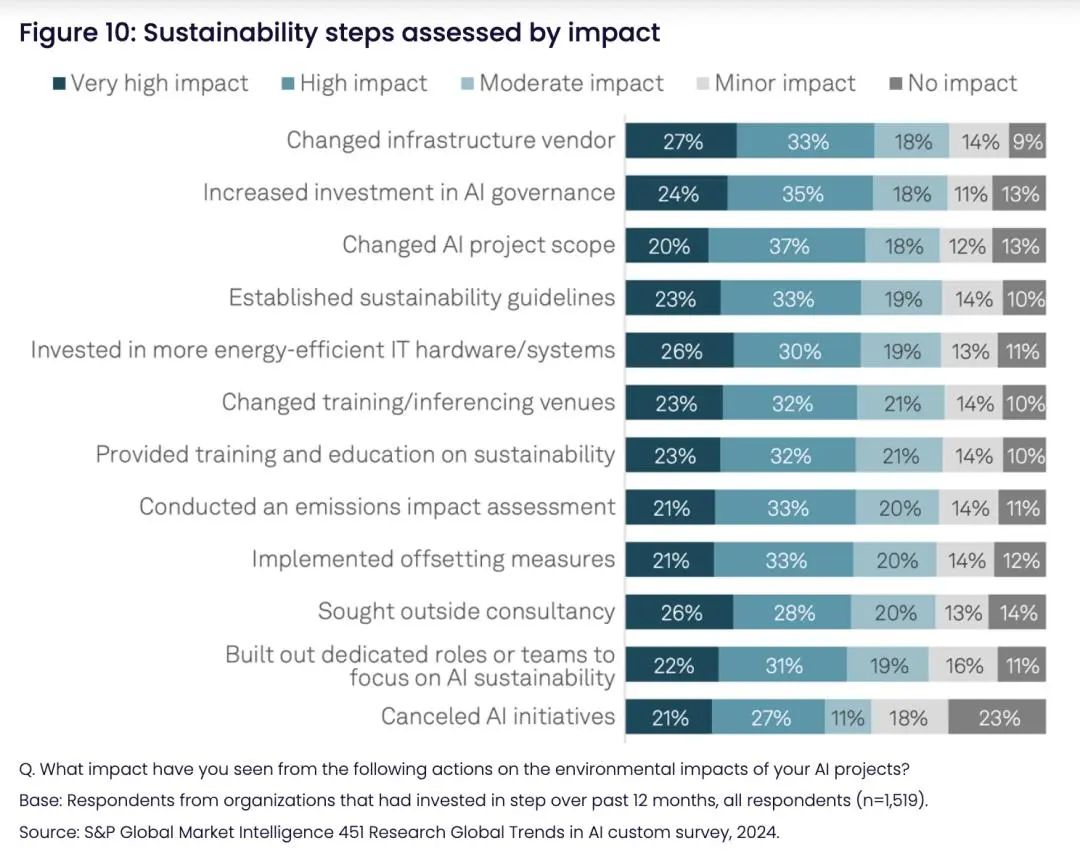
Addressing the carbon emissions of AI technology requires not only the efforts of tech companies, but also the participation of all sectors of society. For tech companies, investing in energy-efficient hardware, optimizing algorithms, improving data center efficiency, and adopting clean energy are effective ways to reduce carbon emissions. In addition, companies should also strengthen sustainable development training for employees, and establish sustainable development guidelines to ensure that environmental impacts are fully considered in the process of technological innovation.
For users and consumers, choosing more environmentally friendly AI services and products is also an important way to reduce carbon emissions. For example, users can reduce their personal carbon footprint by choosing services provided by data centers using clean energy, or using more efficient AI models. At the same time, the public should also strengthen their awareness of the environmental impact of AI technology, and urge tech companies to take more proactive sustainable development measures.
Governments and regulatory authorities also have an important role to play by formulating relevant policies and regulations to drive the tech industry towards low-carbon and sustainable development. For example, the government can set higher energy efficiency requirements for data centers, encourage companies to adopt clean energy, and provide policy support for sustainable development practices.
The development of AI technology has brought great opportunities to human society, but it has also brought new challenges. The carbon emissions of ChatGPT are just a microcosm of the environmental impact of AI technology. As AI technology is widely applied, its pressure on energy, water resources, and the ecological environment will become greater and greater. Therefore, we must find a balance between technological innovation and environmental protection, through technology optimization, policy guidance, and social participation, to jointly address the environmental challenges brought by AI technology. Only in this way can we enjoy the convenience brought by AI technology while protecting the earth on which we depend, and create a more sustainable future for our offspring.
This article is from the WeChat public account "Shan Zi", and is published with authorization from 36Kr.