Author: Veronica Irwin Source: unchainedcrypto Translator: Shan Eoba, Jinse Finance
Since its inception, Tether has been mired in FUD, but this time, it may face its biggest challenge yet. A new stablecoin bill proposed by the U.S. Congress may prohibit Tether from issuing USDT in the U.S.
This does not mean that Tether will be immediately delisted from exchanges like Coinbase, Kraken or Gemini, but if it cannot find a compliant solution, the new law could restrict Tether's growth.
The current question is: Can Tether - a company with deep ties to the Trump administration - find a solution?
Stablecoin bill may squeeze Tether's $140 billion market
The U.S. Congress is pushing for new stablecoin regulatory bills, seeking to regulate this $200 billion industry. Two bills in particular may prohibit Tether from issuing new USDT in the U.S. unless it can meet strict audit and compliance requirements.
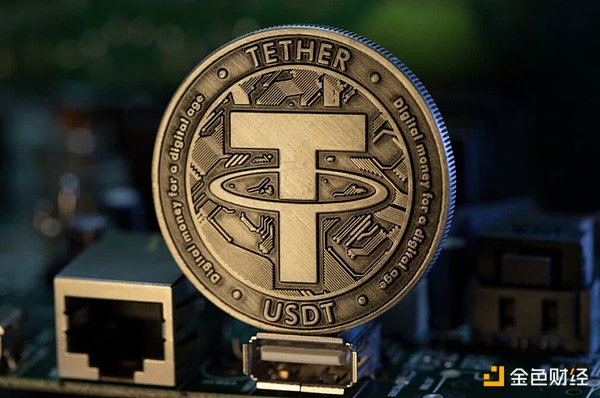
Two new bills passed by the U.S. Congress may prohibit the El Salvador-based Tether from issuing new USDT digital dollars in the U.S. The token may also be delisted from major exchanges like Coinbase, Kraken and Gemini. According to CoinGecko data, USDT is the world's largest stablecoin with a market cap of around $141 billion.
The "Guidance and Establishing National Innovation for Stablecoins Act" (GENIUS) was introduced in the Senate on Tuesday by Republican Senator Bill Hagerty of Tennessee, and co-sponsored by Republican Senators Tim Scott of South Carolina, Cynthia Lummis of Wyoming, and Democrat Kirsten Gillibrand of New York. The bill will prohibit companies that do not maintain one-to-one reserves and have a U.S. accounting firm from issuing stablecoins in the U.S.
A companion bill in the House (discussion draft released on Thursday) also has similar compliance requirements. The bill is called the "Stablecoin Transparency and Accountability Promotion for a Better Ledger Economy Act of 2025" (STABLE), introduced by House Financial Services Committee Chair French Hill (R-AR) and Digital Assets Subcommittee Chair Bryan Steil (R-WI). A congressional staffer familiar with the bill text explained: "Tether would have to comply with the same rules as all other stablecoin issuers - either comply or exit the U.S. market."
While Tether provides quarterly asset attestations reviewed by accounting firm BDO for asset snapshots, it has never completed a full audit to date.
The latest financial report (released last week) shows Tether has $143 billion in assets, while the circulating supply of USDT was $137 billion at the time. However, Tether has still not found a U.S. accounting firm willing to provide a full audit.
Tether CEO Paolo Ardoino has previously expressed willingness to undergo an audit, but said no U.S. firm is willing to take them on as a client. In a July 2024 interview with Forbes, he said: "A big audit firm might be servicing 50,000 banks, each paying them $1 million a year. Imagine you have those 50,000 banks, and then you have one stablecoin company. If you join the potentially most powerful competitor of the stablecoin, how do your 50,000 clients look at you? So it's not an easy pitch for the Big Four (Deloitte, PwC, KPMG and EY)." Tether did not respond to a request for comment.
Tether's biggest competitor is the $56 billion USDC issued by Boston-based Circle Financial, which is audited by Deloitte and issues regular attestations.
The compliance requirements of the two congressional bills may also complicate matters for U.S. exchanges deciding whether to keep USDT on their platforms. Late last year, the asset was delisted from several prominent European exchanges that must comply with the landmark Crypto Asset Markets (MiCA) legislation. However, the two congressional bills so far do not explicitly require this.
"While U.S.-regulated exchanges may prioritize compliant stablecoins, delisting is not an automatic requirement," explained Laurenth Alba, a Romag Protocol lawyer and head of business development. "Instead, exchanges will assess the risks, and if Tether fails to obtain a federal or state-issued stablecoin license, some platforms may voluntarily reduce risk or restrict U.S. customer trading of USDT to avoid regulatory exposure." Coinbase, Kraken and Gemini did not respond to requests for comment.
Compliance opportunities for Tether?
Even if USDT is not delisted from exchanges, the situation could become complex. A lawyer who has studied stablecoin legislation believes the upcoming market structure bills are likely to "direct crypto companies to partner with regulated stablecoin issuers," explaining, "if you're going to enact a regulation that rewards compliance, you also have to take steps to make non-compliance harder to operate."
Neither bill provides a grace period for Tether or any other entity to meet all the stipulated requirements. However, the companion bill may still take months to pass both houses of Congress and be signed into law by former President Donald Trump.
One factor that may help Tether is that the Commerce Secretary nominee, the billionaire CEO of asset management firm Cantor Fitzgerald, is a long-time business partner and investor in the company. Lawyers familiar with stablecoin legislation believe Tether "is not lacking in resources" and could comply with the rules if they choose to do so.