Author: Bai Jiao Heng Yu, from Ao Fei Temple, Quantum Bits

Image source: Generated by Boundless AI
As soon as I opened my eyes, WeChat confirmed:
It has officially connected to DeepSeek-R1, and it's a full-powered version!
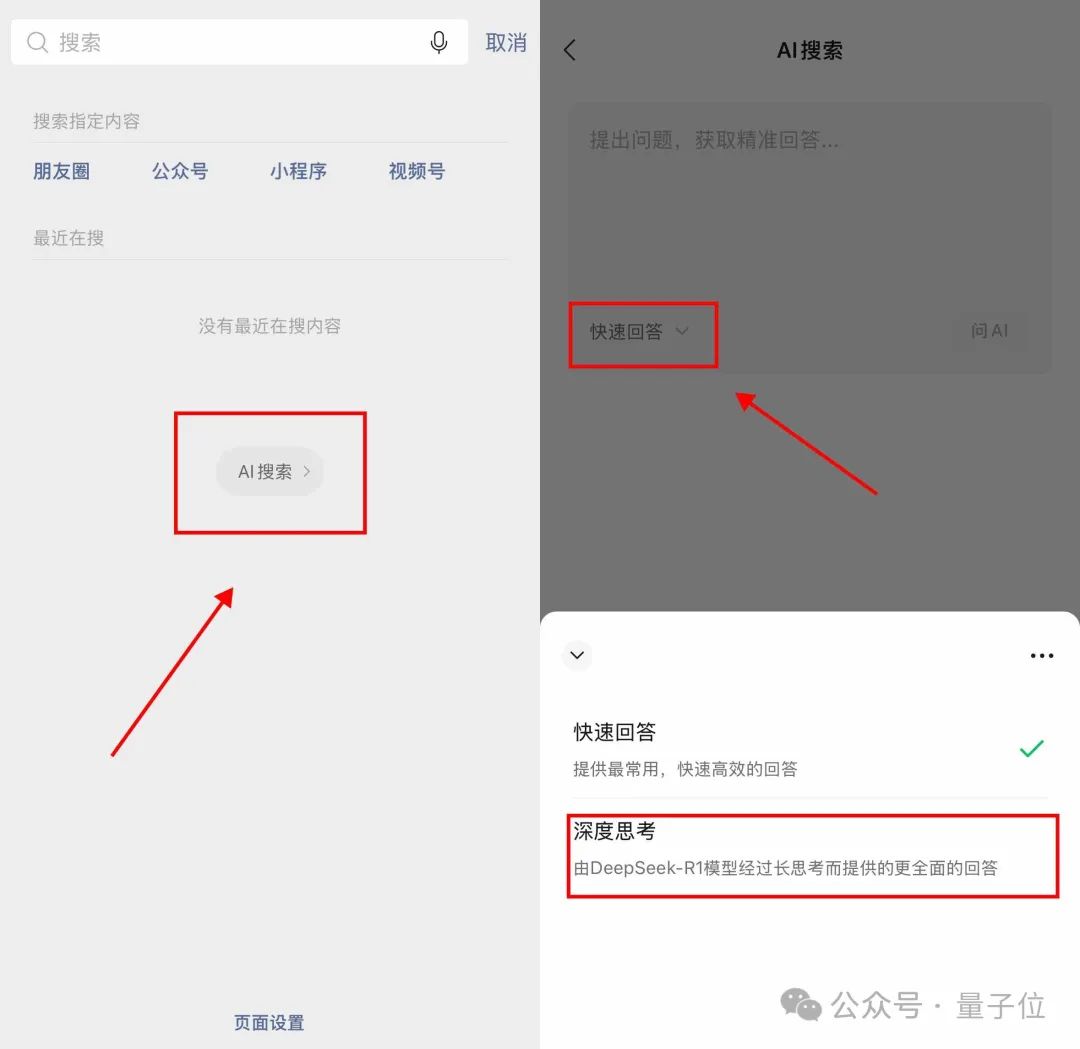
The usage path is very simple: open WeChat - click on the search box - select "AI Search" in the middle of the page - select the deep thinking mode - start using it~
The generated results also have social attributes, which can be shared with friends or posted to Moments.

Previously, many people had called for the ability to share DeepSeek's answers with one click, but their wishes had not been fulfilled. Until last night, almost all ways of sharing DeepSeek-generated results were through screenshots (because it will display the reasoning process, and the screenshots need to be particularly long).
Now, this demand has finally been implemented by WeChat.

The public account "Consensus Crusher" calculated overnight, and currently WeChat can support 5 million to 100 million concurrent online users (concurrent, not DAU).
This number basically meets the usage of the initial batch of Deepseek users on WeChat, and even exceeds the concurrent online users of ChatGPT.
Although it is still in the gray-scale testing phase, this is obviously Tencent's move to continue fully embracing DeepSeek, and it is truly directly available for use.
Good news, the Quantum Bits editor has been included in the first batch of gray-scale testing.
Hurray, this calls for an immediate test, doesn't it?
Testing WeChat's Integration of DeepSeek
Currently, WeChat's AI search provides two modes:
Quick Answer: Generate a brief answer, suitable for general simple questions.
Deep Thinking: Supported by the DeepSeek-R1 model, long thinking, comprehensive answer, the answer is more comprehensive and detailed.
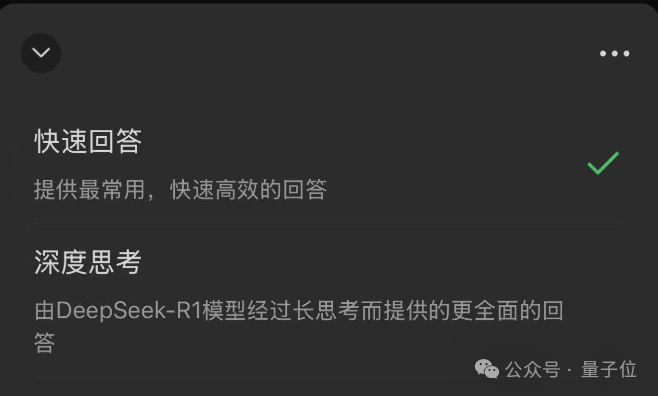
Therefore, to deeply experience R1, you need to select the "Deep Thinking Mode".
First, let's see if it supports basic online mode.
These days, Yushu Robots have been up to something again, they have updated their dance videos, which are more flexible and more amazing than the Spring Festival Gala, even shocking the foreigners.
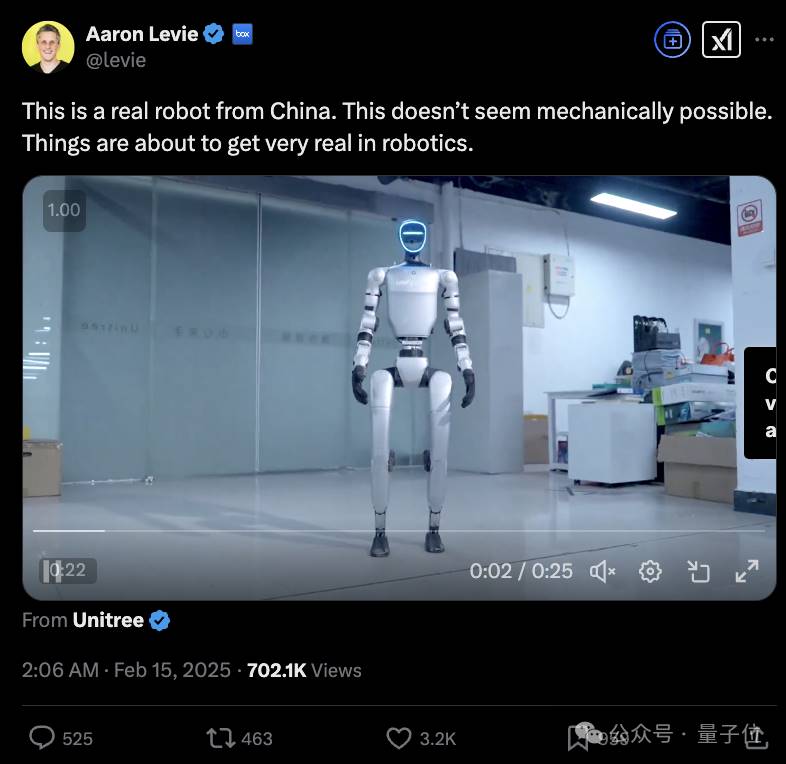
Throwing this question to WeChat: What dance is the latest dance video of Yushu Robots?
The answer obtained is:
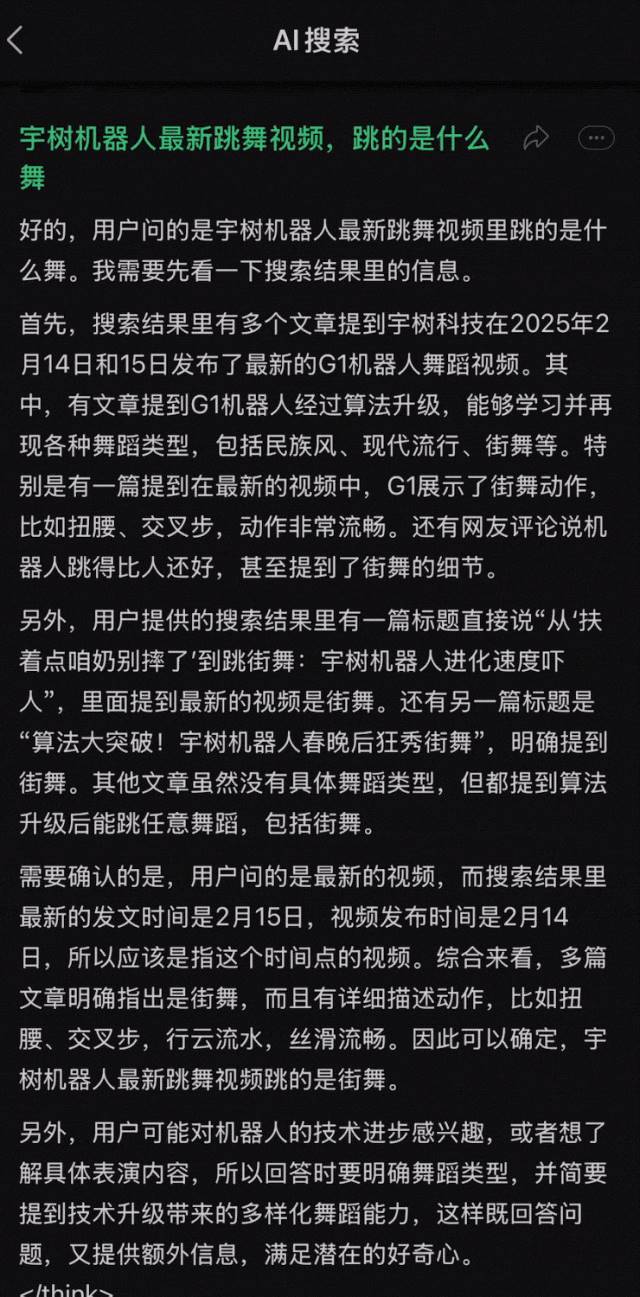
Its response has no noticeable lag, and the output is also very fast. First, it displays its reasoning process, after online search, it determines that this is the progress of February 14, 2025, then considering the user's interest in robots, it provides additional information, and finally arrives at the following answer.
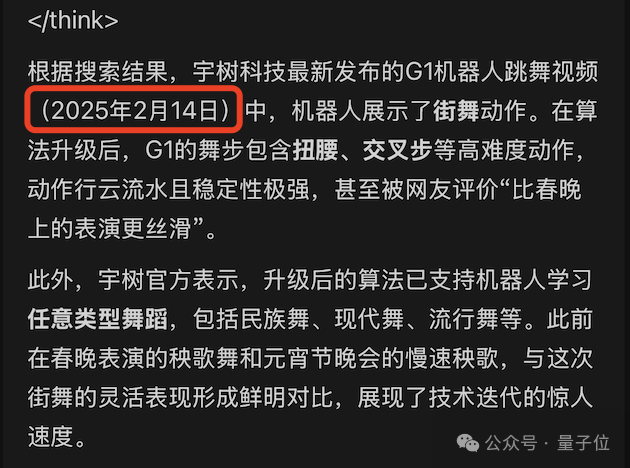
There is a small bug here, which is that the thinking process and the final answer are not clearly distinguished, and the layout is not well presented. But it is estimated that this is due to the instability of the gray-scale testing, and there will be no problem later.
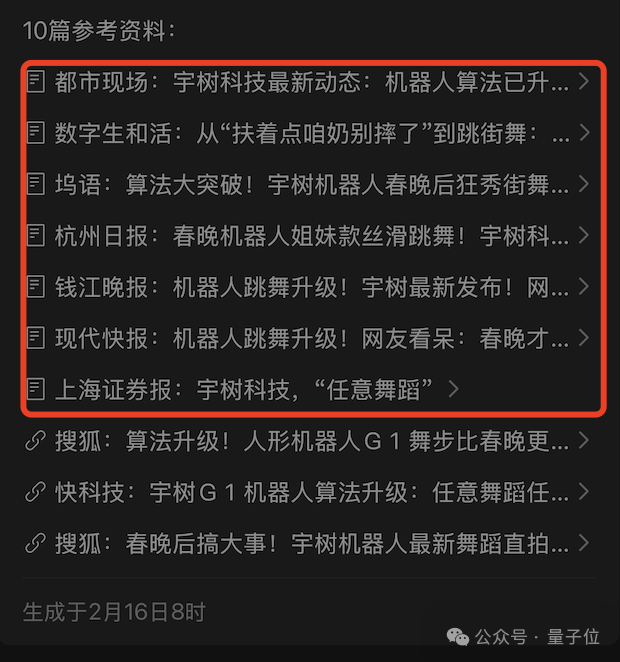
From the 10 reference materials it attached, the first 7 are from public accounts. This also proves that this AI search is supported by WeChat's vast content ecosystem.
Okay, the basic online reasoning function is there, so let's try something more difficult.
Previously, people used DeepSeek to do things like fortune-telling and character creation writing.
If that's the case:
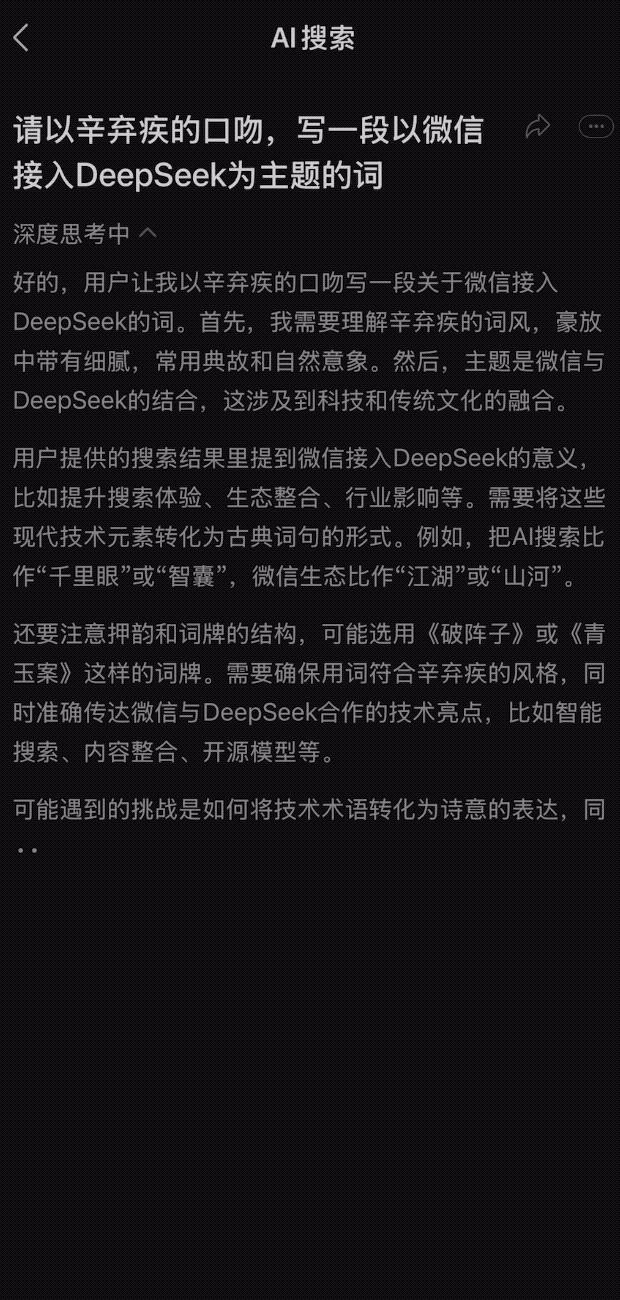
Please write a passage in the voice of Xin Qiji, with the theme of WeChat's integration of DeepSeek.
After the thinking is completed, it will hide the thinking process and give the final answer, which can be expanded at any time.
The final answer is as follows:
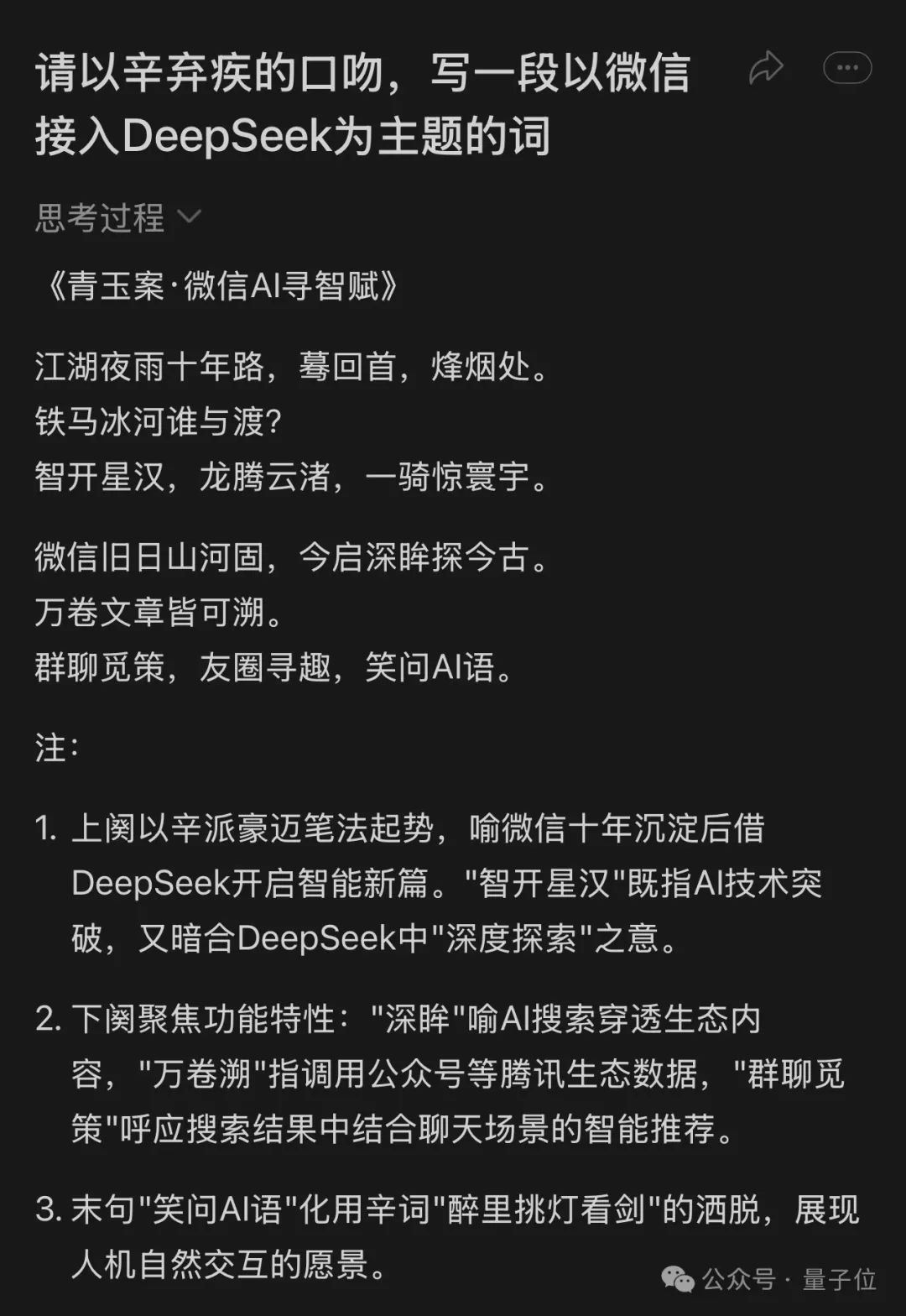
In addition to creating the image, it also provides annotations, which contain a lot of hidden meanings.
The first half represents the significance of the event, "智开星汉" represents a double meaning, and the second half reveals the functional attributes, such as accessing WeChat ecosystem data.
After answering, it will recommend related questions, or "Ask another question".
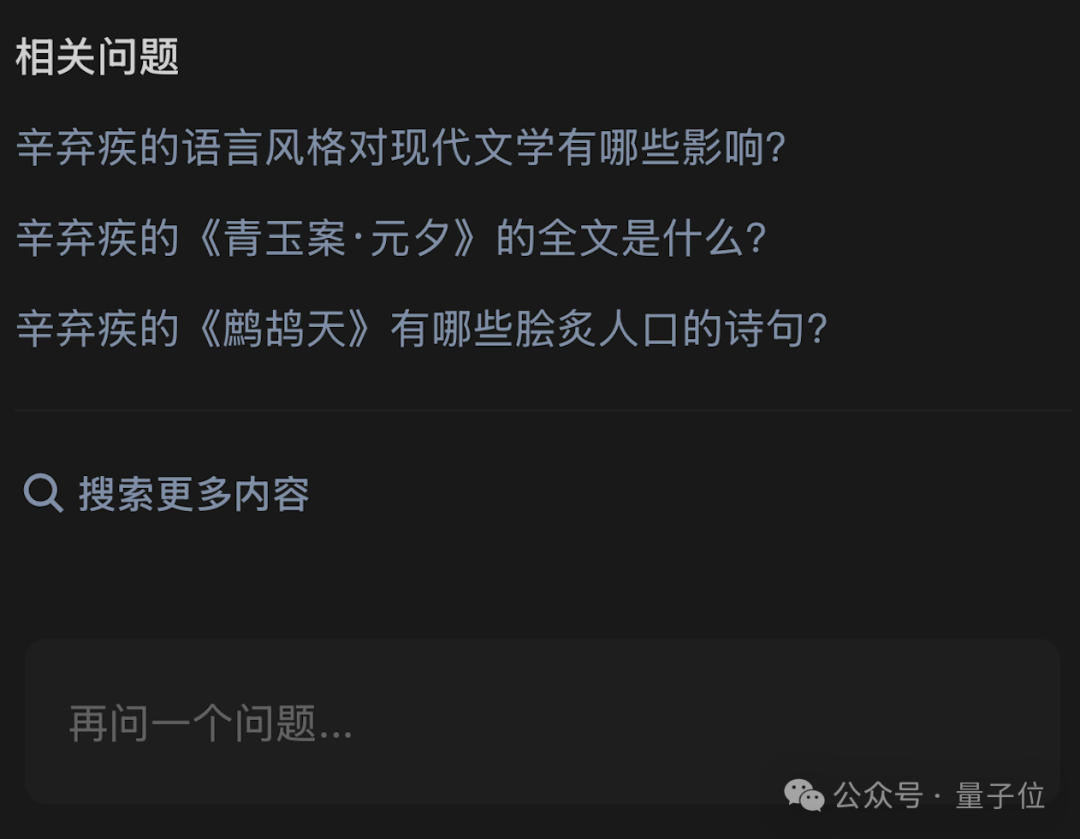

In this way, by clicking on a question or continuing to ask, you can keep answering (but it does not support continuous answering based on the previous context).
And as long as you don't jump out, all the questions and answers will be presented in the same interface.
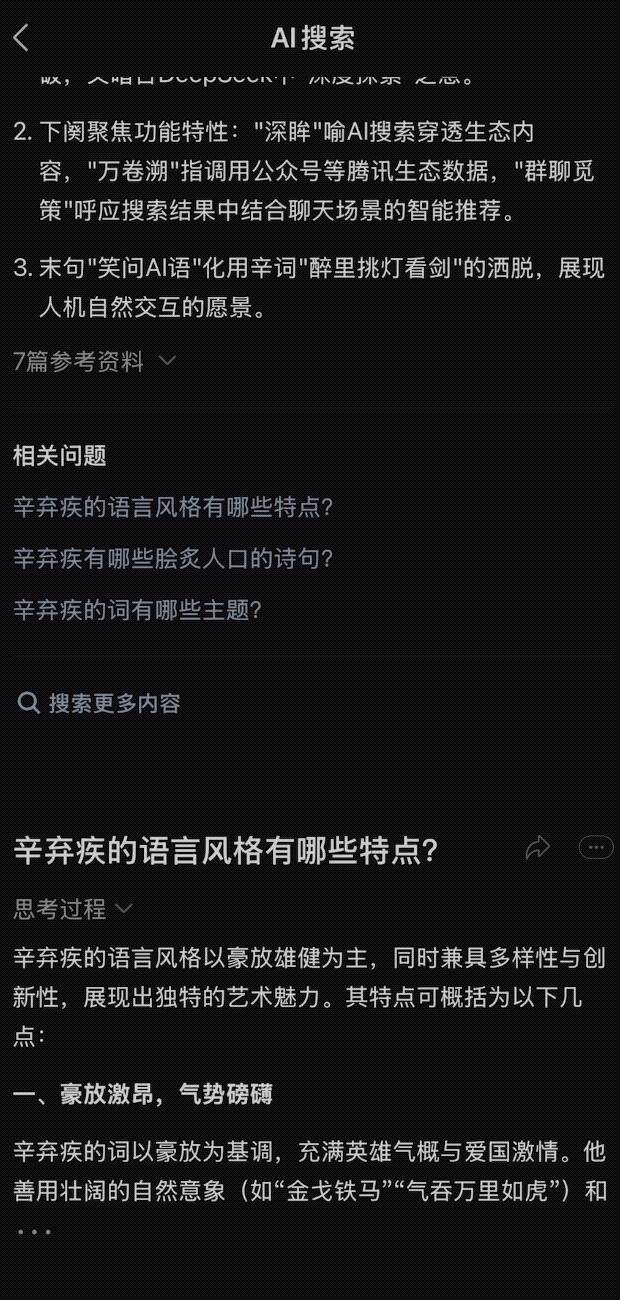
Overall, due to the limitations of the gray-scale testing and the experience window (only supporting mobile devices), there are some areas that need to be improved.
For example, only supporting mobile search, sharing with friends and Moments, and unable to view on the computer.

Apart from that, the answers are not as diverse as the official ones, which should also be due to the limitation of output Token, and it cannot do things like the official one - finding historical Q&A and continuous answering based on the context.
Looking at this, the WeChat integration of DeepSeek presents a short and fast search mode, which is quite in line with WeChat's attributes of immediacy and private domain social networking.
While the world is struggling with the entrance of AI...
What is the effect of WeChat's integration of DeepSeek?
In one sentence:
While global tech giants are struggling for the entrance of AI, Tencent, through a seemingly light "ecosystem integration", has been dubbed by netizens as "ending the AI search race".
Does WeChat's move deserve this praise? Let's analyze it together.
First, in terms of hands-on experience, using DeepSeek-R1 on Tencent's Yuanbao is faster and less lagging than using it on WeChat.
But this is not important.
The important thing is that WeChat's integration of DeepSeek-R1 is setting up an entry point with zero learning cost for the vast number of DeepSeek users.
In this way, WeChat's 1.67 billion users (data from the Internet, as of October 2024) do not need to download a new app or register a new account, and can directly access the current strongest reasoning large model in the Chinese field.
Secondly, and this is the real killer move, is that this move deeply integrates R1 and WeChat ecosystem data resources with RAG (Retrieval Augmented Generation) technology on the premise of providing a simple and accessible entry point.
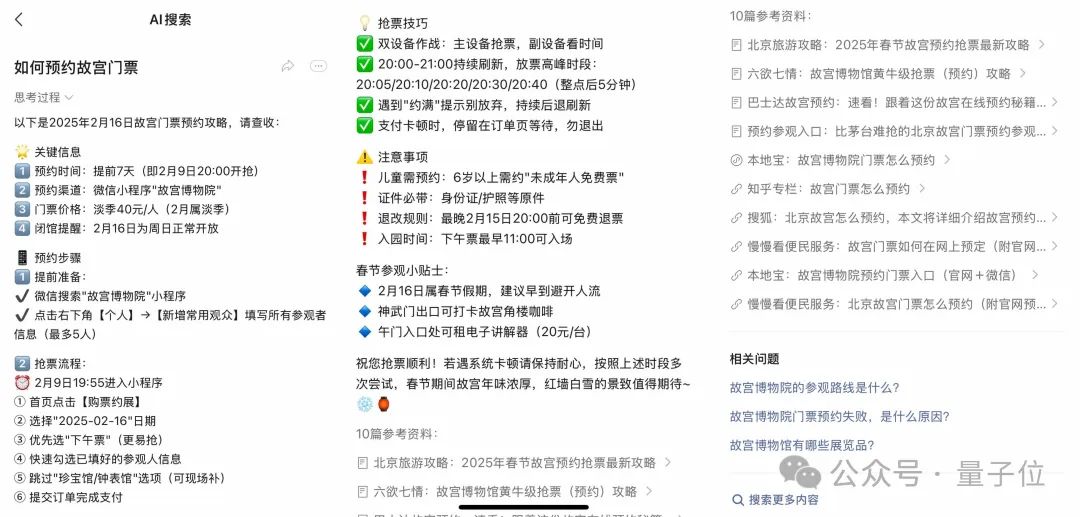
When a user asks "How to book tickets for the Forbidden City", DeepSeek not only can search the entire network, but most importantly, it can extract relevant materials from WeChat public accounts, video accounts, and mini-programs, and can even access the service interfaces of the Forbidden City official mini-program - this is truly Tencent's exclusive ecosystem resources.
Finally, the answer is clearly fed back with emojis, which is convenient to read and grasp the key points, and it's quite human-like.
And as we have previously focused on, Tencent's embrace of DeepSeek has become more broad and comprehensive.
Previously, Tencent Cloud, Tencent Cloud's knowledge application development platform Knowledge Engine, AI Smart Workbench ima, and the flagship AI application Yuanbao in the Tencent family have all integrated DeepSeek-R1 one after another.
With such an open-source victory, and Tencent being so open, what is the ultimate result?
It is that users can use good AI applications on their mobile phones with the lowest learning cost, the most convenient method, and the widest coverage.

The public account "Consensus Crusher" in its latest article said that this move is a "turning point for 2C applications".
It also revealed some information:
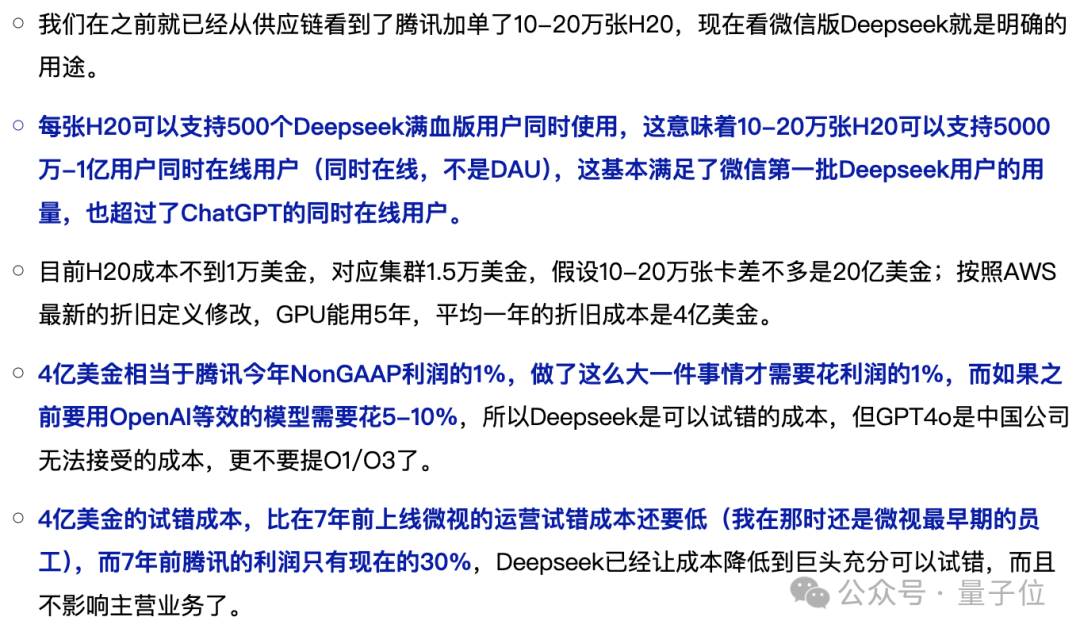
△ From the public account "Consensus Crusher" article "WeChat+Deepseek: The Turning Point of 2C Applications"
The super app of the mobile internet era is still using and exerting the advantages of the super app today, and also has the brain to create a super app.
In summary, starting today, the most commonly used application by Chinese people, the strongest domestic reasoning model, and high-quality ecological data resources have been seamlessly integrated by WeChat and DeepSeek.
One More Thing
Yesterday, Perplexity launched Deep Research for free.
In terms of performance, using the recently popular Humanity's Last Exam to test AI reasoning capabilities, the accuracy rate reached 20.5%.
This outperforms Gemini Thinking, o3-mini, o1, DeepSeek-R1, and many other mainstream models.
In this regard, the CEO of Perplexity publicly thanked DeepSeek:
This is because DeepSeek is open-source, inexpensive, and fast.
But Ultraman couldn't sit still - this morning, he called out on Twitter, directly targeting the Perplexity CEO.
He said:
ChatGPT (4o) is the best search product on the internet!
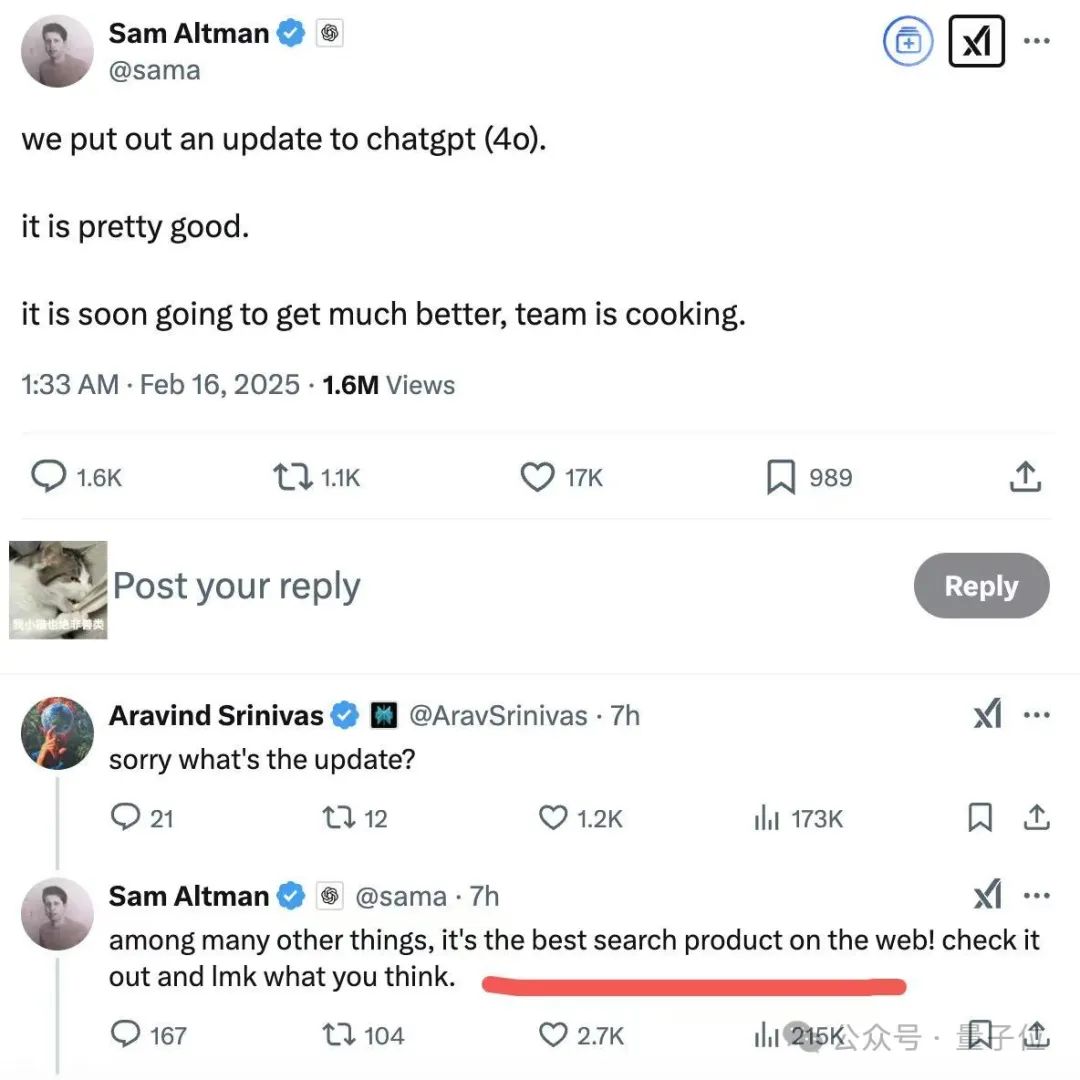
But Now?
DeepSeek remained silent, and WeChat smiled without a word.