A Chinese programmer has burned and donated 6.8 million USD worth of ETH, while also accusing corporations of using technology to control people's minds.
The story began when Hu Lezhi, an Ethereum investor, made a transaction to transfer 500 ETH to a null address on February 17 - an unusual move detected by the analytics platform Arkham. More notably, Lezhi's previous transaction history included 16 transfers of ETH to various addresses, including WikiLeaks, the Ethereum Foundation, burn addresses, and some unidentified wallets. In total, he had transferred 2,553.25 ETH, equivalent to around 6.86 million USD as of February 18.
The distinctive feature of this series of transactions is the accompanying on-chain messages. Lezhi, who identifies himself as a programmer, accuses Chinese businesses and organizations in China of using brain-computer weapons to control employees, turning them into puppets or completely dependent on the digital system. He claims that he has been under surveillance and manipulation throughout his life, and describes the increasing pressure he has felt as he has become aware of this.

Lezhi directly named the CEOs of Kuande Investment, Feng Xin and Xu Yuzhi, accusing them of using brain-computer weapon technology to control employees, and even suggesting that they themselves may be victims.
The transaction chain began on February 10, carrying repeated messages: "There is a new form of crime, in which the victim is gradually deprived of all feelings and desires, until they become completely enslaved by the digital machine. If one day I become a victim at the final stage, I will leave this world."
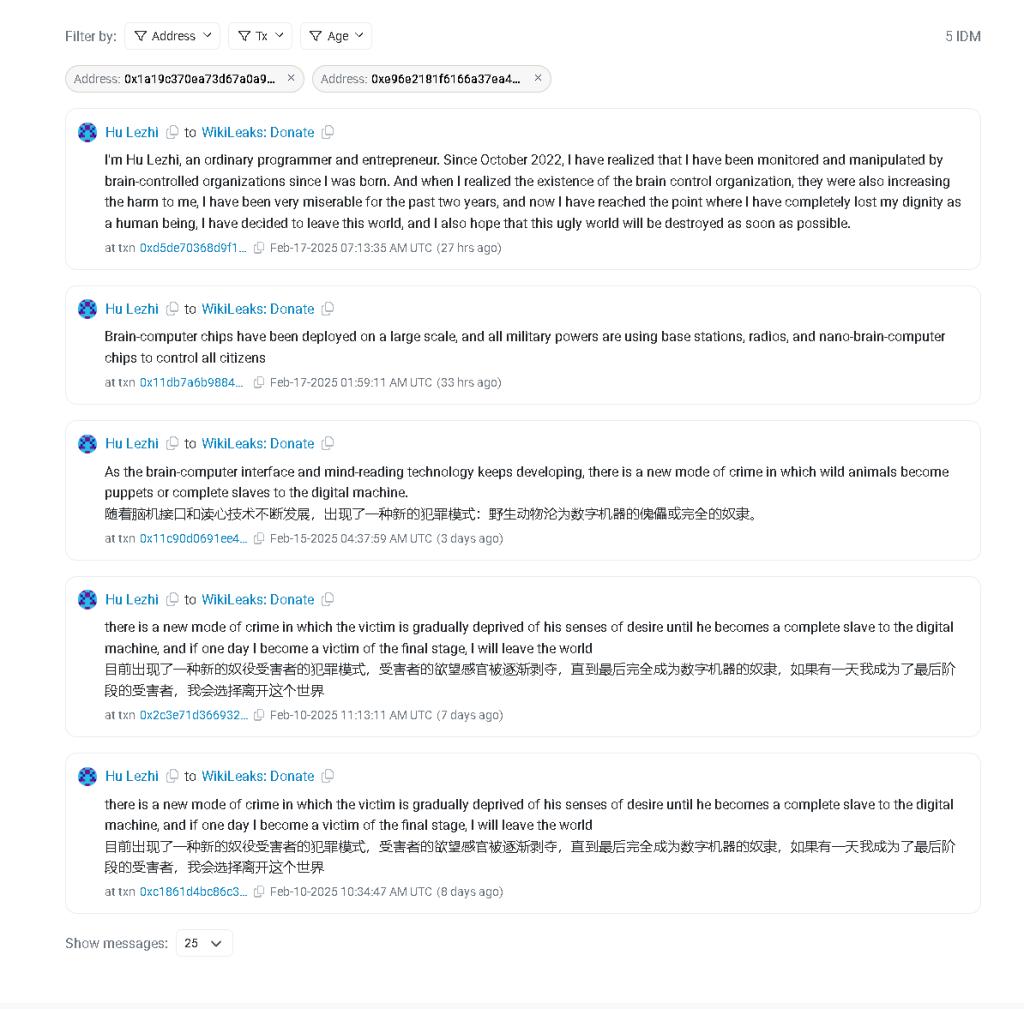
The act of burning and donating the massive amount of ETH, along with the accusations about mind-control technology, has caused a stir in the cryptocurrency community and attracted media attention. However, the veracity of these claims has not been verified, and Lezhi's true motives remain a mystery.