The third short cycle (1992-2000): The Clinton administration that took office in 1992 balanced the fiscal deficit by raising taxes and cutting spending, but the post-war friendly economic environment and good economic development expectations strengthened the financing willingness of the household and corporate sectors, promoting an increase in the social leverage ratio. Thereafter, the economy expanded, and inflation rose sharply. The Federal Reserve began a series of six interest rate hikes totaling 3 percentage points to 6% in February 1994. In December 1994, due to the Federal Reserve's six consecutive rate hikes during the year, the increase in short-term interest rates significantly exceeded the increase in long-term interest rates, resulting in an inverted yield curve. From early 1994 to mid-September, the U.S. bond market lost $600 billion in value, and the global bond market lost $1.5 trillion for the full year, which was the famous 1994 bond market crash.
Subsequently, the 1997 Asian financial crisis and the 1998 Russian debt crisis directly led to the collapse of Long-Term Capital Management (LTCM), one of the four major hedge funds in the United States, overnight. On September 23, Merrill Lynch and Morgan companies acquired and took over LTCM. To prevent financial market volatility from hindering U.S. economic growth, the Federal Reserve cut interest rates by 50 bps in the third quarter of 1998, and the enthusiasm for the development of Internet companies continued to be high, with the leverage ratio increase of the non-government sector reaching the highest level since 1986, driving the increase in the social leverage ratio.
In 2000, the Internet bubble burst, and the Nasdaq fell 80%. After the bursting of the Internet bubble, the leverage increase of the non-government sector and GDP growth rate both declined significantly, the social leverage ratio increase turned negative, and the leverage ratio scale declined, leading to an economic recession, lower inflation, and triggering the next round of credit easing and economic recovery, marking the end of this debt cycle.
Subsequently, the 2008 financial crisis, with the U.S. unemployment rate reaching 10%, global interest rates falling to 0%, and the inability to further stimulate the economy through interest rate cuts, the Federal Reserve launched the largest debt monetization, purchasing debt through money printing. From 2008 to 2020, the U.S. initiated central bank balance sheet expansion and quantitative easing, essentially printing money, debt monetization, and quantitative easing. At the end of 2021, it began to tighten to combat inflation, leading to rising U.S. bond yields and a stronger U.S. dollar, with the Nasdaq index falling 33% from its high, and high interest rates also causing losses for the Federal Reserve.
After a simple review of a debt cycle, it was mentioned earlier that the U.S. is on the verge of entering the bubble burst stage. The transmission path of the big debt cycle is from the private sector to the government to the Federal Reserve. When the big debt cycle reaches the central bank, what will happen?
Step 1: The Federal Reserve expands its balance sheet to monetize debt
When a debt crisis occurs and interest rates cannot be lowered (e.g., to 0%), the central bank will print money and buy bonds, a process that began in 2008, known as quantitative easing (QE). The U.S. has conducted four rounds of QE, buying large amounts of U.S. Treasuries and MBS. The feature of QE is that the assets purchased have a relatively long duration, which forcibly lowers the yield on U.S. Treasuries and causes money to flow into risky assets, pushing up their prices.
The money for QE is realized through reserve balances (the money that commercial banks hold at the Federal Reserve). When the Federal Reserve buys debt from banks, it does not need to spend money, but rather tells the banks that their reserve balances at the Federal Reserve have increased.
Step 2: When interest rates rise, the central bank incurs losses
The Federal Reserve's main income and expenses are interest income and interest expenses. The structure of its balance sheet is to borrow short and buy long, with short-duration assets like RRP and Reserves paying interest, and relatively long-duration assets like Treasuries and MBS earning interest. However, since the rate hikes in 2022, the yield curve has inverted, so the Federal Reserve is losing money, with losses of $114 billion in 2023 and $82 billion in 2024.
Previously, when the Federal Reserve had profits, it would remit them to the Treasury Department. When it incurs losses, this portion becomes a deferred asset (Earnings remittances due to the U.S. Treasury), which has now accumulated to over $220 billion.
Step 3: When the central bank's net assets are significantly negative, it enters a death spiral
If the Federal Reserve continues to lose money, there will eventually come a time when its net assets are significantly negative, which is a truly dangerous signal. This marks the beginning of a death spiral, where rising interest rates cause creditors to see the problem and sell the debt, further driving up interest rates, leading to further debt and currency selloffs, ultimately resulting in currency depreciation and triggering stagflation or recession.
At this stage, the Federal Reserve faces the dilemma of needing to maintain an accommodative policy to support the weak economy and fiscally weak government, while also needing to tighten policy (high interest rates) to prevent the market from selling off the currency.
Step 4: Deleveraging, debt restructuring, and devaluation
When the debt burden is too heavy, large-scale restructuring and/or devaluation will occur, significantly reducing the scale and value of the debt. At the same time, currency devaluation will result in a severe loss of real purchasing power for currency and debt holders, until a new monetary system with sufficient credibility to attract investors and savers is established. At this stage, the government often implements extraordinary tax collection and capital controls.
Step 5: Returning to balance and establishing a new cycle
When the debt has been devalued and the cycle is nearing its end, the Federal Reserve may transition from the rapidly depreciating currency to a relatively stable currency by pegging the currency to hard currency (such as gold), under conditions of extremely tight monetary policy and very high real interest rates, establishing a new cycle system.
Based on the above steps, it can be judged that the U.S. is currently in the middle of the second step (central bank losses) to the third step (central bank's net assets significantly negative, entering a death spiral). What will the Federal Reserve's next response measures be?
The typical paths to control debt are financial repression, which is essentially lowering interest costs, and fiscal control, i.e., reducing non-interest deficits. Lowering interest costs means cutting interest rates to ease interest expense pressure, while reducing non-interest deficits can be done by either cutting spending or raising taxes, both of which the Trump administration has been actively pursuing, with the DOGE government reducing government fiscal spending and tariff policies increasing government revenue.
Although the Trump administration has been actively working on this, the global financial market is not really buying it. Major central banks around the world have actually been steadily buying gold. Gold is now the third largest reserve currency globally, surpassing the Japanese yen and second only to the U.S. dollar and Euro.

The current U.S. fiscal situation has a serious problem - borrowing new debt to pay off old debt. But using debt issuance to fill the fiscal deficit means that new debt brings higher interest expenses, trapping the U.S. in a "vicious cycle of debt" that may ultimately lead to a situation of "never being able to repay".
In this case, the dilemma of U.S. Treasuries will not be resolved anytime soon, and in the end, it will still have to be handled according to the two paths of the debt crisis mentioned above. Therefore, the Federal Reserve will choose to lower interest costs to ease interest payment pressure, as cutting interest rates, while not fundamentally solving the debt problem, can temporarily alleviate some of the interest payment pressure and give the government more time to address the massive debt burden.
Here is the English translation:The interest rate cut is actually highly consistent with Trump's "America First" policy. The market currently believes that the tariff and fiscal policies after Trump took office will cause the US deficit to spiral out of control like a "wild horse", leading to a decline in US credit, inflation and rising interest rates. In fact, the rise of the US dollar is due to the fact that the market interest rates of other countries have fallen more relative to the US market interest rate (countries with relatively high interest rates, currency appreciation), and the decline in US bond prices (i.e. the rise in yields) is also a normal short-term rebound within the interest rate downward cycle.
As for the market's expectation of re-inflation, unless Trump triggers the fourth oil crisis, from any logic, it is impossible to explain his desire to re-push the inflation level that Americans detest the most.
Why has the interest rate cut been so difficult to achieve? The fluctuating expectations of interest rate cuts this year, I think, is to avoid over-discounting the expectations of interest rate cuts. Now the "hawks" can provide space for the subsequent "cuts".
Looking back on the historical experience since 1990, the Federal Reserve has temporarily suspended interest rate cuts in August 1989 and August 1995 to evaluate the subsequent growth situation and decide the speed and intensity of interest rate cuts. For example, after the "preventive" interest rate cut in July 1995, the Federal Reserve remained unchanged for three consecutive meetings, until the US government failed to reach a consensus on the new fiscal year budget and shut down twice, before deciding to cut interest rates by 25bp again in December 1995.

Therefore, it is not advisable to follow the market's thinking to do reasoning, as there are often problems. We should "think and act in the opposite way". What are the subsequent opportunities?
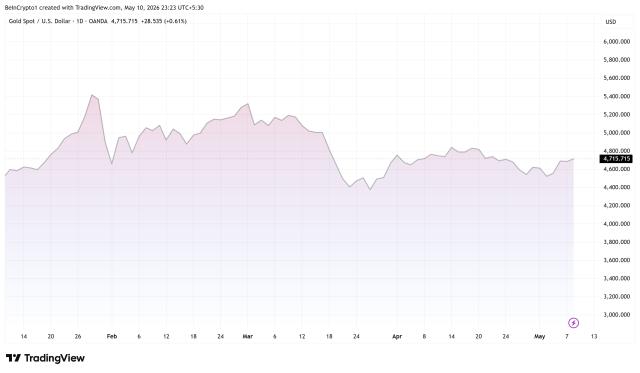
1. From the perspective of US dollar assets, gold is still a relatively good asset; US bonds, especially long-term bonds, are very poor assets.
2. At some point, the US will actively or passively start to cut interest rates, and we should be prepared and closely monitor the yield of the 10-year US Treasury bond.
3. Bitcoin is still a high-quality investment target among risk assets, and the value of Bitcoin is still resilient.
4. When the US stock market experiences a relatively large correction, buy in batches at low prices, as technology stocks still have a high return ratio.