Old Money's Crypto Ambitions: Apollo's "Normandy Landing"
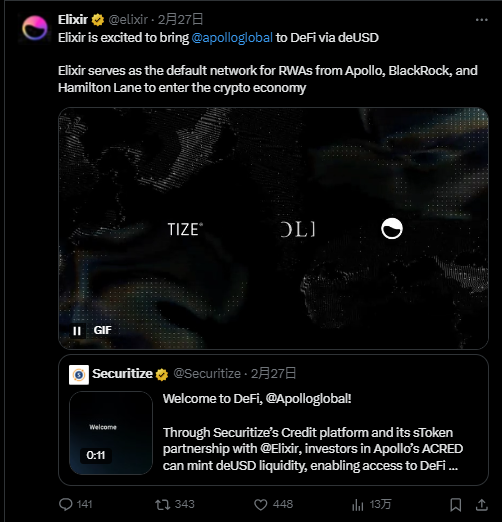
Elixir is excited to bring @apolloglobal into DeFi through deUSD
When the traditional financial giant Apollo Global Management, which manages $733 billion in assets, announced that it would bring tokenized assets into the DeFi market through the Elixir protocol, the entire crypto circle seemed to hear a "wolf is coming" alarm. This PE king, which rose to fame in the golden age of Wall Street, is using the most "Old Money" way to recreate its "vulture investment" myth in the blockchain world.
The Past and Present of the Wolf of Wall Street
Established in 1990, Apollo Global Management is considered the "distressed asset hunter" of the financial world. Its founder Leon Black was mentored by "Junk Bond King" Michael Milken, and during the 2008 financial crisis, he created a Wall Street legend by precisely buying the bottom of distressed assets, turning a $20 million investment into $120 million. Today, this giant, which manages an asset scale equivalent to 1.5 times that of Goldman Sachs Asset Management, is turning its sights to the value troughs of the crypto world.
The Transformation Anxiety of a $1.2 Trillion Empire
Apollo CEO Marc Rowan recently stated bluntly: "The good luck of the global asset management industry over the past fifteen years is over."
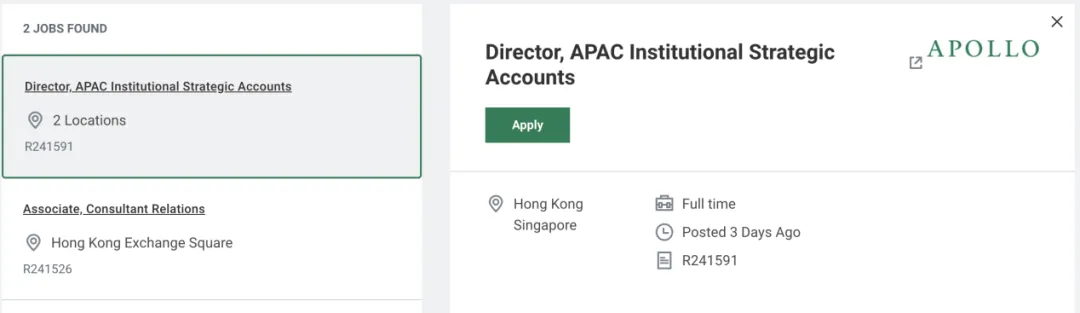
This sense of crisis is driving this PE giant to accelerate its layout of alternative assets. The job description for the recently expanded strategic client director position in its Hong Kong office lists "blockchain asset allocation experience" as a hard requirement, revealing the traditional asset management giants' hunger for the crypto world.
The "Trojan Horse" of Tokenized Assets
By collaborating with Elixir to launch the deUSD stablecoin, Apollo cleverly transforms its accumulated experience in alternative assets such as credit assets and real estate into a passport to enter the DeFi world. This three-step infiltration of "tokenized real assets (RWA) → synthetic stablecoin → DeFi liquidity pool" is building a value closed loop between traditional finance and the crypto economy.
Elixir: The "Infrastructure Maniac" Behind DeFi
Elixir is a modular liquidity network that allows anyone to directly provide liquidity to the order book, bringing liquidity to long-tail crypto assets. As an important decentralized infrastructure, the protocol allows exchanges and protocols to easily guide their ledger liquidity.
While the market is still debating whether Uniswap V4 can disrupt CEXs, a protocol called Elixir has quietly built an "invisible bridge" connecting TradFi and DeFi. This modular network, which has been backed by top institutions like Arthur Hayes and Sui Mysten Labs, is rewriting the underlying logic of decentralized finance in the order book language most familiar to Wall Street.
The "People's Revolution" of the Order Book
Imagine this: ordinary retail investors can inject funds into the order books of top DEXs like dYdX and Hyperliquid, just like providing AMM liquidity, and enjoy institutional-level market making returns. This vision of "liquidity democratization" is breaking the monopoly of traditional market making giants like Citadel and Jump Trading.
The "Trio" of Technical Architecture
- Cross-chain liquidity aggregator: Supports order book synchronization across 30+ exchanges, realizing liquidity sharing between BTC on Binance and ETH on dYdX
- DPoS consensus engine: Ensures the cross-chain settlement security of $20 billion in assets through a validator network
- RWA gateway: Packages traditional assets like the Blackrock BUIDL fund as deUSD, becoming the universal building block of DeFi
The Tip of the Iceberg of the Ecosystem Empire
Currently, Elixir has penetrated 56% of Bluefin's and 66% of Vertex's order book liquidity, and has reached RWA cooperation with institutions like BlackRock and Hamilton Lane.
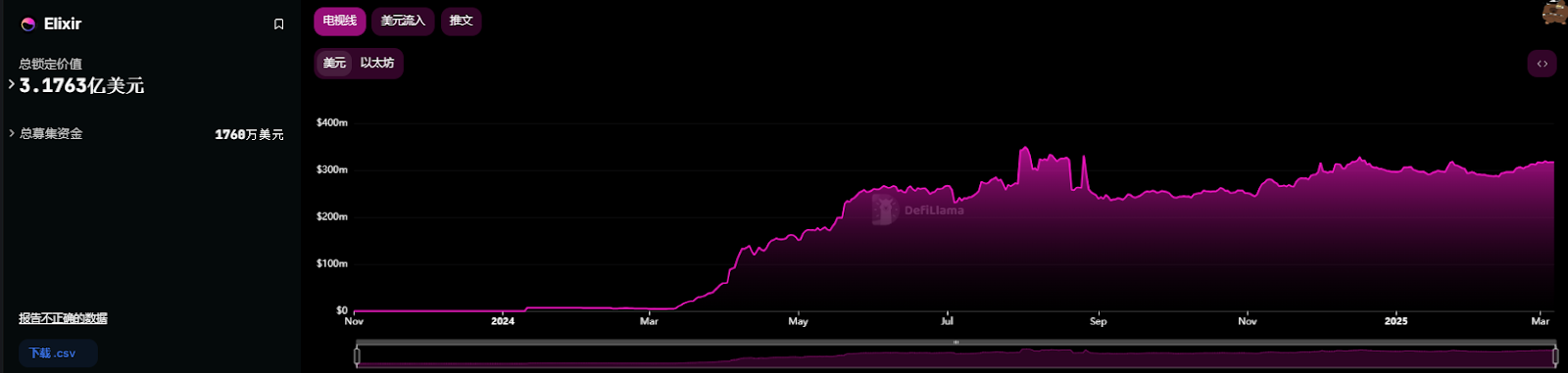
According to defillama data, Elixir's current deUSD TVL has reached $317 million, accounting for 1/5 of the FDUSD market cap. Although it currently ranks 15th on the stablecoin ranking, it has shown the growth potential of real asset tokenization.
Decoding the "Wealth Creation Code" of the $800 Million Unicorn
While the market is still guessing the next 100x project, Elixir is showing the true meaning of "low-key luxury" to the crypto world with a list of top-tier institutional partners including Blackrock and Apollo, as well as the $ELX airdrop query that suddenly opened on March 6.
Elixir Core Team
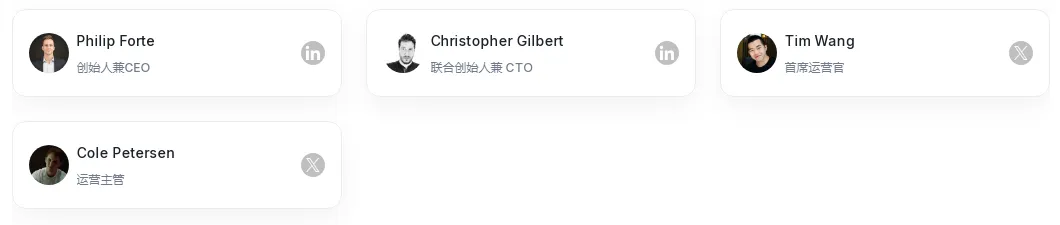
Elixir was established in 2022 and quickly gained prominence with its keen insights and excellent execution. Its creative birth is inseparable from the collaboration of an elite team.
The core members include:
- Philip Forte: Founder and CEO of Elixir Protocol, formerly a partner at BlockVenture Coalition.
- Christopher Gilbert: Co-founder and CTO of Elixir Protocol, former Chief Engineer at Tokensoft and IDEXX.
All-Star Investment Lineup
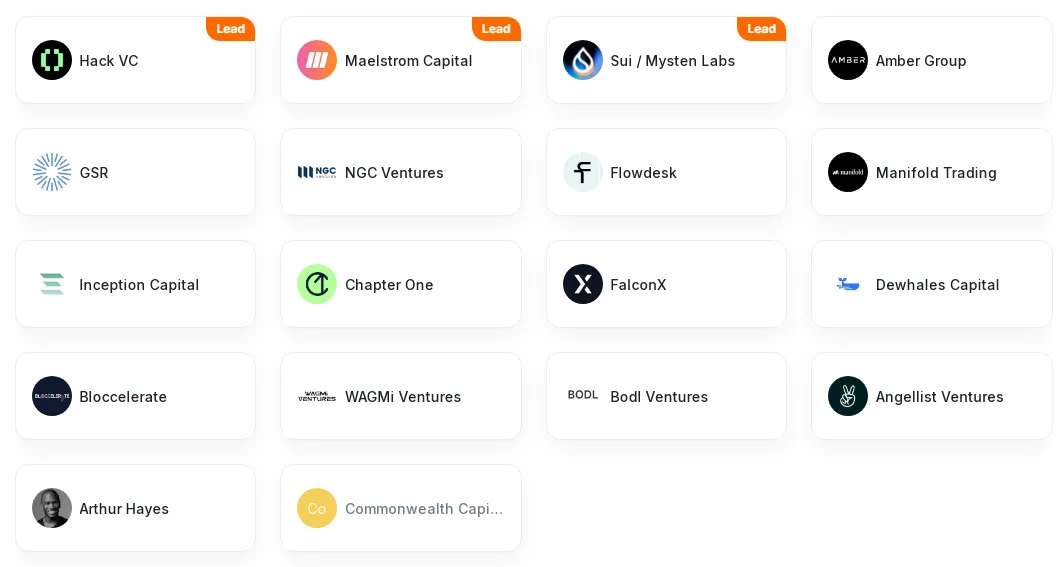
On January 17, 2023, Elixir completed a $2.1 million seed round financing. Investors include Inception Capital, Chapter One, FalconX, Arthur Hayes, and Commonwealth Capital Ventures.
On October 18, 2023, Elixir completed a $7.5 million Series A financing, with a valuation of $100 million. Investors include Hack VC*, NGC Ventures, Bloccelerate, Bodl Ventures, WAGMi Ventures, and Angellist Ventures.
On March 12, 2024, Elixir completed an $8 million Series B financing, with a valuation of $800 million. Investors include Sui / Mysten Labs*, Maelstrom Capital*, Amber Group, GSR, Flowdesk, Manifold Trading, and Arthur Hayes.
Reportedly, the average cost of investors is $0.117, and the cost of the last round is $0.8, with the current off-exchange price being over $1.
This $8 million Series B financing from top-tier institutions has pushed Elixir's valuation to $800 million, but compared to the scale of the RWA assets it carries, this valuation may only be the preface to the story.
The "Ingenious Design" of Token Economics
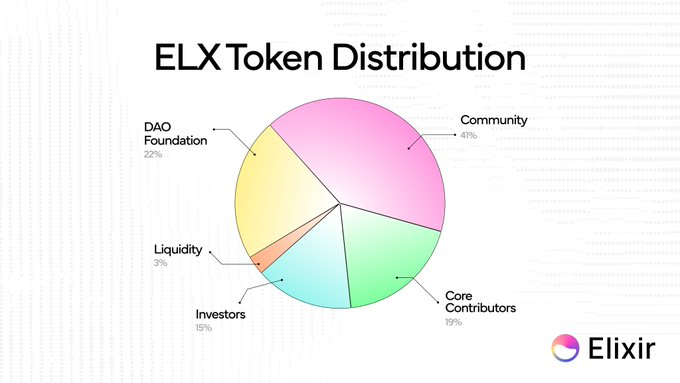
Total Supply: 1 billion
Distribution Philosophy:
41% Community Incentives (including 8% initial airdrop)
22% DAO Governance Fund
15% Early Investors (3-year linear vesting)
19% Core Team (4-year vesting period)
This "community-first" distribution strategy is in stark contrast to the currently popular VC-backed projects.
Users who continue to be delegated during the initial stabilization phase will receive network stabilization bonuses within three months. These holders will continue to earn yields at an accelerated "OG" rate.
Notably, validators can earn 12% annualized yields through the DPoS mechanism, creating a solid foundation for token staking.
The "Wealth Revelation" of Airdrop Details
The initial airdrop will release 80 million ELX (8% of total supply), of which:
- 50% will be allocated to early testnet contributors
- 30% will go to Apothecary staking users
- 20% will be used for ecosystem partner rewards
Estimated at the current FDV of $800 million, the airdrop value reaches $64 million. Referencing the listing performance of protocols like DYDX and UNI, early participants may capture 5-10x returns.
Bitget Launchpool's "Gold Rush Guide"
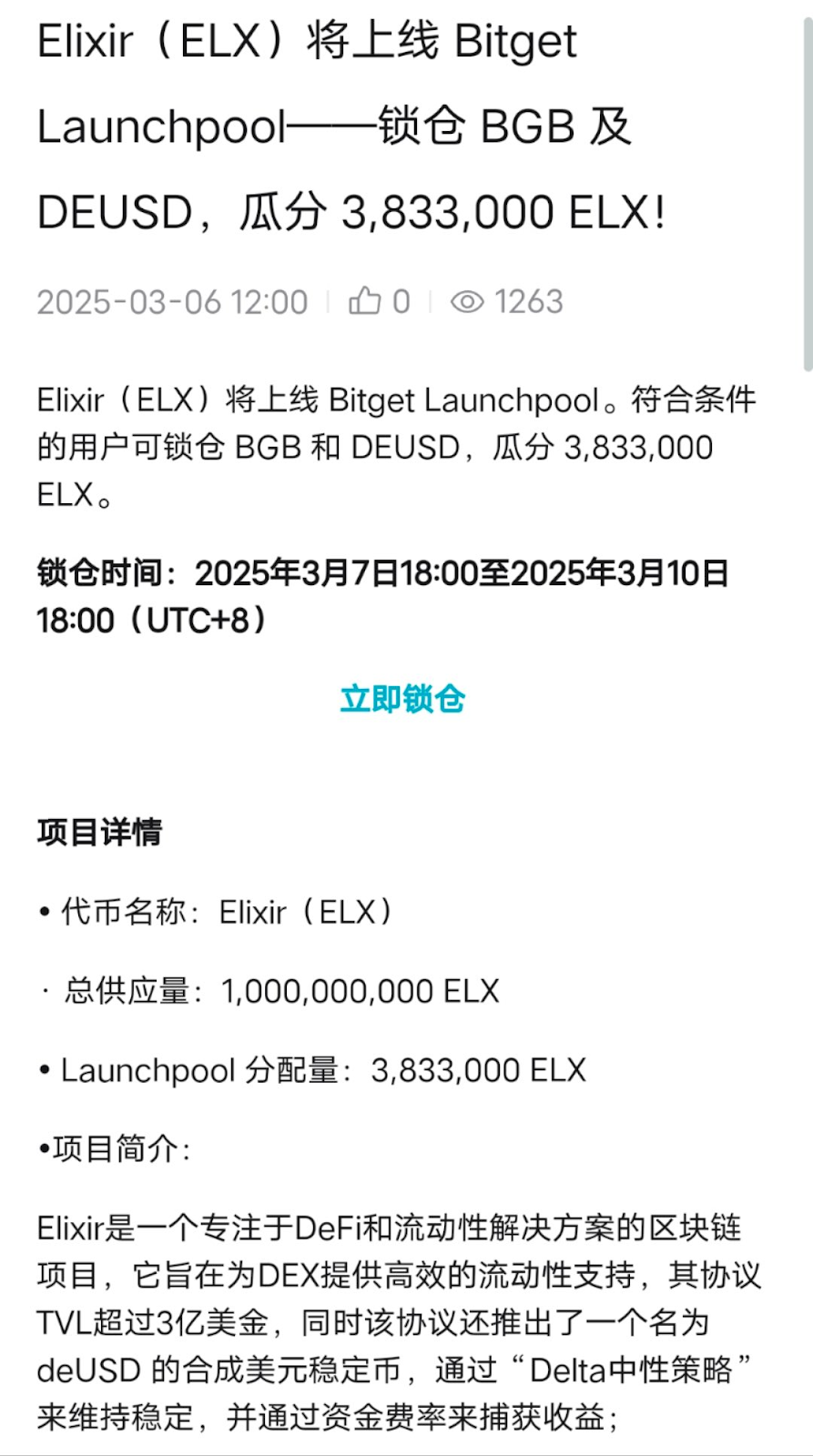
The Bitget Launchpool launched on March 7th has opened a window for ordinary investors to participate in the construction of the Elixir ecosystem. This time, two mining methods are provided:
BGB Staking Pool (Main Battlefield)
- Total prize pool: 3,549,700 ELX
- Estimated annualized yield: Based on historical data, it can reach 80-120% APY
- Strategy recommendation: Combine with the price fluctuation of BGB, adopt a dynamic reinvestment strategy
DEUSD Staking Pool (Hidden Auxiliary)
- Total prize pool: 283,300 ELX
- Special advantage: Enjoy double rewards of Elixir ecosystem points
- Risk reminder: Need to bear the risk of stablecoin de-anchoring
Income simulation calculation
Assuming an investment of $10,000:
- BGB pool: Based on the current coin price of $0.8, 12,500 BGB can be staked, and an estimated 3,000 ELX can be obtained
- DEUSD pool: Fully stake 100,000 DEUSD, and an estimated 200 ELX can be obtained
- The overall annualized yield is about 65% (estimated based on the listing price of ELX at $0.8)
Old Money vs New Money: Paradigm Shift in the Crypto World
When traditional asset management giants like Apollo inject trillions of dollars of RWA assets into DeFi through Elixir, we are witnessing the most disruptive value migration in financial history. The integration brought about not only a quantitative change in liquidity, but also a qualitative change in the power structure of finance - for the first time, retail investors can share the market making profits with giants like BlackRock and Apollo, which may be the most profound revolution of blockchain technology.
For ordinary investors, Elixir brings not only short-term opportunities for airdrop wealth, but also a historic window to participate in the construction of the future financial infrastructure. When Arthur Hayes wrote on Twitter "Elixir is the future of market making", we know that this silent financial revolution has just begun.