Today, the AI circle has been stirred up. A product called Manus, with an all-English promotional video and an invitation-only release, has quickly attracted a lot of attention. This AI Agent developed by a Chinese team is officially called the "world's first general-purpose Agent", as if OpenAI and Anthropic's Operators have been eliminated overnight. After the release of Manus, it quickly triggered a "explosive" spread within a small circle, similar to the phenomenon of DeepSeek. However, can Manus really become the next DeepSeek? Let's take a closer look at it.
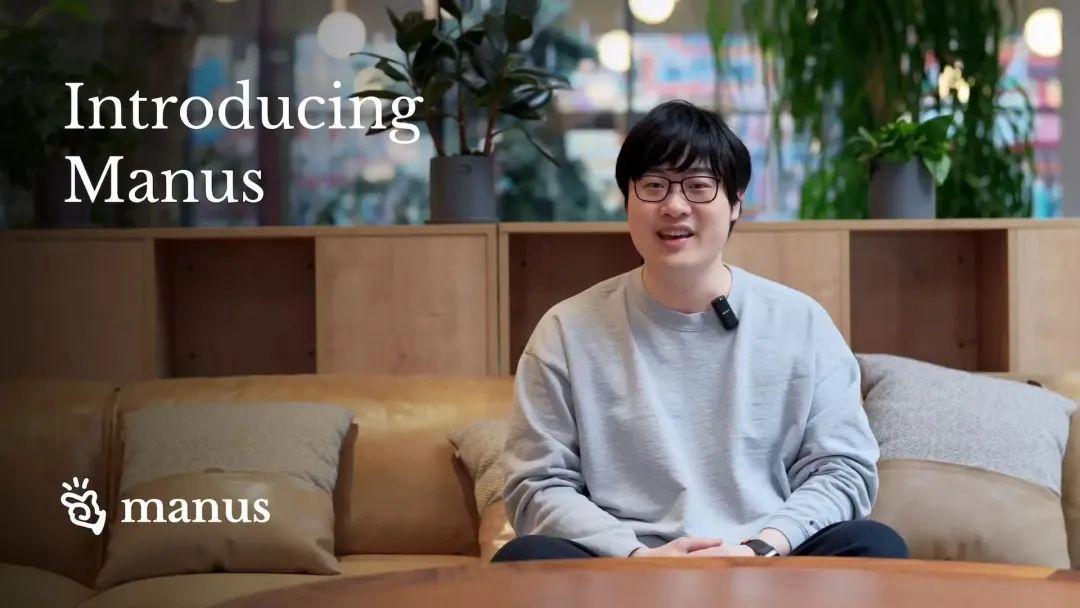
What is Manus?
According to Manus' promotional video and official website information, it is an AI Agent that can "solve various complex and changing tasks, with independent thinking and systematic planning capabilities, and can flexibly call tools in a virtual environment and directly deliver complete results." Such descriptions are not uncommon among AI Agent products today. Manus is not yet publicly launched and can only be used through invitation codes, with the release method completely relying on the demonstration video.
In the video demonstration, Manus showcases several specific application scenarios: for example, uploading a compressed package containing multiple resumes, automatically extracting, analyzing, and providing suggestions based on the prompt; organizing real estate information and prices according to user requirements; generating analysis reports on Nvidia and Tesla stock prices. Similar functions have already been demonstrated by various AI products such as OpenAI's Operator, Gemini by Gemini, and Phone Use by Gemini.
From a technical perspective, Manus has not provided detailed technical reports. Some analysts point out that Manus' basic capabilities may come from the Claude model, combined with post-training techniques of open-source models, and executed through a series of pre-set workflows. Its innovation lies in encapsulating these capabilities in a cloud-based virtual environment and providing services in an asynchronous interaction mode, although this is still some distance from the industry's pursuit of "general AI" goals.
The problem with the "general-purpose Agent"
Manus' goal is to become a "general-purpose AI Agent", meaning that it not only provides suggestions or answers, but can also independently plan and execute tasks. However, this definition itself is problematic. Powerful models like Claude already have the ability to handle complex tasks and can complete them through efficient tool calling. Therefore, Manus' functionalities can essentially be achieved by more powerful Agents or large models, without the need for a specially designed system like Manus.
Furthermore, Manus' product positioning is clearly different from traditional AI Assistants. It seems to hope to integrate different tools and Agents through a "virtual environment" to make them more automated. Although this approach lowers the technical threshold for users, does it mean that Manus can become a truly general-purpose intelligent Agent? After all, the personalized Agent needs are diverse, and whether Manus can adapt to the demands of different scenarios remains to be seen.
Marketing strategy: Hunger marketing and social media spread
Manus' "popularity" is not only due to its technology, but also its marketing strategy. Through the invitation code mechanism, Manus is like a scarce resource, quickly triggering a frenzy in the AI circle, with some platforms even selling the invitation codes for 999 yuan to 50,000 yuan. This hunger marketing strategy borrows from the classic model of the mobile internet era: limited release, user competition, and KOL-driven hype reviews. Although this mode of dissemination can create topics and heat, whether it can bring sustained user growth remains to be tested.
However, when we open up overseas tech forums and social media, the discussions about Manus are relatively quiet. This seems to indicate that although Manus is very popular in China, many people in the international market may not have been impressed by its promotion. It is worth noting that Manus' release appears to be overly dependent on emotional marketing, trying to quickly gain attention through "DeepSeek"-like emotional symbols, but this may also mean that its heat is short-term and lacks long-term core competitiveness.
Manus' product value and limitations
From the perspective of product design, Manus can be seen as a kind of encapsulation and optimization of existing Cursor-type AI products. By introducing multiple small models and Agents, it simplifies the user's operation process, allowing non-technical users to easily orchestrate and execute complex tasks. However, this approach is not entirely innovative, as similar design concepts have already appeared in many AI products, such as OpenDevin.
Manus' advantage is that it can package these complex technologies into a more user-friendly product, allowing ordinary users to use AI to handle complex tasks more directly. But its limitations are also obvious: first, Manus still relies on pre-set workflows, which limits its flexibility and innovativeness; second, its operating environment is relatively closed, and it can only run within the scope of specific software tools, unable to support the operation of various software and applications like a general operating system. Therefore, whether Manus can truly achieve the "general-purpose" goal is still questionable.
Future competition and development
In the Agent field, Manus is not the only player. Competitors like Coze and Dify are also trying to build similar general-purpose Agents. More importantly, with the continuous progress of large model technology, models like Claude 3 and GPT-5 have already possessed powerful tool calling capabilities, and the future capabilities of large models may directly subsume the market of Agent-type products. Therefore, whether Manus can stand out in this highly competitive market still faces huge challenges.
The more critical point is whether Manus can find a real market positioning. Its goal is to become a "general-purpose Agent", but from the current product form, it is more like an efficient AI tool platform suitable for specific application scenarios, rather than a truly versatile AI. If it cannot break through this bottleneck, Manus' market growth may be limited to a relatively narrow circle.
Conclusion
In summary, Manus is a promising AI product, especially in terms of user experience and technical encapsulation, but it is not a technological revolution. Its "general-purpose AI Agent" positioning is questionable, and its product design is more of a re-encapsulation within the existing technical framework, rather than a breakthrough innovation. Although it has created a topic through hunger marketing and social media dissemination, whether it can persistently attract users remains to be seen, depending on whether it can find a unique value in the highly competitive market. If Manus can break through the current limitations in the future, combining multi-Agent collaboration and more efficient task execution mechanisms, it still has the opportunity to become an important player in the AI field.