


Recently, JPMorgan Chase CEO Jamie Dimon has been massively selling his own company's stocks, while Warren Buffett's Berkshire Hathaway has been hoarding a record $334 billion in cash. These signs inevitably make investors wonder: Have they sniffed out the impending market storm?
Table of Contents
ToggleAbnormal signs before the market turmoil
The financial media Kobeissi Letter pointed out that since the inauguration of US President Trump, most capital and risk markets have been in turmoil.
With the recent massive sale of his own company's stocks by JPMorgan Chase CEO Jamie Dimon, Berkshire Hathaway's hoarding of a record $334 billion in cash, and the NASDAQ 100 index plummeting 11% in just two weeks, the market panic sentiment has clearly intensified.
(Germany Triggers Global Bond Market Selloff, Arthur Hayes: The Printing Hunger Games Have Begun!)
Dimon's massive selloff, market sentiment spreads
On February 20, Jamie Dimon, through family trusts and limited liability companies, sold about 866,361 shares of JPMorgan Chase ($JPM) at an average price of $269.83 per share, totaling $234 million. This is the first time he has made such a large-scale sale of stocks since taking over JPMorgan Chase 19 years ago.
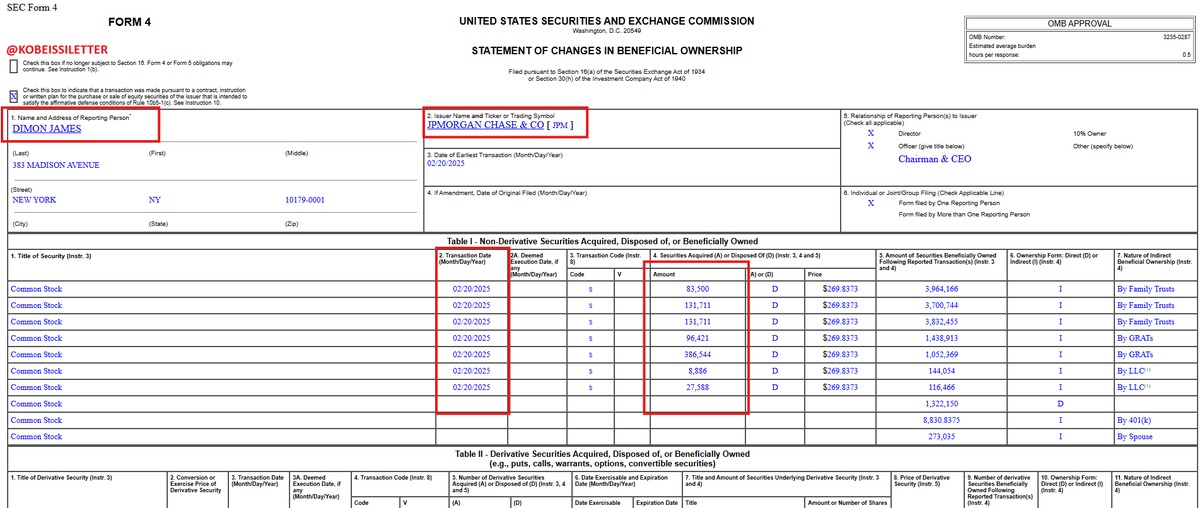
This is not the end, according to SEC documents, he plans to sell a total of 1 million shares by August 1.
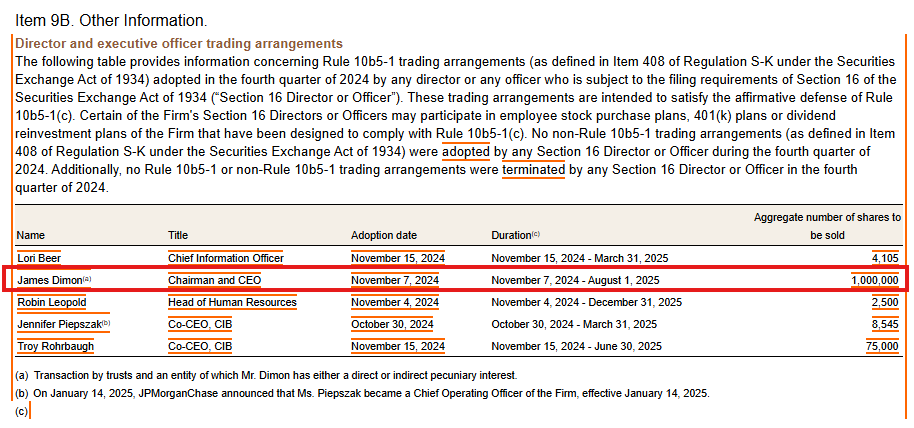
It is worth noting that since Dimon started selling, the $JPM stock price has fallen more than 13% in just a few days, which may be a warning signal that the market is about to experience greater volatility.
Will the 'Dimon indicator' prove true again?
In the past, Dimon's trading behavior has been seen as an important indicator of market trends. In May 2020, when the market was in a trough due to the pandemic, he said in an interview on CNBC that $JPM was "extremely valuable", and the stock price soared 41% within three weeks, which was later dubbed the "Dimon Bottom".

Now, whether his selling action implies that the market is about to face greater pressure has become a hot topic among investors.
Buffett hoards cash, cautiously responds to the future market
Additionally, Berkshire Hathaway's financial report released on February 22 showed that the company's cash reserves reached $334 billion, including $286.5 billion in US Treasury bills (T-bills). In just one year, the company's cash has increased by $145.2 billion, even exceeding the $195.3 billion in Treasury bills held by the Federal Reserve.

It is worth noting that Berkshire Hathaway has not repurchased its own shares for two consecutive quarters, indicating that Buffett believes the current market valuation is too high and chooses to remain cautious:
There are almost no attractive investment opportunities in the market, and we will only find targets worth investing in in very few cases.
The market plunges, investors fall into panic
After the disclosure of Dimon's sale and Buffett's hoarding of cash, the market quickly responded. In less than two weeks, the NASDAQ 100 index plummeted 11%, and the cryptocurrency market evaporated $700 billion in a week, indicating that the capital market seems to be entering a risk-averse mode.
Previously, the GDPNow model of the Federal Reserve Bank of Atlanta significantly lowered its forecast for US GDP growth in the first quarter of 2025, from 3.9% to -2.4% contraction, with the risk of economic recession soaring.
At the same time, the Fear & Greed Index has fallen to the lowest point since the 2022 bear market, indicating the collapse of investor confidence.
(US Economic Outlook Clouded: Q1 GDP Forecast Revised Down to -2.8%, Recession Concerns Mounting)
Warning Signal Revealed in Internal Trading Data
It's not just Dimon and Buffett, the internal trading trends of corporate executives also reflect the market's unease. In early February, the insider buying-to-selling ratio fell to 0.22, the lowest since 1988, indicating that company leaders are more inclined to reduce their stock holdings rather than increase them.
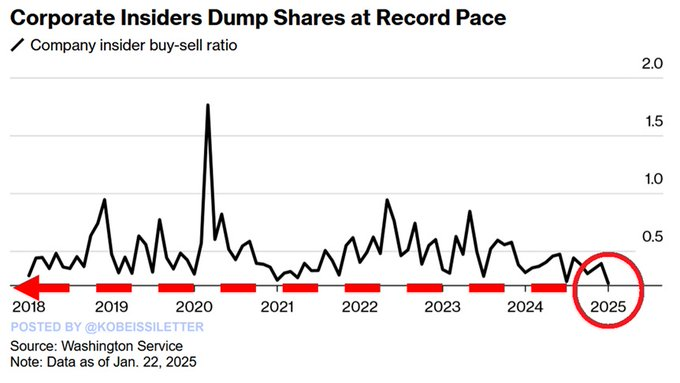
The Kobeissi Letter points out that the excessive optimism in risk assets has reached "unsustainable levels," and these trading data may be a harbinger of an impending market correction.
Coincidence or Accurate Prediction?
Whether Dimon's sell-off, Buffett's cash reserves, and the market's violent fluctuations are purely coincidental remains uncertain. However, the actions of these key figures have undoubtedly cast a gloomy shadow over the market.
For investors, this may mean it's time to shift to a more defensive strategy, or is it a good opportunity to buy the dip? The answer lies in the hands of the investors themselves.
Risk Warning
Investing in cryptocurrencies carries a high degree of risk, and their prices may fluctuate dramatically, potentially resulting in the loss of your entire investment. Please carefully evaluate the risks.




