Text: Whale Brother, Whale Selects AI
Manus broke the circle at a speed that refreshed the records set by ChatGPT and DeepSeek, becoming a viral sensation on the internet within a day of its internal testing!
For this company located in Wuhan, known as the "Butterfly Effect", it is actually their second time creating a hit product. The first was an AI product called Monica, which has 10 million users overseas and an annual recurring revenue (ARR) of tens of millions of US dollars, making it one of the most revenue-generating AI products in 2024.
Manus is the team's first AI Agent product, and during the March 6th internal testing period, it was praised by many industry professionals as a product that "opens the era of the Agent" due to its AI capabilities in autonomous task execution. From going viral to today, it has been less than 4 days, and without even a public launch, people have already placed this product on a pedestal based on a few case demonstrations, with the highest internal testing code being sold for 50,000 yuan.
In fact, this company was offered $30 million by ByteDance for acquisition in 2024. Although they ultimately felt the price was not fair enough and the acquisition did not go through. Whale Brother has exclusively learned from multiple sources that the reason was that ByteDance felt the Monica product was rather "shell-like", with high user acquisition costs and unsatisfactory retention data, and that it might be replaced by large models in the future, as ByteDance also planned to launch a similar plugin, so they offered a slightly lower price.
For Monica, a company with an ARR of tens of millions of dollars, being acquired at only 3 times the price-to-sales ratio (using the concept of the secondary market's price-to-sales ratio) would have been several hundred million dollars higher than their previous valuation, which was clearly not in line with the expectations of the investors behind them.
In the mobile internet era, companies and products have been sold to certain unicorns. And after the AI era was ushered in, from Monica to Manus, the product strength and execution power of the new company are quite formidable. The second-round investors, including Sequoia China and Tencent, have decided to support their further entrepreneurship. After all, in the field of AI-native where even the big factories lack hit products, they have created two out-of-the-circle products with a small amount of financing.
Especially with the release of Manus, it has been accompanied by amazing praise, with many people believing it is an innovation on the level of DeepSeek and the key to opening the door to the AI Agent era, even a representative product on the path to AGI. However, it has also been accompanied by waves of mockery, with many people believing it is just a "shell" product without core technology. Some even suspect it is a marketing campaign involving KOLs, as it has not caused much of a stir overseas. There are also those who believe the subsequent service costs will be too high, making it difficult to land.
Amid the various opinions, Whale Brother has also delved into this product, trying to take a more objective and long-term perspective to discuss its breakthroughs and significance.
DeepSeek Breaks the Dominance of Computing Power, Manus Opens the Agent Era
At the small-scale product launch event on March 6th, this company put up the slogan "The next ChatGPT moment", suggesting that the door to the Agent era has been opened.
Whether Manus is enough to be the next GPT moment is still uncertain. DeepSeek, which has been on fire for a month, has proven its strength.
DeepSeek's explosive popularity during the Spring Festival was because people experienced the charm of the reasoning model for the first time. It is truly intelligent, with much deeper, broader, and more flexible responses than the previously known products like Douban and Yuanbao. This is the advantage of the reasoning model over the instructional model, and also the brilliance of DeepSeek.
In 2025, large models face three breakthrough directions: large parameters, multimodal, and reasoning. For the first path, Grok 3 has powerfully broken through the scaling law of large models by using 200,000 H100 GPUs, while others have expanded and strengthened through architectures like MoE. Multimodal is the main focus of everyone, with representatives like OpenAI overseas and Douban, Tencent Mixun, and Jieluoxingchen in China, integrating DIT architecture and being proficient in hearing, seeing, and writing. The third path is to improve the intelligence of models through reinforcement learning (RL) on the reasoning side, and DeepSeek is a representative in this direction, with Tongyi also quickly following up.
The real highlight of DeepSeek is its outstanding cost control capability, especially after continuously open-sourcing 5 days of projects. It has gradually proven this ability to optimize the underlying infrastructure, breaking the "computing power-based" technological and financial order established by companies like Nvidia.
What is "computing power-based"? The hegemony of the US dollar has gone through three logical leaps in its underlying logic: from gold, to oil, to computing power. Essentially, it is about reshaping the credit system by monopolizing the core global resources.
The collapse of the gold standard (1944-1971)
The Bretton Woods system established the US dollar's peg to gold, but the insufficient US gold reserves led to the collapse of the system. In 1971, Nixon announced the decoupling of the US dollar from gold, and the US dollar urgently needed a new anchor.
The petrodollar hegemony (1974-present)
The US and Saudi Arabia secretly agreed to lock oil settlements in US dollars, establishing the "oil-dollar-US debt" cycle: oil-exporting countries buy US debt after earning dollars, making the US dollar a global reserve currency. At its peak, 86% of global oil trade was settled in US dollars, and the Federal Reserve harvested global wealth through the US dollar tide.
The rise of the computing power-based (2020s-)
In the digital age, computing power has become a new means of production. Nvidia's H100 chip has become the "computing power currency", and the global computing power market is expected to reach $2.6 trillion in 2023, with US companies accounting for 60% of the market share. Computing power is replacing oil as the new pillar of US dollar credit.
The astonishing computing power demand of large models has enabled Nvidia's stock price to surge by more than 435% cumulatively in the past two years, and its market value has grown from $300 billion to nearly $3 trillion in the past decade.
As for Manus, it has not yet caused a stir in the international tech circle. It cannot affect Nvidia's stock price fluctuations like DeepSeek. But according to partner Zhang Tao, the company only has more than 50 people and was able to create this viral AI product in just two to three months.
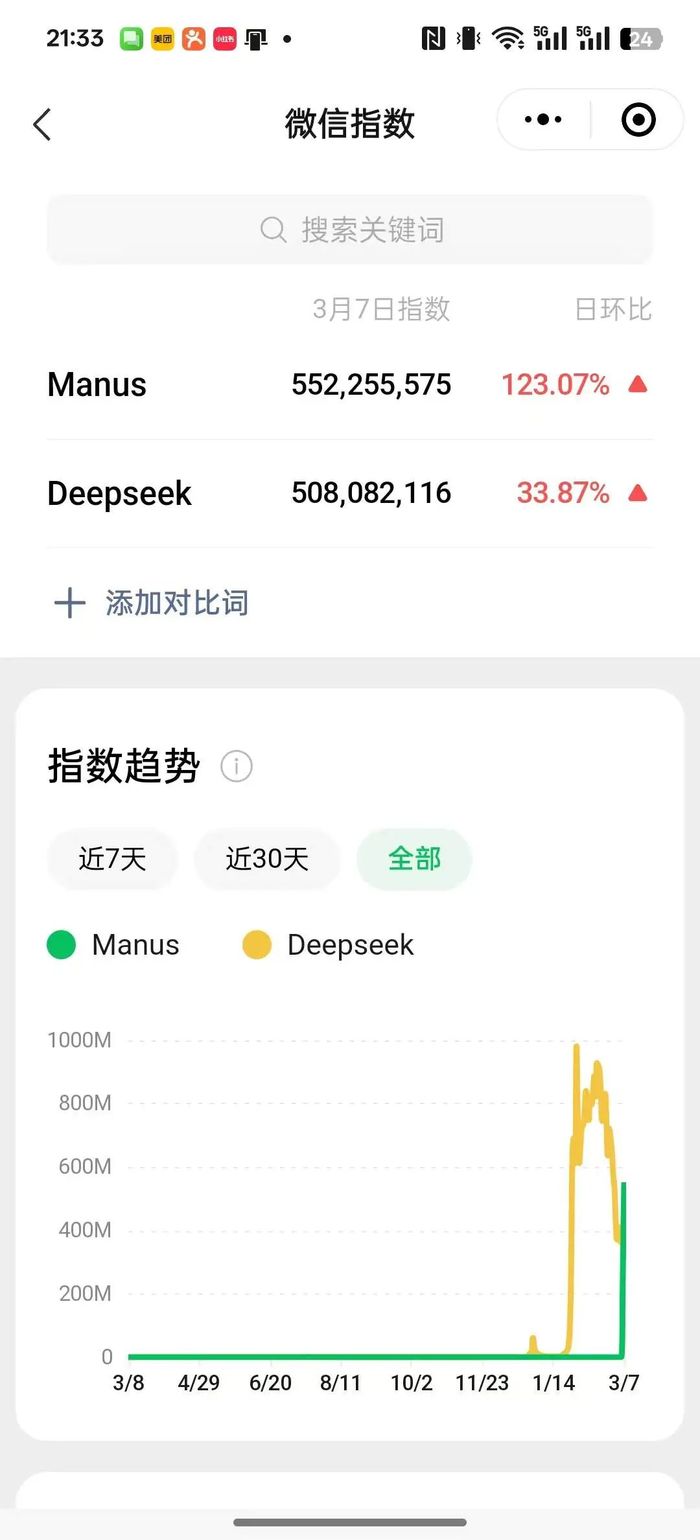
Comparison of WeChat search index: Manus has not surpassed the peak of Deepseek
However, in the domestic market, Manus is still the hottest AI product. Just by releasing a few examples on the website, it has sparked a storm of discussion on the internet. With codes being in high demand, many people are even willing to pay high prices for an invitation code. An application that generates Manus invitation codes even reached the #1 spot on the iOS paid chart in China on March 8th. Of course, this application is useless, but it has ridden the wave of traffic.
Manus' Insight Leads, Big Factories Lack Innovation
For most people who have not experienced OpenAI's Deep Research (up to $200 per month), the domestic Manus is indeed quite impressive after hands-on experience. Whale Brother tested the following questions:
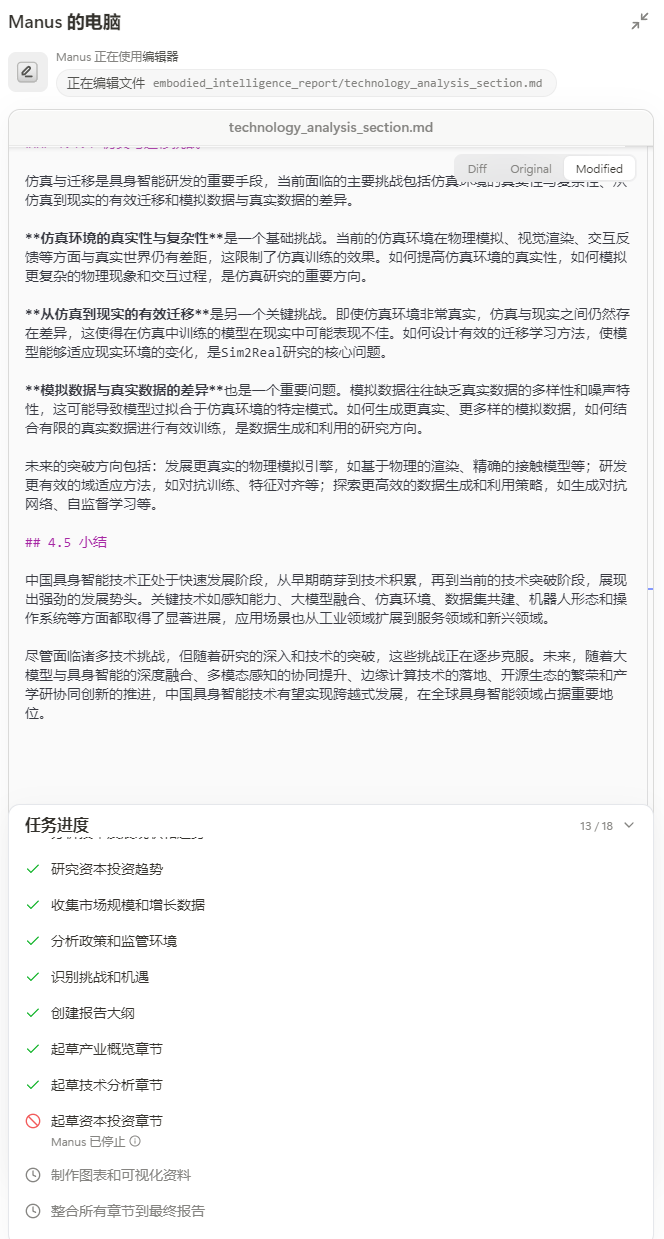
For a task like creating an embodied intelligence report, it got stuck in the first step of analyzing the materials, and the requirement to make it into a PPT was beyond its capabilities. The second attempt to produce a text-based report also stopped at the stage of creating charts.
Currently, Manus often cannot understand and control its own capabilities, often biting off more than it can chew.
In principle, Manus is not that complex. It is an AI product that integrates Computer use, virtual machines, and Multi-agent collaboration.
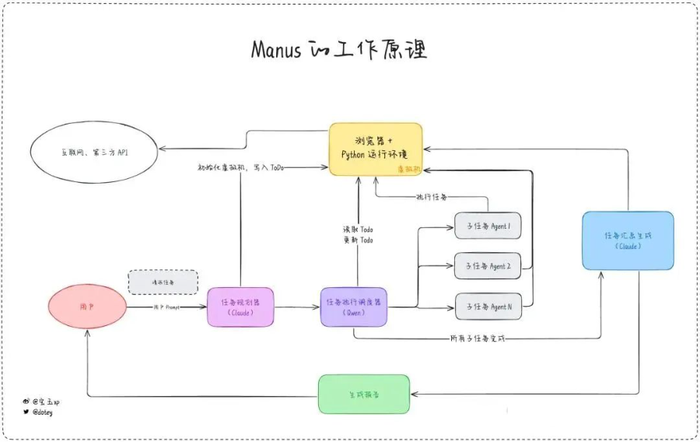
From Bayu AI
But Manus' most important breakthrough is the productization of a general-purpose Agent, compared to the automation software Devin and bolt.new.
A former employee of this company mentioned on social media that the company has a deep accumulation of engineering practices and agent workflows:
In September-October 2023, they first introduced agents in China, with the todolist.md being the best practices learned from various agent solutions.
In March 2024, they built the GPTs platform, and from the beginning of 2024, they have been accumulating technology for browsers, gaining a deep understanding of utilizing browser context.
In November 2023, they started working on search, also accumulating the ability to network agents to acquire information.
In July 2024, they gained growth experience from ROA to acquire social traffic.
In November 2024, they gained an understanding of the coding capabilities of various models in the Coding product.
"It is true that each piece is relatively thin, but the combination of these building blocks has formed sufficiently strong innovative power in this window," the employee commented.
Whale Brother believes that Manus' greatest success is in surpassing the product insights of the big factories.
Here is the English translation of the text, with the specified terms retained:As a serial entrepreneur, Xiao Hong, the founder of the Butterfly Effect, previously launched the "Yiban Plugin", a WeChat plugin product with tens of millions in revenue (the new media operations of the Jingxuan account are also using the paid service), and then seized the opportunity of the enterprise WeChat SCRM trend to create the Weiban Assistant. When the AI trend came, he also created the large model collection product Monica, and now with the AI Agent trend, he has launched Manus.
The success of two consecutive AI native products is particularly difficult. Even OpenAI, which is strong, has not been very successful with its products other than ChatGPT, with many of them still in a semi-finished state, such as GPTs, SearchGPT, DALL.E, Whisper, etc.
At the current stage, the AI products of domestic tech giants generally lack creativity. From AI social to AI search, as well as AI Coding products, they are all "me-too" products.
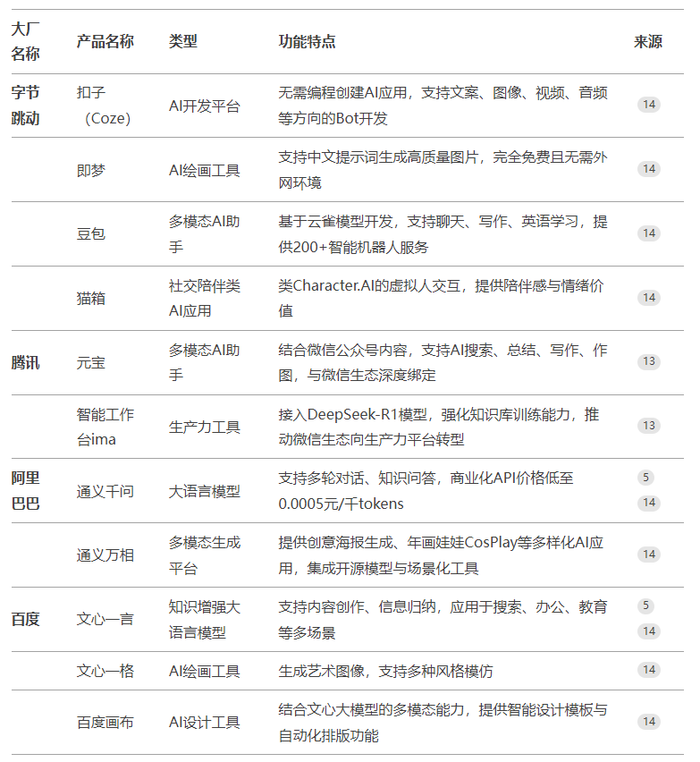
This image was generated by Tencent Yuanbao AI
After the Butterfly Effect company seized the first wave of benefits of AI plugins with Monica, it has also taken the lead in developing the first mature product in the Agent field. In the five stages of AI shared by Sam Altman, Manus has successfully positioned itself in the early stage of L3 (intelligent agent).
Especially their "Less Structure more Intelligence" concept has led them to abandon the path of the AI browser, which they could not surpass the tech giants, and has also allowed them to discover new opportunities.
As for whether this is an out-of-circle effect driven by marketing leverage, the author believes it is not the case.
Previously, when the Chinese version of Monica was released, there was a wave of cooperation with KOLs, where free membership usage quotas were distributed through KOLs. When Manus required KOLs to participate in small launch events, they did describe it as the "world's first universal Agent product", but the author understands that there was no cooperative promotion with KOLs.
It is estimated that if Manus did not receive a strong response, it would have distributed free TOKEN quotas through KOLs, like Monica, but now it is no longer necessary, although the WeChat search index is not as hot as DeepSeek.
Soul Capital partner Wu Bingxian once described: After DeepSeek broke through, the society was indeed educated by the facts, and everyone started to compete in technical level - how to improve Attention, how to improve MoE, how to mix FP8 and FP16 training. Further, it is competing in the level of originality - who can innovate the next-generation model architecture, who can discover the next set of training model methods.
From this perspective, Manus has also made everyone's product strategy return to the forefront of innovation, focusing on what kind of innovative products can be made after the 2025 AI application/Agent元年, rather than the AI assistant traffic war.
Encapsulation does not affect, but success is still far away
At the current stage, the essence of AI products does not have core barriers and competitiveness. Product concepts are difficult to be patented, and engineering capabilities are the strongest for tech giants, so the author has previously mentioned on Xiaohongshu that it is worth guessing which tech giant will launch similar products.
However, Manus is more complete in terms of engineering delivery compared to some previous general Agent products, such as OpenAI's Operator, Anthropic's Claude use, and Tencent's APPAgent.
However, completeness is not a very high barrier for a product. After the explosion of Manus, the MetaGPT team spent 3 hours developing and open-sourcing OpenManus.
After Manus has explored the actual demand and optimized the technical engineering path, and continuously improved the product details, it is indeed not difficult for the outside world to "half open the book" and copy a homework assignment. Being replicated in half a day, does that mean Manus has no barriers at all?
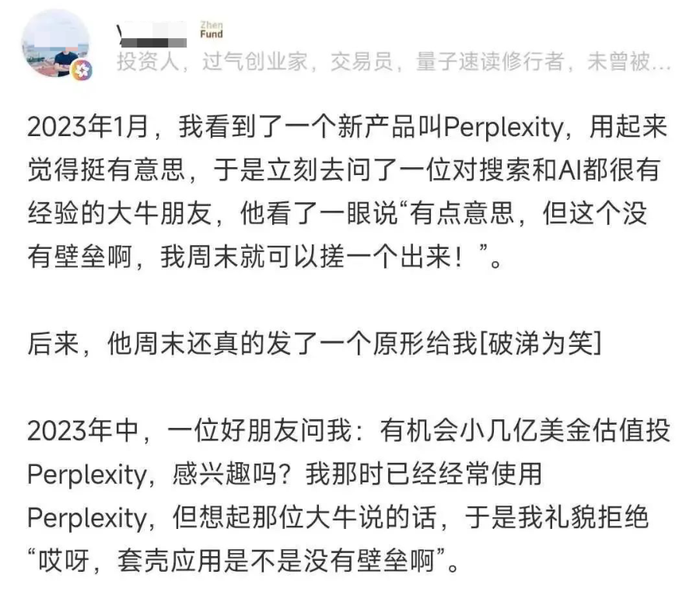
A certain investor lost the opportunity to invest in Perplexity due to the encapsulation theory
Countless AI search products today have not affected the development of Perplexity. The native product understanding will help Perplexity continuously update and improve its features, while other similar products can only follow up and copy.
For Manus, it is the same. At this stage, the most urgent thing to solve may be to accept financing from a tech giant. After all, the reason for not conducting public testing is the insufficient server acceptance capacity.
The information released at the media communication meeting shows that the Manus team has given the cost of single-task operation: about two US dollars. The cost has been reduced to 1/10 of DeepResearch, but the single-task cost is still as high as nearly 15 yuan. This is also the reason why Manus has adopted a small-scale distribution of invitation codes, which has even caused internal system crashes.
Accepting financing from tech giants is not only about capital, but more importantly, the low-cost supply of large model APIs. According to the media who attended the communication meeting, the core of Manus is calling the Claude model, plus some fine-tuning of open-source large models. Will it accept investments from Alibaba, Tencent or ByteDance in the future, similar to Kimi, with capital + resources?
This would allow Manus to launch a subscription membership service at an annual fee of less than 1,000 yuan. Otherwise, at a price higher than this, it may become a toy for a small number of professionals.
On the other hand, improving product details and service capabilities, and rapid iteration, are the fundamental guarantees of vitality.
Currently, it takes a long time for Manus to generate a response, and many tasks will still crash. Manus needs to put more thought into productization, rather than what Manus product manager Zhang Tao said: "It's really very simple, there's no secret, it's just believing in the power of the model."
The model is the foundation, and product details are the service capabilities. For example, Claude 3.7 Sonnet has again broken the ceiling in code programming capabilities, but Cursor, with its advantages in code auto-completion, can still attract people to pay for subscriptions.
More importantly, the MCP (Multi-Agent Communication Protocol) aggregation model is already showing very high growth potential. This is also the development path that Manus should adopt in the future.
From the perspective of the evolution speed of large models, built-in agents may also be a trend. In the future, if GPT 5 can realize the fusion of reasoning and instruction models, multi-modal capabilities, and built-in Agents, it may become surprisingly powerful. Domestic tech giants should also be following this path, and before that, Manus needs to run out user and revenue scale.
Summary
DeepSeek has broken the successful theory of foreign models in the large model field, as well as the extremely low cost of landing capabilities, making everyone believe that the mysterious power of the East has the ability to disrupt the global technology and finance order. In other words, DeepSeek has single-handedly earned China a ticket to the AI competition, directly ending the era of global investors slashing the valuation of Chinese assets.
As for Manus, it has demonstrated the strongest form of AI native, not the monotonous Chatbot, nor the AutoAgent like a Trojan horse, but more useful in various scenarios and with the hope of landing.
At a high point, it may become the next WeChat in the AI era, but may not affect the greater popularity of foreign products like Facebook. At a low point, it has opened up the public's cognition of Agents and given confidence to many startup teams to continue dreaming.