
Bitcoin, as a pioneering cryptocurrency, has changed the way people around the world perceive finance and money. However, as technology advances and external factors change, Bitcoin is facing structural challenges that could affect its future existence and growth.
In recent discussions among industry leaders, key risks that could lead to a black swan event for Bitcoin were highlighted.
What is Bitcoin's Biggest Threat?
Lyn Alden, founder of Lyn Alden Investment, recently asked, "What is the biggest structural risk to Bitcoin over the next 5-10 years?" This question drew significant interest and responses from investors, experts, and industry leaders, shedding light on urgent concerns.
One of the most frequently mentioned risks is the threat posed by quantum computing. Nick Carter, General Partner at Castle Island Ventures, succinctly responded: "Quantum." His answer was widely agreed upon.
"I increasingly agree. To be honest, that was the catalyst for my question," Lyn Alden replied to Nick Carter.
Future quantum computers could break the cryptographic algorithms protecting Bitcoin, such as the Elliptic Curve Digital Signature Algorithm (ECDSA) that secures Bitcoin wallets. With a sufficiently powerful quantum computer, digital signatures could be forged, allowing attackers to steal Bitcoin from wallets with exposed public keys.
Research by River suggests that a quantum computer with 1 million qubits could decrypt Bitcoin addresses. Microsoft claims that its new chip Majorana is moving towards this milestone. This raises urgent questions about how much time remains before Bitcoin becomes quantum-resistant.
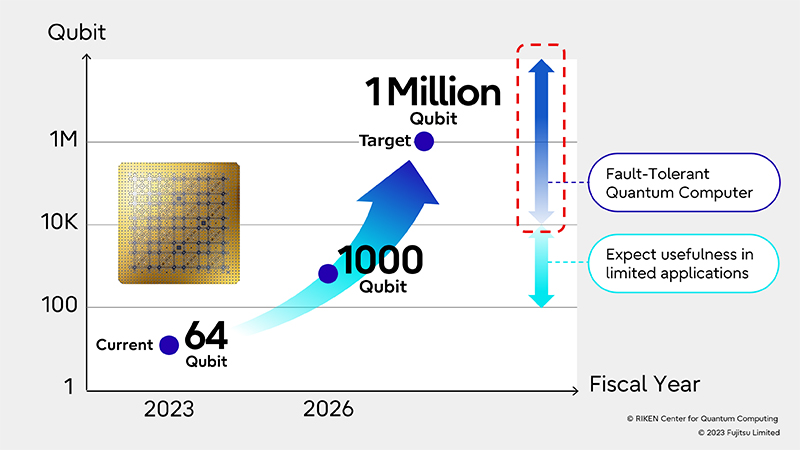
While the threat of quantum computing is apparent, some argue that the more immediate challenge is whether the Bitcoin community can reach consensus and implement quantum-resistant solutions in time.
"Not reaching consensus quickly enough on the implementation of quantum-resistant hashing algorithms," commented Stillbig Josh, former cybersecurity expert at Flutterwave.
However, Ari Paul, founder of Blocktower, pointed out that the Bitcoin network faces more immediate risks as the cost of attacks significantly decreases.
"You can short more than 10% of BTC market cap, take 51% of hash power, and spend about 1/10th the cost to indefinitely mine empty blocks and essentially shut down the network. You can fork the PoW algorithm, but this means the attack cost on the new network drops to 1/1000th of the previous," Ari Paul noted.
Risk of Collision Between Bitcoin Decentralization and Regulatory Oversight
Beyond technical challenges, some investors worry that government and institutional intervention could be the biggest risk to Bitcoin in the next 5-10 years.
"Government and institutional intervention is changing the incentives for everything," commented investor Shinobi.
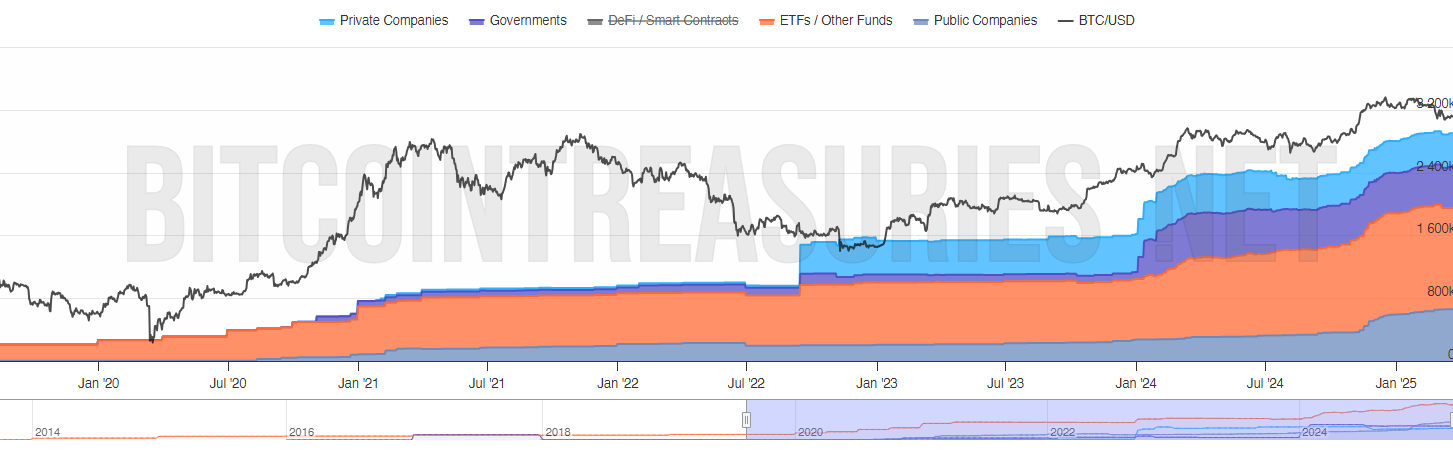
According to BitcoinTreasuries data, Bitcoin holdings by private companies, public companies, governments, and ETFs have increased more than 12-fold from 210,000 BTC to over 2.6 million BTC in the past five years. As a result, regulatory intervention could introduce legal pressure or unwanted changes to Bitcoin's core operations.
"The biggest structural risk is the friction between Bitcoin's decentralized spirit and the increasing pressure of centralized regulatory oversight. Essentially, as governments and large institutions tighten control and enforce compliance, the network may have to compromise its core principles," warned investor Mr. Spread.
The discussion triggered by Lyn Alden's question suggests risks that could lead to a black swan event for Bitcoin. It reflects growing awareness among industry leaders and investors about the systemic risks to Bitcoin in an era increasingly shaped by political stability and artificial intelligence.