Written by: Wenser, Odaily
After experiencing the previous AI Agent concept token hype, Web3 AI projects are in a rare calm period. With this in mind, driven by curiosity about Web2 AI projects, I attended two AI-related events in Hangzhou - an AI Hackathon with diverse participants and a community event that views AI as a money-making tool. Here, I seem to have discovered some significant differences between Web2 and Web3 AI projects, which inspired this reflection. The following content represents my personal subjective thoughts and views, not the official opinion of Odaily, and serves as a small perspective on the AI era for readers' reference.
The Biggest Difference Between Web2 AI and Web3 AI: One is Making Products, the Other is Creating Assets
In my view, while there are numerous differences between Web2 and Web3 AI projects, the most significant difference lies in their ultimate results - the former primarily speaks through products, whether large models, AI applications, or AI solutions; the latter uses AI as packaging, essentially creating concept assets and measuring success through token market performance. This explains why AI Agent concept tokens like GOAT, AI16Z, ACT, and Swarms became popular after the AI Agent concept hype but gradually faded as market attention shifted.
Developer Community: Everyone Can Be a Dev VS Technical Devs
This is my biggest impression after participating in two Web2 AI offline events: Web2 AI event audiences are often much broader, ranging from 8-9-year-old children to elderly people in their 60s or 70s, all showing extremely high enthusiasm; while Web3 AI projects are often limited to technical developers. Others mostly join through token trading or project investment. Although many AI Agent projects promote the concept of "everyone can create their own AI Agent", actual participants are few, and they rarely involve extensive development work.
The reasons are clear: Web3's high entry barriers and narrow usage scenarios deter many people; Web2 AI projects are closer to the internet, thus having more diverse, comprehensive developers, especially after the emergence of AI programming applications like Cursor and Windsurf, essentially making "everyone a developer".

The Two Youngest Participants at the AI Hackathon
Project Starting Point: Demand-Driven VS Market-Driven
Regarding project origins, Web2 AI projects typically start from user needs, aiming to solve specific problems, create products, and generate profits; Web3 AI projects often start from market perspectives, focusing on what narratives, concepts, or assets the market needs, and seeking financing accordingly. As a result, Web2 AI projects typically focus more on the application layer, while Web3 AI projects lean towards preparing projects using the "computing power, algorithms, data" framework, such as previously popular Myshell and recently highly-anticipated projects like Nillion and SaharaAI.
Currently, mainstream Web3 AI projects might be solving problems like "how to create a token" or "how to sell an AI concept token to the market for liquidity".
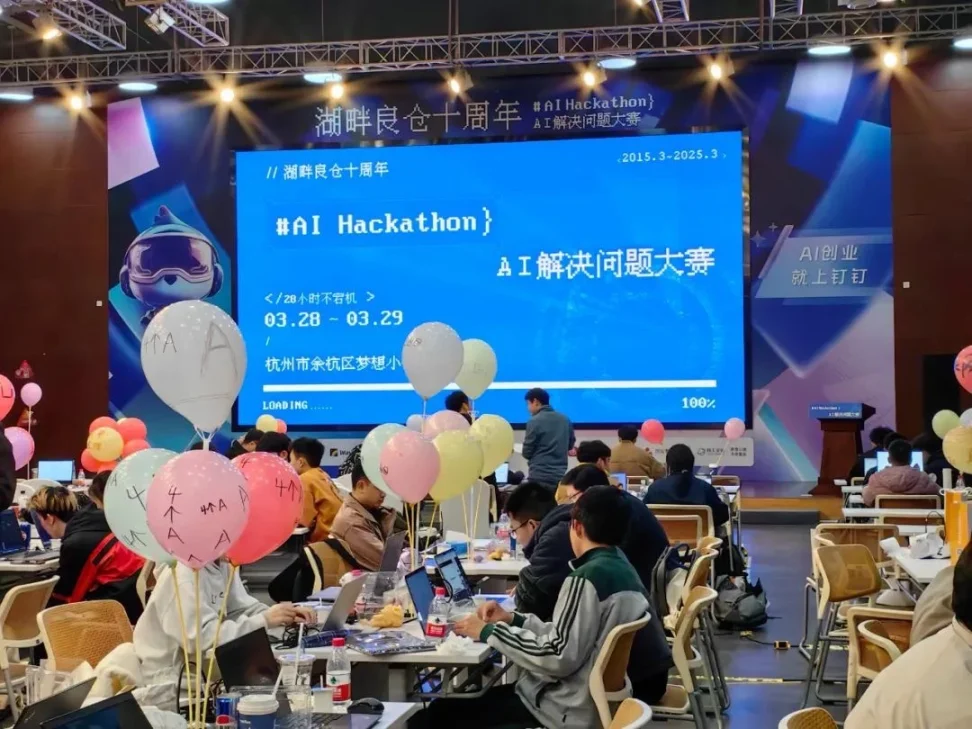
Hackathon Theme: AI Problem-Solving Competition
Project Operations: Product-Driven VS Attention-Driven
In project operations, Web2 AI projects typically follow a product-driven approach, growing and operating through product demonstrations, feature explanations, and application scenarios; Web3 AI projects often adopt an attention-driven route, prioritizing market attention resources because in the Web3 domain, attention focus often represents liquidity, with attention being the most expensive asset carrier.
In the Web3 AI field, "good products will naturally attract traffic" is hard to establish. Instead, "whoever speaks louder gets more attention" is the principle. A good product alone cannot guarantee a project's or its token's success, as most Web3 AI projects are merely meme coins with no technical application.
The so-called decentralized computing resources and decentralized data assets are merely wishful thinking by project teams and retail investors.
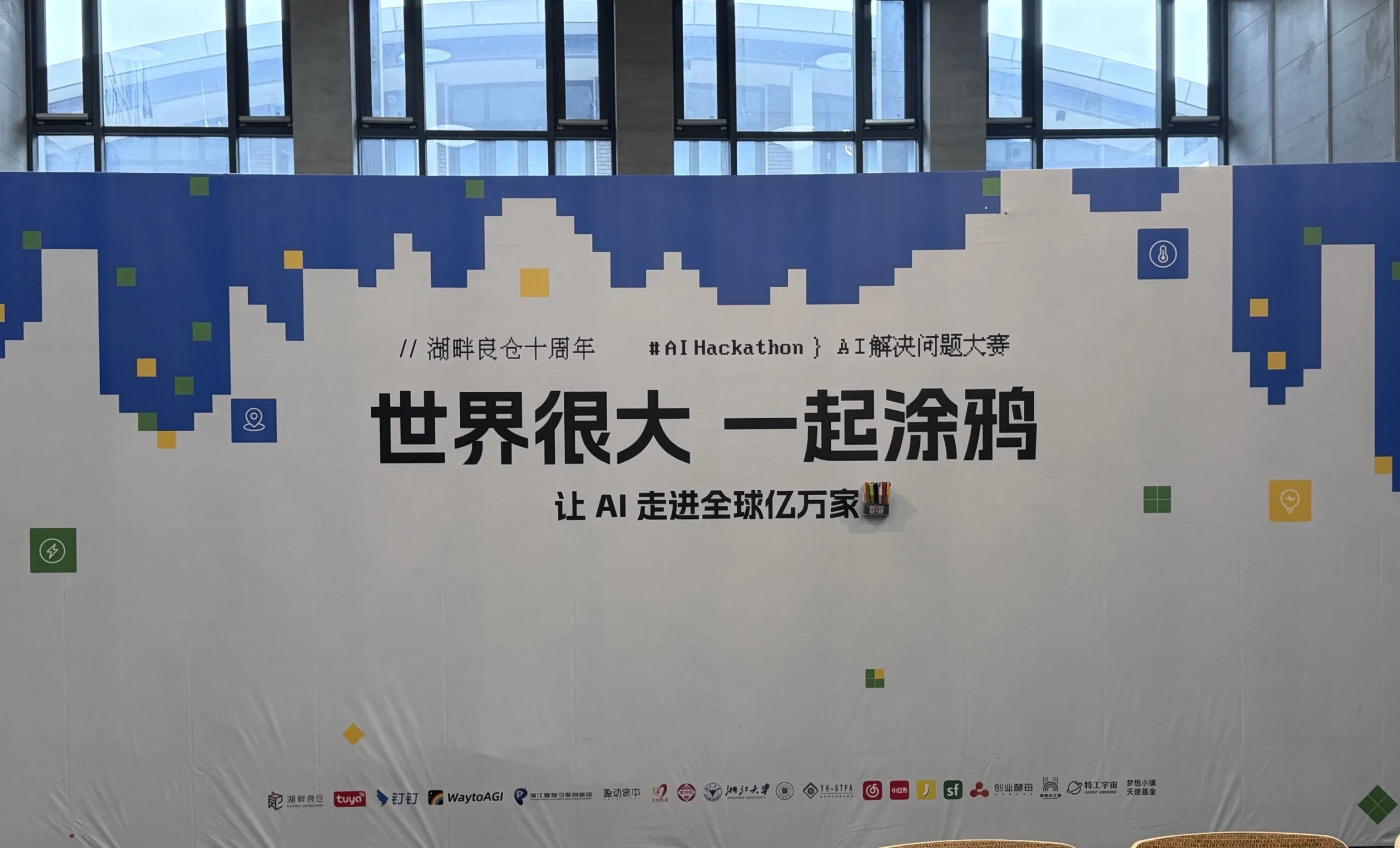
AI is the Best "Doodle Pen"
Exit Mechanism: Business Model Profitability VS Token Liquidity
The exit mechanism presents the most stark and straightforward contrast.
Web2 AI projects' exit mechanisms rely on business model profitability, whether using AI as an automation tool or creating AI applications, products, or large models. Their ultimate goal is to attract as many users as possible, thereby generating profits through subscription fees, membership mechanisms, solution sales, product purchases, or advertising. Most Web3 AI projects have only one exit path: token liquidity, as their actual user base is extremely small, resembling some ghost-town-like L2 networks in the Ethereum ecosystem.
This fundamentally different exit mechanism determines that the former focuses more on products, while the latter concentrates on token assets.

Let AI Manage AI, AI Serves Money-Making
Summary: As AI Becomes History, Web3 AI Projects Can Only Wait for Web2 AI Technology Spillover
In early April 2025, after two waves of AI project hype from late last year to early this year, Web3 AI projects have briefly entered a "construction period" - unavoidably, as market attention and liquidity simultaneously tighten, and as celebrities and presidents become cryptocurrency harvest sickles, Web3 AI projects have passed through various hype points like computing power, storage, data, AI Agents, and frameworks, becoming a "past event" in the current stage.
In the days ahead, whether Web3 AI projects can regroup and reclaim market attention resources may only depend on technology spillover from Web2 AI giants, startups, and innovative enterprises. Otherwise, Web3 AI projects will remain merely "concept token plates" wrapped in AI concepts - it's best to face reality.