Written by: Heart of Metaverse
The latest "2025 Artificial Intelligence Index Report" shows that the AI field is becoming increasingly mature: AI optimization technology continues to progress, but simultaneously, the application and abuse of this technology are presenting an overwhelming trend.
The report was released on April 7, 2025, initiated by the Stanford Institute for Human-Centered Artificial Intelligence (HAI), and led by an interdisciplinary expert committee from academic and industrial fields.
The report continuously tracks multiple key developments in the AI field, mainly including: annual major technological breakthroughs, new benchmark records, generative AI investment trends, educational application trends, technology regulatory legislation progress, and other core dimensions.
Here are 10 core points from the report:
01. Small Models Achieve Performance Breakthrough
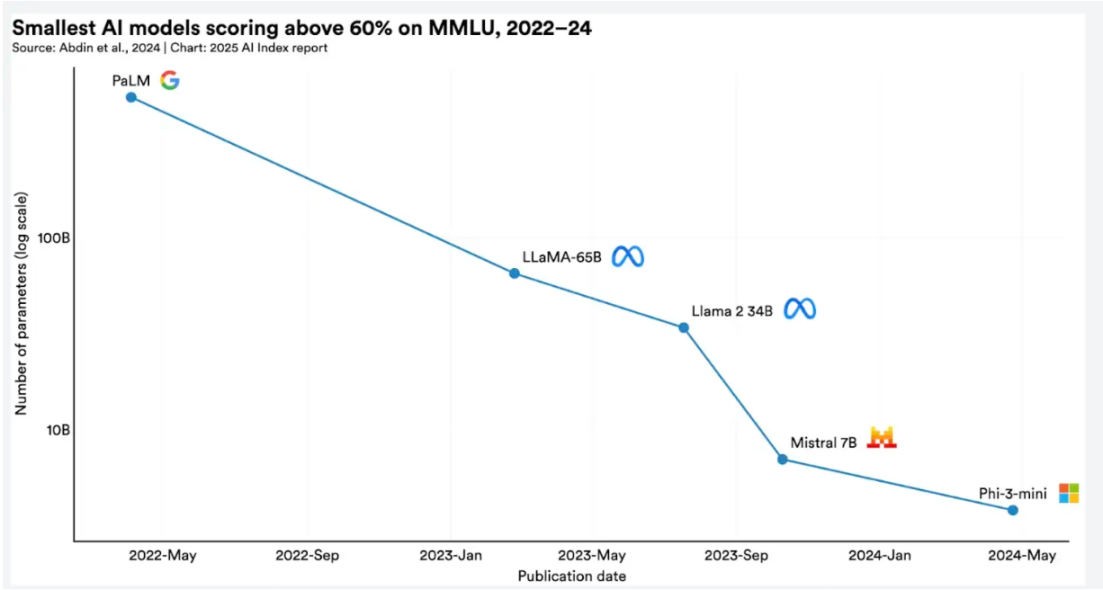
In 2022, the smallest model that could achieve 60% accuracy in the MMLU multi-task language understanding benchmark was PaLM with 540 billion parameters.
By 2024, Microsoft's Phi-3-mini model with only 38 billion parameters achieved the same performance, reducing the model size by 142 times in two years.
02. Model Usage Costs Plummet
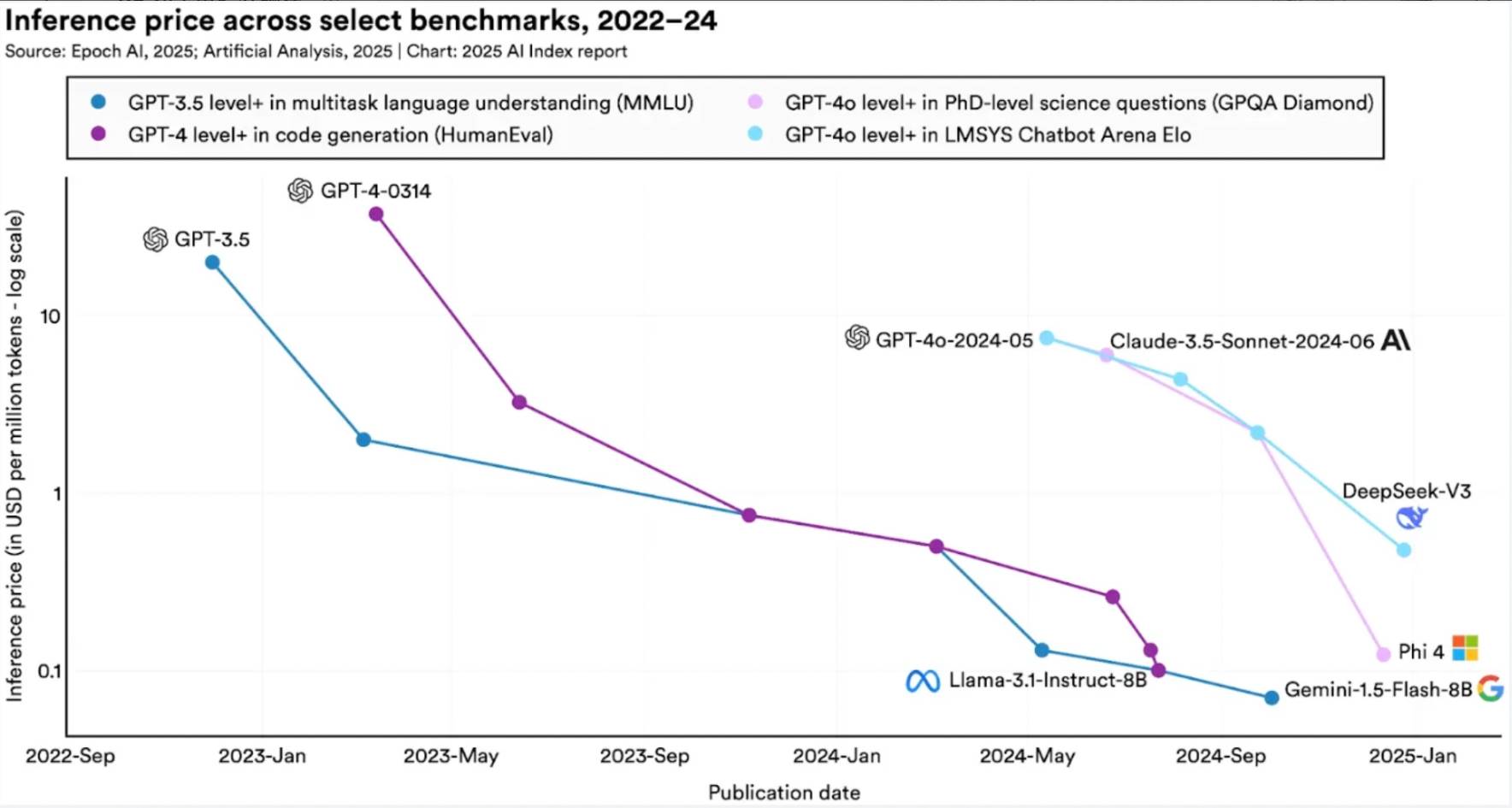
For models reaching the GPT-3.5 level (64.8% accuracy) in the MMLU test, the cost per million token queries dropped from $20 in November 2022 to $0.07 in October 2024 (Gemini-1.5-Flash-8B model), a decline of over 280 times in 18 months. The annual price reduction for LLM inference across different tasks ranges from 9 to 900 times.
03. Chinese Models Catching Up
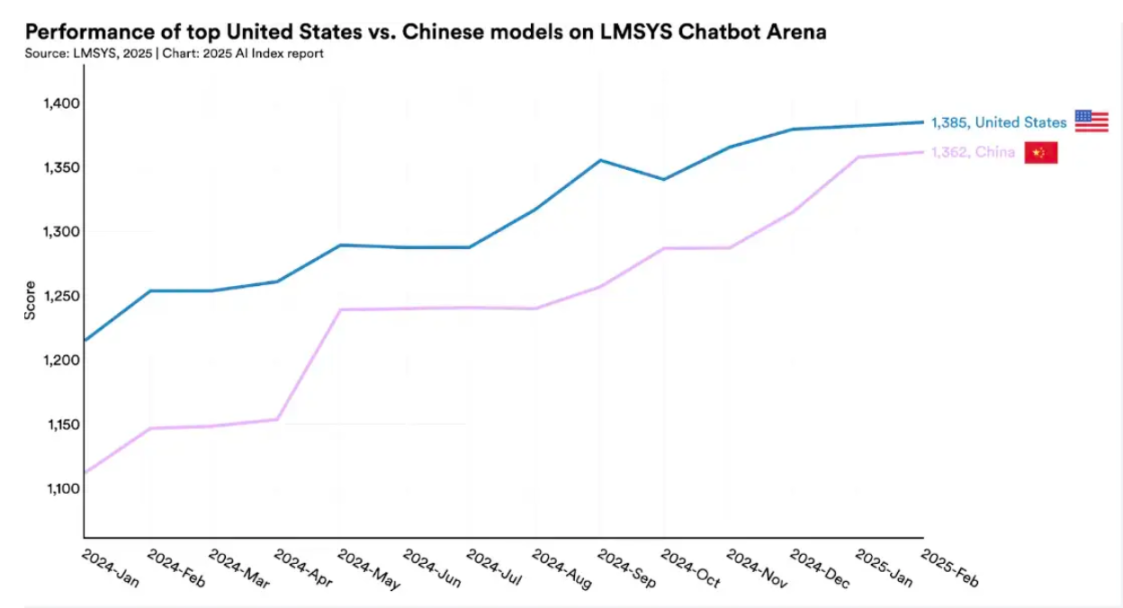
While the United States still maintains an advantage in the number of top AI models (40 important models in 2024 vs. 15 in China / 3 in Europe), Chinese models are rapidly approaching in quality.
In core benchmark tests like MMLU and HumanEval, the performance gap between Chinese and American models has narrowed from double-digit percentages in 2023 to mere decimal points in 2024. China continues to lead globally in AI paper publications and patent numbers.
04. AI Abuse Incidents Surge
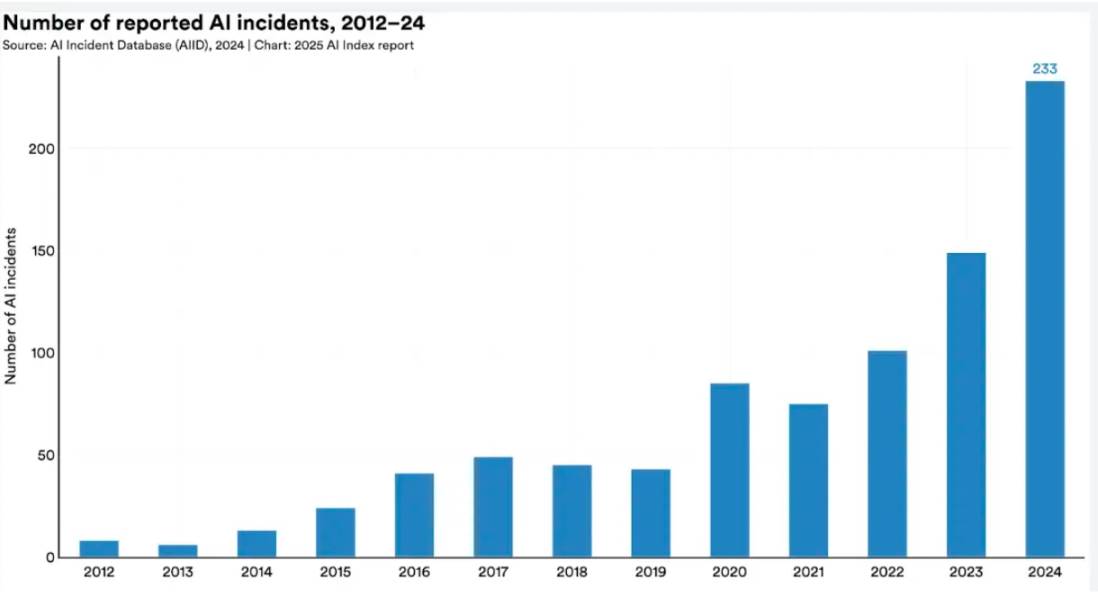
According to the AI Incidents Database, AI-related harm events reached 233 in 2024, a historical high and a 56.4% increase from 2023. Typical cases include deep fake private images and chatbots allegedly leading to teenage suicide. Although not a complete picture, the surge in incidents is shocking.
05. Agent Practical Breakthrough
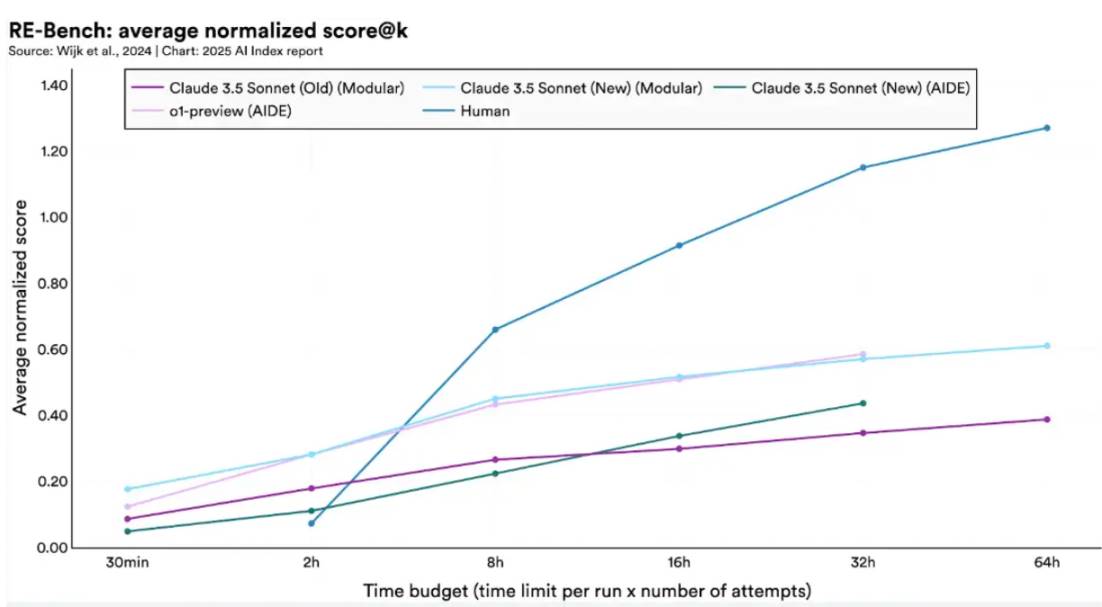
AI Agents show initial potential. The RE-Bench launched in 2024 established a strict benchmark for evaluating Agent complex tasks: in short-term tasks (2 hours), top AI systems performed 4 times better than human experts; but in long-term tasks (32 hours), humans surpassed AI by 2 times.
Notably, AI has reached expert level in specific domains (such as writing specific code) and is more efficient.
06. AI Investment Soars
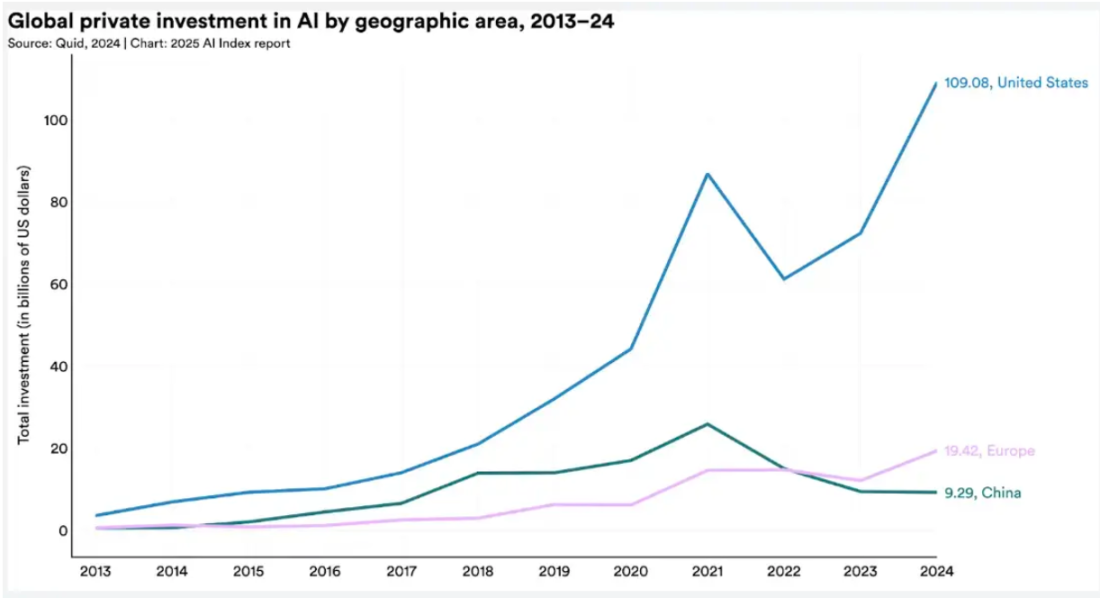
In 2024, US private sector AI investment reached $109 billion, almost 12 times that of China ($9.3 billion) and 24 times that of the UK ($4.5 billion).
The gap is even more significant in generative AI: US investment exceeds the total of the EU and UK by $25.5 billion, further widening from the $21.1 billion difference in 2023.
07. Enterprises Accelerate AI Technology Adoption
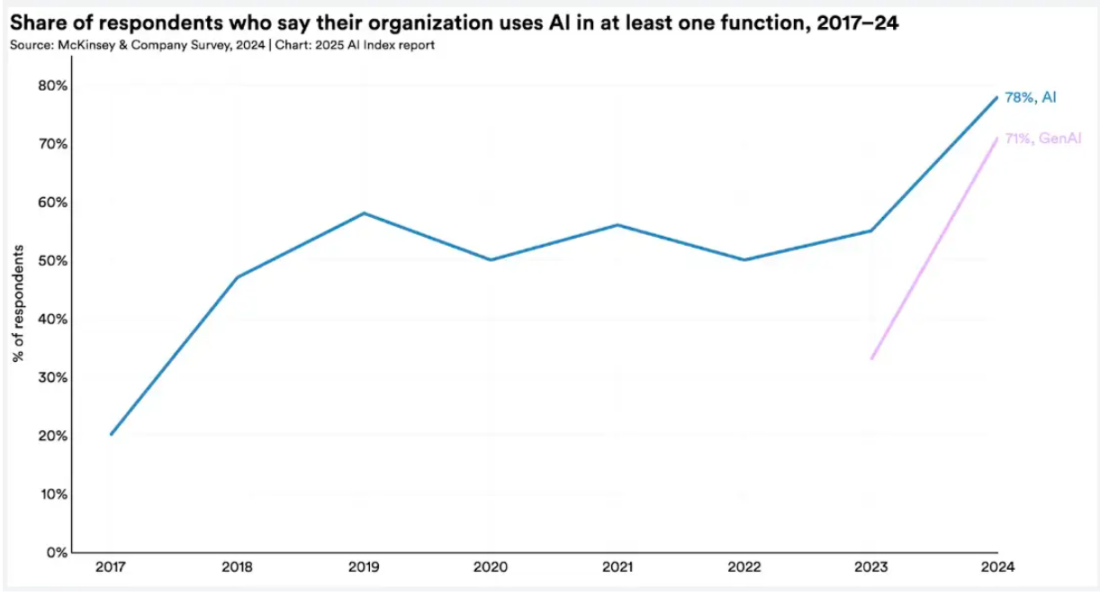
Enterprises are turning to AI. In 2024, the percentage of respondents using AI jumped from 55% in 2023 to 78%. More notably, the proportion of enterprises applying generative AI to at least one business function doubled from 33% to 71%.
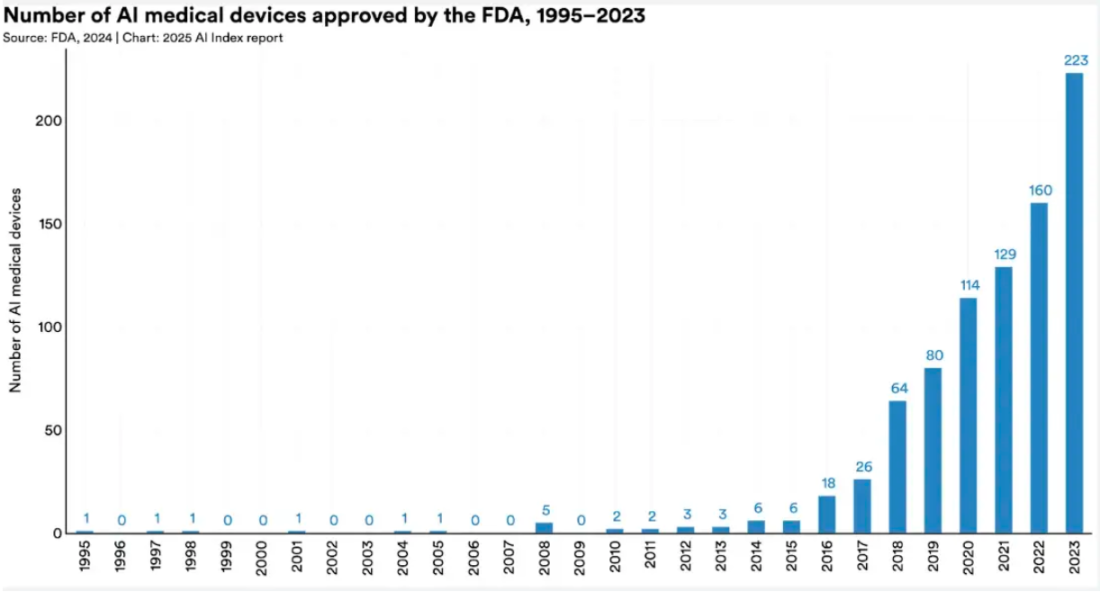
08. Medical AI Products Experience Approval Explosion
The number of AI medical devices approved by the FDA is growing exponentially. After the first AI medical device was approved in 1995, only 6 were cumulatively approved by 2015, but this number had soared to 223 by 2023, demonstrating the accelerating popularization of medical AI applications.
09. US AI Regulation: State Governments Take the Lead
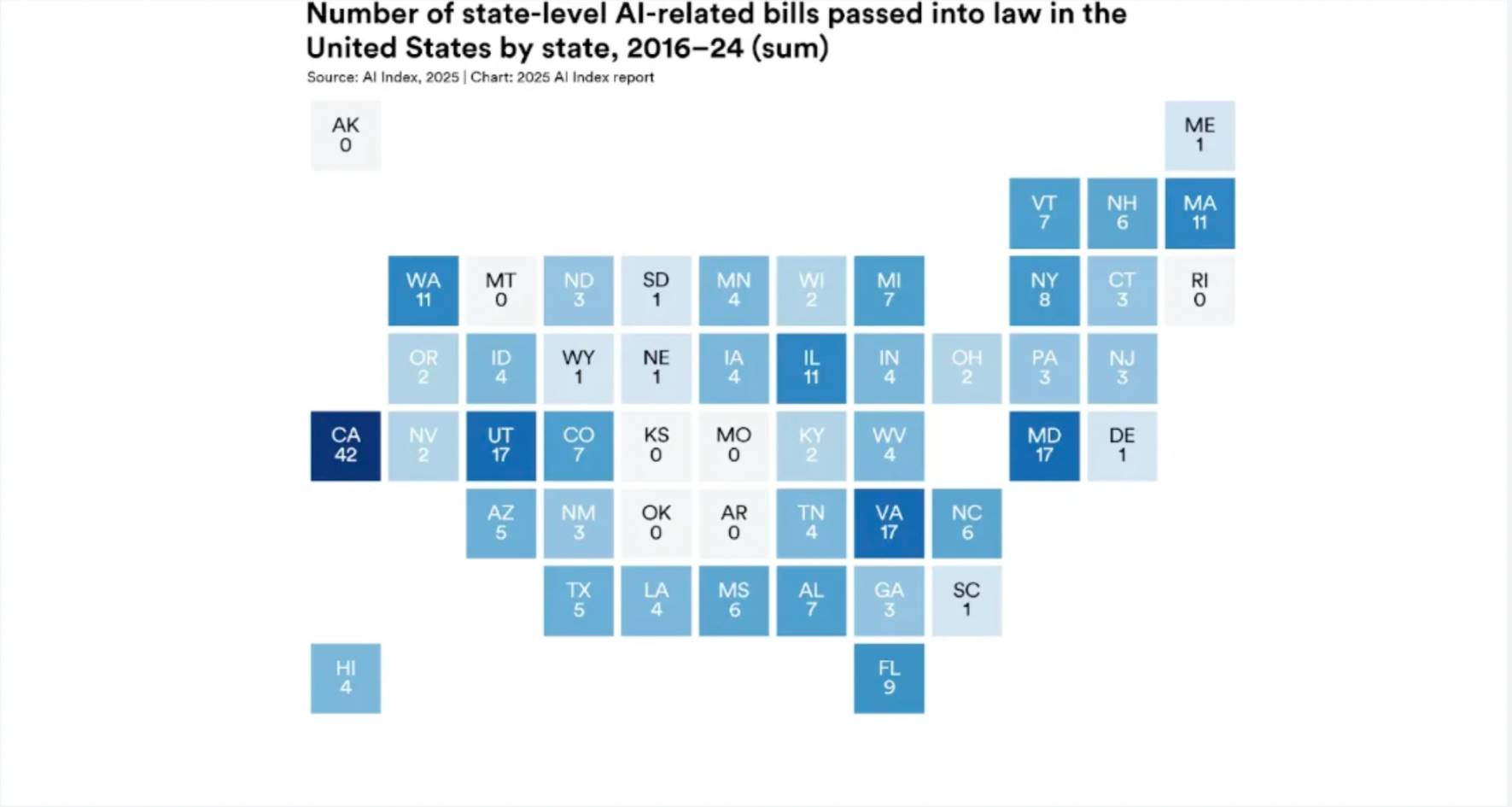
Against the backdrop of slow federal legislation, US states are becoming the main force in AI regulation. Only 1 state-level AI-related bill was passed nationwide in 2016, increasing to 49 by 2023.
In the past year, this number has doubled to 131. Although the number of AI bills proposed at the federal level has also increased, the actual pass rate remains low.
10. Asia Holds More Optimistic Attitude Towards AI
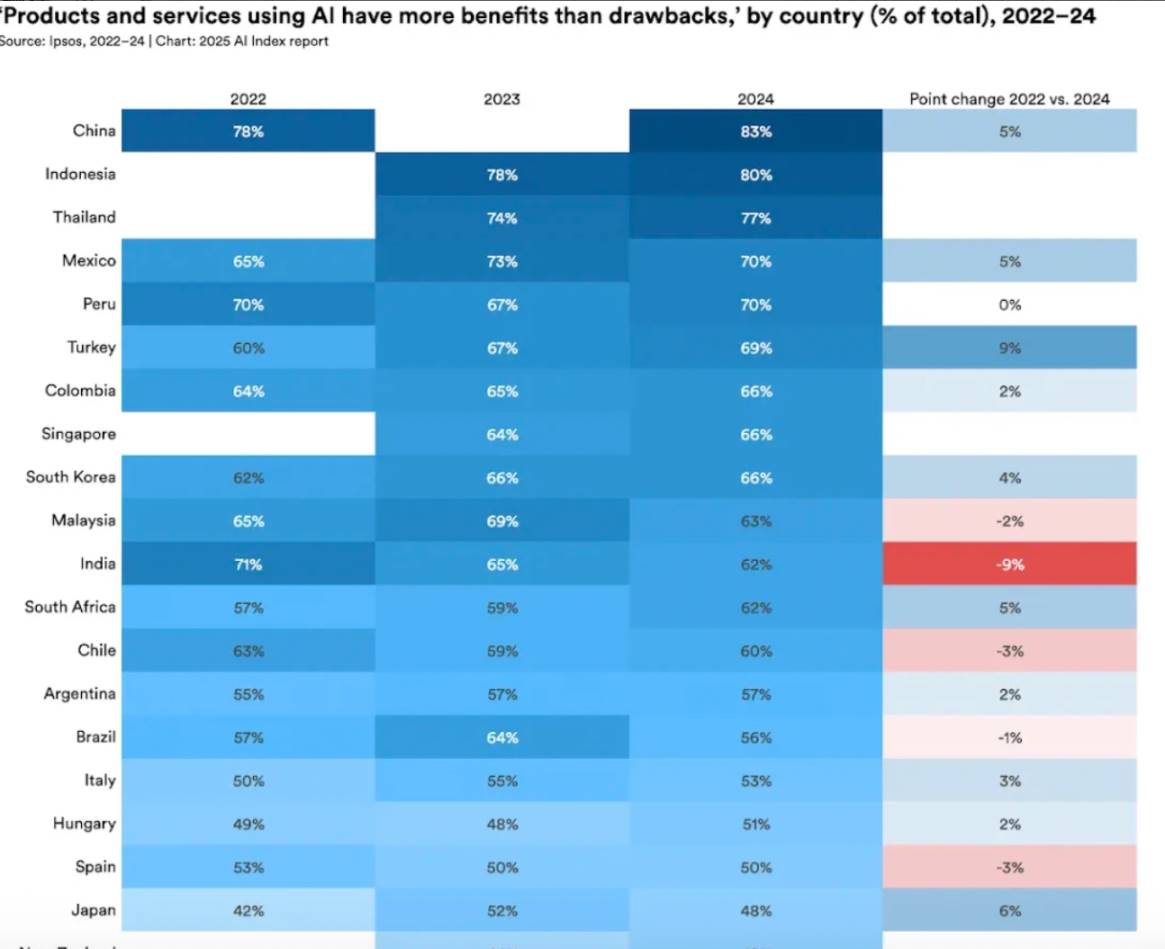
Global AI acceptance shows clear regional differences: in China (83%), Indonesia (80%), and Thailand (77%), the vast majority of people believe AI products are more beneficial than harmful; while in Canada (40%), the United States (39%), and the Netherlands (36%), less than half of the population holds this optimistic view.