Author: Fairy, ChainCatcher
Editor: TB, ChainCatcher
As Trump announces a reduction in tariffs on China, global market sentiment quickly warmed up. Bitcoin strongly broke through $94,000, and Solana also surged past $150. Besides the macroeconomic positive factors, another disruptive growth engine for Solana seems to be quietly starting.
On April 21, the publicly traded company Upexi announced securing $100 million in financing led by the well-known crypto market maker GSR, with approximately 95% to be used for establishing and operating a Solana treasury reserve.
After Bitcoin, SOL is becoming the "next pivot" for corporate crypto strategies. Will Upexi's aggressive entry trigger a new wave of value for Solana?
Upexi Boldly Moves into Crypto
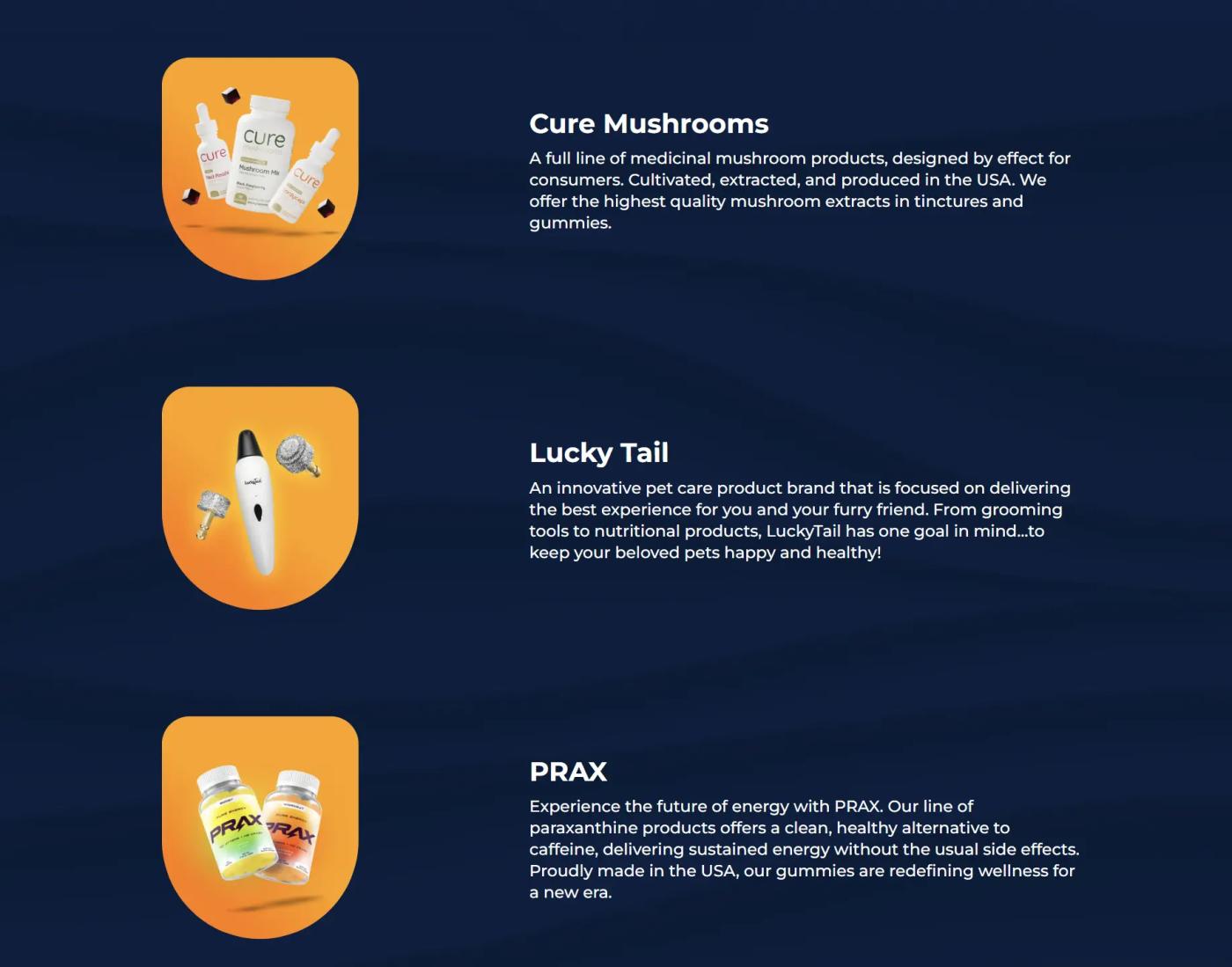
Since its establishment in 2018, Upexi has focused on developing, manufacturing, and distributing consumer goods, owning multiple innovative brands such as the medicinal mushroom product brand Cure Mushrooms, pet care brand LuckyTail, and the Prax series of energy gummies.
In 2024, to focus on high-growth tracks, Upexi conducted a massive business restructuring: selling E-core / Neti, Tytan Tiles, and the Clearwater warehouse in Florida, closing two operations points in Las Vegas, and reducing staff by about 30%.
To enter the crypto asset market, Upexi established two wholly-owned subsidiaries, ChainBitMiner and QuantumHash, specifically responsible for crypto investment management. Currently, the company's digital asset strategy primarily revolves around Bitcoin mining and allocation of high-growth potential Altcoins. ChainBitMiner will establish a diversified crypto portfolio, with 50-70% of assets held in Bitcoin form, replacing traditional cash reserves. QuantumHash will expand the digital asset portfolio through self-mining, aiming to achieve low-risk, leveraged treasury growth.
In Upexi's 2025 strategic roadmap, besides crypto mining and investment, Upexi also plans to deeply explore blockchain projects involving staking, decentralized lending, and yield generation models. This series of layouts demonstrates that Upexi is preparing to "make its mark" in the crypto market.
Is Upexi's "All In" the New Engine for Solana?
Upexi is not alone; earlier, projects like SOL Strategies and DeFi Dev Corp had already deeply laid out in the Solana ecosystem, here are their SOL holdings statistics:

SOL Strategies chose a slow but steady path. Its growth model can be understood as "first inorganic, then organic": initially relying mainly on external acquisitions to expand business, then gradually shifting to natural growth driven by its own team and infrastructure accumulation.
Upexi's approach is different, directly "All In Sol", more like a Solana version of MicroStrategy. Upexi has signed securities purchase agreements with some investors, issuing and selling 43,859,649 common stocks or pre-subscription warrants at $2.28 per share, expecting to raise up to $100 million. The plan is to use about $5.3 million for operating capital and debt repayment, with the remaining funds used to establish the company's Solana treasury system and increase Solana asset holdings.
A.G.P./Alliance Global Partners serves as the exclusive sales agent for this private placement. The transaction is expected to be completed around April 24, 2025, subject to customary closing conditions.
If this model of "publicly listed companies continuously raising funds to buy crypto assets" can be successfully replicated on Solana, will SOL usher in a new round of explosion?
Upexi's Strategy: Success or Failure?
On the day Upexi announced purchasing SOL tokens, the company's stock price surged from $2 to a high of $22, a 1000% increase. Although it subsequently fell to $9, this wave of movement has fully demonstrated the widespread market attention.
Arif Kazi, Business Development at Sonic SVM, posted on X platform, saying this move marks a "transformation in traditional capital markets' perception of on-chain yields". He emphasized that Upexi is not configuring SOL for hedging purposes, but viewing SOL staking as an "infrastructure investment". This operation is likely the largest Solana native treasury configuration among U.S. listed companies, priced above market, with no token incentives, no lock-up period, and no convertible debt structure.
"When treasury strategy combines with DeFi primitives, it's not just 'alignment', it's 'acceleration'," Arif wrote. "Solana now has an operational manual that capital allocators can directly copy."
However, the market is not just applauding; doubts quickly emerged.
Some pointed out that Bitcoin, due to its scarcity and long-term believers, can support Strategy leveraging BTC through debt instruments; while SOL has no supply cap, with higher volatility, making it difficult for traditional institutions to accept an asset that is "high-risk, high-volatility, and continuously increasing in supply" as a core treasury.
SOL's on-chain chip distribution differs from BTC. Bitcoin's "belief chain" can continuously transform into holding motivation, but SOL lacks such user structure. Community user @DL_W59 noted, "How to inspire holders' willingness to hold long-term or even increase positions will be key to Upexi's strategy success."
Whether it's the Solana community, traditional markets, crypto VCs, or regulators, all are watching Upexi's bold bet. As traditional capital delves deeper into the on-chain world, similar stories will continue to unfold. In this era where old and new financial orders intersect, every "All In" is a bold bet and a script preview of the future financial landscape. This time, Upexi has placed its bet on Solana.
And this spring is writing the answer.