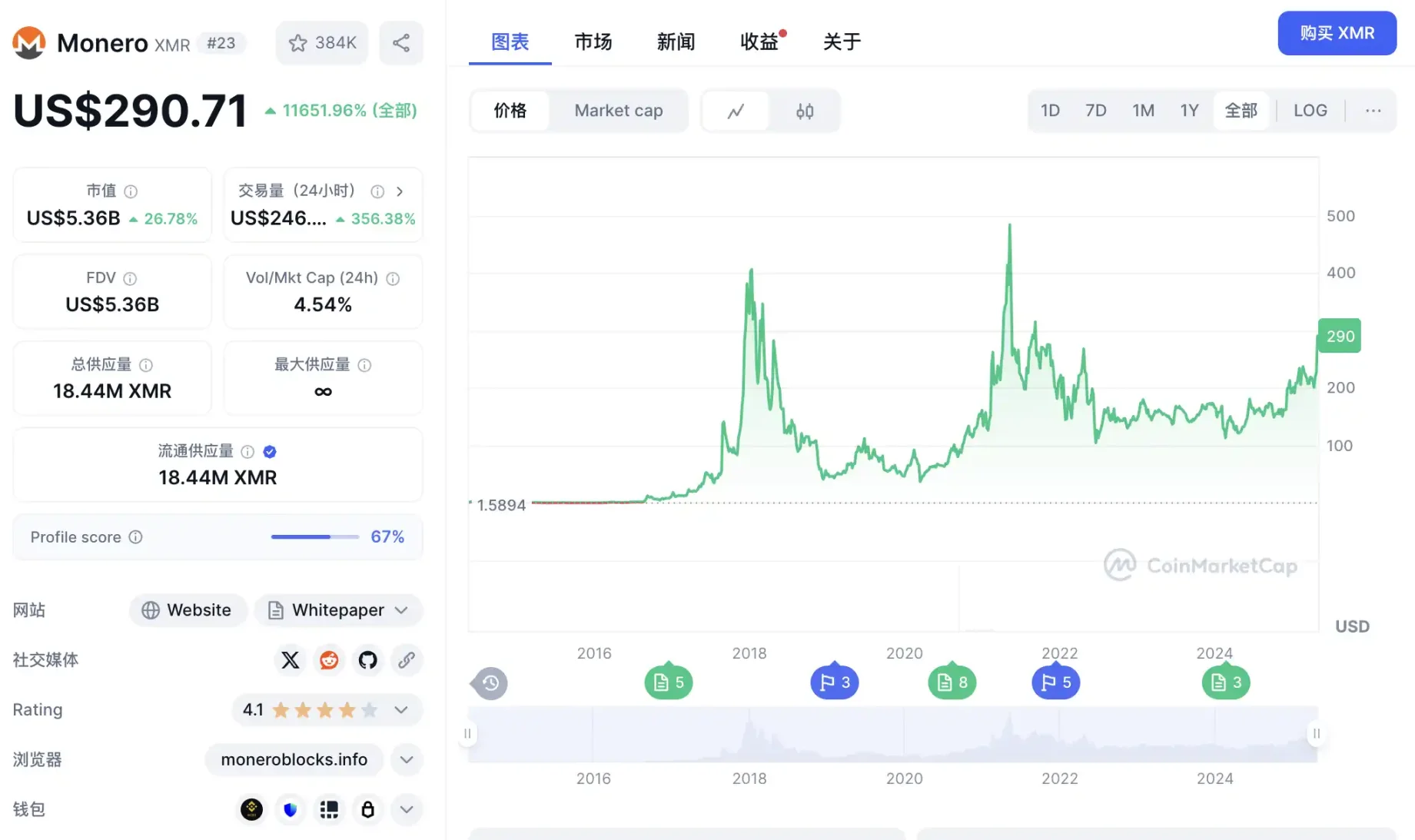
Yesterday, the "ancient" privacy coin Monero ($XMR), which had been dormant for a long time, suddenly erupted. It surged 30% in a single day, with the price rising to a high of $329, creating a new peak since 2021. What is this 11-year-old coin, and why did it suddenly surge?
The Most OG Privacy Coin
In 2013, Nicolas van Saberhagen published the "CryptoNote" protocol, and Monero was born in April 2014 based on this, switching to RandomX in 2019.
Monero uses Ring Signature, stealth addresses, and RingCT technologies to hide the sender, receiver, and amount of transactions. This high level of anonymity provides an advantage in privacy protection, and Monero's modular code structure was praised by Wladimir J. van der Laan, one of Bitcoin's core maintainers.
However, while maintaining privacy, it also makes it difficult to meet anti-money laundering (AML) and counter-terrorist financing (CTF) requirements. As one of the most well-known privacy coins, it is a token with two sides: on one hand, its focus on privacy, decentralization, and scalability is deeply loved by many who embrace "libertarianism", but on the other hand, it has become a breeding ground for criminals.
Criminals' "Favorite"
In the late summer of 2016, with the arrest of Silk Road founder Ross William Ulbricht, police departments mastered Bitcoin tracing techniques. Major Dark Web markets like AlphaBay began to abandon Bitcoin and massively adopt the harder-to-trace Monero. The North Korean hacker group Lazarus Group also favored using Monero to "wash" assets, which led Monero to its first market cap breakthrough (from $5 million to $185 million) and rapid trading volume growth in 2016.
2020 was the second hot period for Monero. That year, the terrorist organization ISIS updated its website, showing that it no longer accepted Bitcoin donations and switched to the more private token Monero. The reason was that if ISIS had too large a Bitcoin reserve, it might be difficult for a terrorist organization to transfer or cash out. A Chainalysis report confirmed this, stating that ISIS held less than $100,000 in Bitcoin, with most other terrorist organizations in similar situations. In the same year, Dark Web market sales grew by 70% year-on-year, and Monero became one of the primary payment tools due to its privacy features, accounting for 45%, almost on par with Bitcoin.
Dark Web transactions, fraud, ransom kidnappings, and hackers' exit paths for stolen coins have made Monero notorious with the large-scale adoption of "underground trading". In 2020, XMR's token price rose from $50 at the beginning of the year to $150 by the end of the year, reaching $450 by mid-2021.
Key to Freedom
Although Monero has long been associated with "crime", it is merely a technical tool. The Monero development team has consistently maintained a "code-neutral" position. They emphasize that "Monero is designed for everyday use by ordinary people, and any technology can be misused, just like cash." They do not cooperate with criminal activities and have no connection with criminal organizations.
Therefore, from another perspective, it upholds Bitcoin's "transaction freedom" and is deeply supported by many geeks who support "libertarianism", "privacy first", and "decentralized anti-censorship" spirit. Many in the community believe it is the true Bitcoin.
John McAfee, who created the first antivirus software, was one of them. "Monero is one of the truly anonymous cryptocurrencies, and Bitcoin is not truly anonymous," he expressed his recognition of Monero's technical prowess and privacy features on multiple occasions during his lifetime. Monero's anonymity and untraceability highly align with McAfee's long-advocated "privacy libertarianism" ideology.
Even "Bitcoin Jesus" Roger Ver "defected". In his first public interview after being released on bail in 2024, he stated that he decided to abandon Bitcoin and is more optimistic about tokens like Monero that can provide more privacy. "Most people are now using custodial wallets, which are not really wallets, just accounts, with no more privacy than an account on an American bank or PayPal. Fortunately, there are other cryptocurrencies like Monero that can provide more privacy protection."
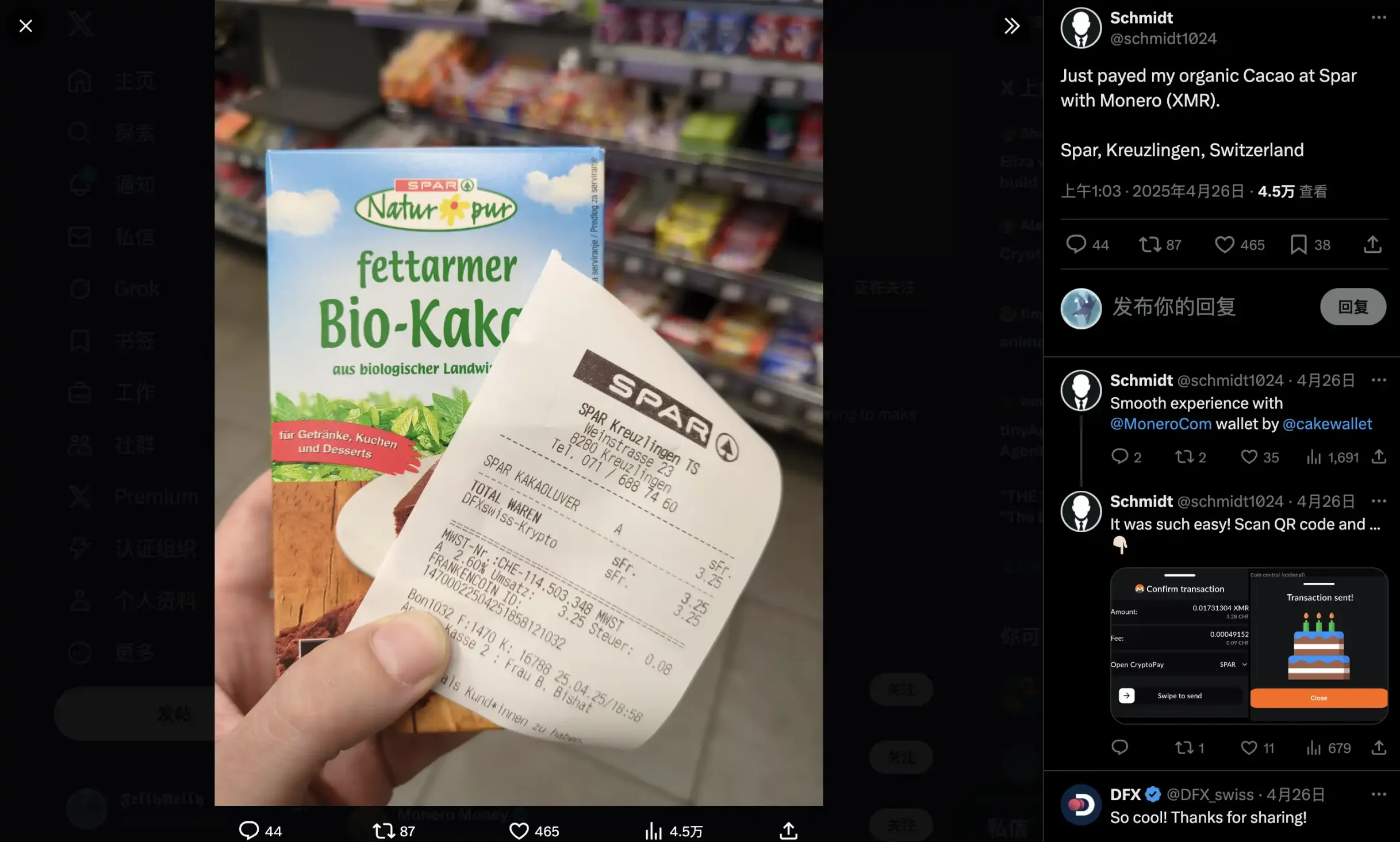
In regions with active cryptocurrency usage, some e-commerce or independent merchants accept Monero as a payment method, such as some technology-related online stores (hardware wallets or cryptocurrency peripheral technology products) or offline retail stores. Community member Schmidt also shared a receipt of purchasing low-fat organic cocoa drink at Spar using Monero.
Note: SPAR is one of the world's largest food retail chains, founded by Adriaan van Well in the Netherlands in 1932. It has over 13,900 stores across 48 countries. The community member's purchase was at the Kreuzlingen store in Switzerland, which has gained attention for accepting cryptocurrencies like Bitcoin and Monero.
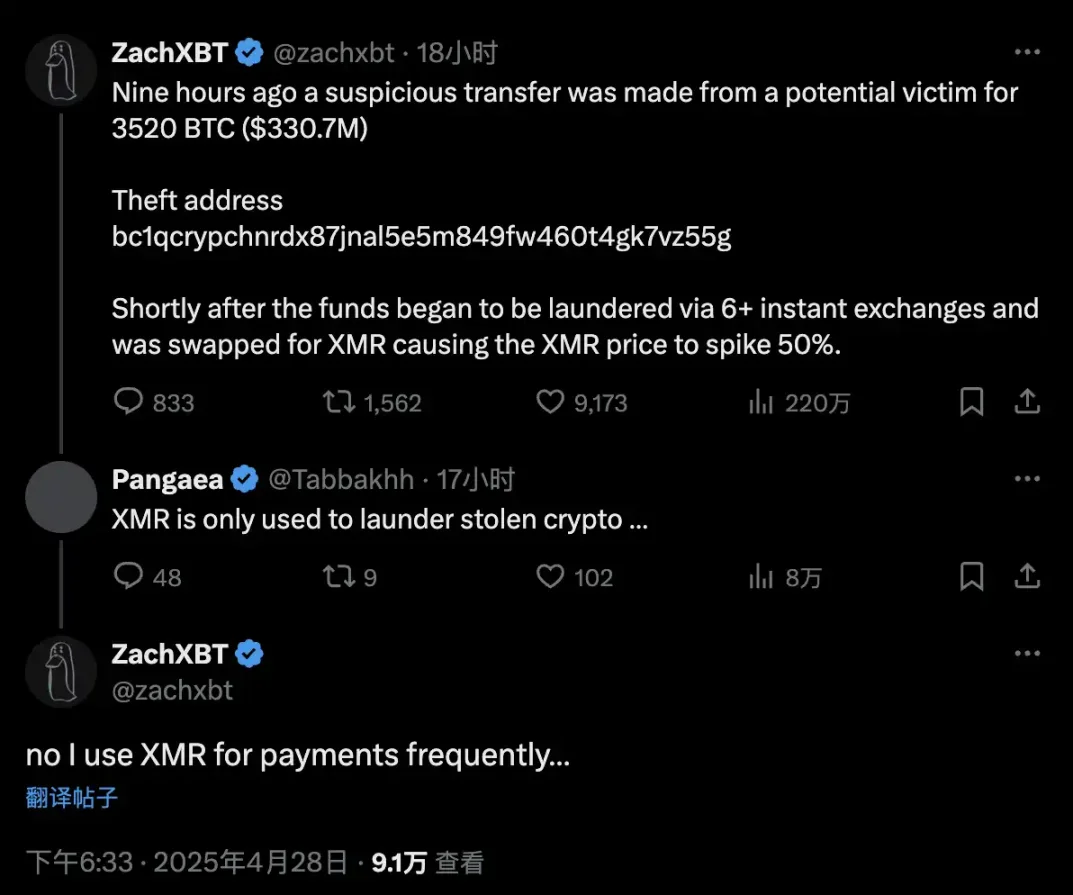
When commenters described Monero as a cryptocurrency for "money laundering", the well-known on-chain detective ZachXBT countered, "No, I often use Monero for payments", indicating he is also a Monero enthusiast.
Short-term Pump or Value Discovery?
Inflow of Stolen Funds
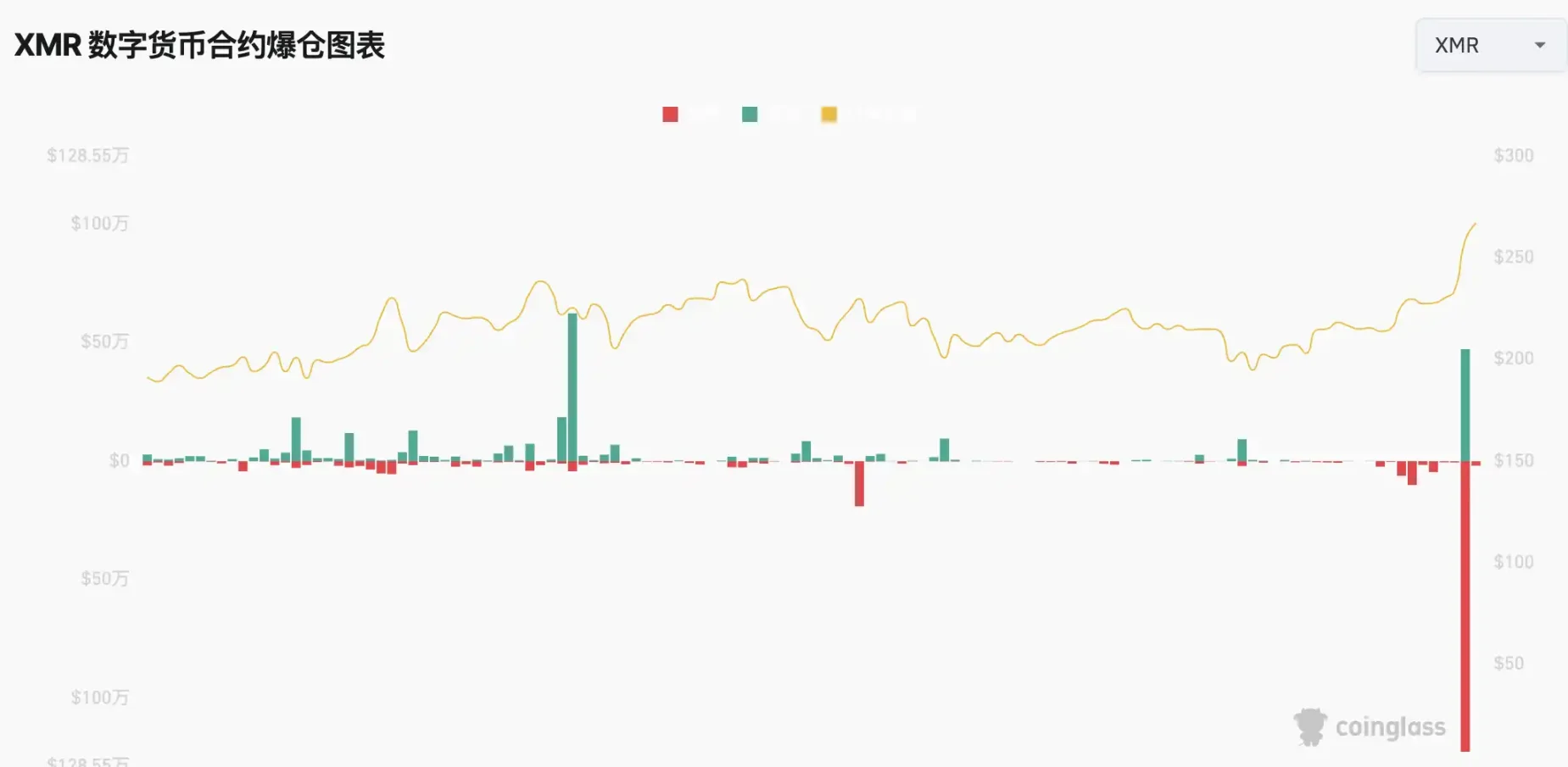
On-chain detective ZachXBT posted on social media, "Nine hours ago, a suspicious transfer of 3,520 Bitcoin (approximately $330.7 million) occurred from an address. These funds were then laundered through more than 6 instant trading platforms and converted to Monero, causing a 50% surge in Monero's price."
This also caused a large number of short positions to be liquidated, and traders were forced to repurchase assets, further increasing upward pressure on the basis of continuously growing spot demand. These combined factors may have created Monero's recent sudden rise.
Positive Project Developments
Some analysts believe that the growing anticipation of Monero's EP159 and EP160 upgrade proposals is also a factor in this rise. These proposals can make Monero more compliance-friendly, allowing users to provide transaction validity proof without exposing sensitive private information. The community believes this upgrade might enable Monero, which was delisted by major CEXs after the EU's updated anti-money laundering regulations in 2024, to be relisted on compliant top CEXs like Binance and Coinbase.
Additionally, the first DeFi project in the Monero ecosystem, Tari, is set to emerge. The project plans to merge mine with Monero and launch on the mainnet on May 6th, and many in the Monero community are eagerly anticipating this project.

When a tool is created, good and evil perspectives give it more meanings. Monero is like a microcosm of current cryptocurrencies, balancing between "freedom" and "regulation", wavering between "human rights" and "crime". The goodness and evil of human nature are infinitely magnified here, just as Einstein commented on the atomic bomb: "Science and technology are a double-edged sword that can both benefit humanity and destroy the world".