Written by: Luke, Mars Finance
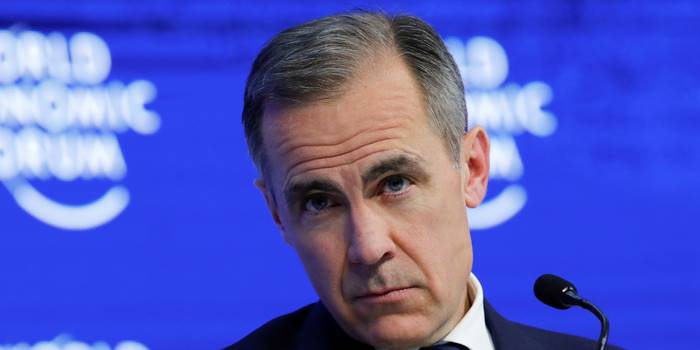
On April 28, 2025, Mark Carney, the former governor of the Bank of Canada and the Bank of England, led the Liberal Party to an overwhelming victory in the Canadian federal election, becoming Canada's 24th Prime Minister. This economist, known for addressing the global financial crisis, has made a dramatic transition from the ivory tower of central banking to the Canadian political arena. Carney's victory was partly due to the surge of anti-Trump sentiment and his promise to position Canada as a global leader in emerging technologies. However, for the cryptocurrency community, Carney's election raises an urgent question: How will his cautious and even critical attitude towards Bitcoin and decentralized finance shape the future of Canadian cryptocurrencies?
[The rest of the translation continues in the same professional and accurate manner, maintaining the original structure and meaning while translating to English.]First, Carney may drive the development of CBDC. His long-term support for a Canadian digital dollar aligns with the ongoing CBDC exploration by the Bank of Canada. Unlike Bitcoin's decentralized nature, CBDC will grant the government comprehensive transaction oversight, causing concern among cryptocurrency purists. The memory of the Trudeau government freezing bank and crypto transactions during the truck driver protests in 2022 remains fresh, and Carney's ideological alignment with Trudeau on CBDC matters may intensify public skepticism towards cryptocurrencies.
Second, Carney pledges to position Canada as a leader in "artificial intelligence, technology, and digital industries", which could provide opportunities for blockchain innovation, but under strict constraints. His platform emphasizes AI-driven economic reform, and blockchain's potential in secure, transparent data management might complement this. However, any blockchain development may proceed through regulated, government-approved frameworks, potentially marginalizing decentralized protocols like Bitcoin and Ethereum. X platform user @JinJooWon reflected this sentiment, stating that Carney's policies might "ignite blockchain innovation" while making decentralization "struggle to advance".
Third, Carney's approach to US tariffs might limit cryptocurrency growth. Trump's trade war, including 25% tariffs on Canadian steel and aluminum and broader tariff threats, raised recession concerns. Carney's response—retaliatory tariffs and diversifying trade partners—demonstrates a pragmatic and risk-averse stance. In this context, cryptocurrency's volatility and regulatory uncertainty might be viewed as a burden rather than an asset.
Carney vs Trump and Trudeau: Cryptocurrency's Hot and Cold Extremes
To understand Carney's potential impact on cryptocurrencies, a comparison with US President Trump and former Canadian Prime Minister Justin Trudeau is necessary.
Donald Trump: The Anti-Crypto Opposite
Trump's second term starting January 2025 surprisingly shifted towards crypto support. He signed an executive order banning US CBDC while establishing a Bitcoin strategic reserve, contrasting sharply with his first term. Trump supports cryptocurrencies as an inflation-fighting tool, inspiring the US crypto community. His policies directly oppose Carney's stance, potentially creating rifts in Canada-US relations.
Carney advocates centralized control and CBDC, while Trump embraces decentralization, potentially attracting crypto investments to the US. Canadian crypto startups, already facing strict regulations, might find the US more appealing. Moreover, Trump's tariff and acquisition threats dominated Canadian political discourse, overshadowing domestic issues like crypto regulation. Carney's focus on countering Trump's economic aggression might leave little room for detailed crypto policy, further solidifying a conservative stance.
Justin Trudeau: Continuity and Transformation
Carney's predecessor Trudeau was equally skeptical of cryptocurrencies. In 2022, he criticized Poilievre's pro-crypto platform as "reckless". The Trudeau government prioritized CBDC development and froze crypto transactions during the 2022 truck driver protests to suppress protest funding. Carney's views align closely with Trudeau's CBDC stance, but his global financial experience and governance style set him apart.
Trudeau's crypto policies were reactive, driven by political crises, while Carney's might be more proactive, rooted in his central bank philosophy. His emphasis on AI and technology suggests a more strategic approach to digital finance, potentially integrating blockchain into government services while maintaining a distance from decentralization. However, unlike Trudeau, a long-time parliamentarian, Carney lacks elected political experience and might be less attuned to public sentiment, especially among young Canadians supporting crypto policies.
Long Road Ahead: Balancing Innovation and Control
With Carney entering the Prime Minister's office, his cryptocurrency policy may reflect his broader governing philosophy: cautious, prudent, and stability-first. His skepticism towards Bitcoin and decentralized finance, stemming from his central bank background, signals stricter regulation and CBDC advancement for Canada's crypto industry. However, his commitment to technological leadership opens doors for blockchain innovation, contingent on alignment with government priorities.
For Canada's crypto community, the challenge lies in promoting decentralization within a regulated environment. Carney's global perspective and crisis management expertise make him a formidable leader, but his top-down approach might conflict with crypto's bottom-up spirit. As an X user noted: "Digital finance will soar, decentralization will struggle?" The question isn't whether Carney will shape Canada's crypto future—he will—but whether he can balance innovation and control.
Compared to Trump's pro-crypto policies and Trudeau's reactive measures, Carney's vision is both ambitious and cautious—a technocratic blueprint for the technological age. Whether this vision will enhance Canada's tech leadership or stifle its crypto potential remains to be seen. Currently, global attention is focused on Carney, the crisis-managing banker, facing his greatest challenge yet: leading Canada through the uncharted waters of trade wars, technological revolution, and digital finance.