Preface
Currency is the foundation of economic activity, but we rarely explore what qualities make currency effective. As digital currencies challenge traditional monetary concepts, we need to re-examine what qualities enable currency to fulfill its basic functions in the modern economy.
History shows that the definition of currency is not merely about its technical characteristics, but about its ability to evolve through different developmental stages. A true currency must traverse a path filled with challenges, which most emerging currencies cannot complete.
Complete Monetary Life Cycle
To become a fully functional currency, an asset must successfully complete four developmental stages:
1. Attracting Value
First, currency must attract capital and attention. Whether through precious metals, government endorsement, or potential appreciation, all successful currencies begin by attracting people to hold them. This initial attraction lays the foundation for subsequent development.
Without this stage, currency cannot accumulate the critical mass needed for large-scale adoption. Many digital currencies excel in this stage, leveraging speculation and network effects to establish initial adoption and liquidity.
2. Scale Development
Secondly, currency must achieve sufficient scale and liquidity to support meaningful economic activity. It needs adequate market depth to avoid transactions causing excessive volatility, and sufficient distribution to ensure finding a counterparty is not overly difficult.
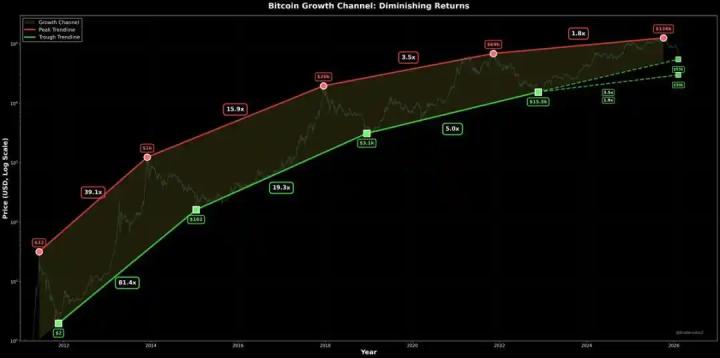
Scale brings credibility, network effects, and the necessary liquidity for broader applications. Major cryptocurrencies like BTC have successfully passed this stage, with market capitalizations reaching trillions of dollars.
3. Stabilization Mechanism
Third, currency must develop mechanisms that make it reliable in commerce and contracts. Stability does not mean fixed value, but predictability and resilience under market pressure. This requires technical mechanisms and institutional support.
Many emerging currencies fail at this stage. True stability requires a system that can operate normally under various market conditions without collapsing or needing external intervention. This means the currency must have inherent response mechanisms to address oversupply and undersupply.
4. Economic Utility
Finally, currency must be truly practical in ordinary economic activities beyond speculation. It must function as a reliable unit of account, medium of exchange, and store of value across various economic environments.
True utility means supporting all financial functions required by modern economies: efficient payments, reliable contracts, reasonable lending markets, and stable planning cycles. This means the currency becomes mundane and practical, rather than merely exciting and novel.
Coordination Challenges
People rarely realize that later stages require solving fundamental coordination problems that become increasingly difficult as system scale expands.
Consider basic monetary functions like providing last-resort capabilities, implementing emergency stabilization measures, or intervening during crises. These functions are inherently public goods. They require entities to place system stability above immediate self-interest—bearing personal risks for collective benefit.
In purely self-interest-driven decentralized systems, these critical functions lack structural support. Systems may operate well under normal conditions but collapse when stability is crucial.
We repeatedly see this vulnerability in cryptocurrency markets:
During the March 2020 crash, exchanges like BitMEX had to suspend trading to prevent liquidation cascades that could threaten the entire ecosystem with total collapse.
- On "Black Thursday", MakerDAO required emergency governance response and community rescue due to insufficient collateralization.
- LUNA initially survived market pressures through massive interventions by well-funded participants but completely collapsed when its scale grew beyond these supporters' ability to stabilize.
- These examples reveal a profound truth: despite cryptocurrencies' theoretical advocacy for trustless systems, their survival during crises repeatedly depends on discretionary interventions by implicit trusted participants.
As system scale expands, this coordination problem becomes exponentially more difficult. Problems that might be solved through informal coordination at smaller scales become impossible once the system grows beyond certain thresholds.
Capital Formation Requirements
Beyond stability, a healthy currency must support capital formation—the lending process that drives economic productivity. This is another fundamental limitation currently faced by existing cryptocurrencies.
Crypto assets' use as collateral is increasing, but they are rarely used as debt valuation assets. Few are willing to borrow in BTC or ETH because their uncertainty creates unmanageable risks for borrowers and lenders.
A fully functional currency must provide a stable unit of account for cross-time agreements. Whether borrowing to build a house, finance a business, or develop infrastructure, they need reasonable certainty about their debt's future value.
Designing a Complete Monetary System
The limitations of existing cryptocurrencies are not temporary issues but fundamental design constraints. Assets like BTC and ETH are primarily designed for the first two developmental stages—attracting value and scale development.
Their fixed or highly restricted supply models created powerful incentives for early adoption and speculation. This design excelled at launching value and achieving initial scale but becomes a burden when stability and utility are needed for broader adoption.
Without mechanisms to adapt to changing economic conditions, provide last-resort functions, or stabilize during crises, these systems remain fundamentally incomplete monetary systems. They operate well as ownership ledgers but struggle to become fully functional currencies.
Complete Architecture of a Healthy Currency
Based on these observations, we can define what a complete monetary architecture requires:
- Adaptive Supply Mechanism: A healthy currency must be able to expand when demand exceeds supply and contract when supply exceeds demand, creating natural stabilizing pressure.
- Last-Resort Function: A healthy currency needs built-in mechanisms to provide liquidity, stability, and intervention during market pressures without external coordination.
- Productive Reserve Utilization: A healthy currency should use its accumulated value for productive purposes rather than leaving it idle or dissipating, creating sustainable system value.
- Lending Market Foundation: A healthy currency must provide the stability necessary for functional lending market development without creating excessive risk.
- Transparent Health Indicators: A healthy currency should offer clear system health indicators, enabling participants to make informed decisions based on fundamental strength rather than merely market sentiment.
The historical development of traditional monetary systems is not coincidental—these characteristics evolved because they are necessary for currency to operate under diverse economic conditions.
Bridging the Gap
This analysis does not deny cryptocurrency achievements. BTC and other cryptocurrencies have achieved extraordinary success by successfully completing the first two developmental stages—proving that launching a non-sovereign monetary system through market incentives is possible.
Their success provides a crucial strategic approach for the initial stages of monetary evolution. The core insight is that a complete monetary system must be designed considering its ultimate mature state while still addressing early evolutionary stages.
Monetary technology needs mechanisms that balance initial growth and speculation while providing pathways to achieve stability and utility once sufficient scale is reached. They need to combine the launch capabilities that made cryptocurrencies successful with the currently lacking adaptive mechanisms.
Conclusion: The Path to Sound Currency
The evolution of currency is not merely a technical issue, but a solution to coordination problems that increase with scale. Sound currency must be designed to operate throughout its entire lifecycle—from initial adoption to mature application—with mechanisms to adapt to changing conditions without continuous external intervention.
This does not mean returning to a completely centralized system, but designing a system with an integrated architecture and built-in mechanisms required for monetary operation. This means creating a currency that is effective not only under optimal conditions but also in various economic scenarios.
As we continue to develop digital currencies, these insights provide us with a framework for assessing their potential. We should not focus solely on technical characteristics or short-term price appreciation, but consider whether a currency possesses the complete architectural elements needed to perform the function of a quality currency throughout its evolution.
The future of currency belongs not to those with the most advanced technology or the strongest initial growth, but to systems that comprehensively understand the actual operating mechanisms of currency at the design stage.