Author: Lisa Editor: Sherry
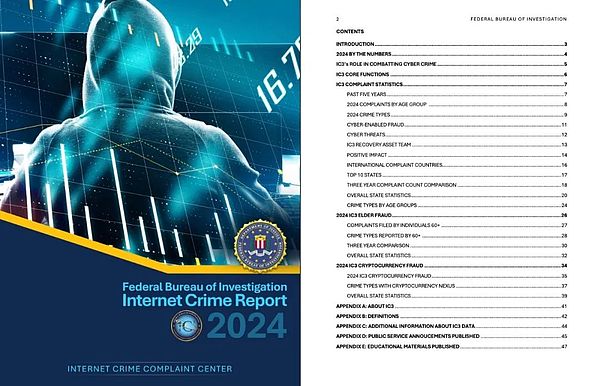
In April 2025, the Federal Bureau of Investigation (FBI) releasedthe "2024 Cryptocurrency Fraud Report". Based on data collected by the FBI's Internet Crime Complaint Center (IC3) in 2024, the report analyzes the number of cryptocurrency-related complaints, scale of losses, victim profiles, crime types, and asset recovery progress. This article will interpret the core content of the report to help readers quickly grasp trend changes and enhance awareness and prevention of complex cybersecurity threats.
Key Point One: 2024 Complaint Data
1. Overall Situation
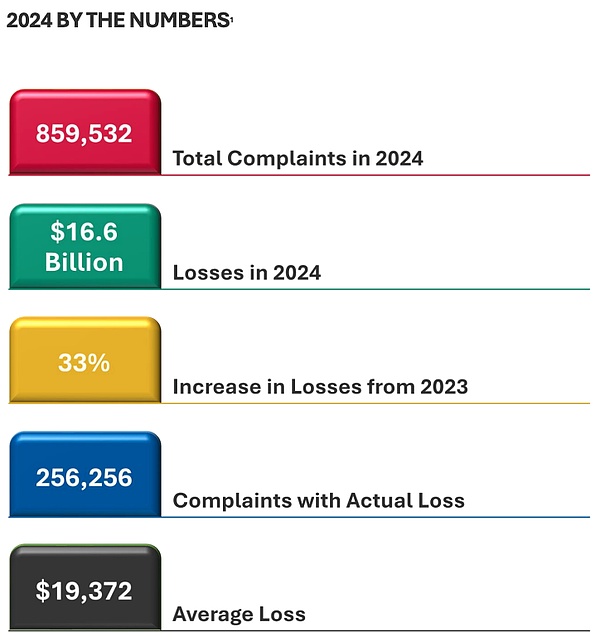
In 2024, IC3 received a total of 859,532 complaints, causing actual losses of $16.6 billion, a 33% increase from 2023. Among these, 256,256 complaints involved actual financial losses, with an average of approximately $19,372 per incident. About 83% of the losses were caused by cyber fraud.
2. Cryptocurrency-Related Situation
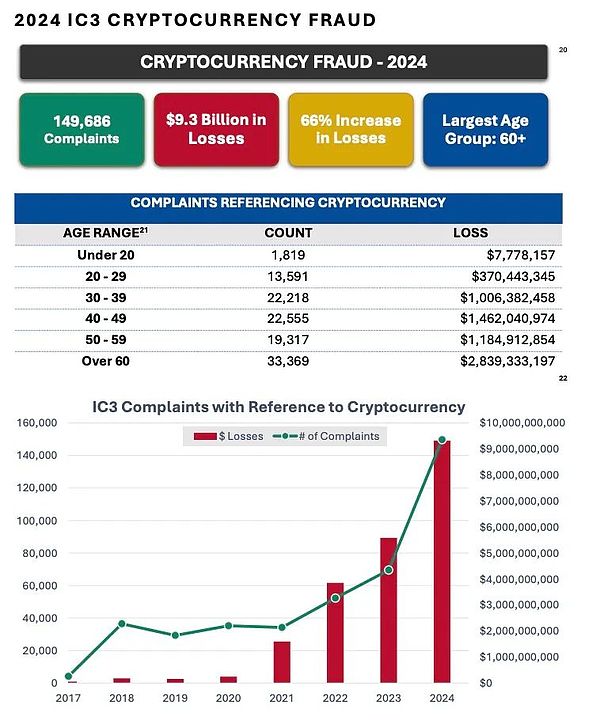
Cryptocurrency-related complaints reached 149,686, causing $9.3 billion in losses, a 66% year-on-year increase. Among victims, those over 60 years old represented the highest proportion.
3. Over 60 Age Group
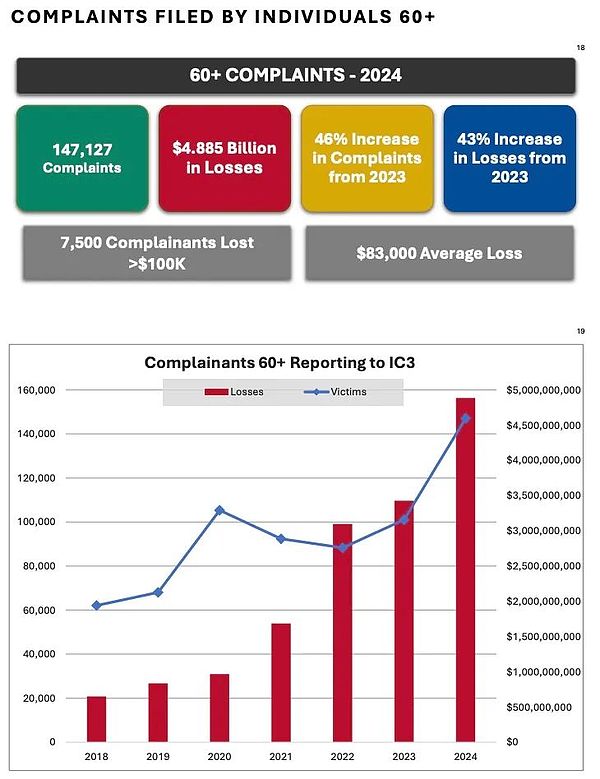
This group submitted 147,127 complaints, reporting losses of $4.885 billion. Complaint volume increased by 46% year-on-year, with losses increasing by 43%. Among them, 7,500 people reported losses exceeding $100,000, with an average loss of $83,000.
Key Point Two: Victim Group Analysis
1. Overall Age Distribution
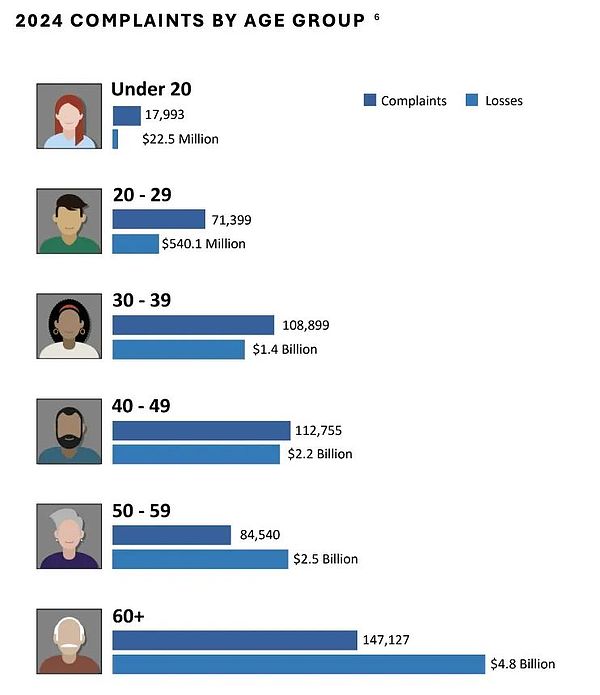
Under 20: 17,993 complaints, losses of $2.25 million.
20-29 years old: 71,399 complaints, losses of $540.1 million.
30-39 years old: 108,899 complaints, losses of $1.4 billion.
40-49 years old: 112,755 complaints, losses of $2.2 billion.
50-59 years old: 84,540 complaints, losses of $2.5 billion.
Over 60 years old: 147,127 complaints, losses of $4.8 billion.
2. Cryptocurrency Victim Group
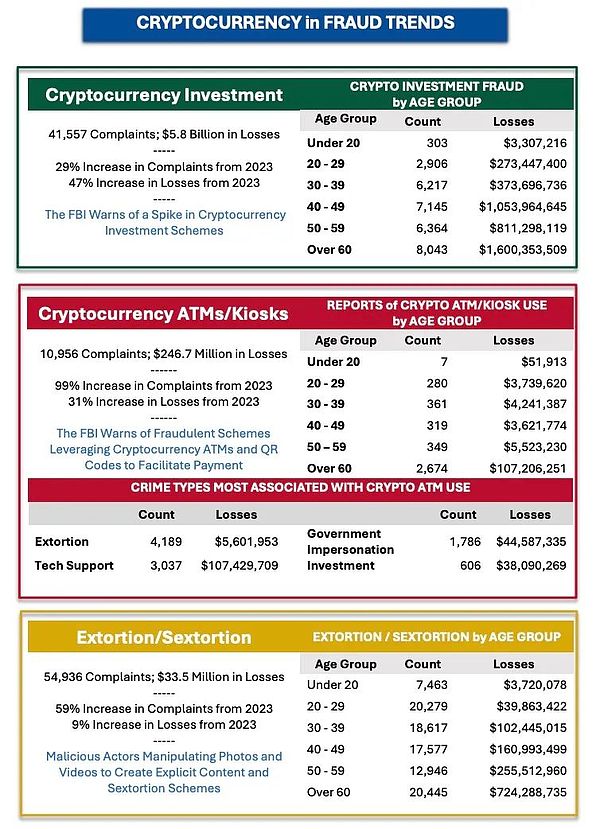
In cryptocurrency investment fraud, the over 60 age group had the most complaints (8,043), with losses reaching $1.6 billion, far exceeding other age groups. Due to insufficient anti-fraud awareness and unfamiliarity with new payment methods like cryptocurrency ATMs, they became the primary target of fraudsters (2,674 incidents, losses of $107,206,251), and were also the group with the most complaints in extortion/sexual extortion (20,445 incidents, losses of $724,288,735).
Key Point Five: Preventing Cryptocurrency Fraud
In response to the high incidence of crypto fraud, the FBI offers the following prevention recommendations:
Stay vigilant and avoid high-return temptations: High-yield, zero-risk investments are often scams.
Verify the legitimacy of trading platforms: Use regulated exchanges and avoid clicking on unknown links in social media advertisements.
Avoid transferring money to strangers: Do not trust "investment mentors" or "friends" met online.
Be cautious of cryptocurrency ATM transactions: Scammers often require victims to make payments through ATMs, so be extremely careful.
Use two-factor authentication (2FA): Enhance account security and prevent hacker intrusions.
Summary
The FBI's "2024 Cryptocurrency Fraud Report" reveals new trends in cybercrime in the current crypto asset environment: cryptocurrency-related cases have significantly increased, with individuals over 60 being the primary victims; fraud methods have become highly sophisticated and internationalized, and cryptocurrency has become the preferred tool for criminals to launder and transfer funds.
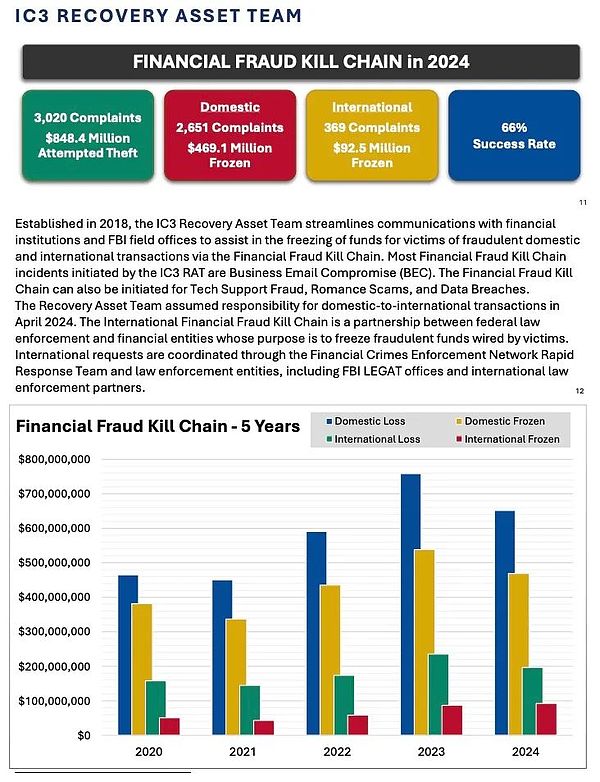
Despite some progress in asset recovery and cross-border law enforcement cooperation, given the overall scale of losses and growth trend, ordinary users still need to remain highly vigilant, effectively improve their security awareness, and avoid falling into various fraud traps. For governments and financial institutions, continuing to strengthen international collaboration, regulatory enforcement, and tracking of fund flows will be key measures to curb cybercrime and enhance enforcement efficiency.