On May 3, 2023 , the Sui mainnet was officially launched, 2 years ago. Many people may remember that when Sui first came online, the situation was not as optimistic as it is now. The investor FTX collapsed, and the foundation was forced to "buy back tokens" and issue tokens in a bear market. The price of the token fell from $1.7 to $0.4. There was no regular token airdrop, but a lottery for token purchase quotas. The community was flooded with messages like "No airdrop, No community." and some even called it a "scam."
In just two years, everything has changed. In this cycle when Bitcoin finally breaks through $100,000, Sui is undoubtedly the dark horse of the new public chain. Looking at the entire public chain landscape, its popularity is only slightly inferior to Solana, which was "reborn from the ashes" in this round.
In fact, the FDV (full circulation market value) of Sui's governance token SUI is second only to BTC, ETH, XRP, SOL, and BNB among non-stable coins, making it the sixth largest crypto asset in the entire industry.
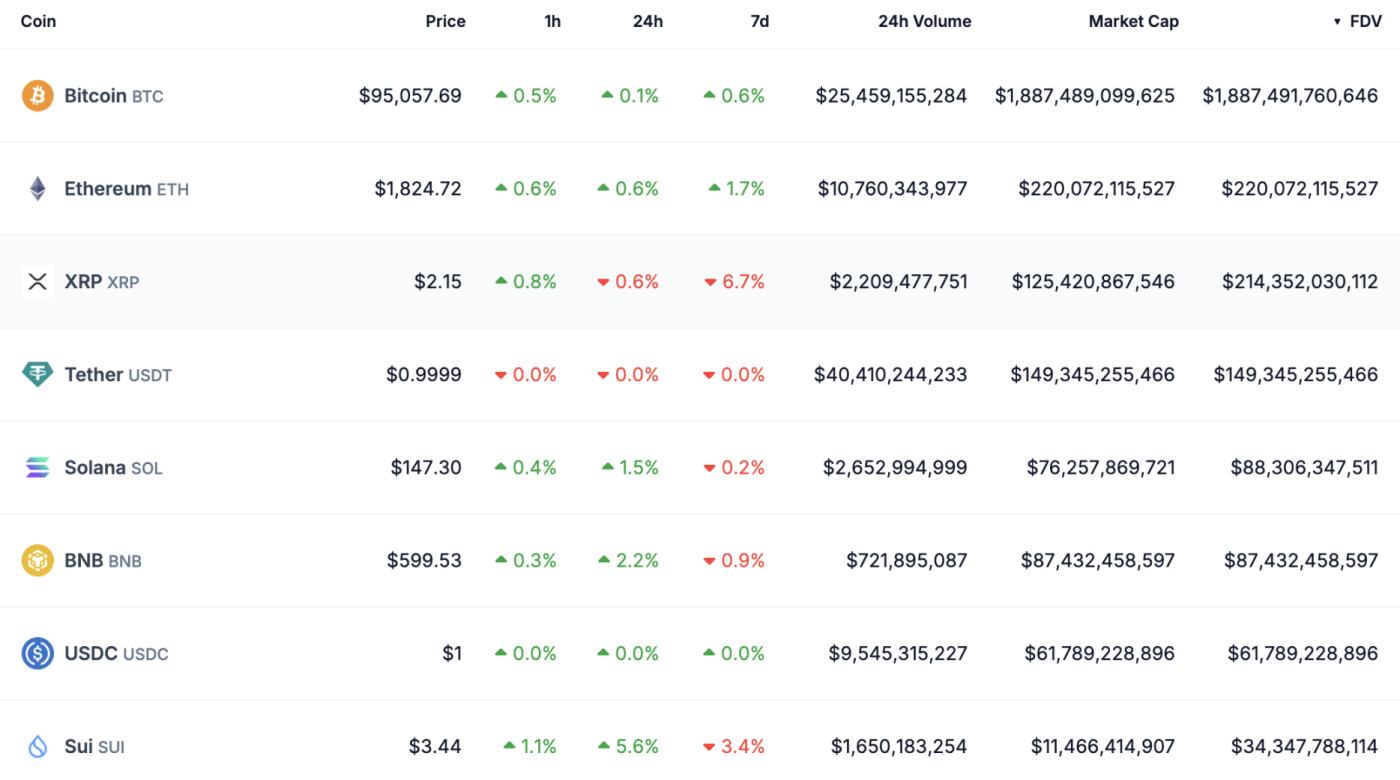
Cryptocurrency FDV ranking, data: CoinGecko
How did Sui achieve such impressive results? What did it do right, and where did its competitors fall short? Taking the opportunity of Sui’s second anniversary, the author, as a deep ecological participant, attempts to uncover the growth code behind Sui’s data using personal experience and subjective feelings as clues.
DeFi Ecosystem
Sui now ranks 9th among all public chains with a DeFi TVL (totally locked value) of US$1.78 billion, surpassing the old public chain Avalanche and the Move language public chain Aptos, which was the first to mainnet a year ago. However, Sui's DeFi ecosystem construction was not completed overnight.
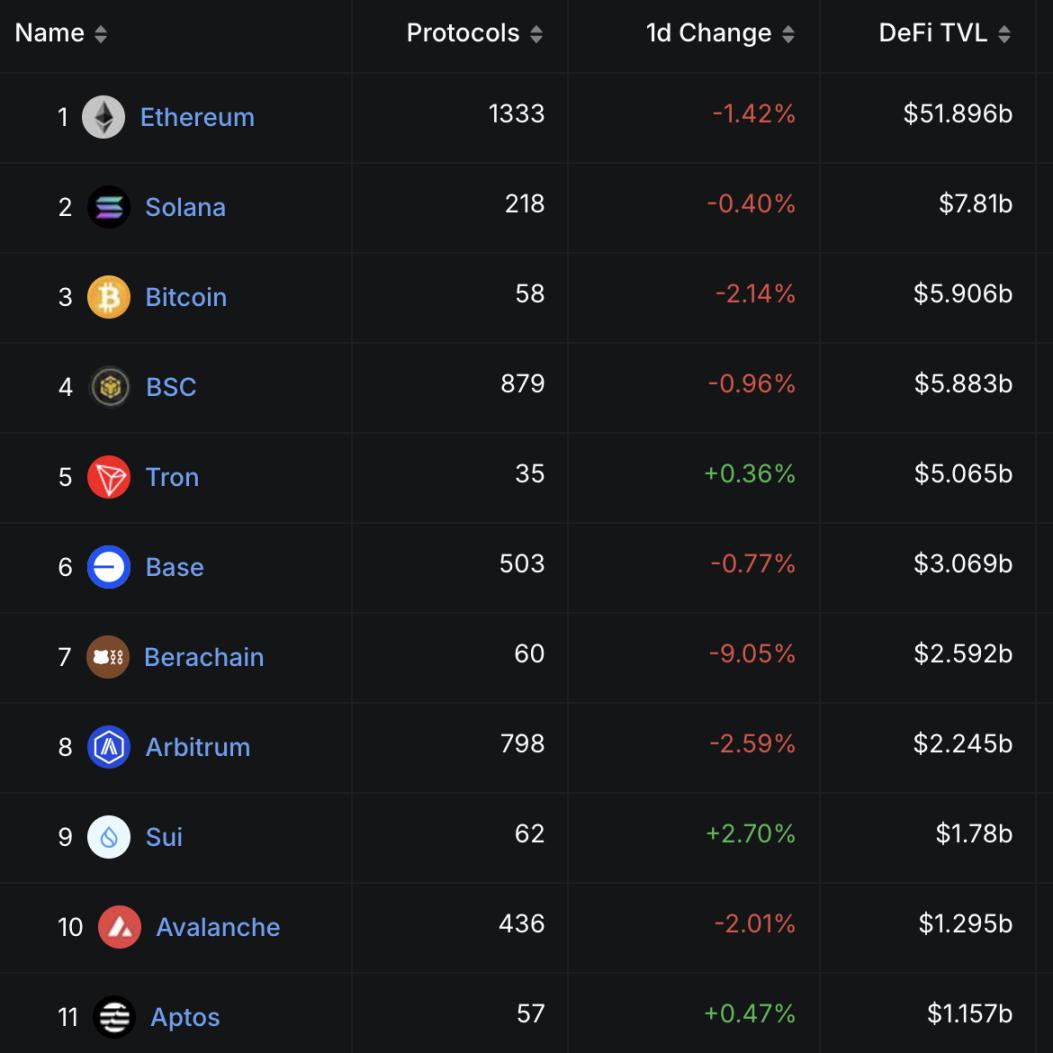
Public chain DeFi TVL ranking, data: DeFiLlama
Like most "VC coins", Sui's mainnet activity data right after the coin was launched was not good. DeFi lacked users and could not function. How did Sui reverse this situation?
Quests "spends a lot of money" to introduce the first wave of traffic
Since July 2023, Mysten Labs (Sui developer) has launched three Bullshark Quests in less than half a year. Users can obtain SUI token airdrops by completing tasks, 5 million per issue, and a total of 15 million tokens have been "dropped".
It is worth noting that Sui’s early task incentive model tended to be “all-inclusive”, with rewards distributed based on number of people rather than capital. Although those ranked high could get a large number of tokens, ordinary retail investors ranked relatively low also had good returns.
During this stage, a large number of retail investors and airdrop studios poured into the Sui ecosystem, helping Sui establish an objective base of early users. Sui's official rewards also left an impression of "not competitive" and "retail investor-friendly" in the airdrop track. The author was also attracted by Quest at the end of 2023 and started to get in touch with the Sui ecosystem.
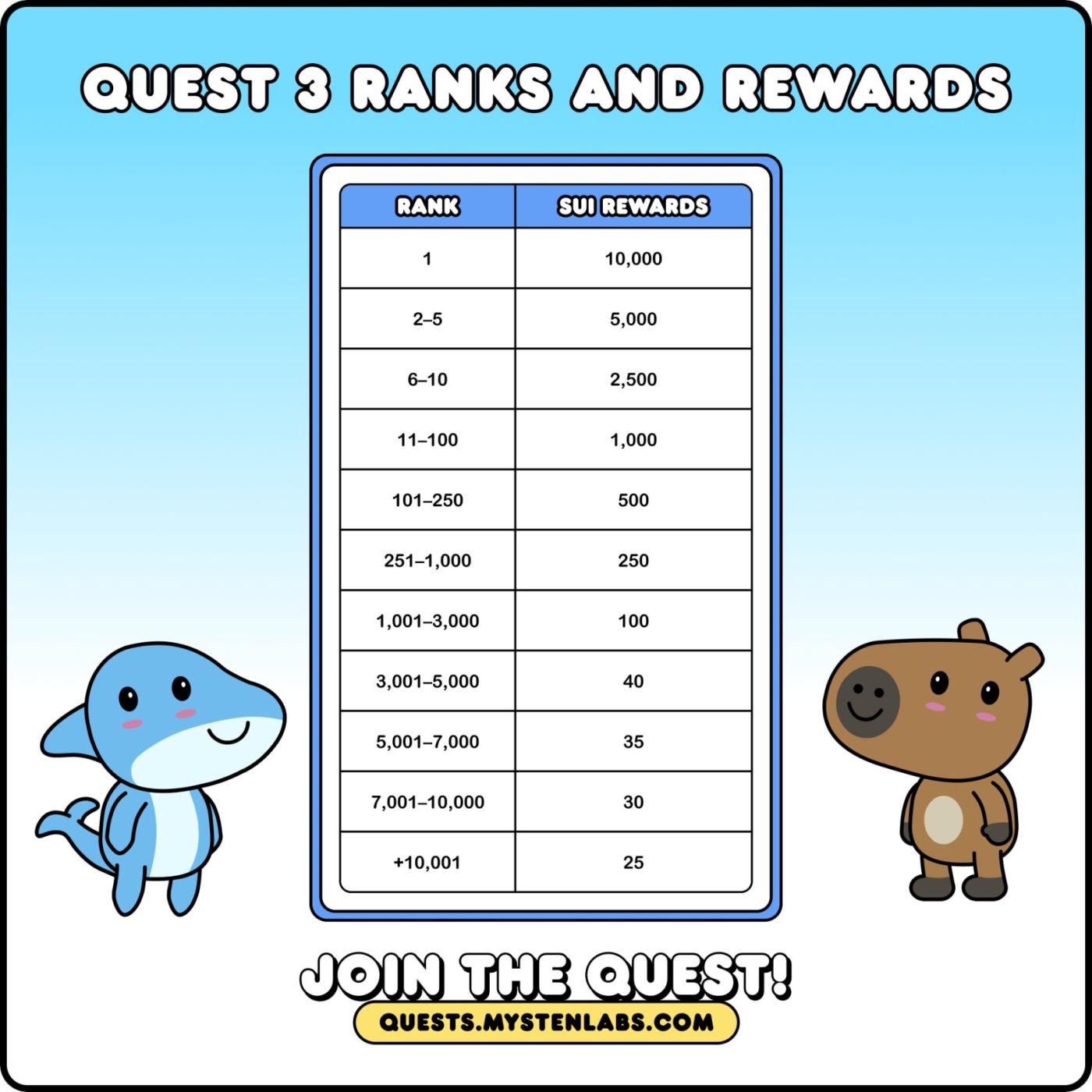
Quest 3 Tokens for different ranking tiers
Token incentives, strong coin prices alleviate selling pressure
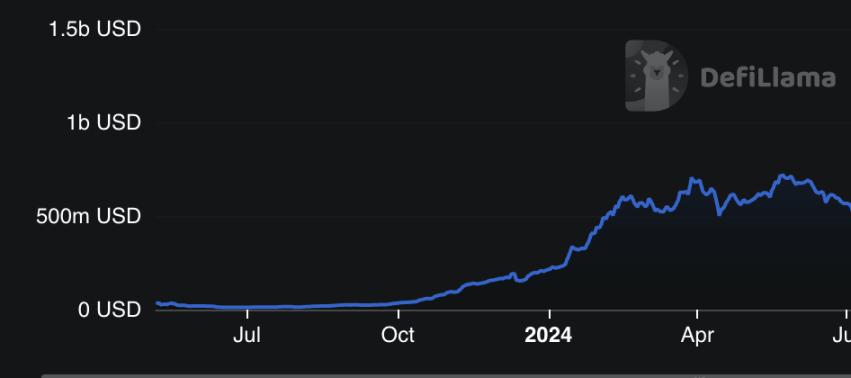
Sui’s early TVL trend under token subsidies
Sui is the first public chain in this cycle to provide interest rate subsidies for DeFi protocols using tokens. In the early days, relatively niche protocols could even earn annualized returns of over 100% through stablecoins. The author has participated in many DeFi mining activities and was tempted by high interest rates. At this stage, he increased his capital deployment on Sui.
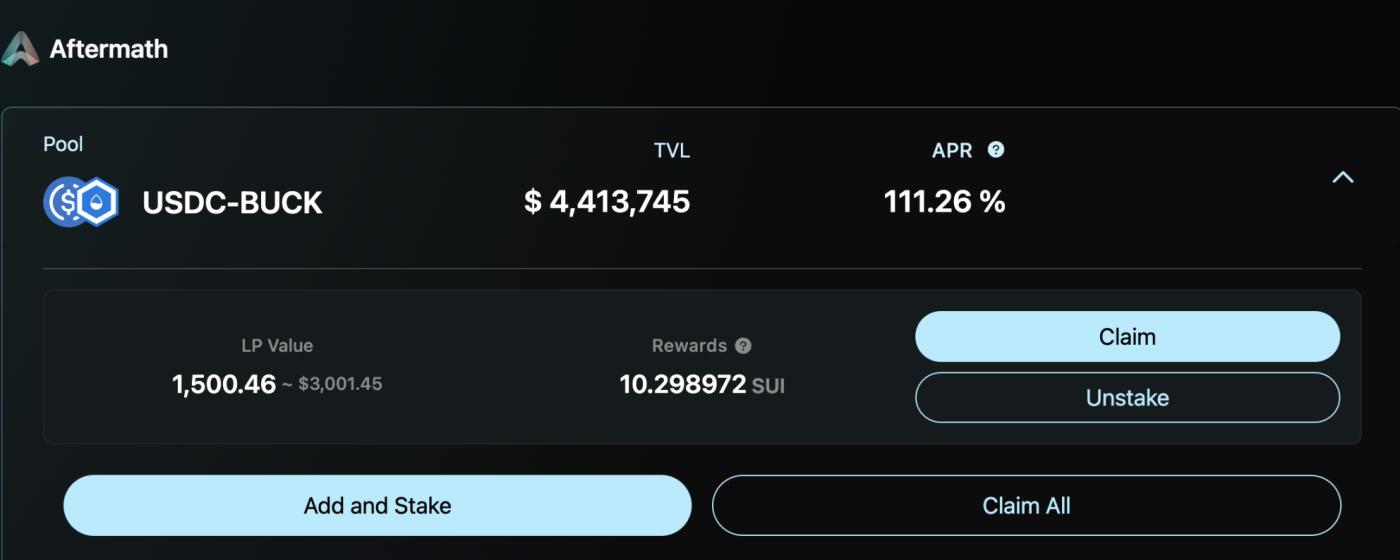
Early interest rates for staking stablecoins in Aftermath were as high as 110%
Since then, public chains that imitated Sui in heavily subsidizing the DeFi ecosystem include Aptos, Starknet, Sei, ZKsync, etc., but the ecosystem has not achieved Sui's prosperity. Where does the difference come from? DeFi interest rates attract mining whale, and the price trend of the tokens mentioned above is relatively weak. In order to lock in profits, large investors have to "mine, withdraw, and sell", which creates continuous selling pressure on tokens and further reduces the price. To maintain the same interest rate, more tokens need to be subsidized, and this cycle continues.
However, SUI's high token subsidies were issued when the coin price was low. Since then, the coin price has steadily risen, whale' willingness to hold SUI tokens has increased, selling pressure has weakened, and the number of tokens required to maintain the same interest rate has also decreased, achieving a positive spiral of coin price growth and TVL growth.
Referring to the current SUI price, the actual annualized return of the DeFi protocol with an annualized return of 100% mentioned above may be above 300%, and "mining, withdrawing, and selling" will actually result in selling out.
Chinese developers, very efficient
Because Evan Cheng, the founder of Sui developer Mysten Labs, is originally from Taiwan, there are a lot of Taiwanese teams in the Sui ecosystem. The ecosystem's lending protocol Scallop, options protocol Typus, stablecoin protocol Bucket, etc. are all backed by Taiwanese teams.
The advantage of having many Chinese developers is that development efficiency is high and the quality of the code is guaranteed. In comparison, European and American teams are very "Buddhist" in their approach to work.
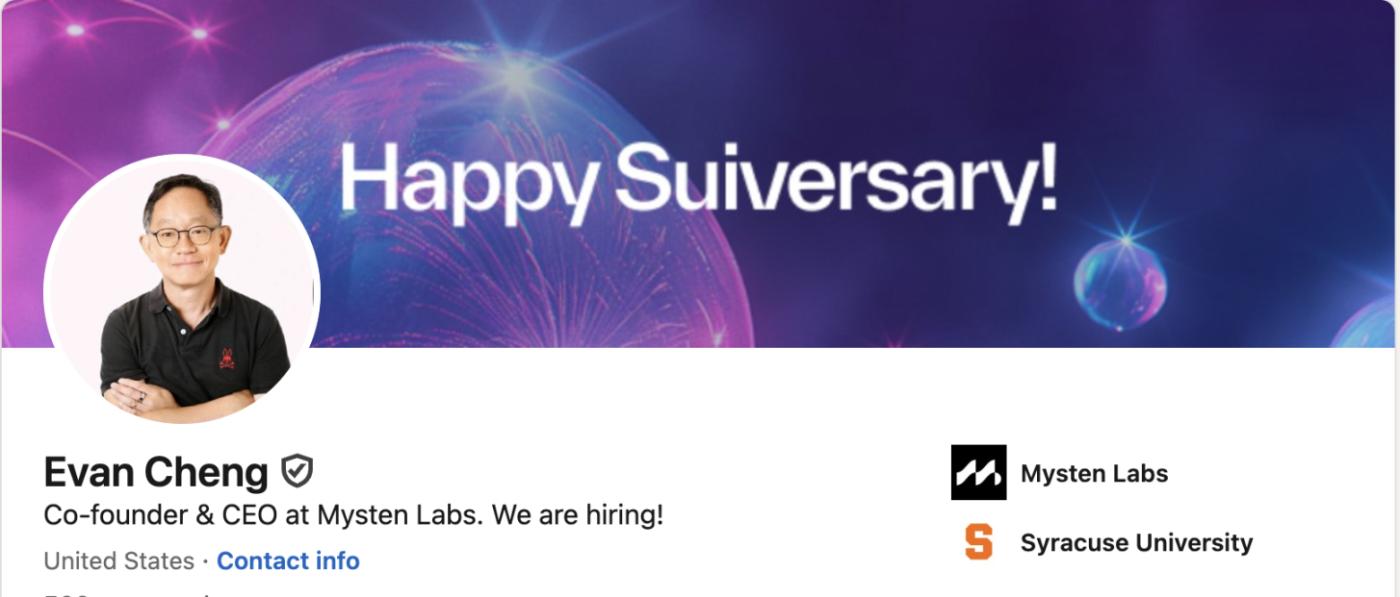
Mysten Labs Co-founder and CEO Evan Cheng
Wealth Effect
Whether an ecosystem is successful is closely related to whether it can create wealth for ordinary users and whether it has a wealth effect. If we look back at the timing of Solana's rise from a bird's eye view, in addition to its leading position in the Meme track, the wealth-creating effect of Jito and the subsequent Jupiter airdrop attracted countless retail investors to invest in Solana's unissued points project, driving the development of DeFi, which is an indispensable part.
At the end of 2023 and the beginning of 2024, the top lending protocols Scallop and Navi on Sui also learned how to play on Solana, launched a points system and issued coins one after another. A lot of funds overflowing from Solana (it is undeniable that Solana was still the first choice at the time) participated in these two projects.
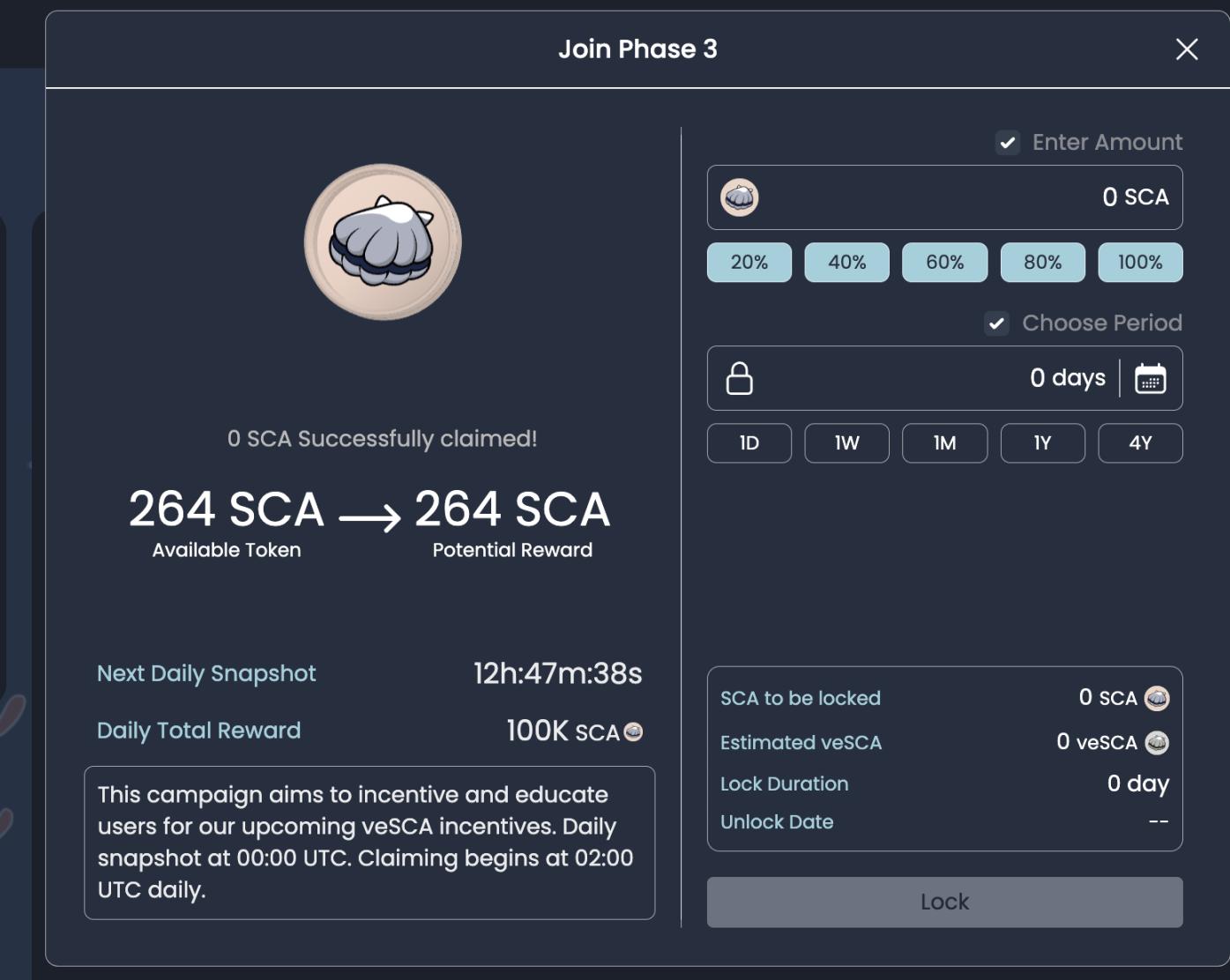
The author participated in the last train of Scallop airdrop with $10,000 and was airdropped a hot pot meal
But at that time (actually now), Sui’s original project could not support a higher valuation, so after Solana’s airdrop of hundreds or thousands of dollars, everyone received tens, hundreds, or even a few dollars of SCA, and began to complain that users had no wealth effect.
I didn’t expect that SCA would be the “most conscientious” airdrop in the Sui ecosystem in quite a long time. Navi, the neighboring company, even issued its coin and listed it for a year, but “forgot” about the airdrop users and used the points ranking to PUA the users for more than a year.
Official intervention to create wealth effect
The wealth effect problem is not unique. Public chains such as Aptos, Starknet, Sei, ZKsync, etc. have not achieved any success in this regard, or in other words, only a few public chains have wealth effects.
But if there’s a problem, Mysten Labs has a solution.
Mysten Labs is almost unique in that it develops projects on its own and then issues coins to the project parties through airdrops in its own ecosystem. Mysten Labs can satisfy your imagination if the valuation of Sui's original project cannot be supported. Including the Sui mainnet(tens of billions of dollars), Mysten Labs has incubated three unicorn-level (over 1 billion U.S. dollars) protocols and platforms, all of which revolve around Sui. (For details, see: Sui Developer Product Matrix Overview: More Than Just a Public Chain )
Deepbook
Deepbook is positioned as the liquidity center on Sui and is a CLOB (order book exchange) at the protocol level on Sui. Since its launch, FDV has peaked at over $3 billion and is currently still around $1.8 billion.
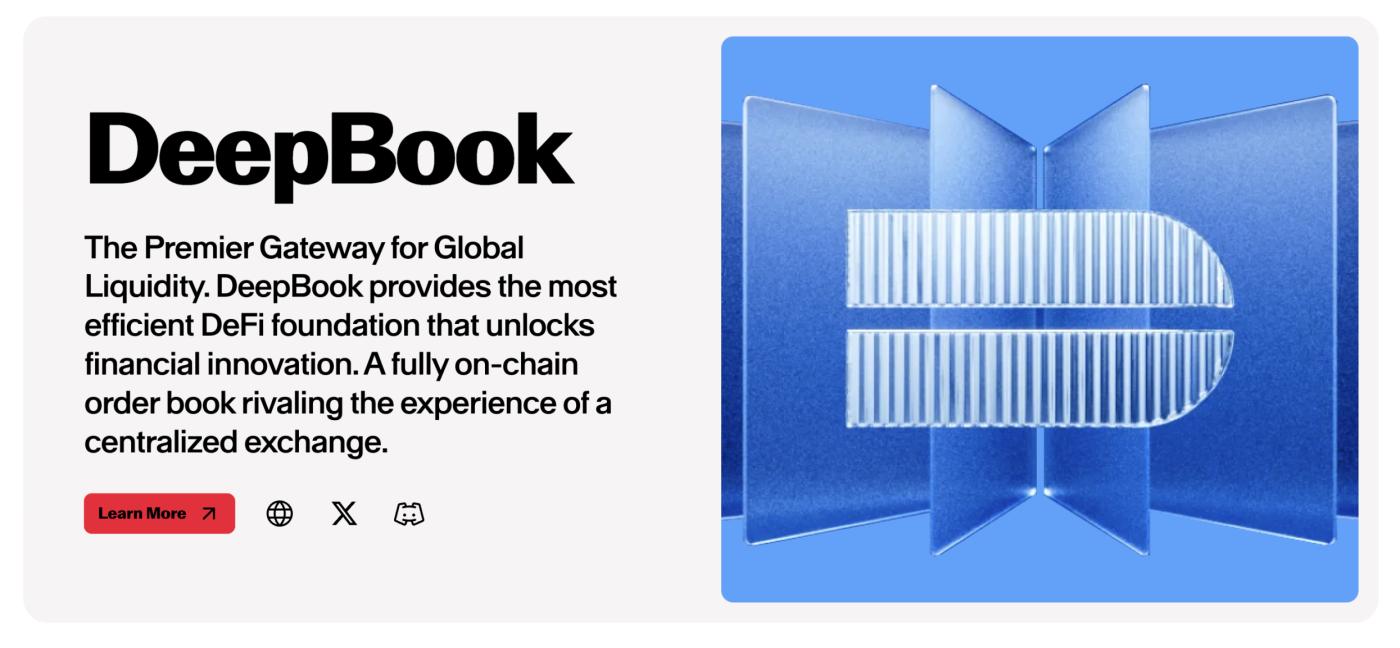
On October 14, 2024, DEEP will officially launch TGE. 10% of the total tokens will be used for user airdrops, with a maximum value of US$300 million. A total of 101,968 Sui addresses are eligible to claim.
Sui Name Service
Sui Name Service is a domain name protocol on Sui. In addition to reflecting the address on the Sui chain in .sui format, it is also deeply connected with other Mysten Labs projects such as Walrus. If you want to deploy a website on Walrus with a custom domain name, you need to purchase SuiNS. For example, the URL of the official website of Stake WAL is the relatively cumbersome URL stake-wal.wal.app, rather than stake.wal.app or staking.wal.app. The reason is that the two SuiNS domain names, stake.sui and staking.sui, have been bought by unofficial people.
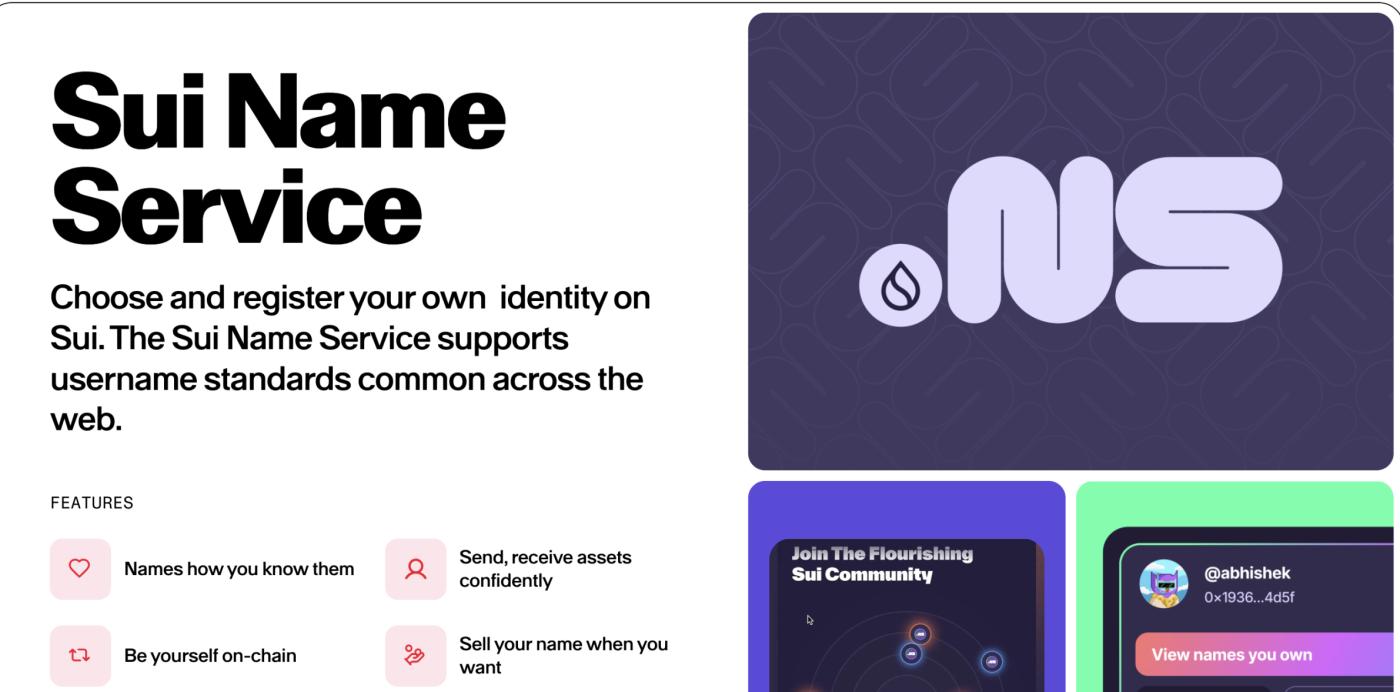
On November 14, 2024, NS will be open for airdrops, with 10% of the total tokens allocated to community airdrops, with a peak value of US$30 million.
Walrus
Walrus is a decentralized storage and data availability protocol based on Sui. Ideally, using Walrus will bring deflationary pressure to the SUI token. Walrus raised $140 million in separate funding. (Recommended reading: Interpretation of the decentralized storage protocol Walrus )
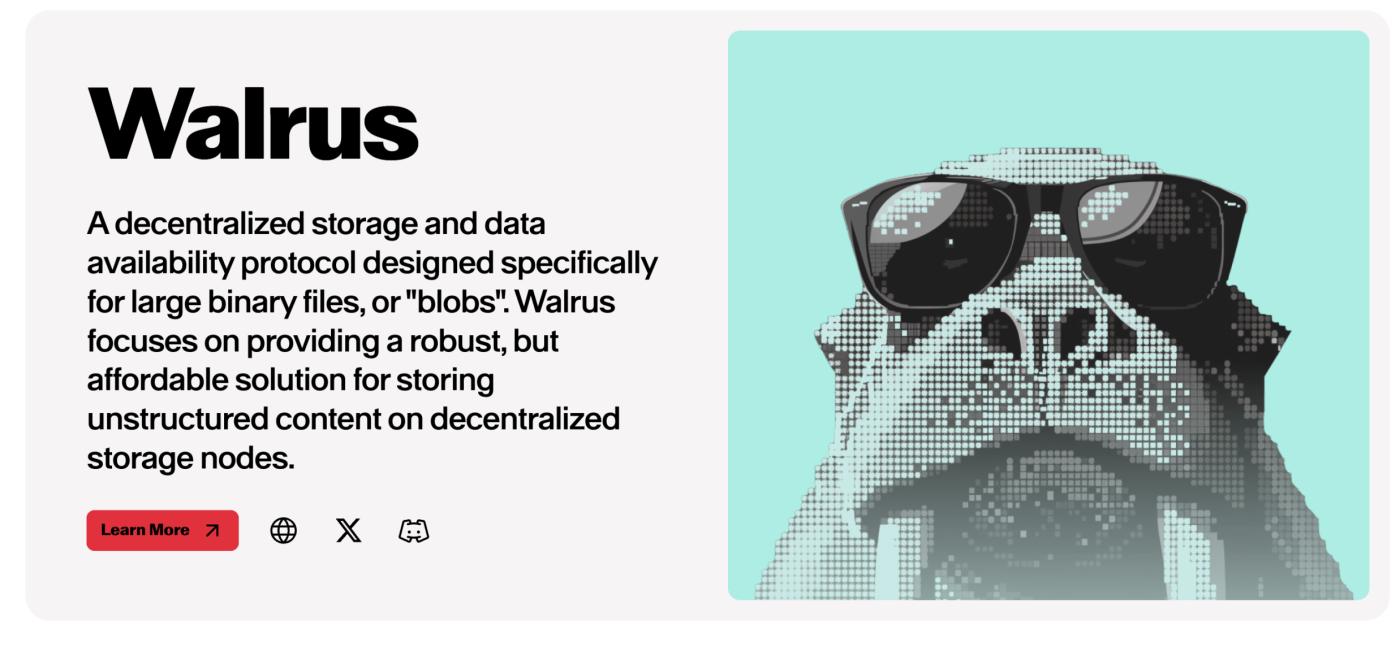
On March 27, 2025, the WAL token TGE, 4% was airdropped to Sui and Walrus ecosystem active users and testnet participants, worth approximately US$120 million, and 6% was used for future airdrops after the mainnet is launched. Over 120,000 Sui addresses received WAL airdrops.
During the same period, Amnis, the liquidity staking project of TGE on Aptos, only airdropped to the top 10,000 people on the list, and the circulating market value of AMI tokens was approximately US$5 million. In contrast, the wealth effect on Sui is "disarming".
Ecological Airdrop
From the criticism of “No Airdrop, No Community. No airdrop, no community.” to the formal transformation of “No Community, No Airdrop. No community, no airdrop.” Although Sui did not conduct user airdrops when its mainnet was launched, it has achieved the ultimate in subsequent use of airdrops for marketing and community building.
The Reference Conference is approaching, and rumors are spreading that the Sui ecosystem will usher in a new round of airdrop season? ; Gold Rush Manual | How to plan for the second phase airdrop of 300 million WAL? In the screenshots of the two articles, Sui’s co-creation explicitly and implicitly reminded users of the “airdrop” opportunities, using airdrops as bait to guide users to interact with the ecosystem and join the community, and the users who ultimately did so did receive airdrop rewards. This is exactly the “airdrop marketing” that users are happy to see, and the reputation of Sui Chain having a wealth effect is also established.
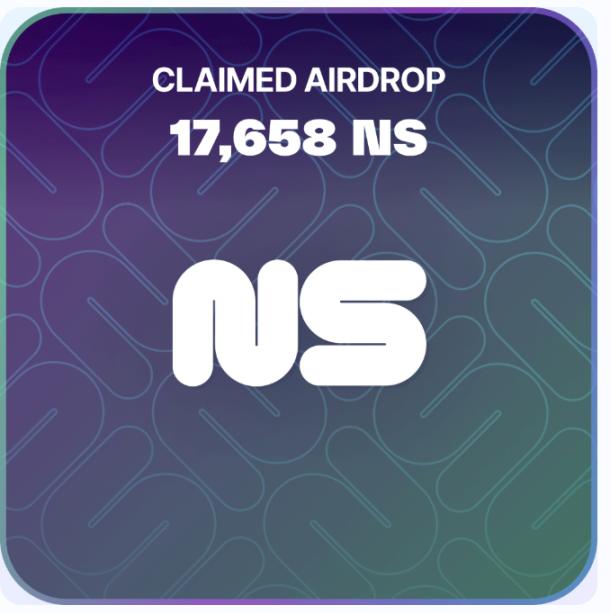
The author interacted with SuiNS according to Adeniyi's suggestion and received NS token airdrop
Excellent fund control + market value management
Interestingly, except for the SUI native currency, the above airdropped ecological tokens have not been listed on Binance (no chips have been handed over), and the initial circulation volume is relatively low. In the DeFi protocol of the Sui ecosystem, these tokens are provided with extremely high deposit rates, further locking the tokens and reducing circulation.
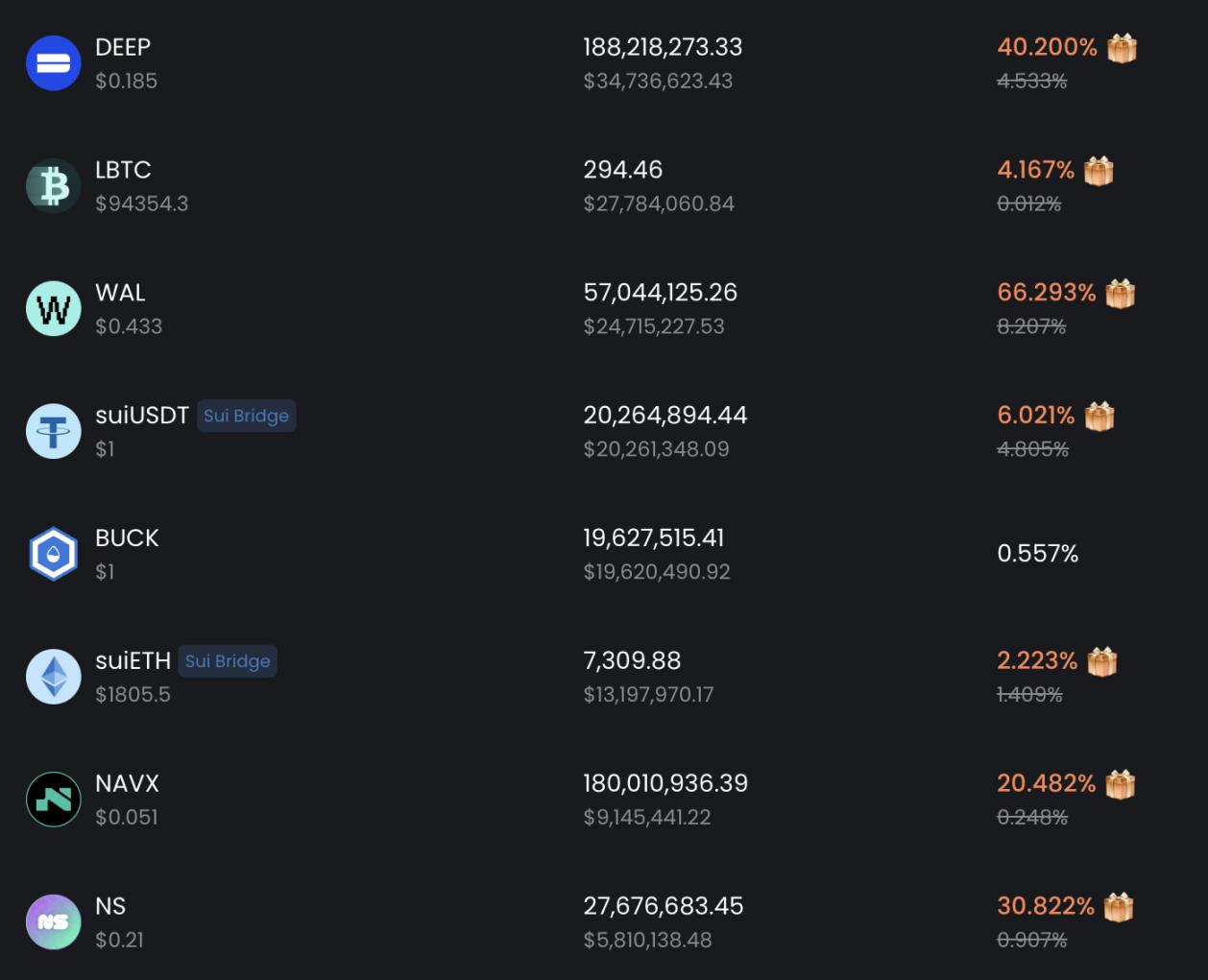
Lower token circulation makes it easier for Mysten Labs to manage market value and create wealth effect.
Learning from Solana
As the two most dazzling public chains in this cycle, Solana and Sui’s strategies do have many similarities. Judging from the chronological order, it should be Sui who is learning from Solana. What kind of playing style will be the winning general in this cycle?
The price of the currency is the best marketing
Observing the rise of Solana and Sui, one common point is that the price of the currency rises before the fundamentals, and various data catch up later.
The price of the currency itself is the best marketing. A strong price attracts attention, mindshare and funds. Various "fundamental" data are thus supplemented, and reasons are found for further increases. For example, the growth of TVL is often driven by the rise of the public chain’s native currency.
Just focus on pulling the market, and there will be great scholars to "debate" for you.
Hardware, airdrops, you have it, I have it too

Sui Game Console SuiPlay0X1
Solana launched the Web3 phones Saga and Seeker, aiming to connect Web2 and Web3 through them and introduce Web2 traffic for encryption. However, judging from the results, most of the people who purchased these Web3 phones are native users of Web3, and their motivation is the potential airdrop of ecological project tokens.
Sui also learned from Solana and focused on Web3 hardware. On September 2, 2024, Mysten Labs and the game console operating system developer Playtron launched the pre-sale of the Web 3 game console SuiPlay0X1 (details: Priced at 599u, is the SuiPlay game console worth buying? ). Currently, the pre-sale of 10,000 units of the console has been sold out and will be shipped this summer.
We already have the hardware, so I can’t miss out on the airdrops you have! Since its launch, SuiPlay has received airdrops or airdrop commitments from more than 10 ecological projects.
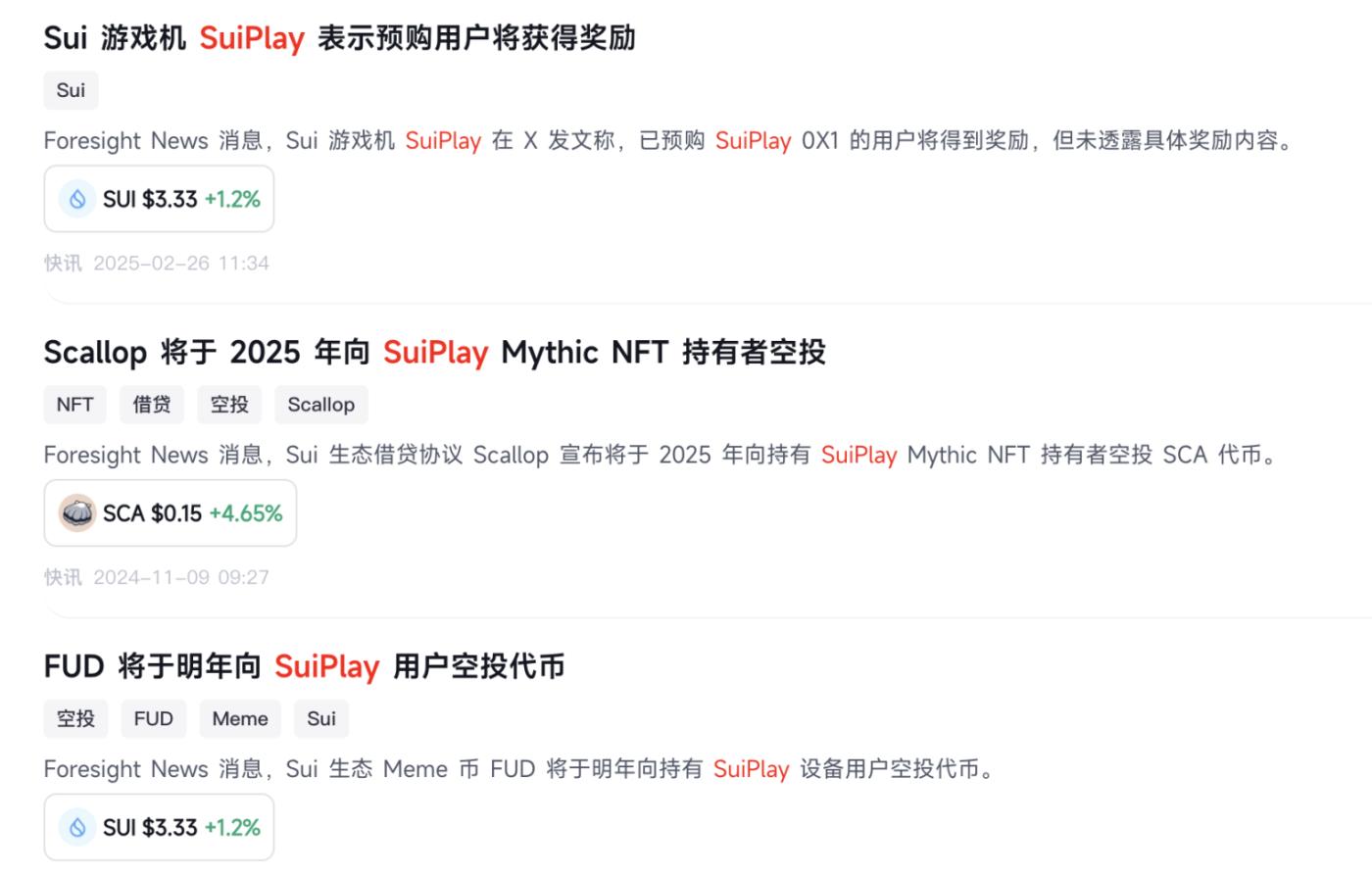 Breaking News: SuiPlay game console received airdrop
Community Building
Whether a community is united affects the atmosphere of the entire ecosystem and the outside world’s perception of it. Sui’s current community is undoubtedly one of the most sticky communities in Web3.
Exclusive Agreement for Developers
According to relevant information, the Sui Foundation will sign an exclusive agreement with the project party, requiring it to build only on the Sui chain as a prerequisite for receiving funding from the foundation (for user incentives, etc.). The seemingly "closed" restrictions do effectively prevent developers from changing their minds frequently. The developers on the Sui chain are relatively focused, unlike some developers on the EVM chain who jump back and forth.
Ecological solidarity and mutual assistance, interests are linked
The Sui ecological project is relatively united, and "mutual airdrops" often occur. The author ranks in the top 50 of the Navi points ranking. Although I did not receive a single NAVX token airdrop, I received a lot of airdrops from ecological projects sent to Navi users.

Bluefin airdrops Sui Ecosystem Project
Summarize
Building a good DeFi ecosystem, increasing wealth effects, and creating community culture are all difficult. It is no coincidence that Sui, who is only 2 years old, has achieved what it has today. Even though a project of this magnitude must have Cabal behind it, the excellence of Sui’s team itself is undeniable.
In this cycle, Sui is still a follower of Solana. If the development momentum does not change, it may officially become a challenger in the near future.