Disclaimer: This article is not intended to FUD or attack the CDP protocol of HyperEVM.
In short: CDP stablecoins, such as feUSD and USDXL, are not actually stable or capital efficient. They lack robust arbitrage mechanisms, have limited use cases, primarily used for leveraged trading, and Hyperliquid already natively provides a better user experience and liquidity. Therefore, these tokens trade below their $1 pegged price, and without incentives like airdrops, they are likely to gradually disappear.
Collateralized Debt Position (CDP) stablecoins promise a decentralized alternative to USD-backed stablecoins (like USD and USDT) or centralized synthetic dollars (like USDe), but reality often falls short of expectations. feUSD, USDXL, and KEI are some of the latest examples attempting to emulate Liquity, but they all face serious issues with peg stability, scalability, or incentive design flaws.
This article will analyze these problems, what paid KOLs aren't telling you, and why these issues are not just growing pains - they are structural problems.
CDP Design Overview
First, let's understand the basics: CDP "stablecoins" are not actually stablecoins or "dollar" tokens. That's why DAI is called "DAI" and not USDD or something else. Naming CDP stablecoins with a "USD" prefix is misleading and can confuse DeFi newcomers. They lack arbitrage mechanisms and direct collateralization. Each CDP token is minted out of thin air and could be far below $1 in value.
To mint a CDP token, users must lock collateral worth over 100%, reducing capital efficiency and limiting growth. To mint 1 token, you need to lock more than $1 in value. Depending on the loan-to-value ratio, this proportion could be even higher.
Without strong mechanisms like Felix's redemption (where arbitrageurs can seize someone's collateral if loan rates are too low) or Dai's PSM module, CDP tokens cannot maintain a 1:1 peg with the dollar, especially when their primary use case is leveraged trading.
In DeFi, CDP is just another form of lending. Borrowers mint CDP stablecoins and exchange them for other assets or yield strategies they believe will outperform the protocol's lending rates.
What Happened?
Everyone exchanges their CDP stablecoins for other assets, usually more stable centralized assets like USDC or USDT, or more volatile assets (like HYPE) for leveraged trading. Holding these tokens makes no sense, especially when you have to pay borrowing rates: feUSD has a 7% annual percentage yield (APY) on Felix, USDXL has a 10.5% APY on HypurrFi.
Take USDXL as an example: It has no native use case, and users have no reason to hold it. That's why it can fluctuate between $0.80 and $1.20 - its price is not anchored by any real arbitrage mechanism. Its price merely reflects the demand for borrowing HYPE. When USDXL trades above $1, borrowers can borrow more USD; below $1, they borrow less - it's that simple.
feUSD is slightly better. Felix provides users with a stability pool where they can earn 75% of borrowing fees and liquidation bonuses, currently around 8% APY. This helps reduce price volatility, but like USDXL, it still lacks a strong arbitrage mechanism to firmly maintain feUSD at $1. Its price still fluctuates based on borrowing demand.
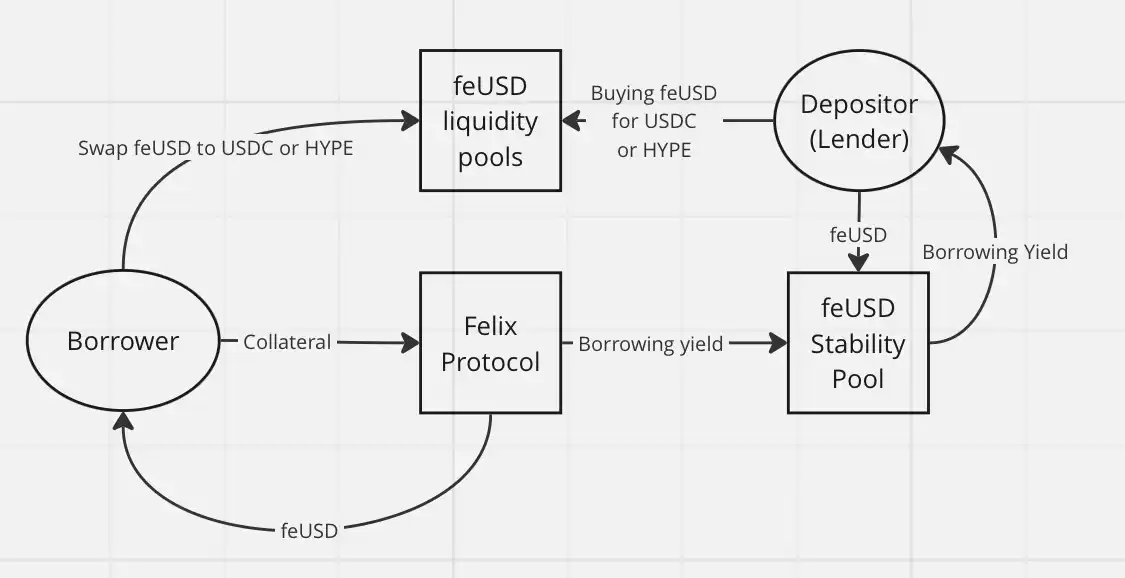
The core issue is: Users buying feUSD and putting it in the stability pool are essentially lending their USDC or HYPE (via Felix) to those minting feUSD. These CDP tokens have no intrinsic value. They only have value when paired with valuable tokens like HYPE or USDC in liquidity pools.
This introduces third-party risk, and without airdrops or other incentives, DeFi users have no real reason to borrow illiquid, non-pegged tokens like feUSD or USDXL, or buy them as exit liquidity for borrowers. Why would you do this when you can directly borrow stablecoins like USDT or USDe? Anyway, the borrowed stablecoins will eventually be converted to other tokens, so you don't care about the decentralization of the borrowed asset.
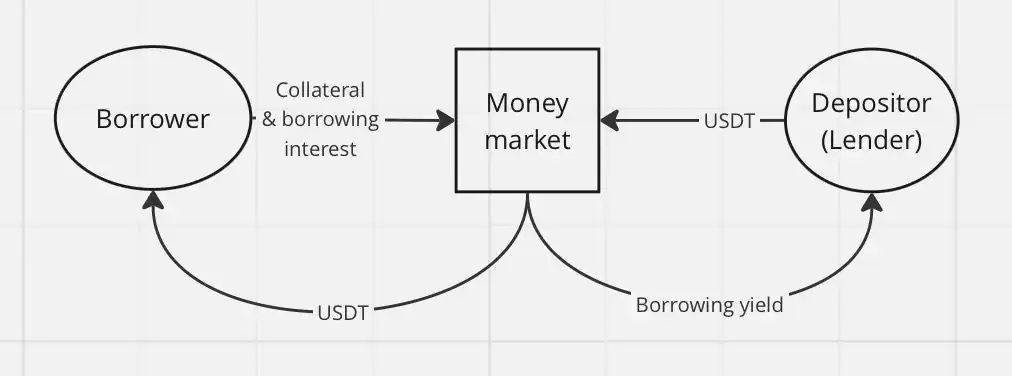
Classic lending through money market flywheel mechanisms, like Hyperlend, is much simpler and produces the same economic effects for end-users.
Another reason CDP isn't successful on HyperEVM is that leveraged trading is already a native feature of the Hyperliquid ecosystem. On other chains, CDP provides decentralized leveraged trading. On Hyperliquid, users just need to use the platform itself, utilizing perpetual contracts with leverage and an excellent user experience, without relying on CDP stablecoins.
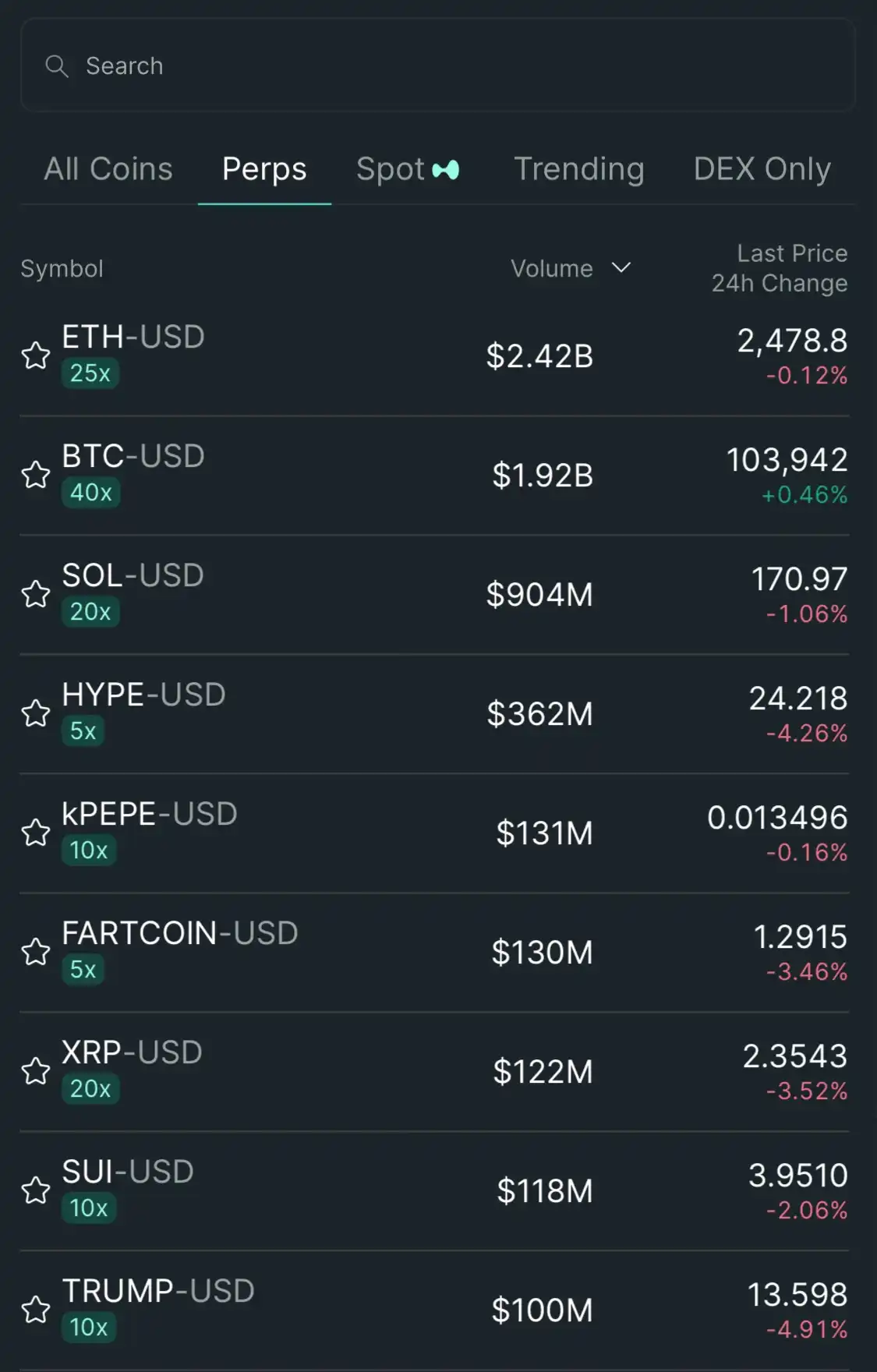
With Hyperliquid, there's absolutely no need to leverage trade through third-party protocols. I see the only use case for CDP being leveraged farming and HLP loop operations.
To summarize, here are the reasons why CDP "stablecoins" perform poorly on HyperEVM:
・Lack of strong arbitrage mechanisms
・Weak demand for CDP products on Hyperliquid
・Low borrowing costs with no reason to hold CDP tokens
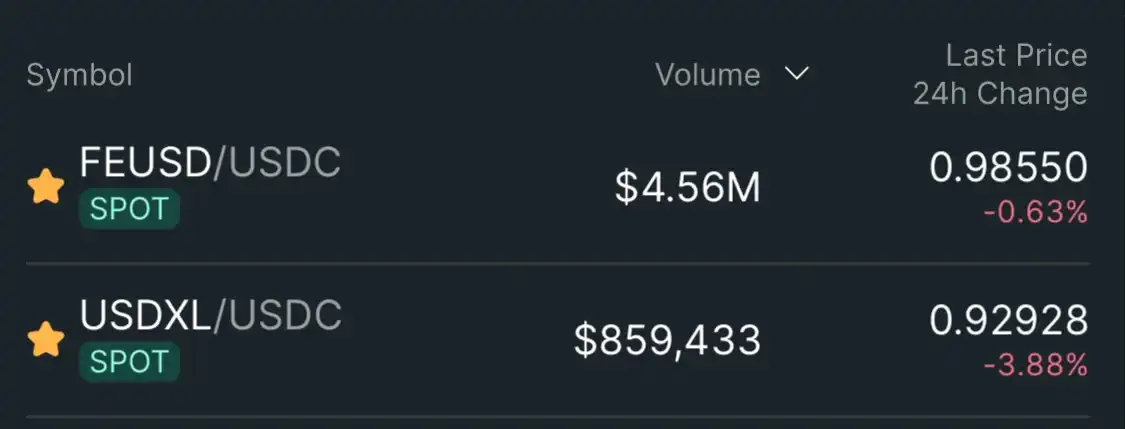
Therefore, CDP "stablecoins" like feUSD and USDXL are trading below their $1 soft peg: feUSD at $0.985 (-1.5%), USDXL at $0.93 (-7%).
Conclusion: I don't believe CDP stablecoins have any potential in the Hyperliquid ecosystem. Users don't need them - Hyperliquid already provides a better user experience and deeper liquidity, natively supporting leveraged trading. Once airdrops and point reward programs are exhausted, CDP tokens will lose their remaining utility value.
Hypurrliquid, don't do exit liquidity.