Key Points Summary
· From Liquidity Exodus to Industry Ecosystem: In the first quarter of 2025, the Korean Web3 market reaches a turning point. This market, once viewed as a global project "liquidity exodus", is transforming into a structured, self-sustaining industry ecosystem.
· Impact of Relaxed Corporate Account Regulations: As part of the Financial Services Commission's roadmap, institutional entities are gradually being permitted to conduct cryptocurrency transactions through corporate accounts.
· Global Project-Led Ecosystem Development: Projects like Avalanche, TON, Ripple, and Solana are actively establishing long-term foundations in Korea. Their activities have gone beyond marketing, focusing on developer community building and hackathon hosting.
1. Korean Web3 Market in Q1 2025: Still Just a Liquidity Exodus?
Despite active retail participation and ample liquidity, the institutional infrastructure development of the Korean Web3 market remains limited. Regulatory efforts prioritize investor protection over ecosystem development, slowing broader industry growth.
Two major obstacles are: 1) Restrictions on corporate account linkage with cryptocurrency trading platforms; 2) High entry barriers for obtaining Virtual Asset Service Provider (VASP) licenses. Enterprises cannot connect company accounts to local trading platforms, making it legally unfeasible to convert cryptocurrencies earned from operations into fiat through Korean financial institutions. While some companies turn to overseas entities as a stopgap, this approach carries regulatory risks and cannot provide a sustainable long-term solution.
The high entry threshold for VASP registration also constrains market development. Although small-scale operations can technically operate without registration, large projects always face legal and regulatory uncertainties. These institutional constraints, combined with investor activities far exceeding local ecosystem maturity, lead some projects to primarily view the Korean market as an customer acquisition channel. In this context, the external narrative of the Korean market as a simple "liquidity exodus" becomes hard to refute.
Market developments in Q1 2025 indicate Korea's potential to transition from a speculation-driven market to an industry revitalization-oriented market. Recent regulatory improvements (such as allowing corporate accounts for cryptocurrency transactions) mark substantial progress in structural changes. Beneath the surface, global projects are steadily building local ecosystems supported by expanding builder communities and emerging initiatives. The Korean Web3 market is at a critical turning point. As the ecosystem gradually matures beyond an investor-driven development model, it is expected to generate greater long-term value, backed by institutional readiness and continued investment interest.
2. Institutional Progress: Allowing Corporate Accounts for Cryptocurrency Transactions
In Korea, restrictions on legal entity cryptocurrency transactions began with the 2017 "Park Sang-ki Ban". Led by then-Minister of Justice Park Sang-ki, this policy essentially prohibited financial institutions and enterprises from participating in cryptocurrency transactions. Although the guidelines have become invalid, the practice continues, creating a dual-track system where individuals can trade within the regulatory framework while corporate investment and financing activities remain limited.
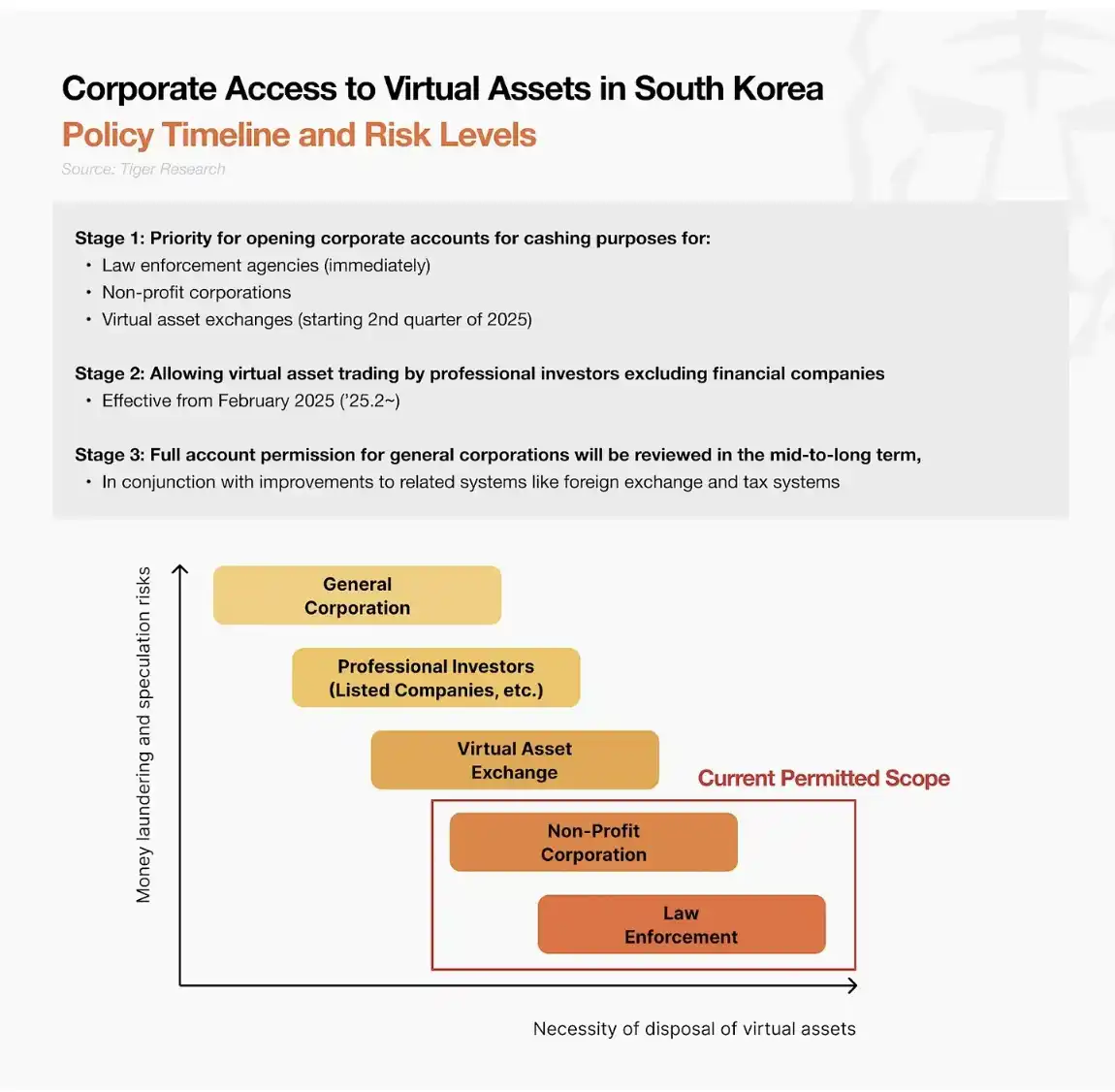
To address these restrictions, the Financial Services Commission (FSC) officially announced the "Corporate Participation in Cryptocurrency Market Roadmap" on February 13, 2025. The roadmap's core highlight is a phased lifting of the seven-year corporate cryptocurrency transaction restrictions.
· Phase One (starting Q2 2025): Opening accounts for law enforcement agencies, non-profit organizations, and cryptocurrency trading platforms, limited to asset liquidation purposes
· Phase Two (starting second half of 2025): Allowing listed companies and registered investment companies to trade
· Phase Three (medium to long-term): Fully opening the market to ordinary enterprises
In the first phase, from November 2024, enforcement agencies, tax authorities, and local governments have begun obtaining account permissions to liquidate seized cryptocurrencies. Non-profit organizations and trading platforms are expected to follow in Q2 2025. The second phase marks a more significant transformation. From the second half of 2025, listed companies and professional investment companies will be permitted to conduct cryptocurrency transactions for investment and treasury management purposes.
However, most Web3 projects fall under the ordinary enterprises of the third phase. To qualify for phase two, enterprises must maintain at least 10 billion won (approximately $7 million) in financial investment product balances under the Capital Market Act, or 5 billion won (approximately $3.5 million) for externally audited entities—a threshold most Web3 enterprises cannot meet. Therefore, most Web3 projects cannot immediately benefit from the new regulations. However, the roadmap still signals a gradual relaxation of regulatory constraints. As phase three progresses, direct market access for Web3 native enterprises will become increasingly feasible.
2.1. Positive Significance of Allowing Corporate Trading Accounts
1. Establishing a legal basis for Korean enterprises to conduct Web3 business
2. Enhancing market stability through institutional investors with structured risk management and long-term strategies
3. Promoting financial service diversification, including cryptocurrency funds and custody services
Web3 projects often use native token exchange services and resources. However, in Korea, enterprises previously had almost no legal means to liquidate acquired crypto assets. The new policy establishes a critical entry point for compliant operations, promoting the regularization of crypto-related business activities. This progress is expected to expand further in the second half of the year, when trading permissions will extend to listed companies and registered institutional investors. Unlike retail investors, corporate investors tend to adopt structured risk management frameworks and long-term investment strategies. Their market entry is expected to reduce volatility and support the sustainable development of the Korean Web3 ecosystem. Additionally, broader corporate participation may address local market inefficiencies—most notably the "kimchi premium".
The increase in institutional participants is also expected to broaden the range of crypto-related financial services. Asset management companies might launch cryptocurrency funds or acquire custody service providers to offer comprehensive solutions. Fintech companies might develop corporate treasury tools supporting crypto account management. These developments will help expand the Korean Web3 industry by strengthening supporting infrastructure services and attracting more traditional financial institutions.
2.2. Potential Risks of Allowing Corporate Crypto Accounts
1. Phased deregulation may cause supply-demand imbalance, creating downward price pressure
2. As listed companies and institutional investors enter the market, government efforts to ensure tax collection are expected to intensify
3. Conservative risk management by institutional investors might lead to Bitcoin concentration, raising concerns about Altcoin market activity decline
The introduction of corporate accounts may significantly impact retail participants. From market dynamics, phased deregulation might cause buyer-seller pressure imbalance. According to the FSC's corporate roadmap, regulators consider corporate selling activities relatively low-risk. Therefore, by the end of 2025, only sell-side liquidity might enter the market, creating downward price pressure. Although expected selling volumes may remain moderate relative to the overall market, low-liquidity tokens might face greater volatility.
On the regulatory front, when listed companies and institutional investors fully enter the market, government efforts to ensure tax collection are expected to intensify. Although cryptocurrency taxation has been postponed to January 1, 2027, the presidential election on June 3, 2025, might change policy direction and warrants close attention. In terms of investment behavior, corporate capital might concentrate on Bitcoin. As demonstrated by Strategy (formerly MicroStrategy) in the US and Metaplanet in Japan, institutional investors tend to allocate to large-cap stable assets due to conservative risk management. This could lead to significant Bitcoin inflows and potentially impact the Altcoin market—where Korean retail investors have historically been highly active. Consequently, the Altcoin market might face diminished interest and liquidity in the medium to short term.
3. Industry Transformation: Strategic Layout of Global Web3 Projects
Following the United States and China, South Korea has become a core strategic market for global Web3 projects. In response, many international teams are actively recruiting Korean talent and establishing substantive collaborations, demonstrating a strategic shift from surface-level marketing to building sustainable, builder-driven local ecosystems. This long-term layout not only supports individual project growth but also enhances the overall competitiveness of South Korea's Web3 industry.
3.1. Project Support: Guiding Industry Direction by Supporting Mature Teams
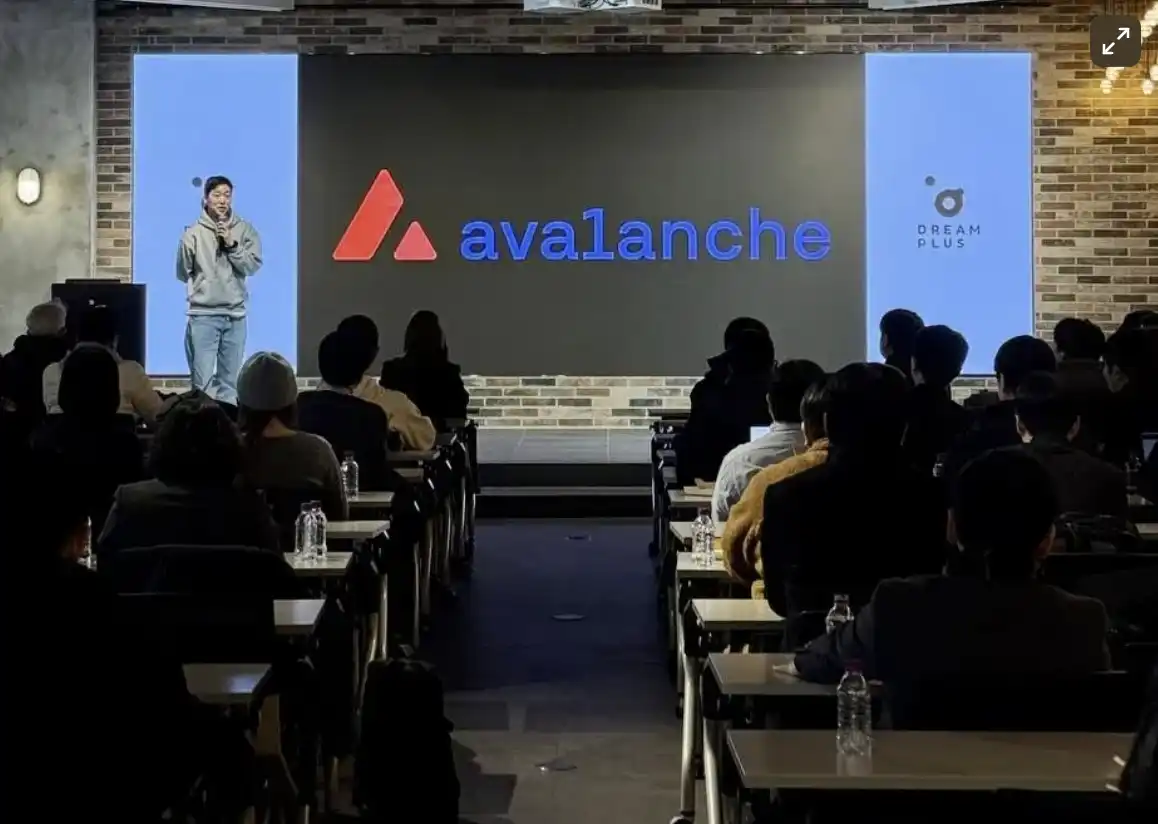
Avalanche and TON Foundation are global project exemplars of directly supporting local Korean teams in ecosystem building. After successfully collaborating with 'MapleStory', Avalanche has expanded its cooperation with small and medium-sized Korean projects. The team hosts demonstration days quarterly to showcase available products and actively attract users, forming a feedback loop that provides substantial value to projects and participants. TON Foundation adopts a more structured approach through launching the "TON Society Korea Builder" program. This program includes an official project database, systematic support architecture, and expanded network access to strengthen the local TON ecosystem in a scalable manner.
These ecosystem support strategies have produced actual results beyond short-term exposure or participation metrics. Verified local developers obtain a more stable growth foundation, and their success stories provide clear guidance for new entrants. Meanwhile, these initiatives lay the groundwork for internationalization of Korean projects.
3.2. Hackathons: Cultivating Korean Builders and Strengthening Market Potential
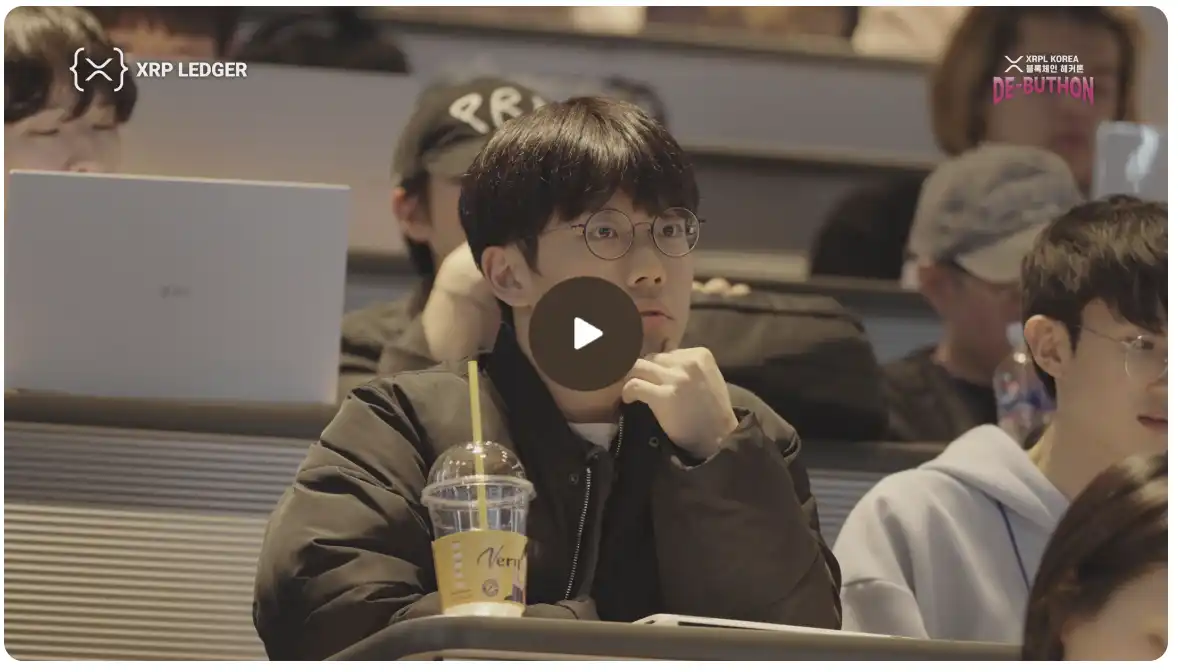
Hackathons hosted by XRPL Korea (Ripple) and Superteam Korea (Solana) have transcended single-event scope, becoming a critical turning point for South Korea's Web3 ecosystem. In March, Ripple held a two-day "DE-BUTHON 2025", attracting 203 participants from 24 teams. Superteam Korea collaborated with 22 global partners to host the "SEOULANA HACKATHON", with over 300 participants.
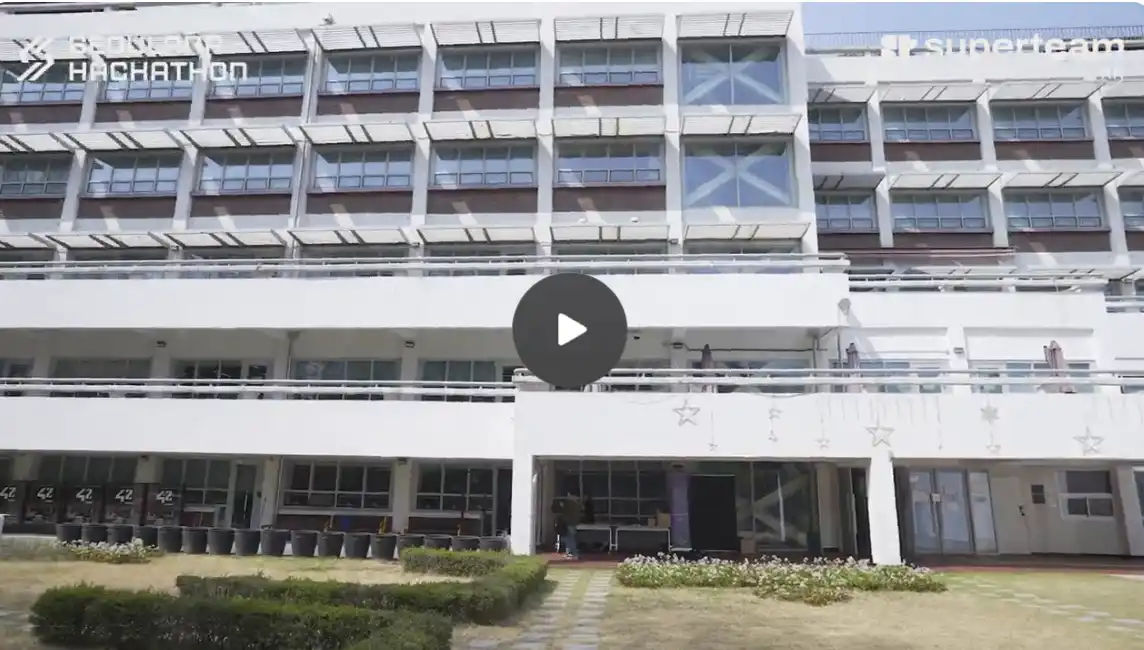
The scale and success of these events help reverse the perception of South Korea as a speculation-driven market. The high participation in large hackathons reflects the existence of a robust builder ecosystem. These events have now become strategic launch platforms—providing builders with clear market entry paths and bridging the gap between prototype development and actual deployment.
By the first quarter of 2025, driven by globalization network-led ecosystem building initiatives (rather than pure capital inflow), the South Korean Web3 industry began showing quantifiable progress. Strengthened collaboration with mature participants, combined with developer support programs, is cultivating a new generation of local builders. These developments mark a new phase of momentum in the South Korean Web3 field. On this basis, Korean projects are poised to export substantive innovations to the global stage in the coming years.
4. From Investment-Driven to Industry-Driven: Turning Point of South Korea's Web3 Market
In the first quarter of 2025, the South Korean Web3 market ushered in a critical transformation—from an investment-driven environment to a mature industry ecosystem. Regulatory progress, including phased opening of corporate crypto trading accounts, lays the foundation for structured market participation. Simultaneously, ongoing ecosystem building efforts by global Web3 projects help South Korea's market achieve long-term growth positioning.
Another important milestone is the successful completion of the first retail user real-world transaction in the South Korean Central Bank Digital Currency (CBDC) "Han River Project". In the same period, major South Korean commercial banks began jointly exploring Korean won stablecoin issuance in early April. The Bank of Korea also indicated it will play a more proactive role in future regulatory legislation. In infrastructure, ongoing discussions about a "one trading platform-multiple banks" system suggest potential structural breakthroughs. Under this model, crypto trading platforms will no longer be limited to single bank partnerships but can interface with multiple commercial banks. This is expected to significantly enhance market flexibility and user access.
Comprehensively, these developments clearly demonstrate the evolution of South Korea's Web3 field towards a sustainable industry ecosystem. After years of regulatory constraints and structural inefficiencies, South Korea is entering a new phase where policy coordination, institutional participation, and industry-level growth are emerging.
Welcome to join BlockBeats official community:
Telegram Subscription Group: https://t.me/theblockbeats
Telegram Discussion Group: https://t.me/BlockBeats_App
Twitter Official Account: https://twitter.com/BlockBeatsAsia