Written by: Bu Shuqing, Wall Street Insights
JPMorgan pointed out that with "de-dollarization trading" stalling, a "zero-sum game" has emerged between gold and Bitcoin. Since April 22, gold prices have dropped nearly 8% after reaching a peak of $3,500, while Bitcoin prices rose 18% during the same period.
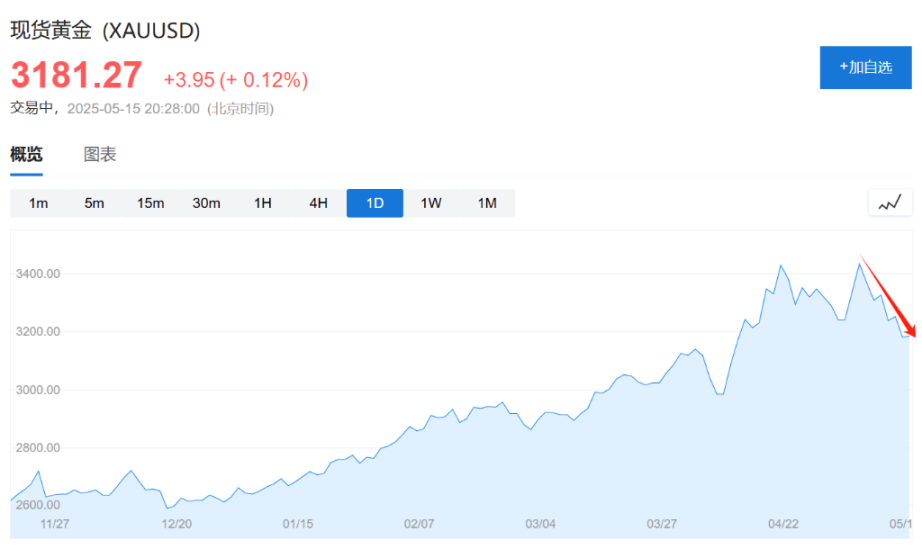
This contrast is also reflected in capital flows. According to Chasing Wind Trading Desk, JPMorgan's latest report indicates that over the past three weeks, gold ETFs have experienced capital outflows, while Bitcoin and cryptocurrency ETFs have attracted capital inflows.
JPMorgan expects the "zero-sum game" between gold and Bitcoin to continue for the rest of the year, leaning towards the view that specific cryptocurrency catalysts will create more upside potential for Bitcoin in the second half of the year. The report noted that in addition to support from funds flowing out of gold, Bitcoin has benefited from multiple cryptocurrency-specific catalysts, including increased holdings by companies like MicroStrategy and New Hampshire's passage of a bill allowing state financial investment in Bitcoin.
Reversal of Safe-Haven Assets
The report pointed out that in the fourth quarter of 2024, gold and Bitcoin prices showed a synchronized upward trend, especially during and after the US election, with market concerns about dollar depreciation benefiting both assets. However, after entering 2025, this "de-dollarization" trading clearly stalled, transforming into a "zero-sum game" relationship between gold and Bitcoin.
This is reflected in capital flows with three main characteristics:
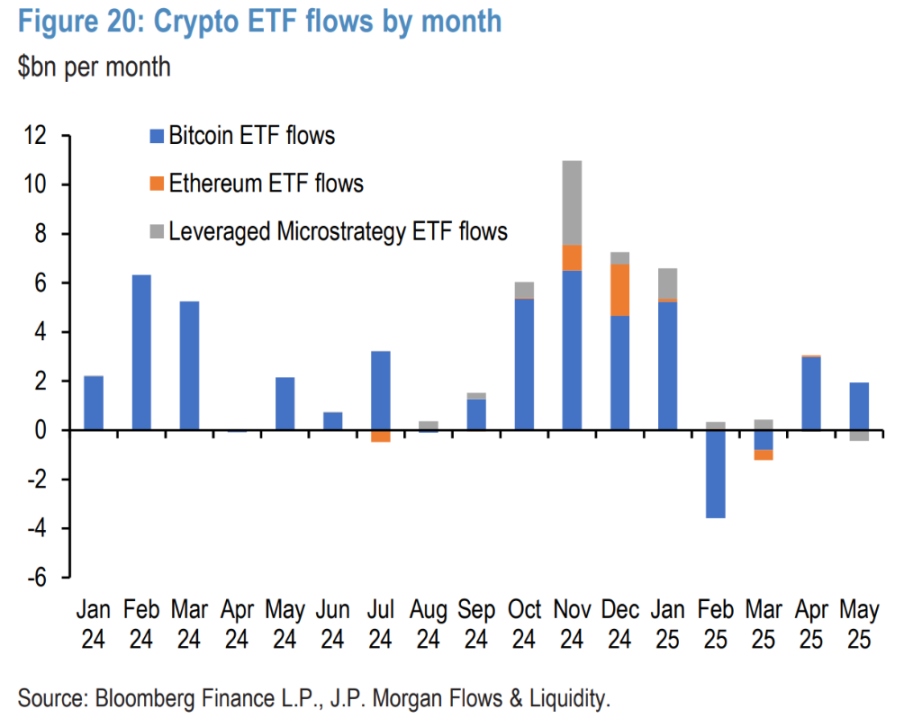
From the perspective of physical gold and spot Bitcoin/cryptocurrency ETF capital flows, gold experienced capital outflows over the past three weeks.
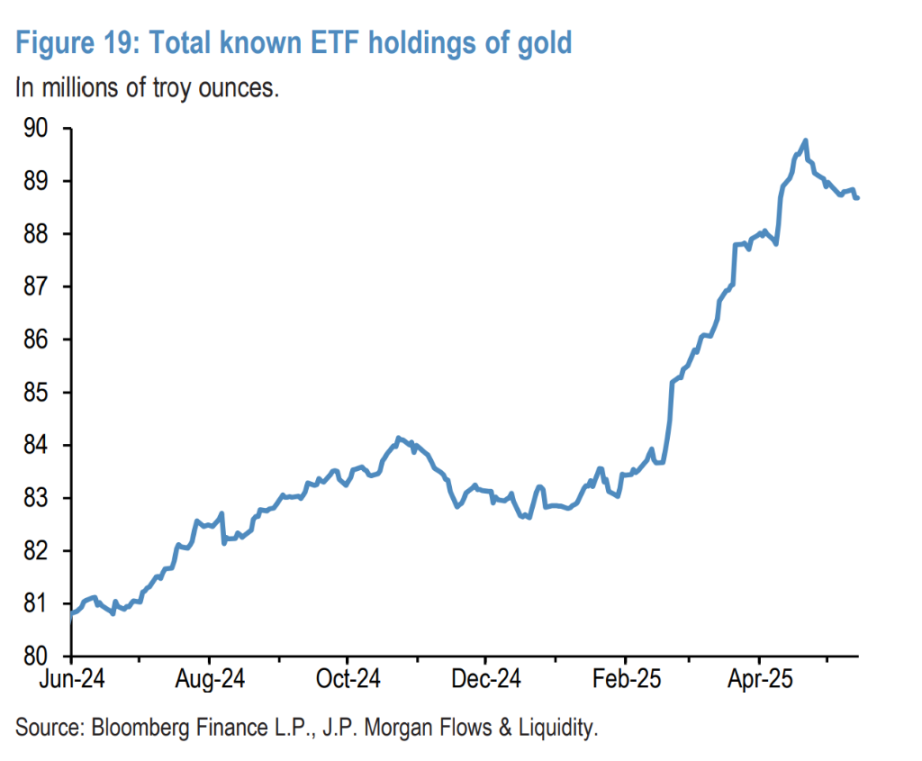
During the same period, Bitcoin/cryptocurrency ETFs recorded capital inflows
Futures positioning data shows that gold futures positions continue to decline, while Bitcoin futures have seen a significant increase
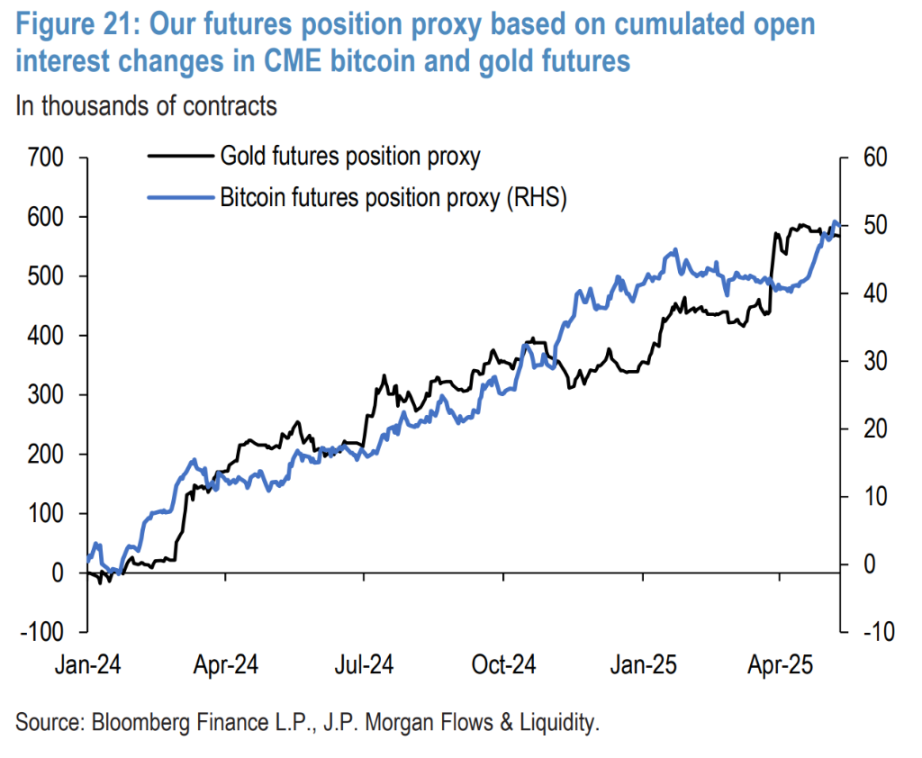
Capital rotation is closely related to changes in market conditions. JPMorgan noted that the tariff tensions between mid-February and mid-April this year drove a strong gold rally, while Bitcoin performed weakly along with risk assets. Over the past three weeks, as market risk appetite improved, this trend completely reversed.
This also demonstrates that under specific market conditions, investors rotate allocations between these two types of safe-haven assets:
During tariff tensions: gold rises, Bitcoin falls.
During improved risk appetite: gold pulls back, Bitcoin rises.
JPMorgan expects the zero-sum game relationship between gold and Bitcoin to continue for the rest of 2025, but based on cryptocurrency-specific catalysts, Bitcoin may have greater upside potential compared to gold in the second half of the year.