Editor's Note: REV measures on-chain economic activity, reflecting users' willingness to pay. Solana's REV is higher than Ethereum's, but REV has lag and can be manipulated. The FDV/REV ratio varies significantly, and the chain's value does not completely correspond to its token value, requiring a comprehensive assessment of multiple factors.
The following is the original content (slightly edited for readability):
What is REV?
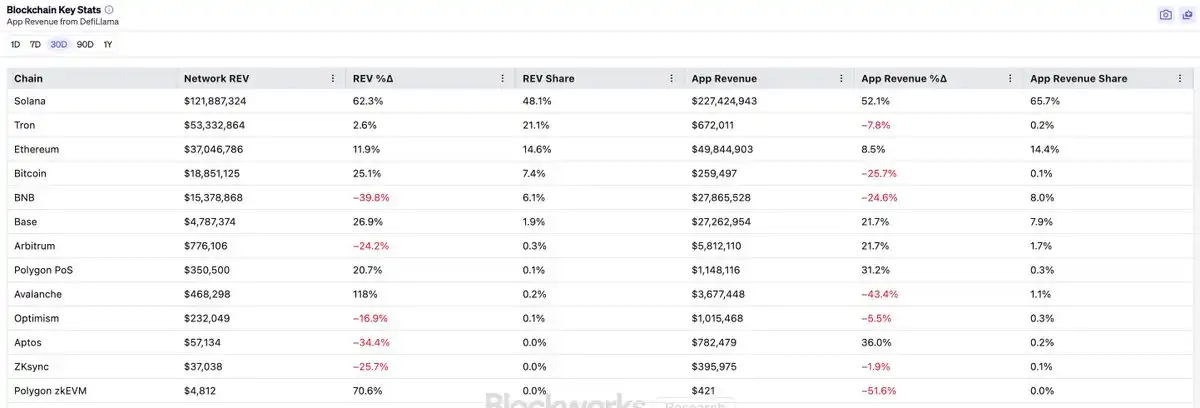
REV represents Real Economic Value, measuring the total fees users pay across the entire chain. Solana's REV is approximately 2 to 4 times that of Ethereum L1. So, why is this metric important? Are SOL and ETH severely undervalued?
REV Time:
REV was standardized by @Blockworks_ and widely promoted by the Blockworks Research team (@blockworksres). Jon Charb (@jon_charb) is also a key contributor in promoting REV as an important blockchain metric.
Revenue is to enterprises what REV is to blockchains.
"REV includes transaction fees within the protocol and tips paid by users outside the protocol for transaction execution, thus measuring the overall monetary demand for on-chain transactions." —@blockworksres
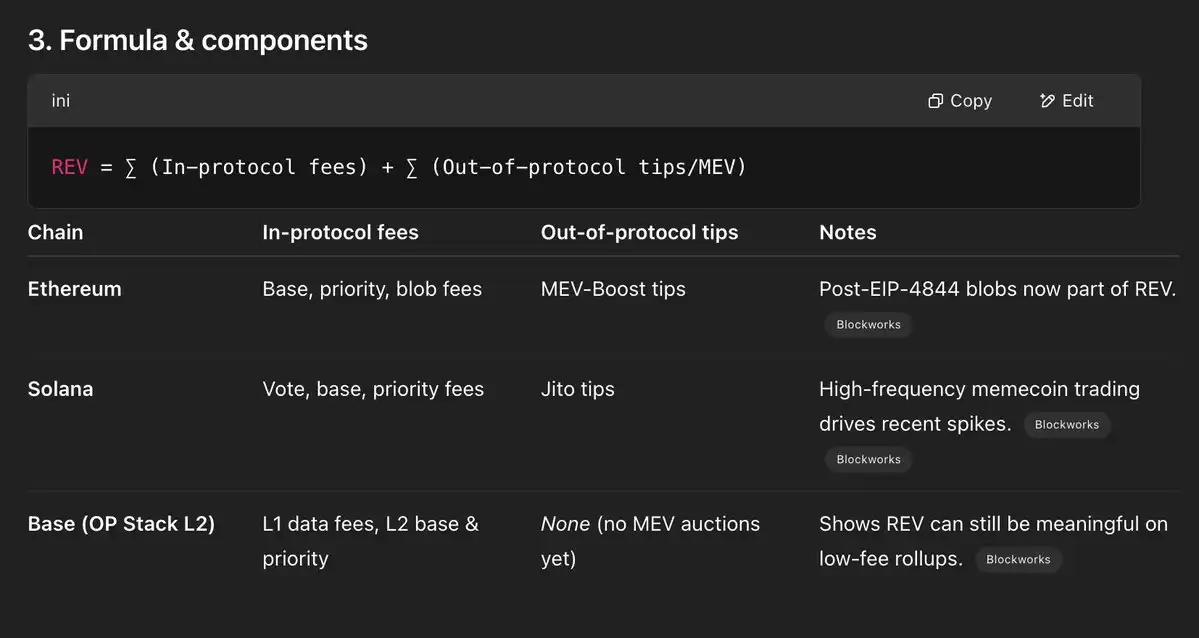
However, blockchains are not enterprises, and equating the two is a significant misconception: while they have similarities, there are also differences. The key is in the details.

Let's look at today's data, with charts provided by @blockworksres.
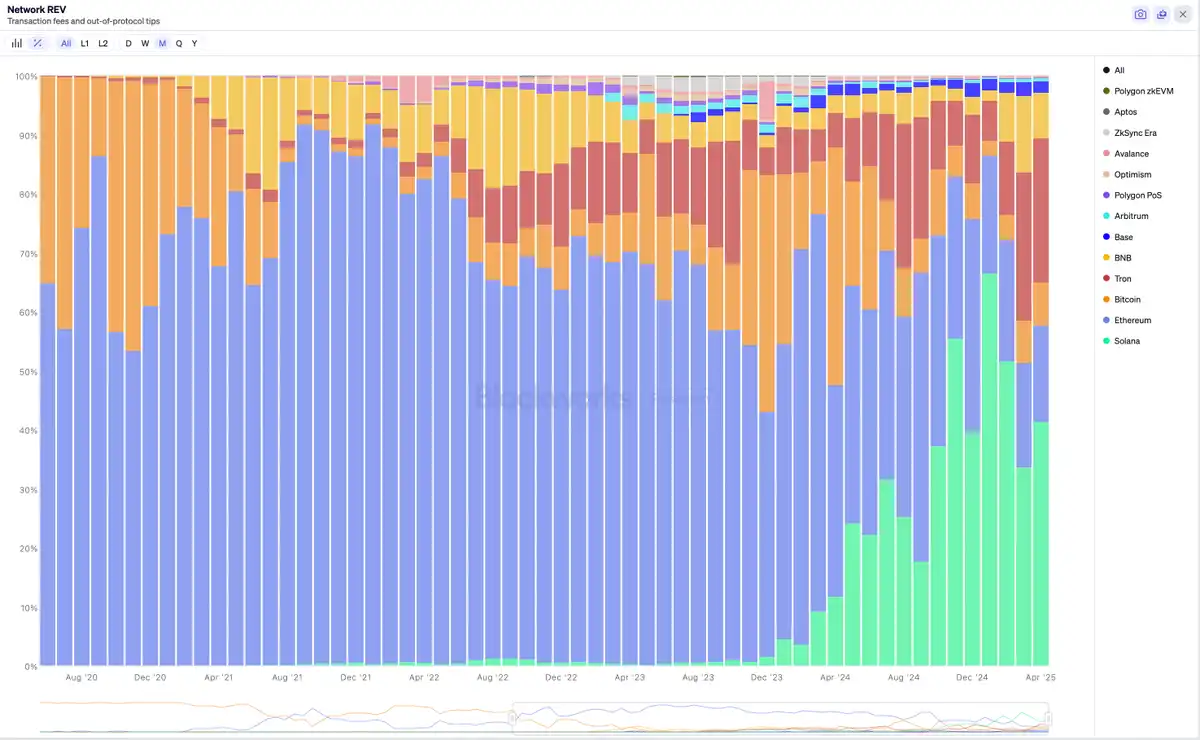
REV share comparison for various chains over the past approximately five years:
·Ethereum dominated during 2021-2022
·Currently, Solana ranks first, Tron second, both exceeding Ethereum
·Bitcoin's REV is almost zero
Here are some data from the past 90 days, including application revenue.
So, what does REV tell us about a chain?
It is one of many metrics, each with its pros and cons:
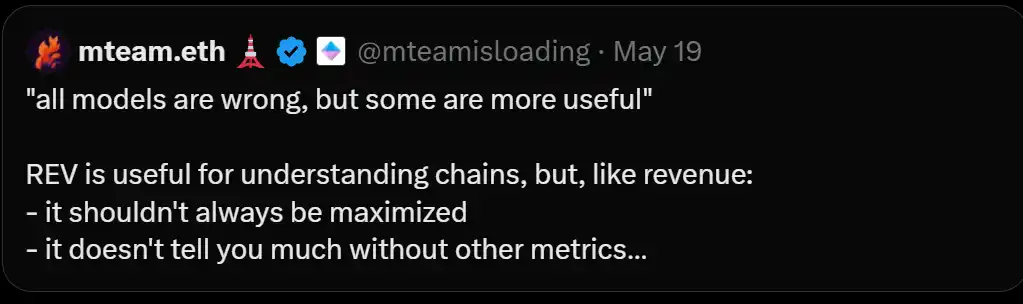
Pros:
·Compared to active addresses or transaction volume, REV is harder to manipulate, especially when part of REV is burned.
·Historically, it has better reflected retail user activity.
Cons:
·Historically, it has often been a lagging indicator.
·Like all core metrics, REV cannot reflect the entire situation.
·Like other indicators, REV can also be manipulated.
·Some activities generate MEV (Maximum Extractable Value) and REV far higher than others.
·REV is often influenced by immature on-chain MEV infrastructure.
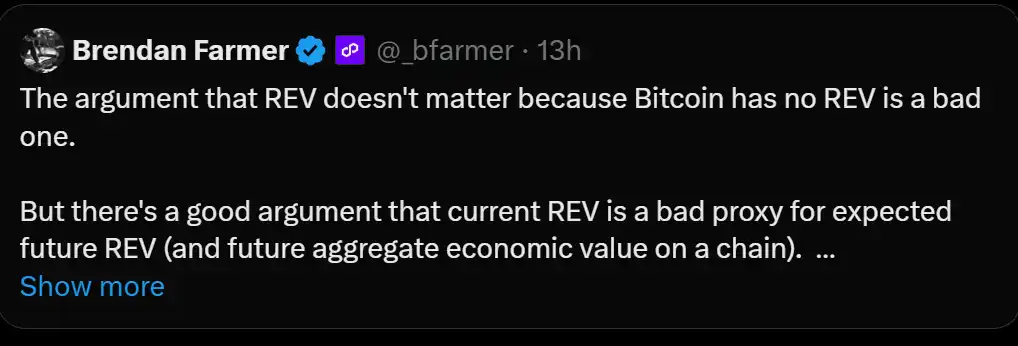
@_bfarmer summarized this perfectly:
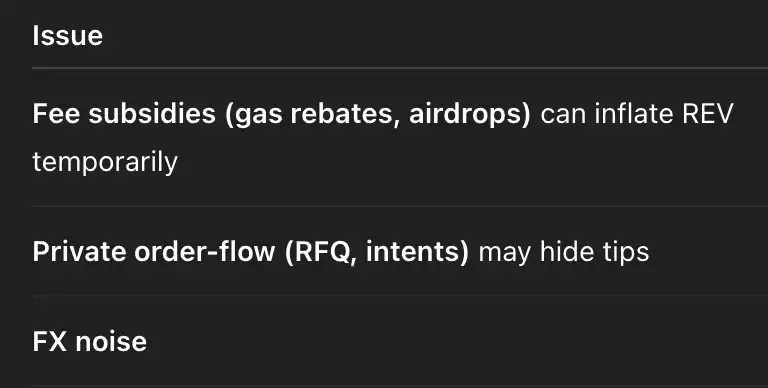
o3 also pointed out several more nuanced aspects of REV as a metric:
If we compare the financial performance of different chains like enterprises, their FDV to REV ratios are as follows:
·Bitcoin: 10,000 times
·Ethereum: 593 times
·Solana: 85.5 times
·Tron: 39 times
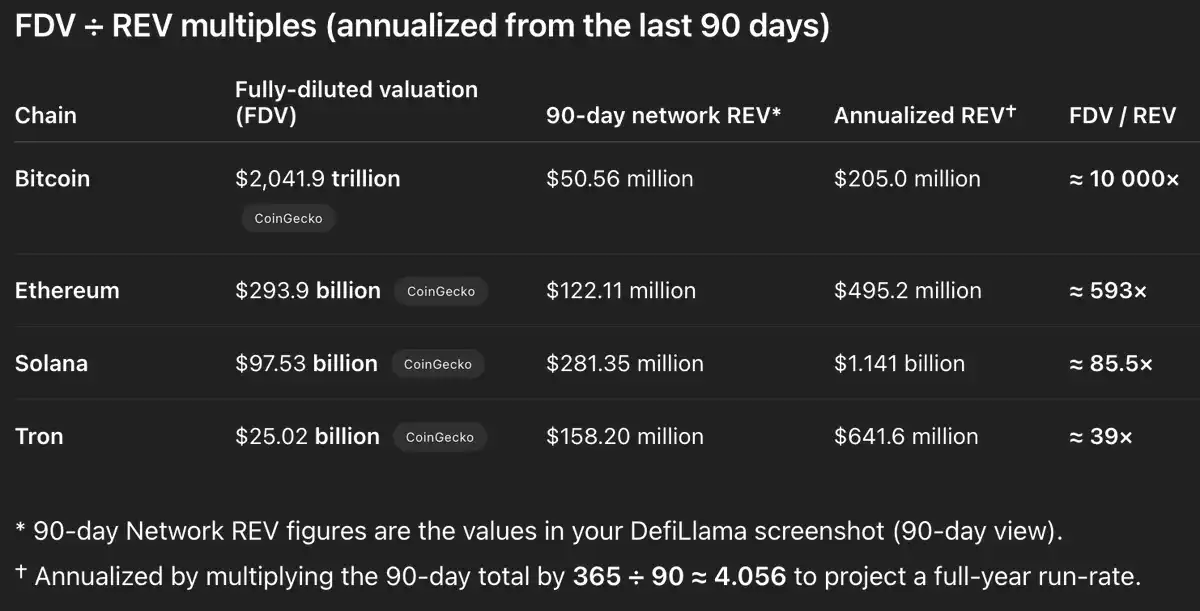
Following this logic, is Solana severely undervalued compared to Ethereum? No.
At least, REV (or FDV/REV ratio) is not sufficient to solely assess the reasonable value of a chain's native token. There are three reasons:
1. REV ≠ Native token value capture. Often, REV is burned, returned to users through incentive mechanisms, or paid as operational expenses to validator operators, etc.
For example (data may be outdated):
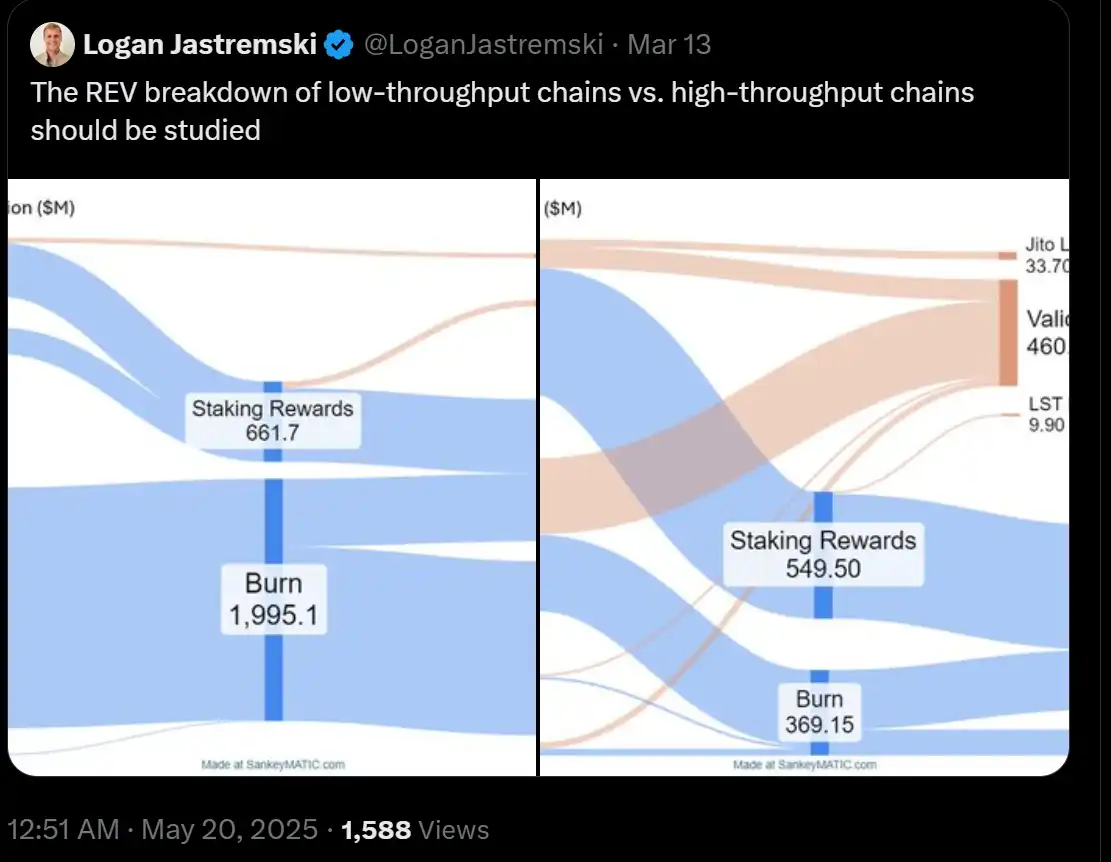
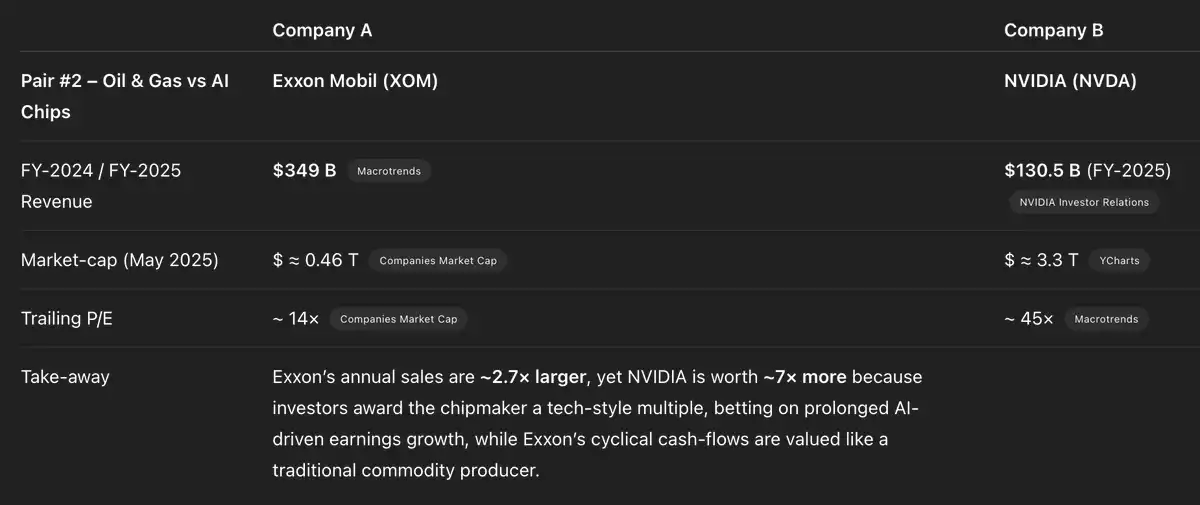
2. FDV/REV ratio (similar to P/E ratio) naturally varies between different chains (and enterprises). For tokens, factors like yield and monetary premium significantly affect price. Moreover, REV quality and sustainability differ across chains.
See:
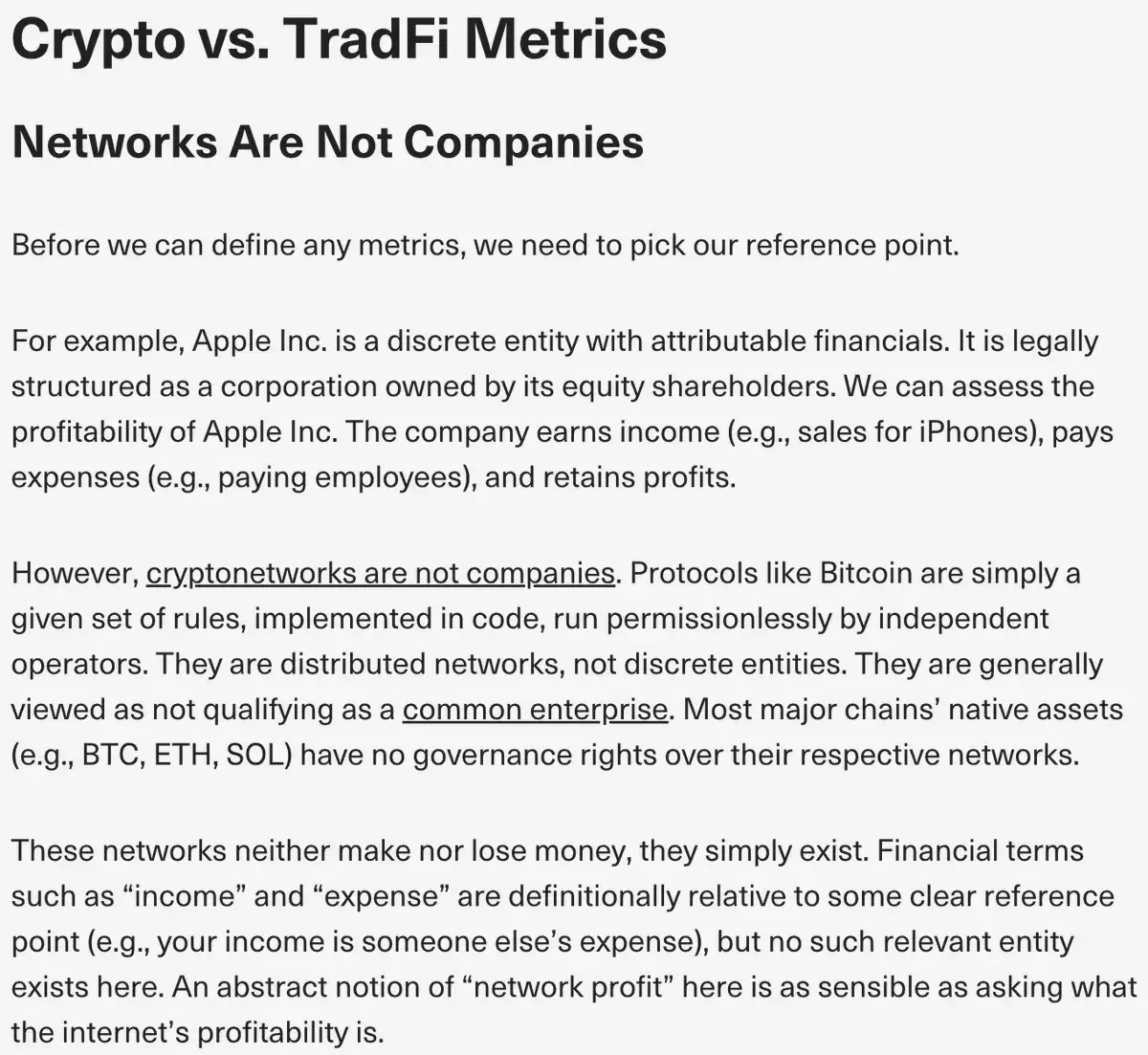
3. Blockchains are not enterprises, and native tokens are not equity shares.
This should be quite obvious.
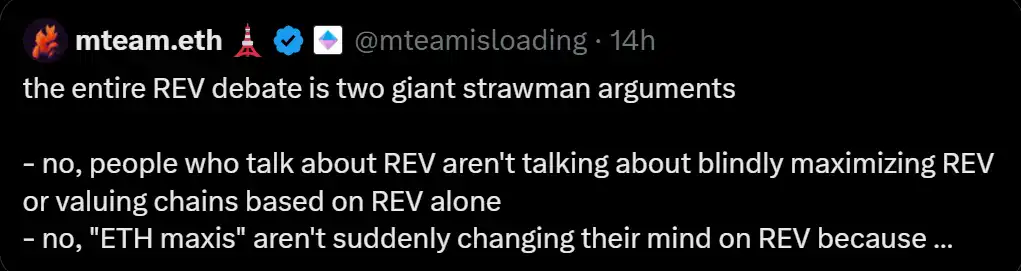
Incidentally, discussions about REV in recent days have had some interesting logical fallacies from both sides (REV minimalists possibly more so).
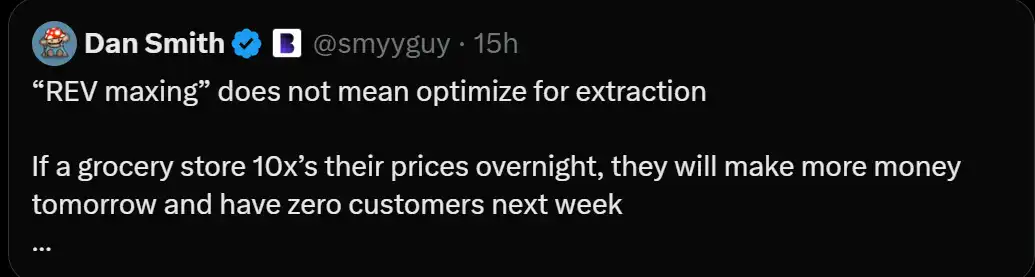
Long-term, maximizing REV does have many points worth emphasizing:
Welcome to join BlockBeats official community:
Telegram Subscription Group: https://t.me/theblockbeats
Telegram Discussion Group: https://t.me/BlockBeats_App
Twitter Official Account: https://twitter.com/BlockBeatsAsia