Original Author | @brianq
Compiled by | Odaily (@OdailyChina)
Translator | Dingdang (@XiaMiPP)

Editor's Note: After the successive launch of Bitcoin and Ethereum ETFs, the boundaries between crypto markets and traditional finance are becoming increasingly blurred. Tokenized Stocks, as an innovative form of bringing traditional equity assets on-chain, are gradually gaining market attention. By converting company stocks into digital tokens tradable on the blockchain, tokenized stocks aim to create a channel between traditional finance and crypto assets. Whether it's Coinbase pioneering the on-chain issuance of its own stocks or Wall Street giants accelerating their entry, various signs suggest that a new financial era built on on-chain stocks may have quietly begun. So, is tokenized stock a bubble or the next trillion-dollar opportunity?
The following is the original article published by on-chain data analysis platform Santiment, compiled by Odaily:
Introduction
Is tokenized stock a reliable investment option? Essentially, it merges the value of traditional stocks with the technological advantages of blockchain. Unlike traditional stocks stored in brokerage accounts, tokenized stocks are blockchain-based digital tokens anchored to actual company shares. This form allows investors to participate in investments with lower thresholds and in a fragmented manner, thereby breaking the capital restrictions of traditional markets.
In early 2025, Coinbase announced the on-chain token version of its own stocks on its Ethereum Layer 2 network, Base. This move not only demonstrates the mainstream crypto platform's focus on this field but also signals an accelerated fusion of traditional finance and blockchain technology.
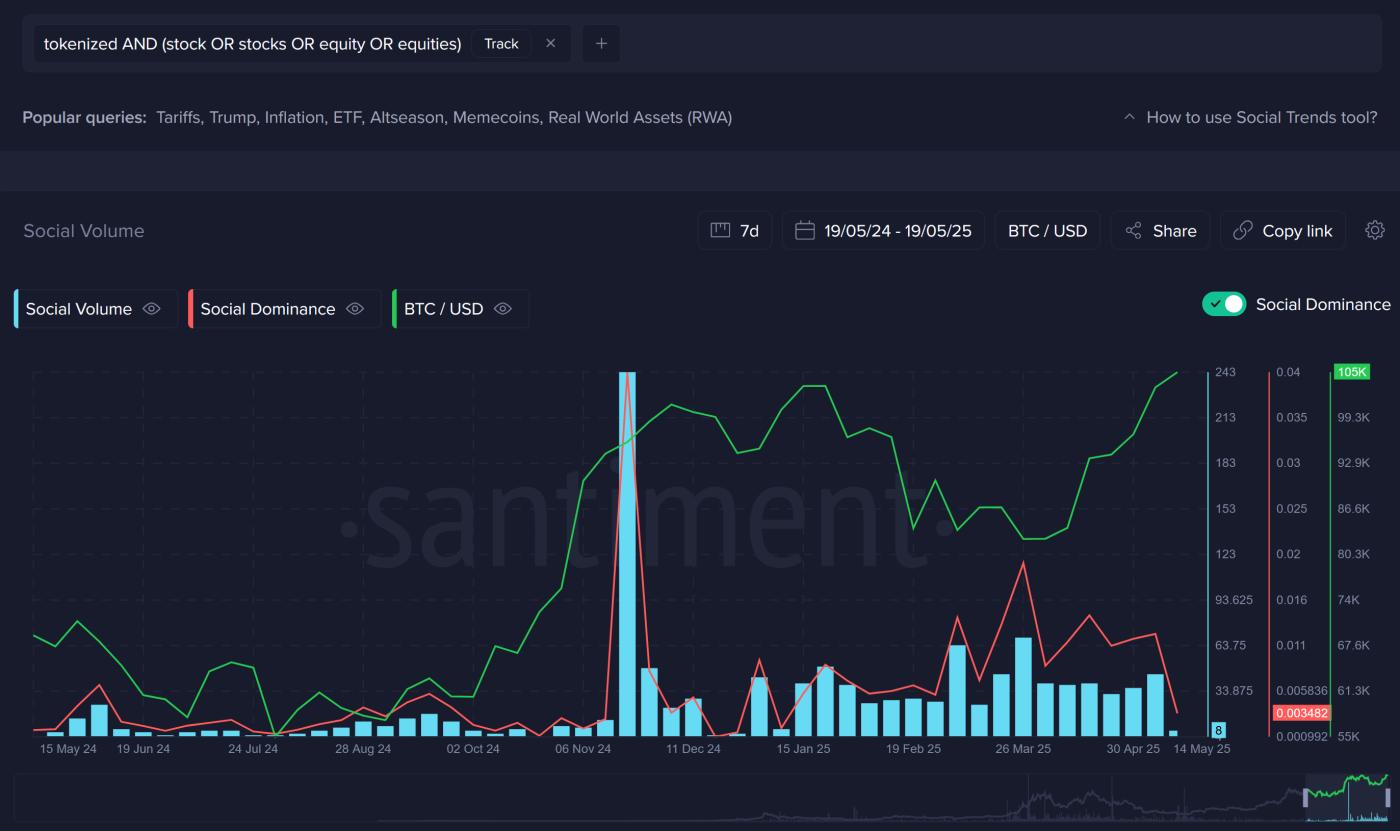
Rapid Trading and 24/7 Liquidity: Core Advantages of Tokenized Stocks
Traditional stock trading often involves long settlement cycles and limited trading hours, but the emergence of tokenized stocks offers a new solution. Blockchain-based transactions enable instant settlement, allowing investors to quickly respond to market fluctuations.
Innovative platforms like AlloX have specifically built tokenized stock trading markets, supporting 24-hour uninterrupted trading, lower transaction fees, and on-chain clearing mechanisms, which undoubtedly greatly improve trading efficiency and rewrite the time and cost logic of traditional stock markets.
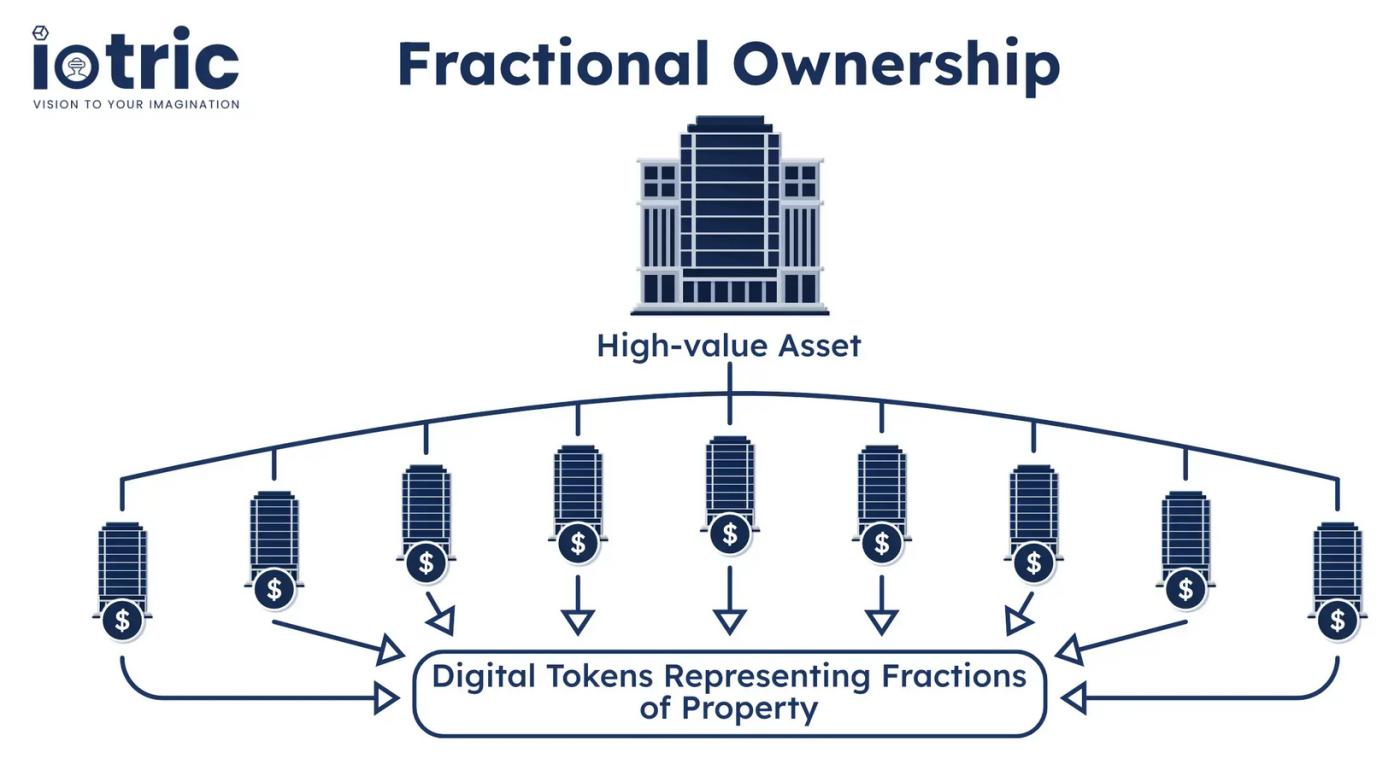
Wall Street Giants Also Entering: From Concept to Practice
Not only crypto-native platforms, but traditional financial institutions are also quickly entering the field. Citibank and Swiss Digital Exchange (SDX) are collaborating to promote the tokenization of unlisted company shares, enabling global investors to access the previously high-barrier venture capital market.
Meanwhile, JPMorgan has also launched actual asset token products on-chain, indicating that this trend is not only recognized but gradually being implemented.
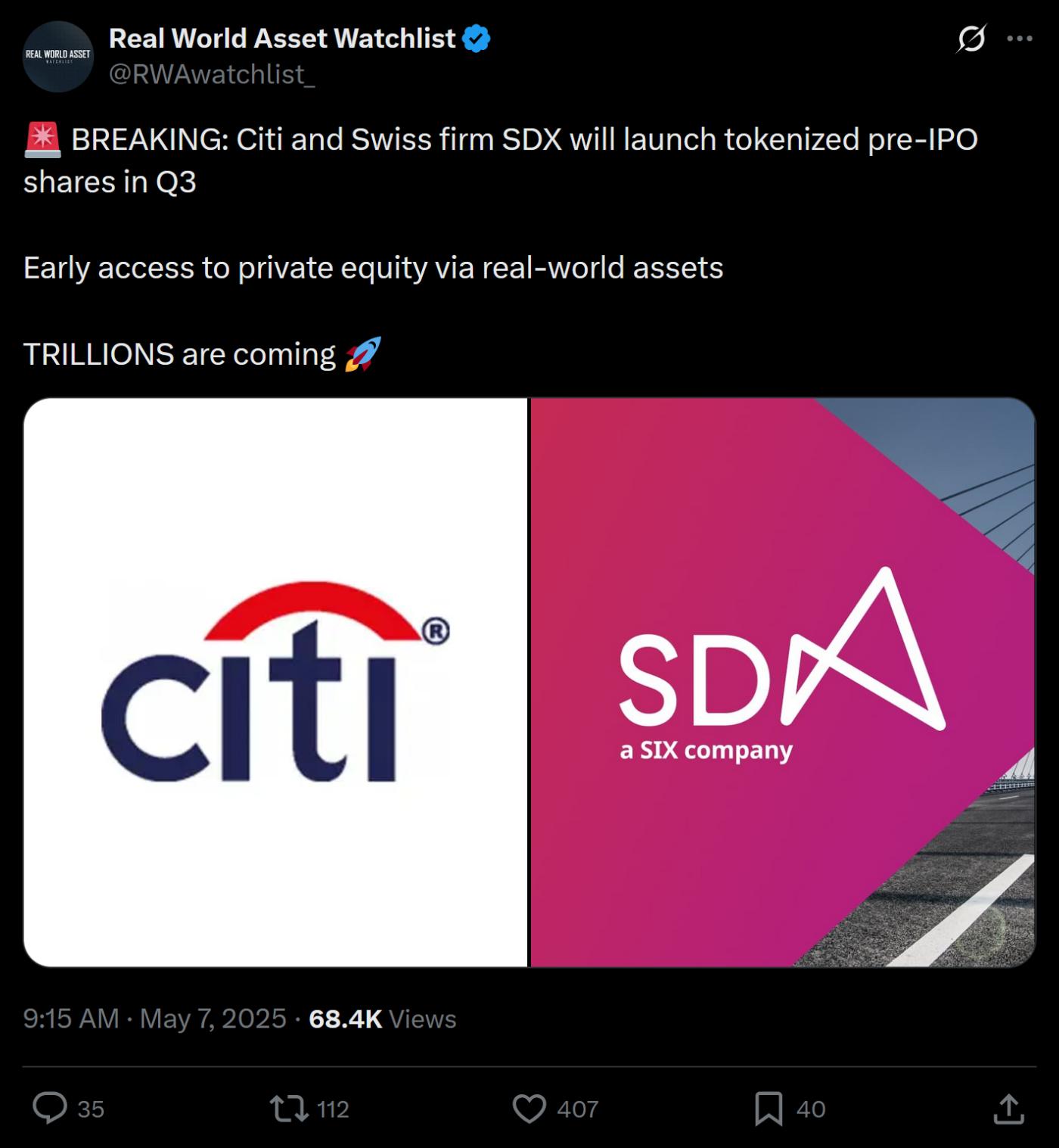
As of April 2025, the total market value of tokenized stocks has exceeded $350 million. Many industry experts predict that this figure could potentially reach $1 trillion in the future.
Although regulation remains in a gray area, with the "pro-crypto" US government pushing forward, policies are gradually opening up. Meanwhile, Switzerland and the EU have already established clear compliance frameworks, bringing confidence to the entire market and potentially signaling the next wave of institutional incremental funds.
A "Stabilizer" for Crypto Assets: A New Way to Hedge Risk with One Click
For crypto investors, tokenized stocks are not just an extension of asset allocation, but also a new means of risk management. By exchanging cryptocurrencies like Bitcoin or Ethereum for on-chain stocks, investors can achieve cross-market asset allocation, thereby enhancing portfolio stability.
For example, Backed Finance recently announced on X the launch of the tokenized version of Coinbase stock, $wbCOIN, explicitly stating that the token is "fully collateralized, freely transferable, and carries legal share rights". This announcement quickly generated 595,000 interactions, indicating the market's rapidly growing interest in such products.
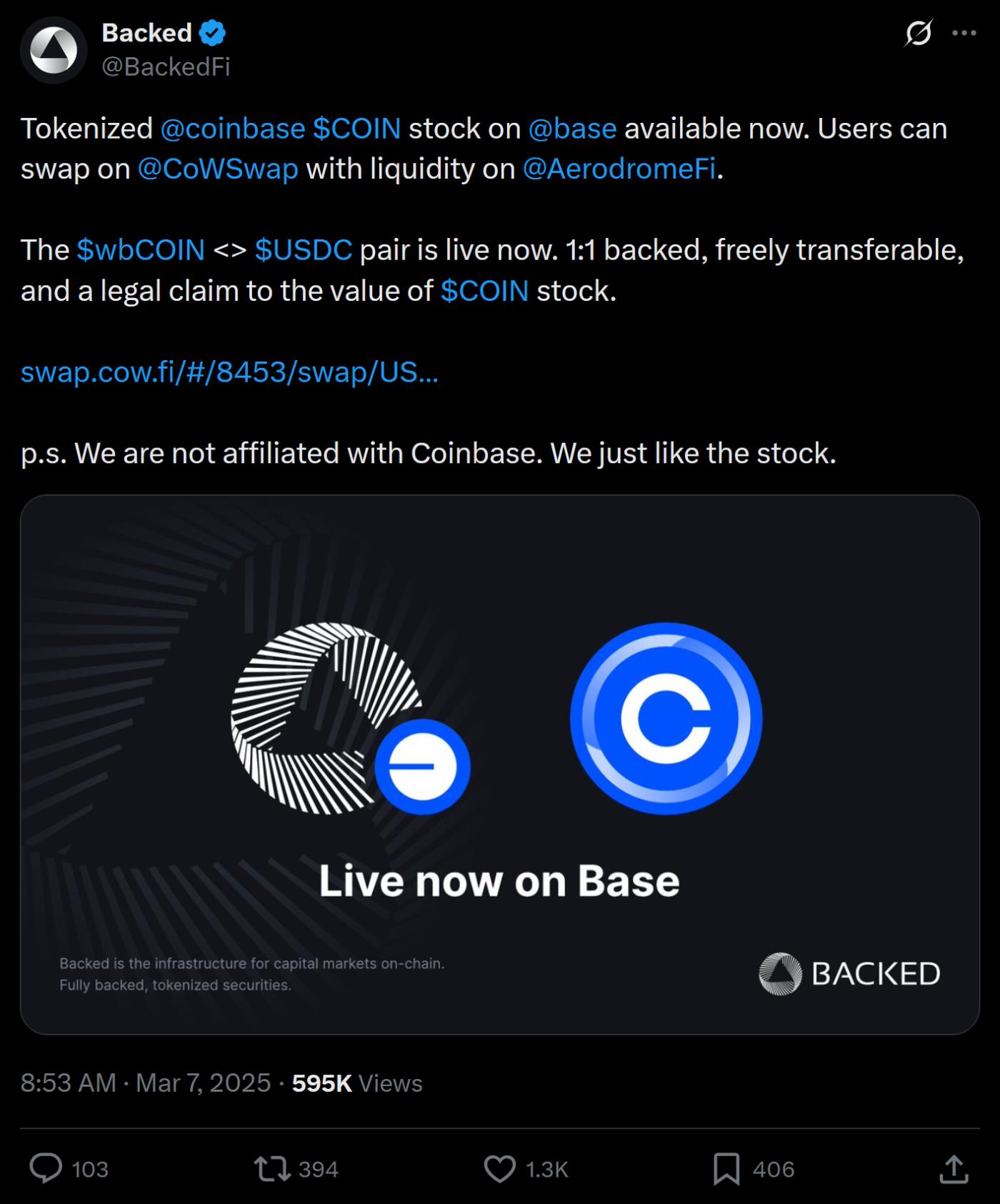
At the enterprise level, companies are actively exploring the potential of tokenized stocks as a financing tool. Compared to traditional methods, tokenized stocks not only lower the financing threshold but also allow global investors to more conveniently participate in early-stage investments.
Traditional giants like BlackRock and JPMorgan have already launched on-chain tokenized products, suggesting that tokenized stocks are not just a "new toy" in the crypto world, but potentially a new infrastructure for cross-border finance.
Conclusion: Connecting, Not Replacing
Tokenized stocks are unlikely to completely replace traditional stock markets, but their greatest value lies in "connecting" - opening the door to the crypto world for traditional investors while providing crypto users with an asset allocation tool anchored to real-world assets.
Just as Bitcoin and Ethereum ETFs made it possible for mainstream capital to enter the crypto market, tokenized stocks may become an important channel for the next round of capital inflow. In the future, it may become a key link for the crypto world to truly "break out".