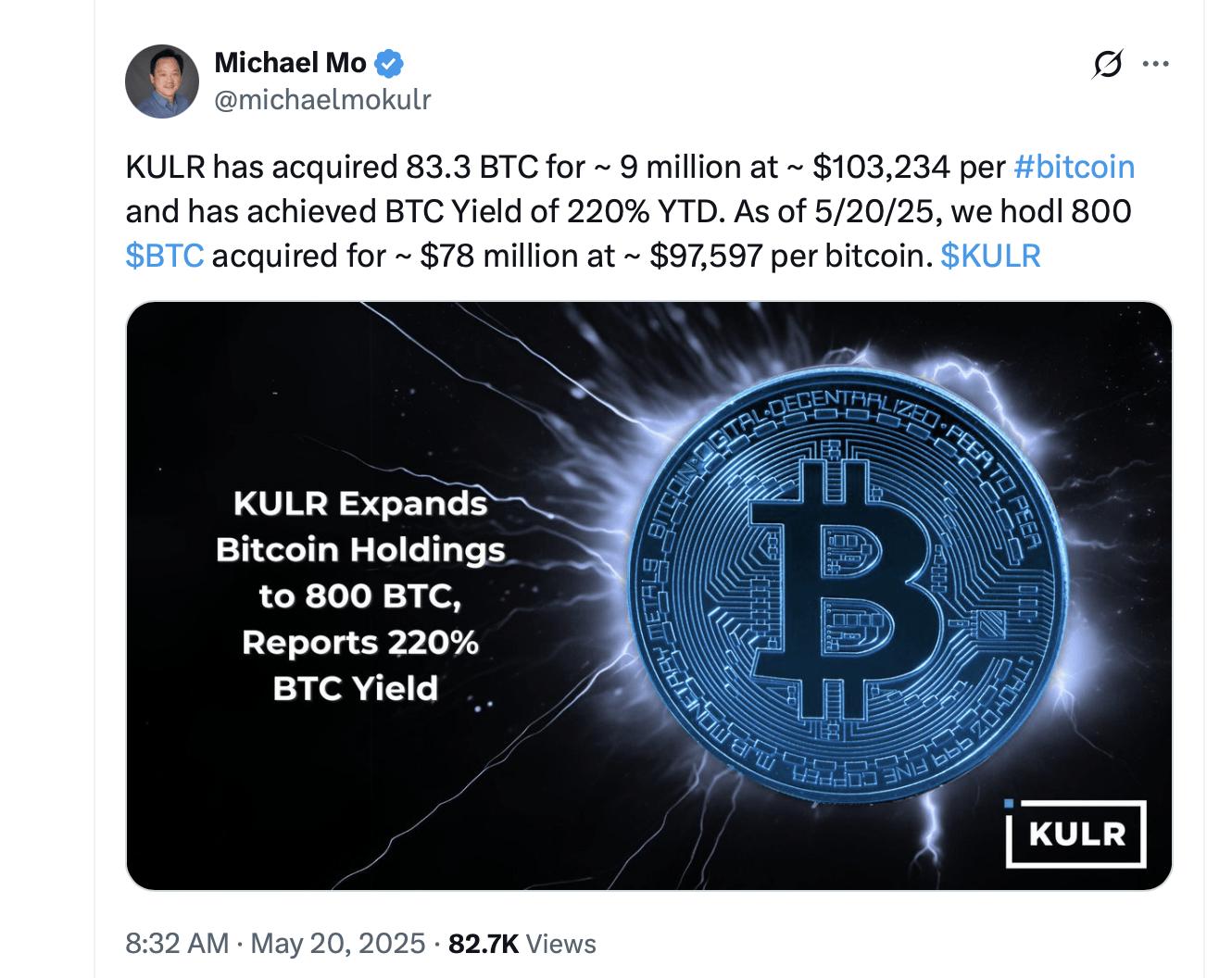
KULR Technology Group has increased its Bitcoin holdings to 800.3 BTC after investing an additional $9 million, and announced an internal profit indicator "BTC Yield" of 220%.
KULR Technology Group has just announced the purchase of additional bitcoin worth $9 million, raising its total BTC holdings to 800.3 BTC, equivalent to approximately $78 million at current market prices. This information was shared in a press release sent to Bitcoin.com News, where the company stated that the recent purchase was made at a weighted average price of $103,234 per BTC, including various fees.
This move is part of the strategy KULR announced in December 2024, whereby the company will allocate up to 90% of its excess cash to bitcoin. This is a notable investment decision, especially when many listed companies remain cautious about digital assets.
BTC Yield – A Special Performance Indicator
KULR has recorded an impressive "BTC Yield" of 220.2%, an internal indicator used by the company to measure the growth of BTC holdings relative to the number of outstanding shares. The company emphasizes that this is a key performance indicator (KPI) in their bitcoin strategy.
However, KULR also notes that this indicator does not reflect the overall financial condition of the business. The BTC Yield calculation does not include liabilities or other financial factors, and the company warns against confusing it with traditional yield indicators. KULR's stock price remains influenced by general market conditions and does not fully reflect the value of its bitcoin assets.
Nevertheless, this strategy seems to have yielded positive results for shareholders in the short term. Over the past 6 months, KULR's stock has increased by more than 250%, a significant figure compared to many other technology stocks in the market.
KULR's continued bitcoin accumulation demonstrates a high-risk treasury strategy that significantly differs from the asset preservation methods of traditional listed companies. While the 220% BTC Yield is an impressive figure, it also raises questions about long-term sustainability, especially given bitcoin's volatile pricing and the potentially uncertain global financial environment.