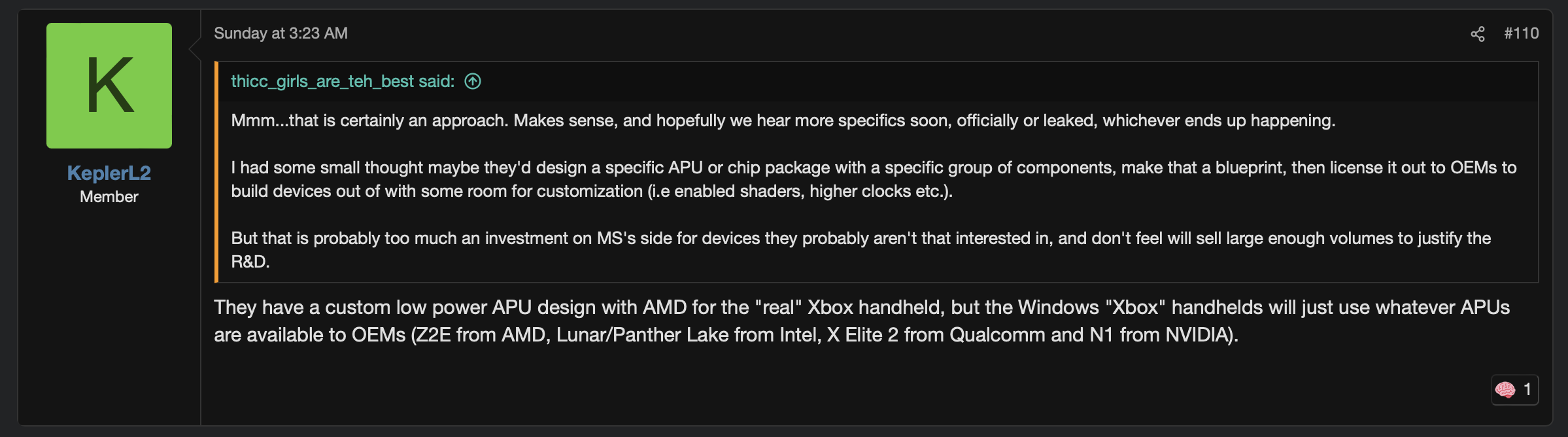
In the handheld gaming market, rumors about Microsoft potentially launching a self-designed Xbox handheld device continue to attract attention. The latest news reveals that, contrary to previous speculation about ARM architecture, Microsoft may be collaborating deeply with AMD to develop a customized low-power APU for a handheld device internally referred to as "truly" an Xbox handheld.
Customized AMD APU Becomes the Focus
According to renowned tech leaker KeplerL2 on the NeoGAF forum, Microsoft is developing a "truly" Xbox handheld. Notably, this device is said to use a customized low-power APU (Accelerated Processing Unit) developed in collaboration with AMD, rather than the ARM architecture previously speculated. The core characteristics of this customized APU are its "low power consumption" and "design optimized for handheld devices", aiming to provide an exceptional handheld gaming experience.
What is the Significance of Customized APU?
Microsoft's primary reason for choosing to collaborate with AMD to develop a customized APU may be to significantly improve compatibility with existing Xbox game libraries and address potential backward compatibility issues.
Compared to the technical challenges ARM architecture might face when running x86-based Xbox games, AMD's x86 architecture APU has a significant advantage, ensuring broader game support.
This technological approach helps Microsoft enhance the attractiveness of its product when facing major competitors in the handheld market, such as Valve (Steam Deck), Sony, and Nintendo.
Differentiation between In-house R&D and Third-party Brands
Players should be reminded that Microsoft's self-developed Xbox handheld differs from Xbox-branded or Windows handhelds currently available from third-party OEM manufacturers like Asus. For example, the upcoming successor to Asus ROG Ally (rumored code name Project Kennan) is expected to be equipped with the existing AMD Ryzen Z series APU.
Such third-party handhelds typically focus more on the general Windows system gaming experience, while Microsoft's self-developed handheld may concentrate more on providing deeply optimized Xbox game ecosystem integration and exclusive experiences. Multiple sources have mentioned the specifications of the next-generation Asus ROG Ally product and emphasized the differences in positioning from Microsoft's own handheld.