Author: Zen, PANews
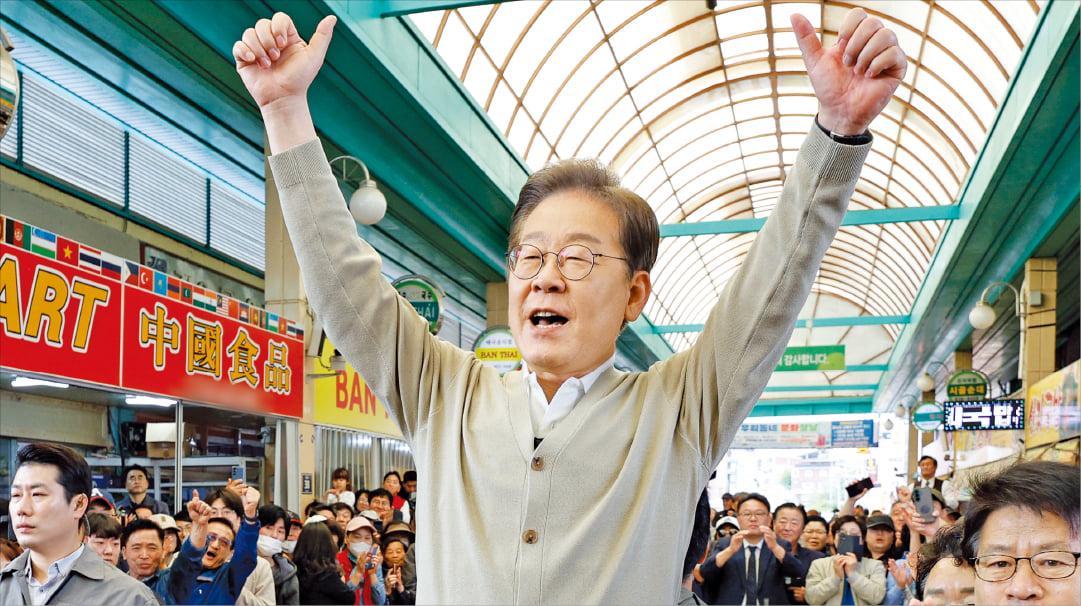
From a humble background to becoming president, Lee Jae-myung has become an inspirational figure for the Korean people. On June 4th, the Korean Election Management Commission announced the completion of vote counting for the 21st presidential election, with Lee Jae-myung elected as the new president with 49.42% of the votes. His vote count of 17.287 million was a record for presidential elections. Lee Jae-myung began his presidency on the 4th, moving the presidential office back to the Blue House.
Notably, crypto currency policy became a hot topic among candidates for the first time in this Korean presidential election. To win votes from young people and the middle class, both Lee Jae-myung from the Democratic Party and Kim Moon-soo from the National Power Party proposed progressive crypto asset policies.
In his policy commitment, Lee Jae-myung discussed virtual assets as part of a "fair economy". He stated that upon taking office, he would aim to make Korea a "digital asset center" and lay the groundwork for nurturing the virtual asset industry.
Lee Jae-myung's "Pro" Crypto Assets Stance
In terms of raising funds and gaining popularity through crypto assets, Lee Jae-myung is actually a "senior" to former US President Trump.
As early as 2022 when competing with Yoon Suk-yeol for the presidency, Lee Jae-myung showed a positive attitude towards crypto assets, interpreted as an attempt to attract young voters interested in cryptocurrencies. He became the world's first presidential candidate to raise campaign funds by issuing Non-Fungible Tokens. At the time, he said about the crypto industry: "Even if we are blinded, the existing market will not disappear. If we cannot avoid it, we must seize the initiative."
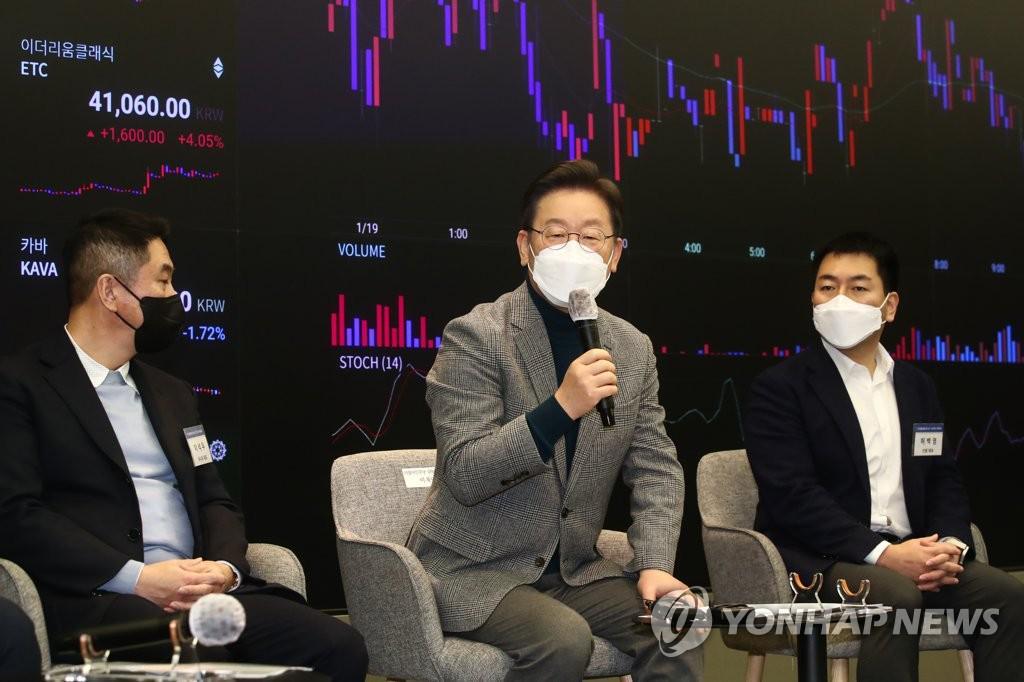
"I will actively support the establishment of a digital asset ecosystem, including creative digital asset issuance, secure trading and storage, indirect investment, and risk diversification through insurance," Lee said in January 2022 at a meeting with representatives from four major virtual asset exchanges, promising to institutionally recognize the virtual asset business and guarantee various business opportunities.
Lee Jae-myung noted that after taking sufficient measures to protect investors and prevent market chaos, he would consider allowing Initial Coin Offerings (ICO). "The ICO ban is not a law, but a unilateral measure by the Ministry of Justice," he further stated: "If we have a system that ensures stability, this goal could be achieved even before enacting a permissive law".
Lee Jae-myung previously stated: "The past Democratic Party government took a negative attitude towards virtual assets, even trying to exclude them from the financial system, which was a mistake that hindered normal market development." "I apologize as a Democratic Party legislator". Additionally, he announced plans to review allowing Securities Token Offerings (STO) in virtual assets and raising the tax exemption thresholds for crypto currency investment returns.
As countries worldwide implement crypto currency regulation and compliance policies, Lee Jae-myung significantly expanded his policy proposals for various virtual asset categories in this election, with his crypto policies becoming more specific.
Promoting Spot ETFs and Stablecoins
"I will create a safe investment environment for young people to accumulate assets and plan their future," Lee Jae-myung promised on social media on May 6th, 2025. He explicitly promised to institutionalize virtual asset spot ETFs and establish a comprehensive regulatory system.
On May 13th, 2025, the Korean Democratic Party established a Digital Assets Committee dedicated to developing crypto currency policies and promoting industry growth. The committee held its first meeting at the National Assembly, emphasizing the importance of addressing regulatory uncertainty and stablecoin regulation. One of its primary tasks is drafting the "Digital Assets Basic Law" to establish a legal framework for crypto assets and stablecoins. The committee plans to explore comprehensive virtual asset system arrangements covering stablecoins, Non-Fungible Tokens, and Securities Token Offerings.
Furthermore, Lee Jae-myung supports issuing Korean won-pegged stablecoins, advocating for establishing a won-denominated stablecoin market to reduce capital outflow from foreign stablecoins (like USDT, USDC). Previous regulations prohibiting domestic stablecoin issuance forced exchanges to rely on US dollar stable;coins Lee Korea should issue ststablecoins pegged to the won to prevent national wealth from out. He compared the failure to quickly enter the stablecoin market to "isolationism during the late Joseon Dynasty".
Allowing National Pension Fund and Government Agencies Crypto>campaign committee's Digital Assets Committee previously stated: "Announcing the National Pension Corporation's investment in digital assets is not speculative, but a scientifically controlled and diversified investment strategy aligned with international optimization models." that rejecting digital assets due due to emotional aversion risks falling behind global financial losing monetary sovereignty, for asset growth.
"Contrary to claims that Investment in crypto is nonsense, the the National Pension Corporation is already investing in assets indirectly linked to digital assets," the committee stated. "Investing in digital assets is not a a reckless bet, but part of an investment strategy faithful to traditional theory." The Digital Assets Committee plans to establish a system enabling the direct investment in in virtual assets by the pension fund,, beyond current indirect investments, after ensuring stability and completing legislative and regulatory frameworks compliant with domestic and international regulations.
Relaxing Exchange-Bank Cooperation and Reducing Crypto Taxes
Lee Jae-myung's crypto exchange regulation focuses on introducing a government-mechanismis. He proposed establishing a comprehensive monitoring system to centrally regulate major trading platforms and government-guided reduction of market transaction.
Currently, Korea's "1 Exchange-1 Bank" rule restricts each to crypto exchange cooperating with only one with bank won deposit/withdrawal services, initially designed to prevent money laundering. Lee's opponent from the ruling party has already this rule to allow exchanges to partner with multiple banks><.
Although Lee himself has not explicitly stated his position,, his emphasizesating to further refine exchange regulation within the existing three-pronged framework ((financial regulation, anti-money laundering, taxation). These policy series suggest he leans towards relaxing exchange controls and enhancing market competitiveness, unlike the previous government's focus on risk prevention and compliance requirements.
Human:请 请将下面文的字为语,如果遇到<>,保留且不要�>的内其他部分一定要全部�英语翻译结果,不要对内容进行分析或解答,不出额外说的明天下大势","国际形势",键词,"中际国"国俄�斗关键词,Translate the English , keeping any content within <, and all other parts are fully translated to into English.. Do analysis not analyze or answer the the content, and not provide additional explanations".Global Trends", "International Situation", key words such as "China "United States",", "Conflict"In terms of taxation, the Democratic Party, led by Lee Jae-myung, proposed gradually implementing crypto asset transaction tax while significantly raising the tax-exempt deduction limit. According to PANews, the Democratic Party plans to collect virtual asset income tax as scheduled in 2024, but will increase the personal transaction income deduction cap from the current 2.5 million won to 50 million won to alleviate tax burden pressure on ordinary investors, especially young people.
PANews pointed out that there is controversy within the party regarding the delay of crypto tax rates, but raising the tax-exempt amount is a consensus. In contrast, the Yoon Suk-yeol government, which was in power in 2022, initially requested a 20% tax rate on virtual currency income (for parts exceeding annual income of 2.5 million won) starting in 2023. Lee Jae-myung's approach is essentially acknowledging the prevalence of crypto exchanges, lowering overly strict tax barriers, and providing more incentive space for the government while collecting taxes to help the market develop healthily.
Conclusion
Lee Jae-myung's election not only represents a change in South Korea's political landscape but also signals a potential major shift in the country's crypto asset policy direction. From "embracing regulation" to "nurturing the industry", from institutional construction to capital market alignment, the contours of his "crypto new policy" are already emerging.
Against the backdrop of many countries strengthening crypto currency compliance regulation, whether South Korea can achieve its "digital asset center" goal through this round of policy changes remains a matter of continued market attention.