


Author: 1912212.eth, Foresight News
On June 8, Binance Alpha launched Open Loot (OL). The airdrop eligibility requires at least 233 points, which is the highest point requirement since Binance Alpha adopted the point system. Since June this year, the Binance Alpha airdrop participation threshold has been continuously rising, from just over 200 points to 223, and now to 233 points, with rising scores and thresholds, while market participants have become "numb".
Since its launch in December 2024, Binance Alpha has attracted countless players with its low threshold and high-return airdrops and TGE. However, the continuous rise of point thresholds now raises the question: Is this point frenzy approaching its end? Will it continue to escalate?
High-Cost Game: Why It's Getting Harder
The attraction of Binance Alpha lies in its return potential. According to airdrops.io, in May 2025, the platform's 5 airdrops averaged $270 in first-day value per user, with a potential total value of $656 at historical peaks. For example, the SIGN airdrop of 1,500 tokens was worth about $177, and BOOP and NXPC airdrops also brought users considerable earnings. Compared to the uncertainty of traditional on-chain airdrops, Binance Alpha's transparent rules and quick redemption mechanism have attracted players.
However, high returns come with high costs. Points are mainly obtained through asset holding and token purchases. For trading volume points, purchasing $2 of Alpha tokens earns 1 point, with an additional point for each doubling (8 dollars gets 3 points, 1024 dollars gets 10 points).
Now, assume an ordinary retail investor with an exchange balance between $10,000 and $100,000, with a daily balance point of 3. According to the trading volume point rules, to obtain 15 points, the player needs a trading volume of around $32,000, and this is only for buying (selling is not counted towards points). If a new player starts from zero to accumulate trading volume, they need to persist for at least 13 days to qualify for the Binance Alpha airdrop. This undoubtedly poses a significant challenge to ordinary retail investors' capital scale and patience.
Additionally, Binance Alpha introduces point consumption in the airdrop token process. Typically, each airdrop claim or wallet TGE activity requires 15 points to be consumed. This means that if points have just met the threshold, claiming this airdrop will make the next airdrop inaccessible. This tests players' judgment - if the current airdrop project is of average quality and only worth a few dozen dollars, missing the "next" airdrop or TGE worth hundreds of dollars creates significant time and opportunity costs.
The "wear and tear" costs during trading cannot be ignored. Foresight News noticed that when trading certain tokens, even buying and quickly selling can result in losses of up to tens of dollars. Therefore, players must comprehensively consider transaction volume, price fluctuations, and other factors when choosing tokens, otherwise, they might find that despite aggressive trading, the airdrop earnings cannot cover the costs.
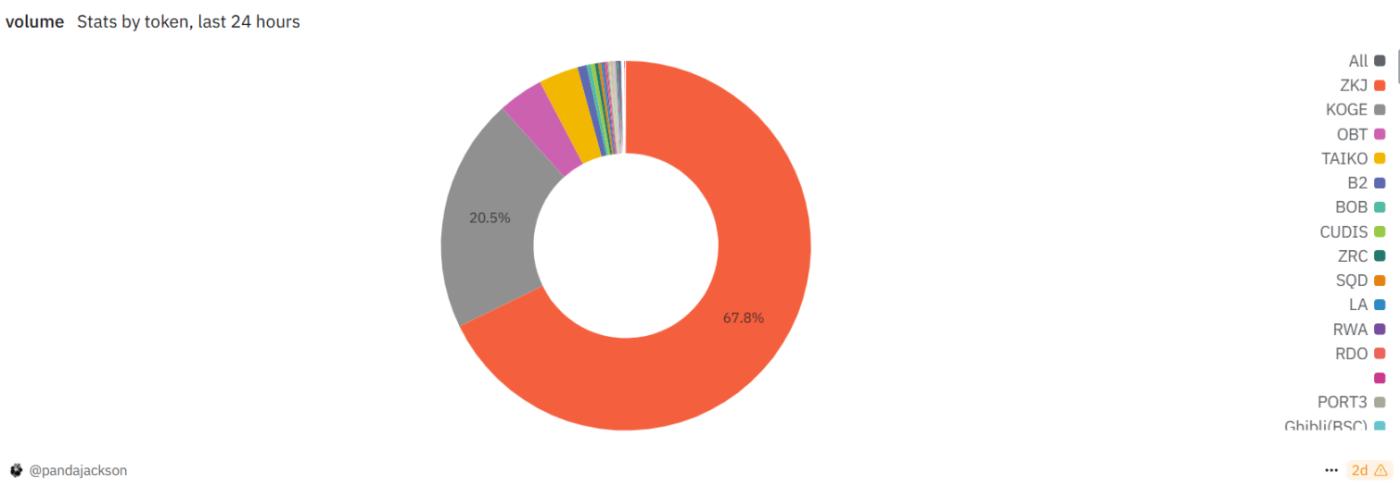
MEV issues are also worth noting. Without MEV protection, losses can be severe. According to AI Aunt's monitoring, on June 8, a user trading KOGE/USDT was sandwiched for $47,000, spending 47,000 USDT to buy only 0.009 KOGE, with a per-token cost of $5.18 million.
However, as long as airdrop earnings exceed wear and tear costs, arbitrageurs will continue to flood in.
A Workstation Carnival?
Binance Alpha, officially launched on December 17, 2024, is positioned as a discovery platform for Web3 early-stage projects, aiming to provide users with early participation opportunities in high-potential tokens. Its core mechanism is the Alpha points system, which assesses users' asset holdings (Balance Points) and Alpha token purchase volume (Volume Points) in the Binance exchange and wallet ecosystem to determine TGE and airdrop eligibility. Points are updated daily based on the past 15 days' asset snapshots and trading behaviors, with points valid for 15 days.
Initially, Alpha points had a relatively low threshold. For example, the April 2025 SIGN airdrop required relatively low points. However, as the platform attracted more users, point thresholds rose. In May 2025, the BOOP airdrop required 137 points, while Privasea TGE needed 198 points. In June, the Bondex (BDXN) airdrop required 213 points, and Open Loot pushed the threshold to 233 points. Some community users point out that thresholds above 220 points have become the norm, and without effort, one might "miss out".
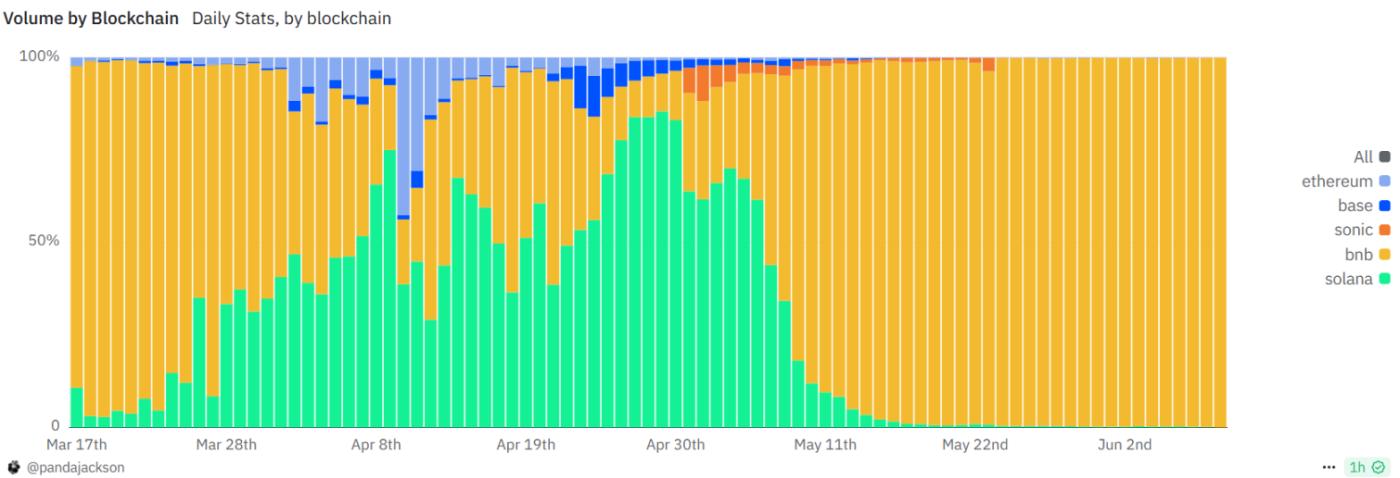
According to Dune data panels, Binance Alpha's trading volume reached $2.04 billion on June 8, a historical high, far surpassing competitors like Solana chain.
The root of this "involution" lies in supply-demand imbalance. Binance Alpha's airdrops and TGE opportunities are limited, with continuously rising thresholds, while the number of participants surges. It's estimated that the Open Loot airdrop has about 10,000 qualified participants, each receiving 1,836 OL tokens. As arbitrageurs flood in, the platform raises point thresholds to filter truly active users and curb bot point farming. In June 2025, Binance announced an upgraded risk control system, considering any use of bots - including but not limited to scripts, automation tools, or other non-manual methods - as a violation.
From Thousands to Hundreds of Dollars: Binance Alpha's Endpoint?
In the early stages, with fewer participating users and some high-return projects, ordinary retail investors could earn over $1,000 after costs. However, as user numbers increase and thresholds rise, monthly earnings have dropped from over a thousand dollars to around $600, with one mid-May project's airdrop earnings falling as low as $25, far below user expectations. This indicates that the Alpha points game is shifting from "low threshold, high return" to "high threshold, low return", reducing its attractiveness to ordinary players.
Binance Alpha's popularity has not only changed user behavior but also profoundly impacted the entire industry ecosystem. On one hand, Alpha's massive traffic has created a "spillover effect" for other public chains. Since May, Solana chain's DEX trading volume increased from $2.2 billion to $4.59 billion, partly due to the hot trading of tokens like $MOODENG on the Alpha platform. The NAVX token in the Sui ecosystem also saw a trading volume surge after listing on Alpha, with Alpha's point activities injecting vitality into emerging public chains.
On the other hand, Alpha's success has prompted other exchanges to imitate. Twitter KOL @_FORAB revealed that exchanges like Kraken and Bithumb have recognized the Alpha model and may launch similar activities. As competition intensifies, airdrop thresholds and costs will further increase, potentially creating higher participation barriers for users. Binance itself continues to adjust strategies, such as introducing double points activities (obtaining double points by purchasing Alpha tokens through BSC chain or limit orders) to stimulate trading volume. However, these incentive measures further raise point thresholds, exacerbating "involution".
Facing high-point thresholds and increasingly fierce competition, is Binance Alpha approaching its endpoint? The answer may not be simply yes or no. User fatigue is evident, with high thresholds and high costs deterring newcomers. If returns continue to decline, ordinary users might choose to exit. Bot and arbitrageur crowding: Despite Binance's upgraded risk control system, bot point farming remains unresolved. This not only damages fairness but also increases platform operational costs. Market saturation is another negative factor, with the supply of high-quality Alpha projects potentially drying up. In the long term, the platform may struggle to maintain high-frequency, high-value airdrop activities.




