Author: MD
Produced by: Bright Company
Recently, the well-known investment podcast Invest Like the Best once again invited Benchmark partner Bill Gurley to comprehensively discuss the current real problems in the US primary market and the current valuation and investment contradictions of AI companies.
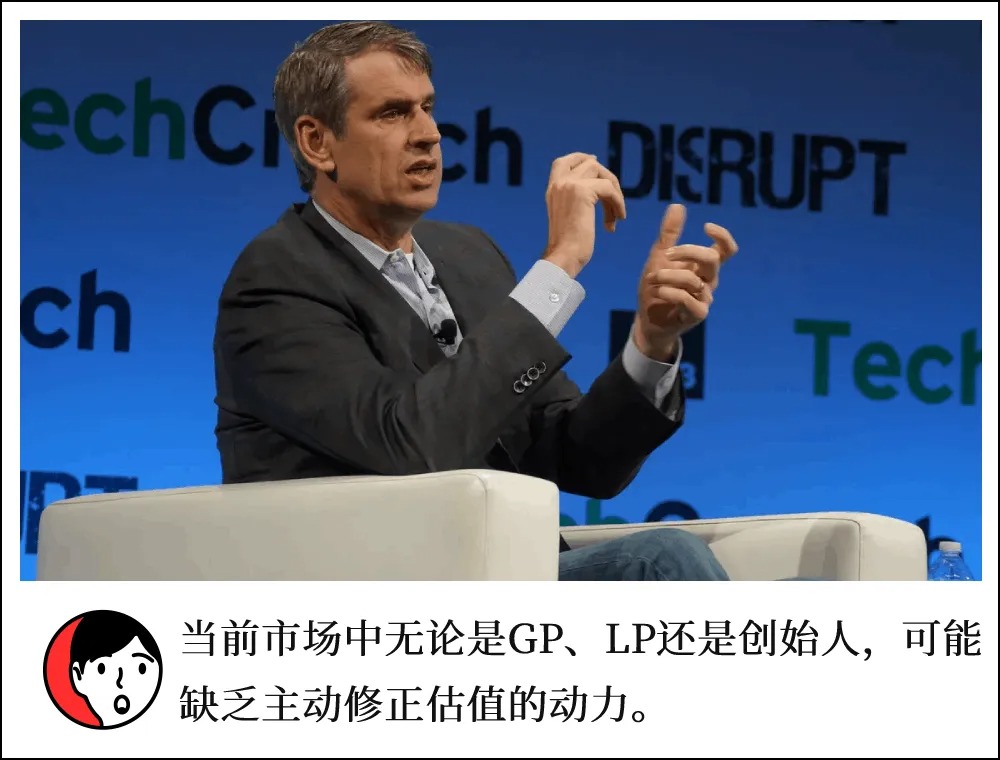
In the interview, Bill analyzed the structural changes and challenges of the current venture capital industry. He pointed out that the rise of MegaFund has doubled the size of funds, blurred the boundaries between early and late-stage investments, and promoted the birth of a large number of AI and technology unicorns. However, there are a large number of "zombie unicorns" among these companies, that is, companies with huge financing but weak growth and questionable true value. Bill emphasized that in the current market, whether it is GP, LP or founder , there may be a lack of motivation to accurately mark assets and actively revise valuations, resulting in a serious deviation between book value and actual value and a misaligned incentive mechanism.
In the interview, Bill also analyzed the investment (speculation) environment under the zero interest rate environment. Excess capital has prolonged the "survival period" of companies, making companies that should have been eliminated by the market still exist, and the market competition landscape has become extremely complicated. At the same time, the closure of the IPO and M&A windows has trapped a large amount of capital in the primary market , and the liquidity problem of LPs has become increasingly prominent . Even the endowment funds of prestigious universities have to deal with funding pressures by issuing bonds or selling private assets.
Bill also believes that the arrival of the AI wave has interrupted the market correction that should have occurred. AI is regarded as a historic platform transformation, which has led to a new round of investment boom and valuation bubble. He reminded that although AI brings huge opportunities, all parties in the industry need to be vigilant about the importance of fundamentals and unit economic models and should not blindly pursue high valuations.
Although Bill admitted in the interview that he "no longer writes checks", he is still very concerned about China's AI and technological innovation model.
In the latest episode of Bill's podcast BG2, he also analyzed the transformation of the "competitive model" of Chinese companies - from photovoltaics, new energy vehicles to today's AI, China's fierce competition may create more competitive companies. Benchmark is still one of the most successful VC institutions in Silicon Valley. Not long ago, Benchmark participated in a new round of financing for ManusAI as a lead investor.
The following is the full text of the interview compiled by Mingliang Company:
Patrick: Our guest today is Bill Gurley. Bill was a general partner at Benchmark Capital. His sixth appearance on Invest Like the Best is his most comprehensive market analysis yet, exploring the realities that are reshaping the venture capital industry. Bill confronts the disturbing math behind today’s venture capital returns, especially as companies stay private longer. He also explains why no one, from GPs to LPs to founders, has enough motivation to accurately mark assets, creating coordination challenges for the entire system. We also delve into the investment impact of AI as a platform change, from assessing the quality of AI revenue to international competitive dynamics. Bill provides key perspectives on how to deal with the current and future situation. Please enjoy my conversation with Bill Gurley.
Patrick: Bill, you have taken back the title of the most guest on InvestLiketheBest, surpassing our good friend Michael Mauboussin. Welcome back.
Bill: Well, I can't think of anyone who could compete with Michael for that title.
Patrick: Interestingly, this is the first time we've done a show with just the two of us since 2019, which is incredible. Time has really flown by. Since it's just the two of us, I wanted to get a little more big picture and talk about where you see the current situation. I know you used to do a market version of the "State of the Union" when you were at Benchmark. I hope you can do that for us and talk about where you see the market in the summer of 2025.
Bill: I'm happy to do this. Yes, I used to open our LP meetings with the current state of venture capital. This is the process and speech I'm used to doing. I've noticed a lot of things are different in the venture world lately, maybe even permanently different. A lot of what I used to talk about was based on the cyclical nature of the venture capital industry itself, but recently those patterns have been disrupted or become a little chaotic, and we'll talk about that.
Before we get into this, I have two premises to make. First, Michael would agree that I am a big fan of systems-level thinking. There is a great book on systems thinking (note: but the name of the book is not mentioned). Michael and I spent a lot of our time at the Santa Fe Institute working on systems theory - the idea that systems behave differently than their individual components. It's actually very difficult to see across systems. But when we got into this, I thought that many of the components in the industry were colliding with each other, and the sum of all of these was the most interesting. So you have to step back and look at the big picture from a distance.
Second, I want to state in advance that I do not make moral judgments about any of the participants. The actions taken by individuals and companies have changed the industry landscape, and I think they are all acting reasonably in their own interests. The overall effect may not be good for the world, but I will not attribute malice to anyone, and I want to make this clear first.
So let me start. I want to start by laying out some of the realities of the market that I see. In this first part, I'm not going to do too much analysis, just lay out some of the things that you're going to encounter if you're in the venture capital market. By the way, I think what we're going to talk about is important for VCs, founders, LPs, anyone who touches this ecosystem. This is very high-level talk. Let me talk about these realities first, and then we can discuss some interpretations back and forth.
Seven realities of the primary market
1. Mega VC Fund
Bill: The first thing I want to mention, and everyone is talking about, is the continued rise of the super-sized venture capital funds. When I first got into the industry, everything was very customized, and most of the big-name funds focused on early-stage investments. They didn't participate in later stages, and the fund sizes were much smaller than they are today.
Today, many of the big names have gone from $500 million commitments every three or four years to $5 billion, a 10x increase. They are very active in so-called “late-stage” investing— although I’ve always felt that “late-stage” is just a euphemism for “big check.” Now there are people willing to invest $300 million in a 12-month-old AI company. That’s not late-stage, it’s just big check.
A lot of companies are moving upstream and setting up various industry-specific funds, which has led to a significant increase in the amount of funds managed by many brands. There are also many new players entering the late-stage market with different approaches, and some old institutions occasionally participate, such as Fidelity and CapitalGroup. But I think Atreides, Coatue, Altimeter, Thrive (which I think is doing a very distinctive job in the market) are all very active. Also, Masa (Masayoshi Son) is back. We didn't hear much about him in the past few years, but he is active in the market again.
Patrick: He himself is an indicator.
Bill: Yeah, I agree. So there is more money in the market now.
2. Zombie Unicorn
Bill: The second reality that everyone is talking about is the “zombie unicorns”, which is a term I don’t like but I use the most. If you look at the number of companies, I like to use the LLM before and after because it’s really a watershed moment, and everyone is excited about this new platform transformation. There are probably about a thousand of these private companies that have raised more than $1 billion. ChatGPT told me it’s 1,250, and the NVCA (National Venture Capital Association) said it’s 900. Let’s say it’s about a thousand.
Patrick: About a thousand, yes.
Bill: Yes. They raise about $200 million to $300 million each. That adds up to $300 billion. NVCA estimates that LPs have $3 trillion on their balance sheets. I've talked to LPs one-on-one, and they've slowly increased their allocation to venture capital from 5-7% to 10-15%. Some even go as high as half of their private equity allocation. Venture capital and private equity are on par , and some LPs have a larger PE allocation, but venture capital is a growing part of their balance sheet, so it's important.
I think there are a lot of questions about this group of companies. First, what is their true value? Many companies were last priced in 2021.
Patrick: Around 2021.
Bill: Yes, it was the peak of the market, the second year of the COVID, if you remember, all the tech stocks went up, Zoom exploded at that time, everyone did well in that window. So how much are they worth now is a question. The investment community as a whole is not interested in these companies. They have low growth rates, and I will talk about the reasons later.
Many people may not believe it, but I guarantee that this is true - no one has the motivation to get the valuation right. For those who don't understand this world - private equity, whether PE or VC - is a strange model where GP reports the price to LP and they set the price themselves.
Of course, there are auditors behind the scenes, and you will hear LPs complain that some funds are conservatively priced low, and some are priced high. The information LPs receive is also varied.
Patrick: For the same asset, different GPs give different prices?
Bill: Right. But what many people don't realize is that the managers who run the VC groups in the large endowments have no incentive to correct this number. In fact, many of their bonuses are based on book valuations. So they even have a negative incentive to correct it.
3. Misaligned incentives lead to poor results
Patrick: Don’t founders have an incentive to get these things right? Isn’t that better for company building in the long run?
Bill: Great question. I think there are two things going wrong. First, every founder I know multiplies their percentage of ownership by the company's historical highest valuation and uses that number as their net worth.
Patrick: But does that mean anything? It doesn't mean anything.
Bill: I don't judge, I think it's a natural reaction. But it's hard to accept that the number is cut by 70%. Another issue is the liquidation preference. This is another technical detail, let me explain it to the audience.
The amount you raise becomes your liquidation preference. In an M&A, investors can choose to get their principal back instead of converting it into common stock. So if the company raises $300 million and is valued at $2 billion, the liquidation preference will have no effect. If the valuation drops to $400 million, the liquidation preference may take away 75% of the company's value when it is sold . This is a real problem.
Patrick: If we go back to the thousand zombie unicorns and analyze them carefully, how many companies do you think are profitable and can continue to be profitable until they are willing to re-price? And how many companies will not be able to survive and eventually have to raise funds and reset the price?
Bill: I haven't done a statistical survey to be honest, maybe someone can do it, such as a fund of funds, Pitchbook or Carta or something like that. I think it can be used as an introduction to talk about what happened. We are in a very long period of zero interest rates, now called ZIRP, which has not been seen in a hundred years. Zero interest rates lasted for five, six, seven years? About the same.
Patrick: For a long time.
Bill: On the one hand, this delayed the adjustment of VCs, and on the other hand, it brought a lot of funds and speculation. There is a small episode. I have only met Buffett once in my life . It was a small fundraising event with 20 people. Each person could only ask one question. I asked him, "Your DCF is not valid at zero interest rates, right? This will only bring speculation." He replied, "You are right." Just like that, a brief encounter with the great man.
In short, speculation was rampant. The $20-30 billion I just mentioned was unprecedented in scale.
When companies get so much money, several things happen. I think there are too many players in a space, and companies that should have been eliminated earlier can survive. This makes it harder to expand the market because the number of surviving companies goes from 1-2 to 3-5. When you are overfunded, you do everything. There are many articles and studies that show that constraints lead to creativity and you are better off doing only one or two core products. But when there is too much money, you do seven projects.
Patrick: All of them.
Bill: Yes, all of them. I think there will be a small adjustment in 2022 or 2023, before AI explodes. Most companies turn to break-even, as you said. So once they turn to break-even, they will cut those seven projects and keep only two.
But those seven projects and the overextended sales force brought in revenue, but not sustainable revenue. Once you shrink and go after breakeven, the growth rate will naturally be affected. So I think that's why the growth is sluggish.
I agree with you that many companies have enough capital to break even or close to break even. Based on my previous views on traditional company building, this should be a good thing, and I certainly support it. But the reality is that they may actually last forever, which is where the "zombie" label comes from.
Patrick: So what does this mean? Since no one has the motivation to correct the valuation, will this situation continue? Will anything change?
Bill: We'll come back to that in a minute. Let me get these market realities out of the way.
Patrick: Okay, go ahead.
Bill: And then we can go into the possible changes that might happen.
4. Close the exit window
Patrick: The next question is exit, which is how these companies will be priced in the real market.
Bill: Right, so we talked about super funds, zombie unicorns, and then the capital markets. For some reasons that are not well explained and not well understood, the IPO and M&A markets have stagnated in the past few years. Both of them were actually good in 2021, but then they stopped. If you look at last year (2024), the Nasdaq rose 30%, but the window was still closed. This is the general consensus.
In my history of following capital markets and engaging in venture investing, I have never seen a situation where the Nasdaq market performed well but the exit window was closed.
Patrick: No IPO, right.
Bill: Yeah, that doesn't make sense. They used to be related, so something else must be going on. I'm always concerned about IPO discounts, especially the ones that are forced on the market by the big name banks. But there are those who think it's too expensive to go public, and there are those who think it's too expensive to be a public company. Of course, money is everywhere. We'll come back to this later - successful companies don't need to go public now, or at least they don't need to rush to go public.
Mergers are harder to read. Everyone blames Lina Khan (Federal Trade Commissioner), but she's gone, and there were no record M&A in the first five months of this year. I think it has something to do with the "Big Seven." These seven companies have an incredible amount of cash on hand, which should lead to large-scale M&A, and I'm sure they would be happy to use it . But Washington doesn't want to see it, and the EU doesn't want them to be active, so the situation is stuck. No one wants to take the risk of not being able to complete an M&A agreement.
Even a big deal like Wiz this year was announced to take more than a year to complete. This was hard for the board and the management team to accept. Waiting a year was too hard.
Patrick: Do you think we’ll see a private company valued at $1 trillion soon?
Bill: How close is SpaceX to this goal?
Patrick: About a third. OpenAI is a third. Stripe is a tenth. There are several companies that, if they can continue to be successful, could very well do it. I mean, if you can be a trillion-dollar private company, do you need to go public? It sounds crazy.
Bill: We will talk about this. Another factor that may affect M&A is high valuations. In 2021, we pushed the most exciting companies to extremely high prices, and we are still doing so today. This will also affect M&A.
Patrick: Can you talk a little bit more about why this is happening? Are the feedback loops we just talked about?
Bill: I think ZIRP (zero interest rate) was the main reason before LLM. After LLM, everyone believes that AI is the biggest technology platform transformation in our lifetime. So if you believe this... Another point, I recall that when Mauboussin and I were at FirstBoston thirty years ago, network effects and compounding effects were not fully understood or recognized. Now everyone fully believes it.
So people who have seen Google or Meta go from $12 billion to $3 trillion, if they think a company could reach that level, then they don’t think it’s “overpriced” — it’s reasonable for independent investors to think so. If everyone does this, the market will factor expectations into the price, but we’ll see.
5. LP liquidity issues
Bill: The next reality is that many LPs are facing liquidity problems. This is a new phenomenon, and it is related to the closing of the IPO and M&A window. There is another interesting data. In the first quarter of 2025, US colleges and universities issued $12 billion in bonds, the third highest quarter in history. If you use debt to meet capital commitments, it is because your endowment fund does not have enough liquidity to pay 3% or 5% of expenses every year as before.
You may have seen recently that Harvard announced the sale of $1 billion in private equity assets in the secondary market. They have many special reasons, but what is more interesting is that Yale announced that it would sell $6 billion in private equity assets.
What Yale is doing is very important and interesting, and historically no other institution has had a greater influence on endowment management strategies.
Patrick: Not really.
Bill: David Swensen (former CIO of Yale University and author of "Innovative Investing") is the originator of this model.
Patrick: He is the godfather of this model.
Bill: That's right. Yale is said to have achieved a 13% compound annual return during his 35-year tenure. His famous "Yale Model" is to invest more money in illiquid assets rather than liquid assets. No one did this at first because of the lack of transparency, liquidity, and difficulty in management. But he did it, and it was very successful. What we may be seeing now is the result of everyone imitating the Yale model. Howard Marks once said that you can only make a lot of money when you are non-consensus and correct. But if everyone follows Swensen and invests 50% in illiquid assets, can they still succeed?
I think that's a very challenging question, but that's probably the case. It's interesting that Yale has led the way in adopting a strategy that they're now backing out of.
6. Private is the New Public
Patrick: If you think about the liquidity issue for LPs, would that be the key to breaking the deadlock you just described?
Bill: Possibly. If I can continue with these realities, we'll-
Patrick: Okay, sorry, couldn't help but interrupt.
Bill: The AI wave came at a very good time. This is my fifth point. We were heading for a small correction. You have to remember, Patrick, at that time everyone was tightening their belts, laying off people, trying to break even, and worrying about whether they could raise more money.
In my 30 years of venture capital, every time an industry gets overheated, there is a correction, and then everything calms down. I have seen Morgan and Goldman Sachs open offices on Sand Hill Road and then close them. I have seen Fortune and Forbes pay attention to Silicon Valley and then withdraw. I have seen it many times.
But this time there is no complete correction, because AI appeared and everyone was too excited. I am not saying that we should not be excited, if this is really the biggest technology platform transformation in our lifetime, then we must be excited, which will affect the zombie unicorn group and everything.
But suddenly, there's a surge in investment enthusiasm. What are the multiples of valuation and revenue for AI companies? 10, 20 times that of normal companies, right?
Patrick: About the same, some are even higher.
Bill: Yes. Even though traditional LPs are tight on money, they can still find money elsewhere. The Middle East is a major source of money. How many of your friends have been to the Middle East in the past 12 months? A lot. They are all talking to fundraisers, so the money is found, everyone is chasing this opportunity, and no one wants to miss it. This is a very important part of the whole situation.
7. New changes in the post-market
Bill: The last reality, which you mentioned, is the new movement in the late-stage market. I think Josh and the team at Thrive have led the way in this, but they are not the only ones.
They will go to companies that are ready to go public and are reported by the media to be going public, and make an offer that is hard to refuse. The liquidity of founders, employees, and angel investors is encouraged, and companies are more willing to remain private. The most recent example is Databricks.
Patrick and John from Stripe also talked about this on different podcasts. At first they said, "Maybe we'll go public, but there's no rush now," and then it became more like what you said, "Maybe we'll never go public." I talked to some LPs, and this is very unusual. They've been in and out of Stripe, and the company has adapted very well. This is very new in our industry.
Patrick: So these companies are able to get the funding they need, whether it's employees cashing out or early investors selling shares, basically like an appointment-based open market?
Bill: Yeah, like the old pink sheets, trading by appointment.
Patrick: Stripe is undoubtedly a great company led by an outstanding founder. Why take on the extra work, regulation, data disclosure, and letting competitors know about you when you can have your own private marketplace? It makes sense for everyone, so I doubt this model will continue.
Bill: Maybe.
Patrick: If LPs can obtain liquidity by transferring Stripe shares, then the liquidity problem will no longer exist?
Bill: We're going to get into that in a minute. I'd like to add one more thing - there's another motivation for these investors to encourage companies to stay private. In a traditional IPO, banks are very careful about how they allocate shares. If a large public or private fund applies for a placement, it's usually 100 times oversubscribed, hoping to get 1-2%. They can't get 30%. But when these investors do a large private round, they can get 30% of the shares, which is much more than an IPO. And they will do these deals together.
So this is an oligopoly-style opportunity to take the IPO growth dividend away from the public market. Amazon went public with less than $1 billion, and now it's worth over a trillion dollars, and the public market has enjoyed these compound growth. If you delay the IPO and get a high percentage of shares in advance, these investors will be more advantageous than buying in after the company goes public.
Another important point is that they will tell LPs: companies are no longer listed like in the past. If you want to get the returns of these high-growth technology companies, you must invest in me . This is very convincing.
Is the U.S. capital market healthy?
Patrick: You have finished talking about the market reality. Now I want to ask you in detail. For me, the interesting premise is that I always hope that the capital market will operate healthily. The US capital market is an extremely important innovation engine in the history of the world, which has driven countless innovations.
So my point is that as long as it allows risk pricing to be reasonable and capital markets to function healthily, I support it. I'm curious where you think the system is most unhealthy given these realities, and what changes do you want to see in it?
Bill: I agree with your wishes. I think we would be better off if more companies participated. I didn't mention it just now, but you must know, and most people know, that the total number of public companies in the United States is much lower than it was at its peak. A large part of the reason for the decline in public companies is the IPO process.
I asked my friend Jay Ritter, a well-known investment bank, to re-run the data . Now the IPO discount is 25-26%, plus 7% fees, the capital cost is 33%. I know a CEO who is preparing to go public. When discussing with the investment bank, the investment bank said that you should issue at X price. The founder said that I can raise $1 billion in the private equity market tomorrow at a price 20% higher.
Like you said, if the private market is so liquid, flexible, and optimal, why do we need to go public? I don't know what changes are needed. I think as long as there is an IPO involving financing, everyone will avoid this part.
Hester Peirce from the SEC has an interesting article that you might want to put in the show notes. She is the longest-serving commissioner at the SEC, and there are only four commissioners now. She is the most supportive of cryptocurrency. The article is called "A Creative and Cooperative Balancing Act," and she argues that blockchain may be able to fix the IPO market, which is challenging.
Patrick: How to do it specifically? Tokenize private assets and trade them freely?
Bill: Tokenize securities. No one is going to go back to using the IPO distribution method for crypto assets. It will definitely use distributed ledgers. ICOs already do this. So this is very interesting and I will pay attention to it.
Mergers and acquisitions are difficult, and the regulatory pressure is too great. There are some "alternative acquisitions" in the AI field, such as signing a license agreement first and then hiring people, but I haven't seen a real big case for a long time. This is a roundabout way.
And if the price is too high, like many AI financing rounds now, I can understand that Apple might want to acquire a company like Perplexity, but they just raised funds at a valuation of $15 billion. The price is too high and it is difficult to close the deal. So I can't do anything about it.
Regarding the capital market, you just said that everyone says that the US capital market is the best in the world and is envied by the whole world. I personally am not so sure.
Patrick: What other interesting capital markets innovations have you seen? You mentioned that the Middle East has been very proactive in the new technology wave, trying to get involved in the most interesting companies, technologies, and infrastructure. Are there any other capital markets innovations that you find interesting?
Bill: It's not necessarily innovative, but Coatue has made a new move recently. I haven't talked to Philippe, but I'm just telling you what I saw. Their previous minimum subscription amount was $5 million, but now it's down to $25,000 , and they're working with an investment bank to promote it. This is similar to what I just said about selling to LPs, but it's actually opening up new sources of capital. People sometimes call these investors "dentists and doctors," who couldn't invest in funds like Coatue before, but now they can. The PE industry is doing something similar. A large PE firm is lobbying in Washington, hoping to allow 401(k) plans to invest in private equity, trying to unlock new sources of capital.
Some people refute me, saying, "It doesn't matter if U.S. institutional LPs are short of funds. We will find money elsewhere, and it turns out that we did it." But this is just adding more water to the pipe. If the outlet is blocked, adding more water will be useless. I can't think of a better metaphor for the moment. Perhaps the human digestive system is the most appropriate - it only takes in but not out. If you are constipated, it is useless to eat more.
Patrick: When you talk to LPs, what do they usually talk about? Is there anything that they don’t say publicly but discuss privately that you think is important?
Bill: I think they have a high level of awareness of the market realities that I just talked about. In their position, they have to make decisions. When it comes to long-term decisions, if you work in an endowment fund, the decision time is very short, and the feedback cycle is as long as 10-15 years, so it is difficult.
But you have to start thinking about whether these issues we're talking about are temporary or permanent. If they are permanent, you have to change your approach. As I mentioned, LPs have been in and out of Stripe and know who to contact, the head of capital markets at the company, to start thinking about this possibility being permanent and how to prepare for such a world.
Patrick: Apollo recently published a report that 87% of companies with annual revenues of more than $100 million are now private companies. Of course, if you look at market capitalization, the majority are public companies because the tech giants are so big, but it’s an exaggeration. $100 million in revenue is a lot. We do live in a highly private world, and that’s undeniable.
Bill: Yes, maybe I should rephrase that. You just said that the best world is one where capital markets are efficient, listing is easy, liquidity is high, and transaction costs are low. I do think that world is better.
If we're entering a new world where the only way for regular investors to participate in high-growth technology companies is through 2/20 venture funds, I think... What's the name of that famous investing book, One Up On Wall Street? Harvey...
Patrick: Yes, that one.
Bill: He would never want the world to be like this. But we seem to be heading in this direction. I think there is less transparency, more fraud, and higher transaction costs. This is the inevitable result. Let's take Stripe as an example. It's one company. At most you can name five similar companies, but we are worried about 1,500 companies. They can't all become Stripe.
Patrick: You once taught me one thing - you have to play under the existing rules, but also think about the changes in the rules in the future and prepare for the future. But if we talk about the facts, based on the "rules on the court", facing this more chaotic, private market-dominated, and liquidity-tight reality, what do you think different groups should do? From the founders to the entrepreneurs who really create value, they are funded by these capital markets.
In the AI world, if they can raise funds at a valuation of $15 billion, maybe they should take it. So how would you advise them to make the best choice under the current rules of the game?
Bill: They are forced to act according to the rules on the court. This is also the worst part of the world for me. I recently discovered a term called "gavagetube". Do you know what it is?
Patrick: I don’t know.
Bill: The French use it to force-feed geese to make foie gras. This is a picture of a feeding hopper. In this world, the reality is - this is the case in 2021 - as long as there is a little bit of momentum, there will be people knocking on your door, trying to give you $100 million, $200 million, $300 million.
This may sound ridiculous to founders who have been struggling to raise money, but it's reality, and you know it. It leads to everyone going all in, all in.
I experienced it myself during the Uber-Lyft competition. Now there is this kind of capital war in every sub-segment. You just mentioned traditional company building. Traditional companies are not burning $100-150 million a year, but all the big AI companies are doing this, or even more. OpenAI said they burn $7 billion a year.
This is not your grandfather's way of starting a business, and this is not your grandfather's way of venture capital; this is a completely different world. If you are a founder, you may wish you could ignore this and build your company your way. But if your competitor raises $300 million and expands their sales team 10x or 50x, you will be outdated very quickly.
So you are forced to act according to the rules of the field. The good news is that because investors are too eager, you can probably realize the founder's cash out. I think this is not good for the long-term success of the company, but because it is in line with the investor's strategy, they all encourage you to do so. So you should cash out appropriately. If someone is willing to invest at a valuation of 30 times revenue and force you to play a high-burn game that you are not used to, you should leave yourself a way out appropriately.
I think this is terrible for the ecosystem because we will lose all the small and medium exits and only be left with the big home runs. But that is the reality. We don’t seem to have learned any lessons from the ZIRP era.
The zombie unicorn problem we just talked about is now happening again with AI companies.
Thoughts on AI platform transformation
Patrick: I want to ask a very key question, which is AI as a new generation of general enabling technology. This is the biggest difference between now and 2021. Just as we have never seen such a huge financing round, we have never seen the company's revenue grow so fast. I know you love technology as much as I do. I use these things every day, and I feel that this is the most amazing technology I have ever used.
So I want you to talk about the "bull market theory", that is, people are not irrational, because we will really usher in 5% GDP growth or even crazier numbers. Because this is indeed a different level of technology, even bigger than the Internet.
Bill: First of all, I agree with what you said. I will never object to it being a true platform transformation. If it is a platform transformation, such as mobile Internet and PC, it is already big enough and does not need to be bigger than the previous ones.
Patrick: Even if it's just another platform transition?
Bill: Yeah, definitely one of them, maybe even bigger. That brings us to everything we just discussed. As I said at the beginning, I'm not judging any of the participants, the reality is the reality. There is a possibility in my mind that some of the revenue growth is actually attributed to the resale of computing power.
Many companies in the market are actually wrapping the basic models and cloud services in a shell and then selling them. Many companies actually have negative gross margins. You may be cheaper to buy these "shell" company products than to buy the models or cloud services directly, and these revenues are counted three or four times, resulting in negative gross margins.
Until the day when we really care about unit economics - but this is impossible in the all-in stage of the capital war, everyone can only grab market share . Wait until the optimization model arrives, that is the key node. I have no doubt about this, even if I don’t talk about the basic model, such as what Bret Taylor did at Sierra, I have no doubt that AI will actually change every business they touch.
I totally believe this. In other words, many phenomena are actually rational responses to reality.
Patrick: If you've experienced a lot of technological paradigm shifts, what excites you most about this one?
Bill: This question is very personal to me, and it’s the same as what you just said. I now use AI platforms to search 40-50 times a day, which is more than I use Google. Almost all of it is rapid learning, whether it is recalling details or understanding new knowledge, which happens every day.
I think that for those who are naturally good at self-learning, their efficiency and growth rate will be amazingly fast. In addition, problems like Tesla's self-driving and other problems solved with traditional AI are also very interesting to me, and may even be more profound. I do worry that LLM has limitations. Although it may be able to solve them, they are essentially language models and are not good enough for numbers.
I don't agree when people say that general AI will replace all computing unless these flaws are fixed or merged. Now you ask AI math questions and it writes Python, and more will follow. If you want to make the case for "AI is really useful", I can't argue with you.
The Dilemma Faced by GPs and LPs
Patrick: Let's go a step further and talk about GPs (general partners). Same question: What is the rational approach given the current rules of the game? There are two versions here, one is the "Spock-style" rational answer, and the other is the "Kirk-style" emotionally driven answer.
The Spock approach is: since the market is like this, I want to build a platform to rationally maximize investment returns.
Kirk's answer is: If you were to start a venture capital firm again today, what would you do? Would you start a small fund like you did at Benchmark? Or would you start a fund that invests in everything, has a different fee structure, and can adapt to the new rules? I want to hear your answers from both perspectives.
Bill: I want to emphasize the first of two points in my answer: time is a big issue. We have extended the company's liquidity time from 5-7 years to 10-15 years. I don't know the exact number, but every LP is aware of this problem.
I sent you an NVCA chart showing the percentage of venture funds that return committed capital within 5-10 years. In the past, the average was 20%, the highest was 30%, and it dropped to 5% last year. Now it is around 5-7% , which reflects the liquidity problem of LPs.
But this is also a problem for GPs. Why is time such a big problem? Because there is a cost of capital, and IRR (internal rate of return) is eroded by time. Everyone says, oh, it’s DPI that’s important, not IRR, but if time doubles, IRR becomes the key. This is what really matters.
In addition to time and capital costs, there is also dilution. Each zombie unicorn issues 3-6% of new shares every year for employee incentives.
Combining these two points is a big problem. Suppose you originally expected to get back $100 in the 10th year, but now you have to postpone it to the 15th year. At only 10% compound interest, it would have to be worth $160 in the 15th year to be equivalent. If you think these people invest in venture capital just for the big returns, then your cost of capital is not 5%, which is the risk-free rate. It is really 15%, plus 5% equity dilution, which is 20%.
If you wait five more years, that $100 would have to become $250 to achieve the original return you were expecting. So that's a big problem.
There is one thing that is not clear. In the past, a certain number of companies would be acquired or listed, and then entropy would increase, making it difficult for all companies to grow in the long term.
People like to ask, what would the fund do if there were no big winners? But I haven't seen anyone ask, what would the fund do if there were only big winners and nothing else? Because we seem to be heading towards that situation. Having said all that, I don't know the answer to your question. I have been investing in early stages throughout my career, and I still like that stage because that is the window where you can make the biggest bets and get the biggest returns.
But I really don't like the idea of the new generation of GPs repeating the Uber-Lyft competition for every company. You go to a board meeting and find that your competitor has raised another billion dollars, and the decision on the table becomes "Should we continue to lose money for two more years and have negative gross margins to grab market share?" You won't see this in the Harvard case.
This is a very unique hand, a super high-stakes poker game, and the strategy is not from "From Good to Great". This is not the traditional way of company management, nor is it what Buffett wrote in his letter. It is not applicable in this world of capital wars.
Patrick: I want to talk about LPs and whether capital really flows to where the highest risk-adjusted returns are. In theory, capital should continue to flow to where the risk-adjusted returns are the highest. This is the meaning of the whole system.
So I want to ask, what do you think is blocking this flow? In other words, what should LPs do now? They are the capital owners, or on behalf of the capital owners. Their responsibility is to obtain the best risk-adjusted return. What do you think they should do? What is stopping them from doing so?
Bill: This is probably the last point I want to emphasize, and then we can chat casually. You asked a very inspiring question at the beginning. You asked early on whether the liquidity problem of LPs will become a catalyst for changing the world?
There are many factors driving this change. Timing is an issue, which we have discussed, and LPs are still adding leverage. Washington is also discussing taxing endowments, which will bring more liquidity pressure, which they have never encountered before. There are also cuts in research funding, not just Harvard's radical measures, but also NIH and NSF's general research funding has been cut. For example, indirect costs have been cut from 60% to 10%.
All of these things will lead to universities saying to endowments, we don't want 3%, we want 5% or 6% annual payout. These are factors that may make the situation more difficult for LPs. Yale's first entry into the secondary market looks interesting.
If you are a small endowment fund that has never invested in Sequoia, you can now participate indirectly by buying Yale shares. But if more and more big players come to the secondary market and prices collapse, it may have a chain reaction on the entire system.
Another thing worth watching is whether the Middle East will change its mind. I sent you a link to an article by Sheikh Saoud Salem Al-Sabah, Qatar's investment chief. He said that the head of the world's largest sovereign wealth fund said that the bell for private equity has rung, and he joined a growing number of investors who are concerned about the way the industry is valued. This is a different voice in the Middle East. If this view spreads and affects all players, the impact will be huge. So this is an area worth watching.
If I were an LP, what would I do? I would definitely buy and sell in the later private market to experience the market mechanism myself. I don’t want to cause a run , but you may really need to re-evaluate whether the Yale model is still valid. It must have worked when only Yale did it, but now that everyone is doing it, it may not be the case. I will pay attention to whether there are PE companies willing to actively dig out value from the zombie unicorn group. I think there may be opportunities here and it is worth being optimistic. I will also be interested.
Patrick: If you only consider returns, as your former partner Andy Ratcliffe often said, if you want to make big money, you have to go against the trend and be right. Can you consider investing in the primary market outside of AI? The pricing and supply and demand relationship there are completely different. If you go to those ordinary companies, the capital market is very strict with them and uses calculators to strictly evaluate them, which is completely different from the AI field. Can you pay more attention to these places?
Bill: I even think that the institutions that are considered to be late-stage investors mentioned earlier are also thinking this way. They are thinking, can we find a traditional company that may not have realized that AI can improve it, but we can do it ourselves, maybe this is a disruptive opportunity.
Howard Marks first proposed the idea of "non-consensus and correct". I have read a lot of his works . But this idea conflicts with platform transformation. Because platform transformation has become a consensus, if you want to go against the trend, you can't invest in AI, which sounds ridiculous. So it is difficult to do these two things at the same time.
Another interesting phenomenon about AI is that big companies seem to react very quickly. For example, if you go to the ServiceNow website, it’s all about AI. Microsoft mentioned AI 67 times in its financial report, and Satya talked about AI for two hours straight. This is very strange.
We read in Crossing the Chasm and The Innovator’s Dilemma that large companies are always slow to respond to mobile Internet and PCs, which gives startups opportunities. But this time, I think large companies were alert very early.
Patrick: Do you think this is just happening in a different way? For example, in theory Google should have the most advantages to dominate all AI scenarios, but almost no one around me uses Gemini or Google for code generation, nor for daily LLM work. Instead, they use startups, Cursor, Anthropic, and OpenAI. Although large companies react quickly, technology companies themselves are still repeating the same phenomenon.
Bill: There are data on both sides. I think your argument is very interesting. Apple is an example. Microsoft missed it once (mobile Internet), so this time it is more alert.
I saw Friedberg (note: one of the hosts of the podcast All-in) interview Sundar and asked him if he had read The Innovator's Dilemma. He frankly said no. When your company is doing well, these theories seem to be for others, but now maybe he should read it.
Patrick: When evaluating an exciting new AI company, the nature of its revenue may be different from traditional models such as enterprise SaaS - as an investor, how would you evaluate the quality of revenue of a new AI startup?
Bill: I think it's difficult for the reasons I mentioned earlier. You may get a million-dollar order, but it's a negative gross profit for you. On the other hand, if you look at any AI model from two generations ago, the price now is only one hundredth of what it was. You can probably be confident that you will improve efficiency through price optimization in the future.
One interesting thing that the partners at Benchmark have been watching and evaluating lately is when companies move into optimization mode, and once they do, how do they make decisions differently than in experimentation and sandbox mode. Now with sufficient capital, you can run in sandbox mode longer before moving into optimization mode. We saw this happen in the Internet era. I like to emphasize that in the first two years, all startups were built on Sun and Oracle. Everyone was. Five or six years later, no one was using them anymore. That's why it's important to watch this transition closely.
"If all the AI products of Chinese giants were open source, it would be very powerful"
Patrick: What do you think of the interesting international competition in the field of AI? In the previous platform transformation, this competition was not so obvious, and it was basically the United States and Western technology that were at the forefront. China is obviously the biggest variable here, such as projects like DeepSeek, and there are more and more startups from China, and their products look very impressive. How do you view this international AI competition, especially between China and the United States?
Bill: I think there is a super interesting development in China, which is worth paying attention to. When DeepSeek became popular, we were all paying attention to the reaction of the United States, the American model, and the policy of Washington. For example, AWS hosted DeepSeek, etc. But in China, Alibaba has open-sourced Qwen, and Xiaomi now has its own model, I can't remember the name, it may be called MiMo, which is also open-source. Baidu's Robin Li (Li Yanhong) originally had a closed-source model, but he said it would be open-source in June.
If you end up with four very well-funded companies all open-sourcing their products, that's going to be very powerful. We already know that these models can train each other and improve each other. If you have four open-source models that can learn from each other and everyone can use them, I think that will create a lot of choice and experimentation that we don't have in the United States. That's the most fascinating part of the international AI narrative that I see.
Patrick: To what extent do you have a "want someone to win" sentiment? What do you want to see most? Competition?
Bill: It's interesting that you bring that up. I've noticed that some of the most aggressive "China hawks" are actually the ones betting on the new generation of venture-backed military companies. I hate that you might become a warmonger, but I know it can happen because when I invested in Uber, you defended it at all costs. It's natural, like your child, you protect it, so your position changes depending on the investment object. I still feel this way about any company associated with Benchmark, and I'm not sure if I will ever stop feeling this way. This is reality, and this is how the world works.
In terms of the technology itself, I think some of the non-LLM directions are very exciting. I'm excited to see what breakthroughs robotic intelligence can achieve. I'm hopeful that we'll make progress in healthcare. I don't think all diseases will disappear in ten years, as some AI founders say. I think that's a stretch, but it's going to be fun. As you said, I use this stuff every day. The pace of change is the fastest I've ever seen in my career. If you miss a week of news, it's like entering a different world a week later.
Patrick: You mentioned the defense startup ecosystem. I want to expand this to the physical world, the hard technology ecosystem, many of which are actually not related to war, such as mining companies and so on. What do you think of this type of company? They are undoubtedly technology companies, usually operating in a large market, but the capital density is very high, and it takes a long time from investment to revenue. For example, nuclear fusion, fission, etc. What do you think of this type of private market technology investment? I know you haven't invested in this type of project before, maybe you don't like it?
Bill: As a rule of thumb, if I were a professor, I would say you can do the math and the returns in these areas are generally not high. You can look at -- there was a lot of venture capital going into solar 15, 20 years ago, and it didn't work out well. The only exception is anything that Elon Musk was involved in. So SpaceX and Tesla are data points, but they are both special cases, and they are all related to Elon.
I think we won't know for sure until we see four or five non-Elon-led success stories. I've learned and heard a lot about his execution and speed of development in these companies, and I'm not sure others can do that. If they can do it and succeed, it will certainly be a good thing for the world. By the way, we also see that when capital is abundant, people are more willing to invest in businesses that are capital inefficient, and the two are related.
So another thing to watch is, if capital becomes tighter, will people still be interested? A lot of these businesses involve regulation, and if we can't use China's resources, mining becomes more attractive. I hate this part of the world. I gave a speech a few years ago about regulatory capture, and no one in Silicon Valley went to Washington. Now everyone goes - "Hilland Valley", etc. So this is another element that maybe should have been placed in my "real world".
Patrick: This seems to be a trend - venture-backed, early-stage private-market-backed companies that are faced with large, regulated industries are eventually "processed." For example, Anduril is now valued at about $30 billion, which is not as large as SpaceX, but it is still large - do you think this is another data point that shows that we can really succeed in companies that require a lot of capital?
Bill: There is no doubt that this is true from a regulatory perspective. Historically, it has been difficult for companies in these industries to break through, mainly because of regulation. Before Tesla, there were attempts to build cars such as Seven Motors, but they all failed. I think many of them were stuck because of regulation.
So the fact that Anduril was approved by the U.S. Department of Defense and actively sold to the military is definitely a new data point, which is very admirable for startups. But I don't think this means that all venture capital should rush into these tracks. It's hard. If you can be a software company, or as everyone often says, a social network company, and can quickly grow revenue and profits, that path is much easier than what is being discussed now.
Patrick: Are there any other ecosystem segments, company types, investment strategies or trends that we haven’t talked about that you are particularly interested in?
Bill: If I were still an active GP, I would consider the vertical fields of AI and think about where AI is particularly good. AI is very strong in language. Coding is actually a more refined language, so AI is stronger in the field of programming. These fields are all important. There have been a lot of explorations in fields such as law and customer service. But I think there are still some fields that have not been fully explored. This fit is very interesting to me.
How to fix broken systems : advice for founders
Patrick: Going back to the LP perspective and the capital market system level that we discussed at the beginning, what do you think will happen in the next five years? You have described the reality and various incentives (or lack of incentives). What do you think will happen next?
Bill: My gut feeling is that we do have a problem. Although I have had some success in the venture capital field, I have always been more of an analyst than an optimist. I am naturally more inclined to critical thinking, so my bias is there. Someone can certainly refute me and say that Gurley always predicts down cycles or something.
But my gut feeling is that we do have a problem. The current system is leading to poor liquidity, less traditional high-quality company building, and faster cash burn. From my perspective, this is not a good combination. And it's all self-reinforcing, all the components are working against each other, and unless something changes at the LP level, I don't see a corrective mechanism. I feel like we're just going to get more and more stuck in this cycle.
You may have seen a video by Josh Kopelman where he derives this problem using very simple GP math.
Patrick: Yeah, with Jack Altman. Yeah, I saw it.
Bill: It's about a three-minute video. Maybe we can post it. It's hard for me to disagree with what he says in the video. It's simple math. The system looks unsustainable right now. At the prices we're paying, the money we're spending, and what it would take to get VC returns at historical levels, it's a very difficult situation to solve.
Patrick: What happens if we experience a reset? Suppose we can bring the pricing mechanism of the open market to all assets, the result is a large-scale price reset. What will happen after that? What do you think are the pros and cons of this "reset"?
Bill: It's hard for me to imagine. I think most people would find it terrible. I've been through a few resets, and one interesting thing is that when I was an active GP, I was calmer and happier during the reset, and my work was more fulfilling and more efficient. It wasn't so good during the bubble period. Maybe some people prefer bubbles, such as sales people who like the lively scene. But I found that discussions about company building were more efficient and more real during the reset period.
When the Internet bubble burst, the pretenders left Silicon Valley. There was a joke at that time that B2C and B2B became "Back to Consulting" and "Back to Banking" because the money was not easy to get, so the opportunists left. I don't like these people. They don't participate for the right reasons. They like to over-promote, over-finance, over-participate in the secondary market, and finally leave a mess. I don't like this, but it's part of this high-speed world. If the market corrects, everyone will look for new opportunities. One of the reasons for this situation is that everyone has studied history, understands compound interest effects, network effects, cyclical cycles, and has seen booms and busts. Do you remember how long the stock market decline lasted in the early days of the new crown?
Patrick: About three weeks.
Bill: Yes, and then everyone started to buy the dips. So I suspect that the confidence in the AI field is high enough that even if people think AI is overvalued for six months, it will rebound soon.
Patrick: If you were starting a brand new investment firm today, what would be the most important factor in brand building? We are in a new era, with some emerging private market companies like Thrive, Greenoaks, a16z, Ribbit, etc., which were founded around 2010 and are now very large and prestigious. They each have their own brand building methods. What advice would you give to new investors starting a business this year and hoping to become investors in these companies twelve years from now?
Bill: What you just said reminds me of a point that is unrelated to your question.
Patrick: It's okay.
Bill: Another negative impact of systemic problems is that some companies are begging to be on the shareholder list by writing a $300 million check. Their way of differentiation is to become the founder's best friend . This is easy for me to say because I no longer write checks, and no one will stop me from being a director because of what I say, so it doesn't matter.
But they will not take the responsibility of "helping you make better decisions". They will never say "no". An extreme exampl