Author: Bruce
Have you ever wondered how an era is remembered? Not through wars, not through monuments left by victors, but through seemingly insignificant moments: a blooming cherry blossom, a figure passing through a narrow alley, a child's gaze towards the sky. Ukiyo-e captures these moments.
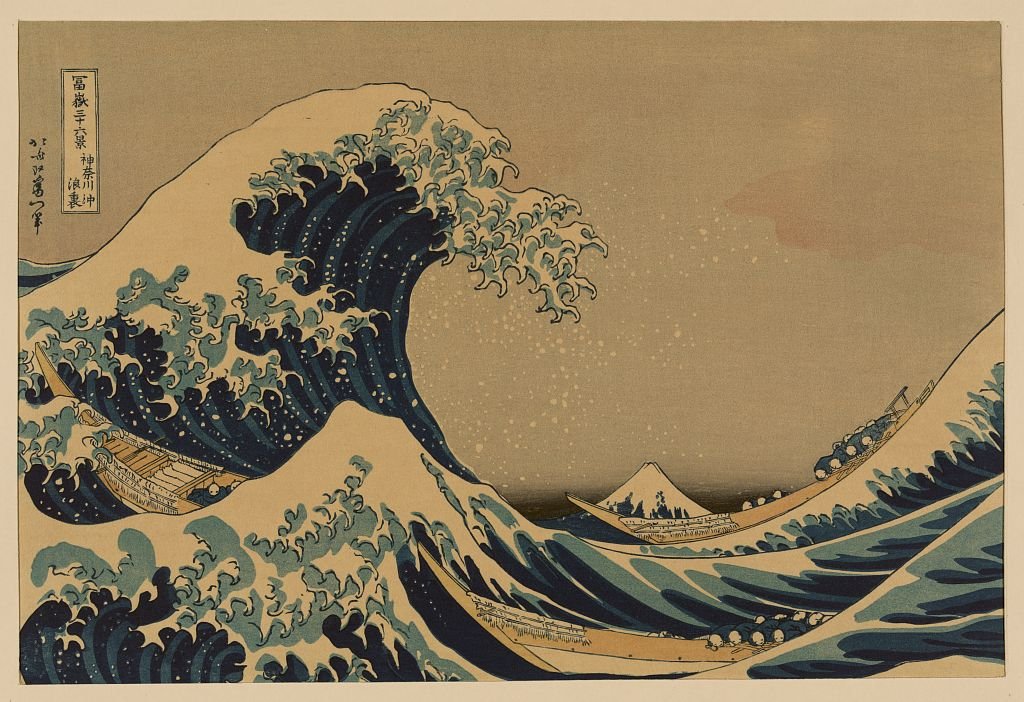
For many, Ukiyo-e is a style, a decoration, a colorful small-format painting from old Japan. But it is actually a "mirror" of an era. Look at Hokusai's "The Great Wave off Kanagawa", where the surging wave seems about to devour the small boat. But if you look a few seconds longer, you'll realize the wave is not a disaster, but a vast, expansive momentary sensation. It doesn't want to conquer you; it just wants to show you the "immensity of an instant".
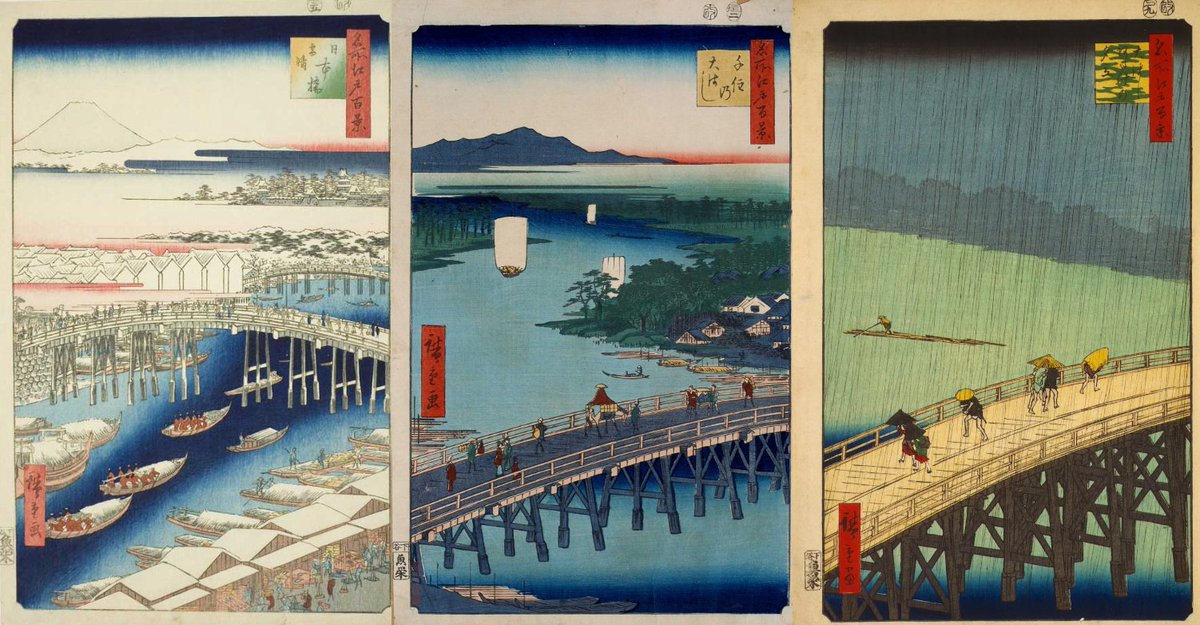
Look at Hiroshige's "One Hundred Famous Views of Edo" series. No palaces, no nobility, just fishermen's fires by bridges, people walking in the rain, twilight ferry crossings, or drifting carp streamers. You can sense a wonderful quietness that is not cold or desolate, but a stillness of "living truly".
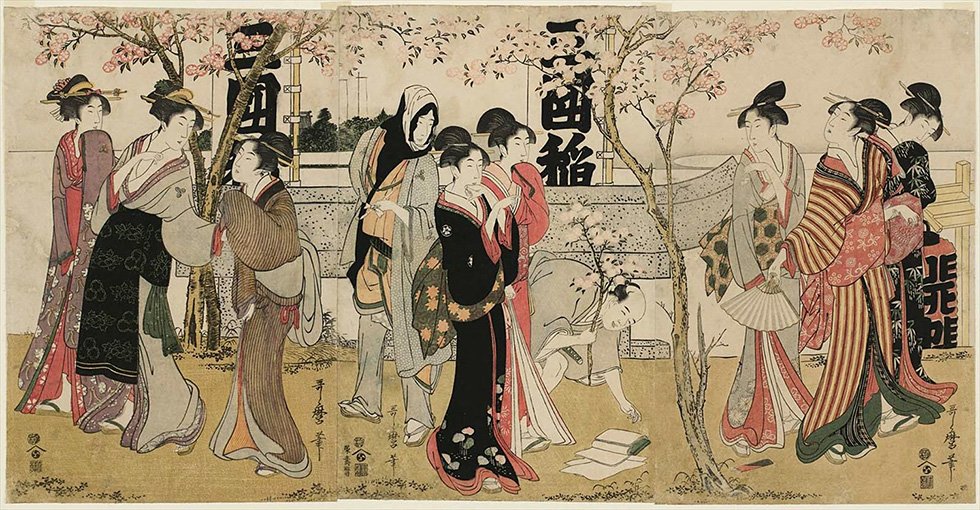
And Utamaro's beauties are not sculptural and eternal, but vivid, soft, and fleeting - like a face with gentle eyes you glimpse in a crowd, then disappears the next second.
These paintings have no grand themes, no crowded scenes. They are obsessed with "the present" - obsessed with the dim morning light through windows, the elegant sway of willows in a light breeze, a lazy cat napping, obsessed with that momentary self.
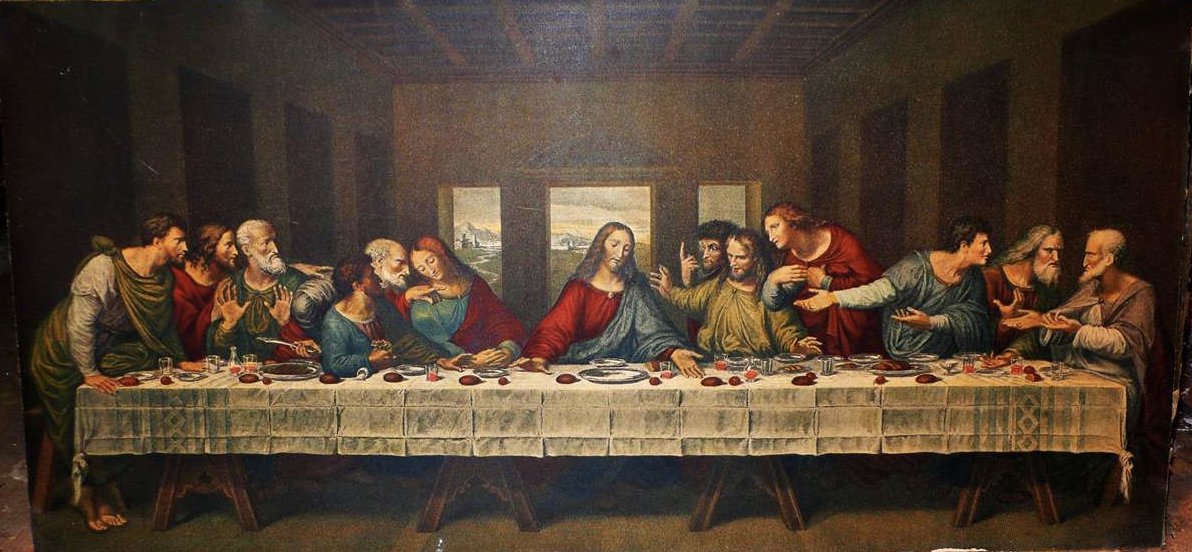
Compare this to Western paintings: Since the Renaissance, Western painting has always pursued "eternity" - compositions with focal points, logical light sources, symbolic characters, paintings meant to "explain a meaning". Viewers stand outside the painting, gazing at the arranged world within. Da Vinci's "The Last Supper", Raphael's "School of Athens" - each character's position is like a designed script, each ray of light has a "master-servant relationship".
Ukiyo-e does the opposite - it doesn't tell you where to look, doesn't arrange a protagonist, and even rejects perspective. The painting is spread out, every part is important, wherever you look becomes the focal point.
The two characters "Ukiyo" were not originally a complimentary term. In Buddhist terminology, it referred to this tumultuous, ever-changing human world of rise and fall, joy and sorrow. But during the Edo period, it was reinterpreted. People no longer just lamented impermanence but began to think - since everything will pass, why not seize the moment happening right now? Thus, "Ukiyo-e" began - an art of recording daily life with images, an art of capturing flowing time from an equal perspective.
Ukiyo-e paintings have no protagonist, no elevated viewpoint. You can't see who stands center stage or who retreats to the corner. You can only freely wander with your gaze, like walking into a city's twilight, an unadorned street evening.
It tells you: this world has no "absolute focus". Every element has its position, every existence is glowing, even if just for an instant.
This concept sounds like aesthetics but is almost philosophical. It's an acknowledgment of "impermanence": acknowledging everything will disappear, not depicting eternity, but cherishing the present; it's an insistence on "equal view": you don't need to climb high to be seen, you stand where you are, and you have your meaning; it's a gentle "decentralized composition": no one dictates where you should look, no one defines you as a supporting role.
I later realized I love Ukiyo-e because it's not just a painting style, it's how we should live. Not everyone needs to stand in the spotlight, not every event needs "meaning". As long as you are at that moment, in that position, you appeared, you felt, everything about you is established, and this might be the greatest meaning for you. Does this text have any practical meaning? My writing, your reading, algorithm's recommendation, system's retention - which is meaning?
Now, screens have changed, carriers have changed, but this decentralized feeling is being rediscovered in the Web3 world. We are no longer simple users, no longer arranged audiences, but nodes in the system, points in the composition, with our own visibility, with our own small yet definite position.
Everyone is no longer just watching the painting, but participating: signing an agreement once, Minting a Non-Fungible Token, leaving a Tx. Even if it's light, it will be packed into a block, becoming part of the consensus, a cornerstone of constructing this vast world from the future.
Web3 isn't about making you a "star", but letting you know - "you are a stroke in the painting", and that's enough. Not noisy, not absent, not needing to define meaning, yet still worthy of being recorded.
The world will continue to flow, we will continue to change, but we are standing in this moment, with names, actions, positions, like a clear bright point in the fiber of time, gently recorded. In that moment, at that coordinate, in that instant when gas is burned, you are acknowledged: you contributed a piece of on-chain data, you are truly here.
The world's canvas structure is changing. From looking up to eye-level, from being organized to self-organizing, from the center illuminating the entire scene, to each stroke glowing independently. You don't need to be someone who "can change the system", you just need to be willing to participate as one of its parts. Even a small action is a form of "being present".
If you see each interaction as a stroke of painting, you'll discover: Web3 is not a script with a "main plot", it's more like an endlessly unfolding scroll. Every person is a point in the composition, and each point is unique.
This is a very human-centric structure. It doesn't ask who you are, but asks: which stroke do you want to be?
Perhaps this is the gentlest expression of "decentralization". Not rejecting organization, but giving every participant the right to organize; not lacking focus, but ensuring every focus gets its turn.
We are all here. Not standing outside the painting observing, but living within it. Even if you appeared for just a second, you are already a part of it. And this is the most beautiful evidence that you once existed in this era.
What stroke do you think you are in the Web3 scroll?