Most people will never realize that marketing is the most challenging creative work.
Written by: Stacy Muur
Translated by: Luffy, Foresight News
What is the biggest problem with Web3 marketing? Talent. Or more precisely, a lack of talent. Lack of genius, lack of wisdom, lack of critical thinking.
90% of teams simply copy and paste the same marketing manual, without stopping to ask why they're doing so or whether the strategy is effective.
- Zealy/Galxe/Intract task designs, only for faking social interactions
- Suddenly appearing X "intern" accounts
- Discord poker nights with no participants
- Inflating airdrop and points program data... while watching capital flee after TGE
- Strategically pointless shill
- Rose robot customer service
- Six-digit follower count with zero mutual follows
- Fake interactions across all platforms
- Raffles, trading competitions...
These strategies are all the same. You've seen them, I've seen them, we've all seen them, over and over again. The question is, can we do better? My answer is: of course we can.
1. Are you sure you've found the right target audience?
Has your team done a real competitor and vertical domain analysis? Have they used tools like @Similarweb to capture audience data? Do you know who your users are and where they are?
If you think your target audience overlaps with Binance, please quickly check reality: you're aiming at the US market, but your actual users might be in Asia.
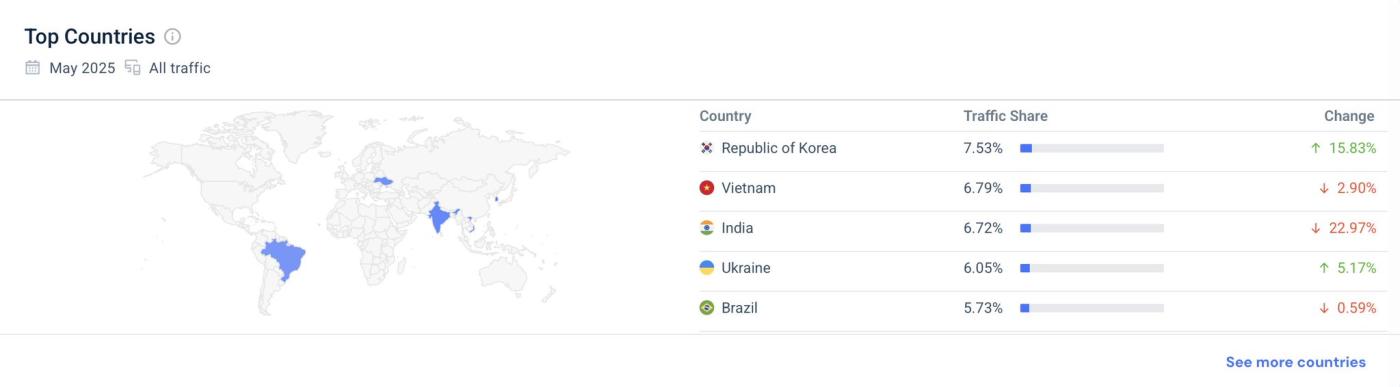
Now guess what happens when you launch a Zealy campaign without verification? New community members flood in, but from regions you never imagined.
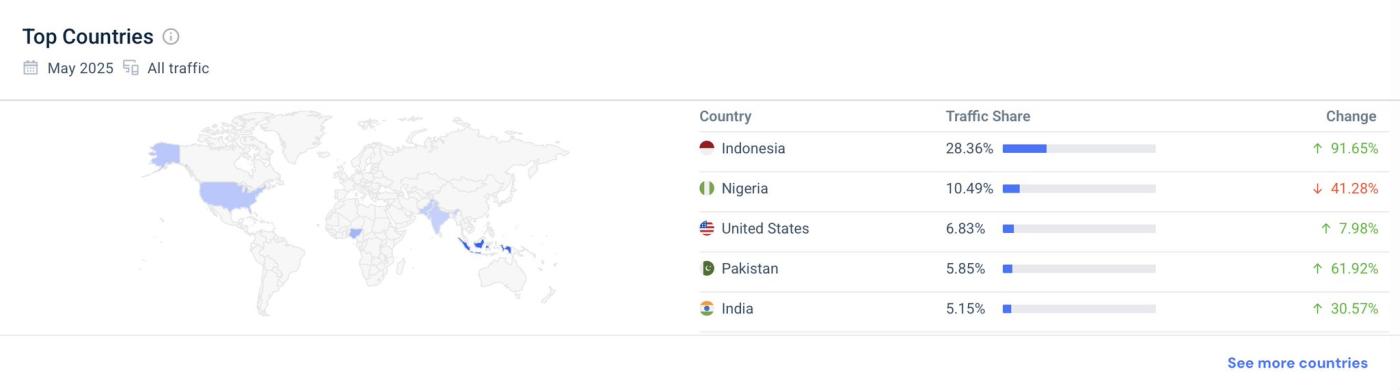
This isn't bad luck, it's poor marketing.
Web3 allows you to easily access transparent data, but most marketers are too lazy to use it. Instead, they plan campaigns based on atmosphere, follower count, and surface-level indicators.
But the truth is: blockchain is the best user research tool.
- Who used it early?
- Who persisted through the testnet phase?
- Who did liquidity mining? Who sold? Who came back?
You think on-chain = anonymous? Not so. You can match on-chain behavioral patterns with off-chain behaviors - it's just that most teams are too lazy to do so.
2. Are airdrops really effective?
Here's a rebellious idea: what if airdrops... are useless?
What's the retention rate after an airdrop? What percentage of funds can be retained?
Because the tokens you airdrop = your marketing budget. You could have spent these tokens on strategy, creativity, community, data, or media. But instead, you throw them into ruins... and then wonder why the token's K-line plummets after TGE.
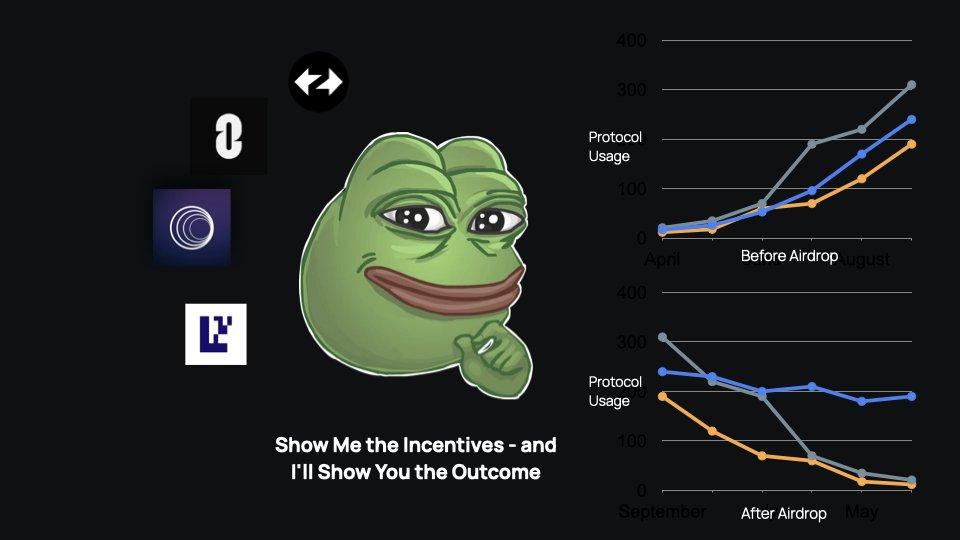
Honestly, some airdrops succeeded. Like Uniswap, Hyperliquid, Arbitrum. Why? Because their underlying products are good, have demand, and can retain users. But this list is short, and the list of failed airdrops is much longer.
So ask yourself: does your project really need an airdrop? Or do you want to inflate data to get a higher valuation from VCs?
3. Developer relations are not technical support, but distribution channels
If you're building infrastructure, developers are not "partners" but your users. They are your early adopters, the most honest feedback loop, the best distribution channel.
But most projects still view developer relations (DevRel) as backend support, not part of marketing - a huge mistake.
- Documentation is your landing page,
- GitHub is your conversion channel,
- Hackathons are your product laboratory.
If DevRel and marketing teams don't communicate, you're working in a vacuum.
4. Creativity is king
Ideally, marketers' work is to create a "marketing product" for the product.
Some marketers just recycle existing ideas, repackage them, and throw them into the market. This is no different from teams forking Uniswap or cloning Pump.fun to chase the original's success. Most of them fail.
So why would you expect different results from marketers who merely copy others' strategies?
Airdrops, points programs, zero-fee trading events... same old, same old.
Yes, originality is difficult and takes time. It requires months of research, customer development, testing, and iteration, and marketers who can truly do this work aren't cheap.
But this doesn't mean you shouldn't try. At least, you should ask yourself: Why am I doing this? What results do I actually expect?
We don't need more hype campaigns, we need more belief. Most projects overthink scale and ignore trust.
Your market size isn't millions, perhaps only tens of thousands. The truly important people are already tired of hype and allergic to nonsense. You can't win their favor with:
- Yet another raffle
- Yet another points program
- Yet another paid shill activity
- Yet another AMA
- Yet another staking raffle
- Yet another trading competition
By solving actual problems and honestly explaining how you solve them, you will win them over.
Start small, first win 10 true believers, then 100, then 1,000. This is the survival rule here.
Before your next campaign, ask yourself:
- Do we know who we're talking to?
- Are we appearing where they are?
- Are we saying something trustworthy?
Web3 marketing isn't hype, but the convergence of product, values, and identity. The best projects don't sell features, they build belief. When done well, they don't need to beg for attention. Their community will market for them.
Finally
Most people will never realize that marketing is the most challenging creative work. Precisely because when it's done right, everything seems natural.
So don't be perfunctory. Don't throw prompts into ChatGPT, sprinkle some emojis, and call it a campaign. Dive deep into researching the product, talk to users, sketch outlines on a whiteboard until inspiration emerges, write it down, erase, rewrite.
Excellent marketing provides perspective, forcing you out of self-excitement and into others' needs - then clearly and honestly show how you meet them. That's the work. Do it well, and your results will outlast buzzwords.