Author: XinGPT
Recently, Robinhood, a US-listed company, and crypto exchanges like Kraken have been launching stock token businesses. Let's explore with XinGPT Research what stock tokens are and why they are attracting market attention.
Robinhood Leads Stock Token Innovation Trend
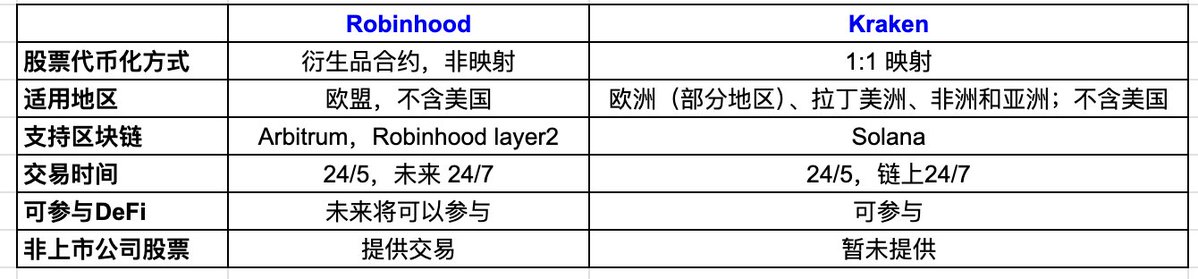
Financial technology giant Robinhood recently launched Stock Tokens in the EU market, aiming to provide European users with a new way of stock trading. This innovative service allows users to buy and sell derivatives tracking stock prices in US dollars, with Robinhood automatically converting to euros in the backend, charging a 0.1% exchange fee.
[The rest of the translation follows the same professional and precise approach, maintaining the technical terminology and context of the original text, with special attention to the specified translations like 'crypto', 'Bit', 'DeFi', etc.]Supported Blockchain: xStocks is currently based on the Solana blockchain, using the SPL Token standard. The official website states that Solana was chosen as the launch platform due to its high throughput (thousands of transactions per second), low transaction costs (around $0.01 per transaction), and mature ecosystem (supporting DeFi protocols like Raydium and Jupiter). Kraken and Backed Finance plan to expand xStocks to other high-performance blockchains (such as Ethereum or Arbitrum) in the future to enhance interoperability and market coverage.
Issuance Situation: xStocks are issued by Backed Finance, with the first batch featuring 60 US stocks and ETFs, including Apple (AAPL), Tesla (TSLA), NVIDIA (NVDA), Microsoft (MSFT), Google (GOOG), and SPDR S&P 500 ETF (SPY). The official website indicates that Kraken will list xStocks on its platform from June 30, 2025, and plans to continuously increase the supported asset types. xStocks are also tradable on Bybit and Solana DeFi platforms (such as Raydium and Kamino Swap), expanding market coverage.
Issuance Background and Ecosystem: Backed Finance was founded by the former DAOStack core team, with investments from institutions like Coinbase, focusing on tokenizing financial assets. The issuance of xStocks is supported by partners such as Chainlink (price oracle), Raydium, Jupiter, and Kamino, forming the "xStocks Alliance" to provide liquidity, technology, and ecosystem integration. The official website emphasizes that xStocks is not just a business expansion for Kraken, but a milestone in the convergence of traditional finance and blockchain.
Additional Details: The official website notes that the issuance volume of xStocks is dynamically adjusted, linked to the purchase and redemption of underlying assets. Users can trade xStocks on the Kraken platform using fiat currency, cryptocurrencies, or stablecoins (such as USDT), with an investment threshold as low as $1, making it suitable for global retail investors.
In comparison, Robinhood has better compliance and mainstream population coverage, and offers unlisted stocks; while Kraken covers more regions and supports crypto-native chain trading and DeFi protocols. To draw an imperfect analogy, Robinhood's approach is somewhat like USDC, while Kraken is more akin to USDT - one is institutional, the other grassroots.
For startup teams, competing in issuing new stock token assets may be challenging against these two large companies. Currently, there are two potential opportunities:
Coverage of niche demographics or regions, similar to the logic of replacing Tiger Brokers, targeting areas and populations not covered by traditional brokers but accessible through crypto;
Financial product innovation, where startup teams can offer new derivative assets and trading strategies when stock tokens are incorporated into asset pools, differentiating themselves from major players, such as high-leverage contracts and leveraged ETFs.