The well-known video editing tool CapCut (international version of Jianying, developed by ByteDance) updated its user terms in June, granting the platform "perpetual, global, royalty-free, and re-licensable" rights to user content, sparking strong backlash from the global creator community.
This not only reflects the gray area of digital content rights but also forces users to reconsider: To whom do the videos we upload to the cloud actually belong?
Perpetual, Free, Transferable: Terms and Conditions Hide Risks
According to CapCut's official announcement in June, when users upload videos, photos, or audio to the platform, they agree to authorize CapCut and its partners to use, modify, re-license, or even commercialize these contents "without time, location, or purpose limitations" and without additional payment.
Even if the account is deleted, the platform retains the content usage rights. CapCut emphasizes that users still own the copyright, but this "broad authorization" significantly weakens individual control over self-created content.
Etopia reported that such terms are common in large community platforms, but CapCut's scope and perpetuity far exceed most competitors. Many creators worry that their works might be used for advertisements or third-party projects without compensation or notification.
The Gray Area of Content Ownership
This terms controversy quickly sparked widespread discussion in the international community, with creator groups from multiple countries expressing concerns about "content misappropriation", and some users have started looking for alternatives.
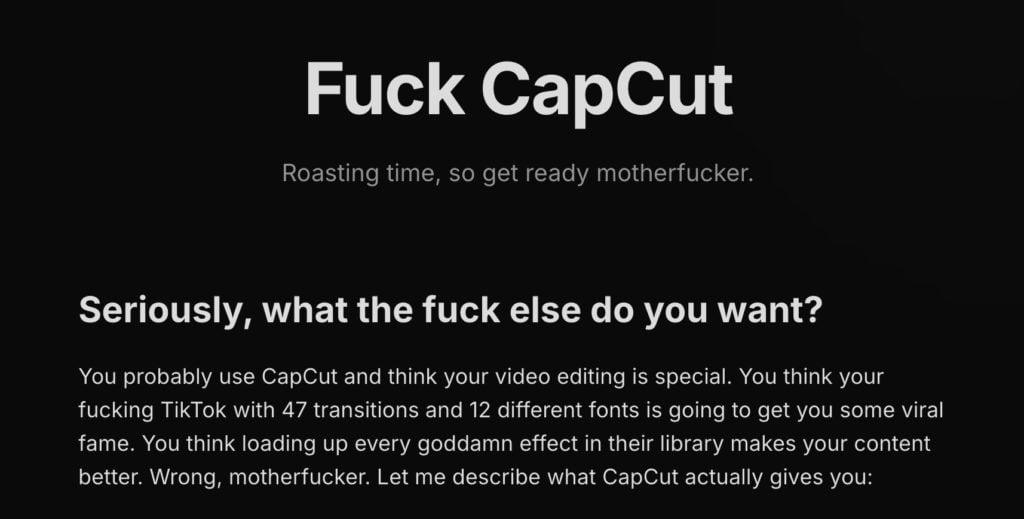
In this context, an open-source editing tool called Opencut has recently gained significant attention in the community, with its Github repository quickly accumulating nearly ten thousand stars. The project's official website prominently displays "Fuck CapCut" to express their dissatisfaction.