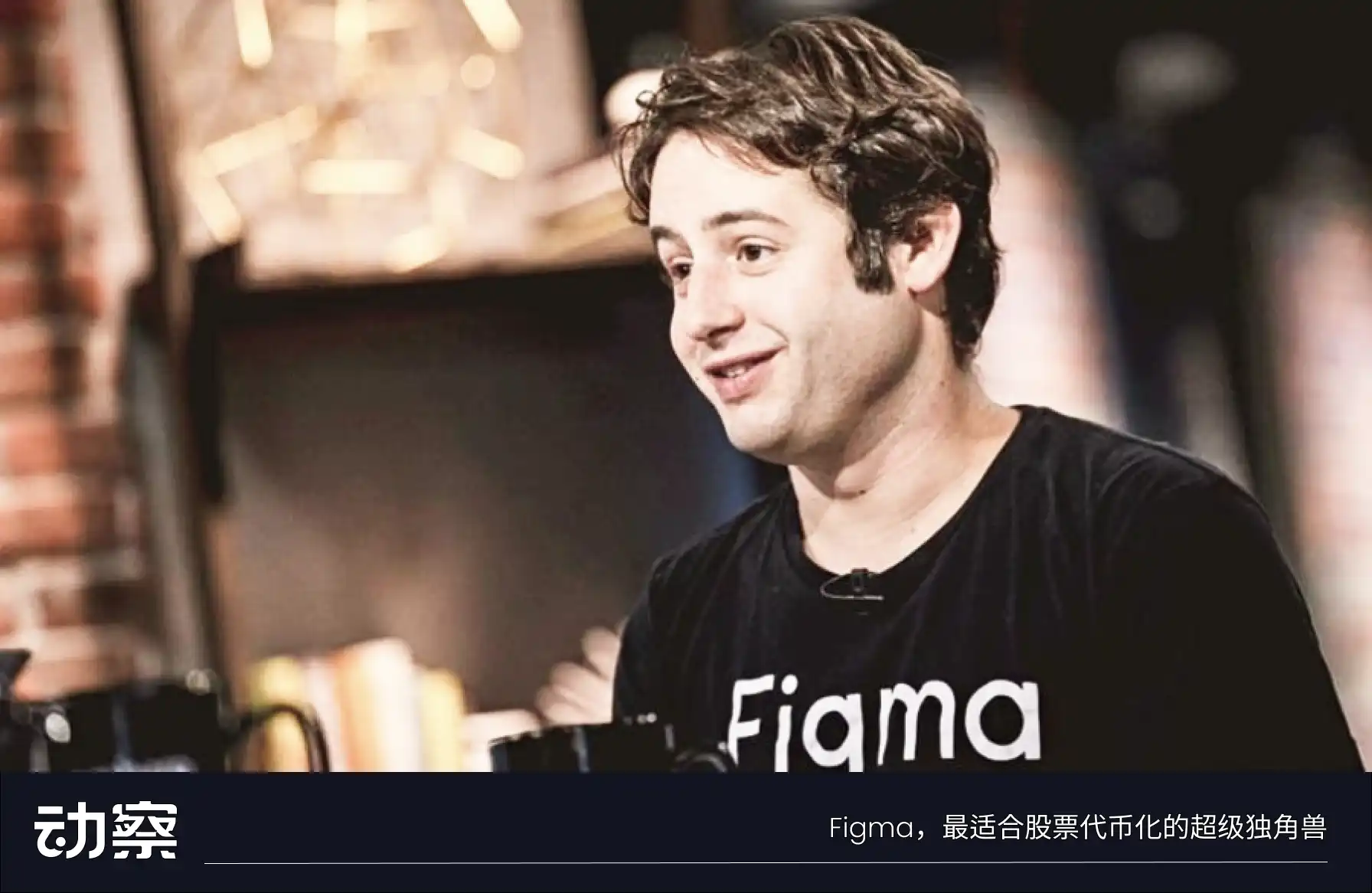
On July 31, the Silicon Valley design software giant will officially go public on the New York Stock Exchange, with lead underwriters including Morgan Stanley, Goldman Sachs, Allen & Company, and JPMorgan Chase, making it one of the most anticipated tech stock IPOs of 2025.
In Figma's IPO prospectus, there is a sentence that caught our attention: the company has been authorized to issue "Blockchain Common Stock". Globally, this approach is unprecedented.
In fact, this is not Figma's first intersection with the crypto world. Previously, they had included BTC ETF in their balance sheet. Moreover, Figma's founder Dylan Field is one of the few Web2 entrepreneurs who paid attention to Crypto trends early on. Therefore, this is not an opportunistic attempt, but an expression of long-term optimism about Crypto.
The world's most cutting-edge companies are proving through actions that they are gradually accepting crypto technology. We should not underestimate this change. We want to recognize this company from a more unique perspective: not only its valuation and growth curve, but also its product philosophy and capital structure design.
And all of this cannot be separated from one person - Dylan Field.
Who is Dylan Field?
In Silicon Valley, almost every successful founder must learn one thing: Becoming the Face of your company.
It's a face that knows when to speak and when to stay silent; a face accustomed to media spotlights; a face that can look into the camera and say "We are changing the world". People's familiarity with this face sometimes even exceeds their memory of the product he founded.
Dylan Field does not belong to this category.
At first glance, it's hard to associate him with the "Figma founder".
He is slightly chubby, dressed casually, and used to have slightly long curly hair, looking very much like Leonard from "The Big Bang Theory" without glasses.
He was actually an actor before.
His first time on stage was at the age of five. It was a small theater in California, converted from an old church, with lights flickering and backdrop often falling to the ground. He was not chosen for his looks, but because he "could sit quietly and knew how to read".
In the following years, he intermittently took on many performances, having agents in the Bay Area and Los Angeles, and even shot commercials for eToys and Windows XP.
His "acting career" came early and left early, but subtly influenced his life.
While other kids saw the stage as a starting point to stardom, Dylan remembered how everyone tacitly changed positions, moved, and picked up lines during rehearsal breaks. He said that was the first time he experienced the "power of collaboration" - not how well one person performs, but whether everyone can be on the same rhythm point in a space and complete a performance.
This hidden thread ran through his subsequent life.
In high school, he began to learn programming, helping friends make websites with Dreamweaver. He was not like those teenage prodigies in Silicon Valley myths who made apps at a young age, nor did he write blogs about "how to make a hit product in three days". Later, he went to Brown University, where he also considered other career paths, taking some political science courses, considering legal-related professions, and even wanting to return to the entertainment industry.
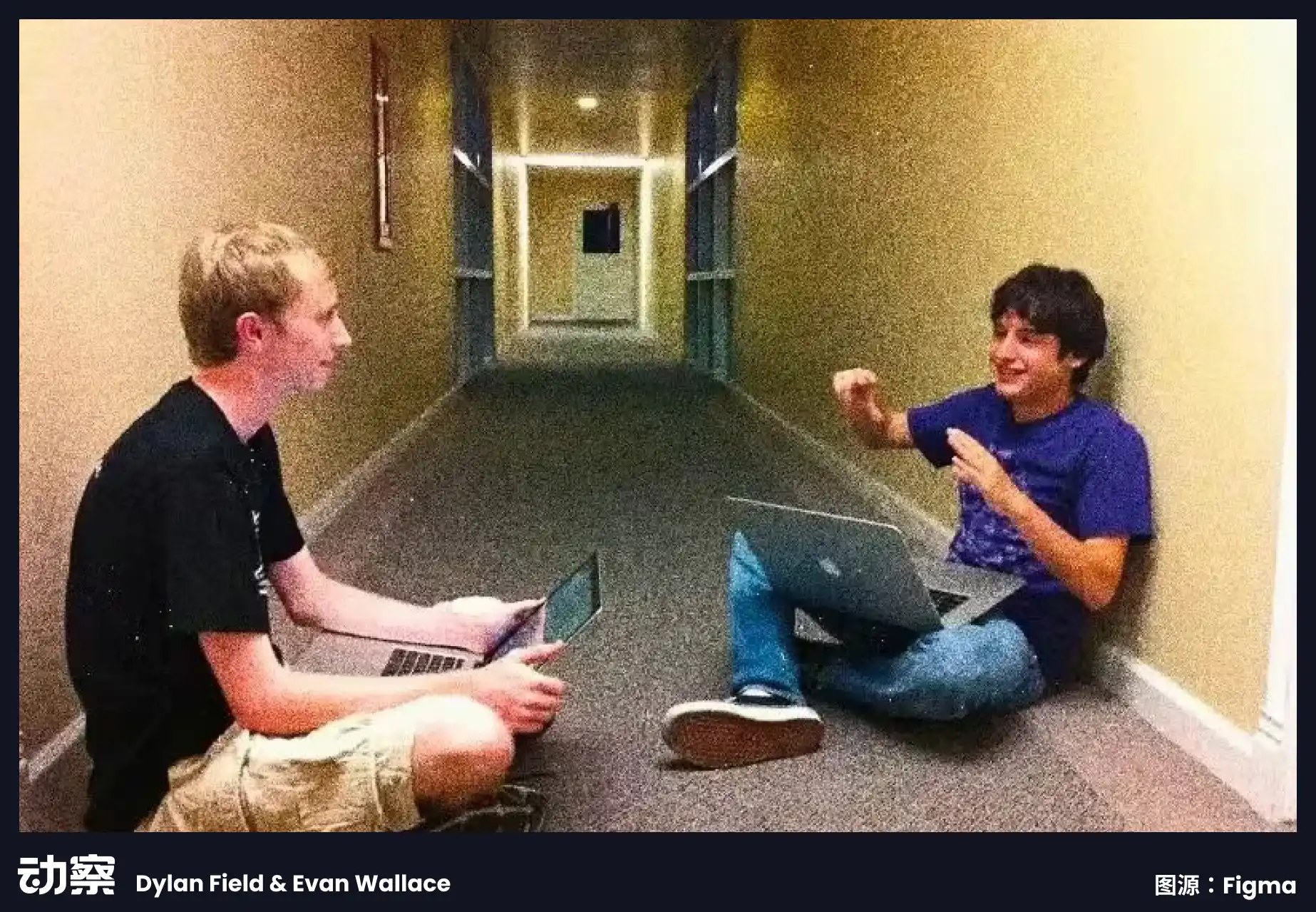
In his junior year, he met Evan Wallace, the other future founder of Figma.
Wallace was his classmate, a WebGL geek who had created a browser rendering demo called Water, with rippling water that was smooth and natural. WIRED called it "one of the most impressive WebGL demos".
Dylan was shocked. But what attracted him was not the image, but the logic behind it: if graphics could be seamlessly rendered in the browser, could design also be done in the browser? Could it also be collaborative?
What emerged in his mind was the feeling from rehearsing plays years ago - you take a step, I respond. Could design be like performance, without file transfers or application version comparisons, but with several cursors responding to each other in one page, flowing like rehearsal and performance?
In an era when everyone was discussing growth hacking, hit formulas, and viral spread, this narrative sounded too un-"Silicon Valley".
However, years later, Figma became a collaboration platform worth billions of dollars and eventually went to the IPO stage.
In an era that encourages high-profile narratives and betting on stories, why was it Dylan Field who brought Figma and stayed until the end?
A Startup Founder Far from the Trend
Let's go back to 2012 when Dylan Field received the "Thiel Fellowship" from PayPal co-founder Peter Thiel, becoming one of the 20 "young people allowed to drop out" that year.
He was 20 years old, took a leave of absence from Brown University, and rented a studio in Silicon Valley with the $100,000 scholarship. However, at that time, he didn't know what he wanted to do.
This doesn't mean he had no ideas, but his ideas were not quite feasible at the time. Drone route monitoring, graphic editing, animation generation... During that period, he could only try and guess, trying to figure out what he was good at and find a direction that could really work.
He rarely mentioned these failures. He is not the type to turn failures into turning points, nor is he interested in packaging early chaos as a "necessary path of growth". He just noted down the problems and continued moving forward.
One thing he never let go of: could the browser platform carry more complex collaborative behaviors?
This was a thought he had during his internship at Flipboard. During the internship, he first experienced that screen interfaces could be as smooth and elegant as paper magazines. After that, he began to ponder: if reading experience could be redesigned, could collaborative experience also be redesigned?
It was not a popular direction. Those years' trends were in mobile, with App Store booming, ride-hailing wars heating up, and growth hacking becoming investors' favorite keywords. Browsers seemed outdated, and collaboration was not a word that could tell a high-valuation story.
He did not chase trends but delved into "collaborative experience": how could the logic of people working together be moved into the browser? Could it be designed like a system?
Although their direction was not finally determined at that time, after numerous discussions and trials, the word "collaboration" had become the logical starting point of their entrepreneurship, with all ideas revolving around "collaboration". It was like returning to the childhood theater, where everyone was in the same space, stepping on the same rhythm point, completing a performance.
Later, they gradually narrowed down their direction, starting to build Figma's framework around "browser + real-time collaboration + UI design".

Dylan was not someone who could see the "end game" early on. He didn't shout about interstellar plans from Day 1 like Elon Musk, nor did he draw closed ecosystem loops in his Deck like many entrepreneurs. He was more like starting to doodle lines in the center of a blank paper, and only discovering these lines eventually formed a treasure map.
There's another interesting coincidence: two years after Dylan received the Thiel Fellowship, Ethereum founder Vitalik Buterin also received the Thiel Fellowship.
Vitalik went on-chain to redesign the protocol; Dylan stayed in the browser, redefining collaboration. Two system theorists, entering the digital world from different entry points, trying to answer the age-old question in different ways: How do we work together.
But Dylan did not make a stunning debut like Vitalik.
He did not have a brilliant theory, nor was he riding any trend. He simply pondered one question: Why can't software design be collaborative like the Web? Why do we still rely on files, version numbers, and sending back and forth? Why hasn't anyone solved this?
These questions are not sexy, and they don't make for a good story that would easily impress investors. But he felt that someone had to solve this. This is the reason he stayed, the reason Figma was born.
……
Read the full article on Beating WeChat Official Account
Click to learn about BlockBeats job openings
Welcome to join the BlockBeats official community:
Telegram Subscription Group: https://t.me/theblockbeats
Telegram Communication Group: https://t.me/BlockBeats_App
Official Twitter Account: https://twitter.com/BlockBeatsAsia