Editor's Note: Ethereum is moving towards a new era of scaling to 10,000 TPS, with zero-knowledge proof (ZK) technology becoming a key driving force. This is the first article in our "Ethereum 10,000 TPS Roadmap" series, which aims to break down ZK technology, zkEVM roadmap, and Ethereum L1 scaling plans in an accessible manner. The next article will delve into ZK implementation challenges, L2 ecosystem evolution, and future impacts on Ethereum's economic structure.
On July 30, 2025, Ethereum will celebrate the tenth anniversary of its Genesis Block, and after a decade of exploration, Ethereum's scaling roadmap is exploring new directions and visions.
Of course, the recent price increase of ETH has also brought renewed confidence to the community, but what is truly exciting is that after years of exploring L2 scaling, Ethereum L1 finally has a credible path to extreme scaling while maintaining maximum decentralization.
In short, from now on, Ethereum's gas limit and TPS plan will increase several times each year, and validators will no longer repeatedly execute every transaction (editor's note: they will not recalculate the transaction state from scratch), but instead only verify a zero-knowledge proof (ZK-proof) to prove that these transactions were correctly executed, thereby enabling the underlying network to increase TPS to tens of thousands of transactions per second.
Meanwhile, L2 will also scale simultaneously, achieving hundreds of thousands or even millions of TPS, and a new type of L2 called "Native Rollup" will run like a programmable shard, providing the same security as L1.
Although these proposals have not yet been formally approved by Ethereum's governance process, they are built on the ideas Vitalik Buterin began exploring in 2017 and are supported by Ethereum Foundation core researcher Justin Drake.
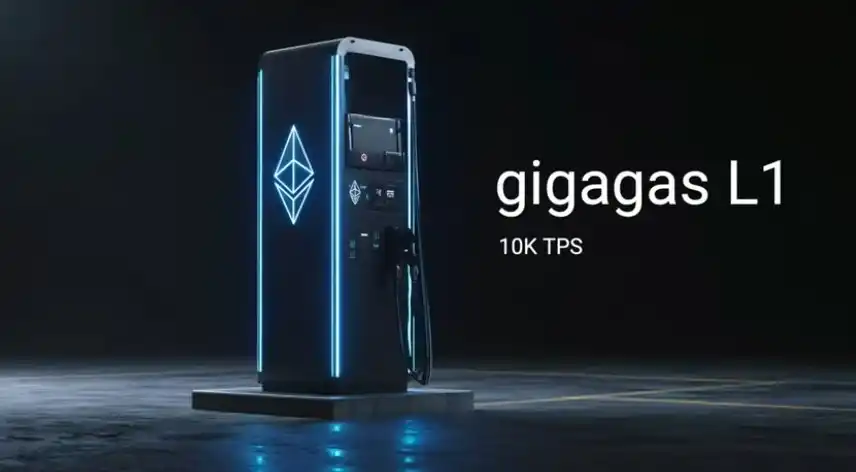
At the July EthCC conference, Drake stated: "We are at a critical turning point in Ethereum scaling, and I firmly believe we are about to enter the GigaGas era of L1 - around 10,000 TPS, and the key to opening this era is zkEVM and real-time proving".
Drake's ultimate goal is to enable the Ethereum ecosystem to achieve 10 million TPS within 10 years, but this means no single blockchain can meet this throughput requirement. The future will inevitably be a "network of networks" architecture: different L2s will each bear different scenarios, trade-offs, and advantages, collectively expanding the entire ecosystem to meet global demands.
Why Has Ethereum L1 Never Been Able to Scale Massively?
Although other blockchains have long been trying to use more powerful hardware and computing capabilities to expand throughput, Ethereum has always had an almost ideological, and some might say "utopian", commitment to decentralization.
From the perspective of ETH maximalists, chains like Solana, which are "data center chains", have hundreds of millions of dollars in centralization risk points where governments can directly censor transactions, and even chains like Sui with lower hardware specifications have cost and bandwidth requirements that are daunting, thus affecting the degree of decentralization.
In comparison, Ethereum can even run on a Raspberry Pi. This low-threshold design allows over 15,000-16,000 public nodes and millions of validators to participate in the network, making it almost impossible to censor transactions on Ethereum and giving the entire network extremely strong resilience against attacks.
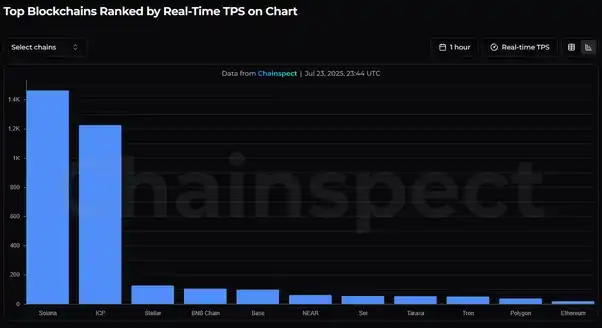
Of course, the cost is extremely slow speed - currently around 18-20 transactions per second, while Solana's TPS is about 1,500 transactions per second.
In a sense, blockchain architecture is inherently inefficient, somewhat like a Google spreadsheet, where before modifying a cell, every computer worldwide with a copy must first recalculate the entire spreadsheet and confirm it is correct before updating.
Uma Roy, co-founder of ZK technology company Succinct Labs, explains: "Ethereum's design hopes that anyone can keep up with the network and re-execute all transactions", which also means transaction volume cannot be arbitrarily expanded indefinitely because each transaction requires someone to recalculate.
It is precisely because of the limited scaling space on the mainnet while maintaining decentralization that Ethereum had to embark on the controversial L2 layered scaling route in 2020.
How Does ZK Break the Blockchain Trilemma?
Ethereum founder Vitalik Buterin once proposed the "Blockchain Trilemma" concept to describe the difficulty of public chains simultaneously achieving security, scalability, and decentralization.
Almost all scaling solutions can only satisfy two of these simultaneously, necessarily sacrificing the third.
Until now.
Zero-knowledge proof (ZK-Proof), a technology described by Drake as "moon math" - can mathematically prove that a large batch of complex transactions have been correctly executed without revealing transaction details.
The process of generating ZK proofs is very complex, but verifying whether a proof is correct is both fast and lightweight.
Therefore, Ethereum's future vision is: instead of having a bunch of weak Raspberry Pi nodes recalculate all transactions, let validators only need to check the mathematical results of a tiny ZK proof.
Succinct Labs co-founder Uma Roy further explains, "Instead of having everyone re-execute all transactions, just give them a proof telling them these operations have occurred, so anyone can verify this proof without recalculating".
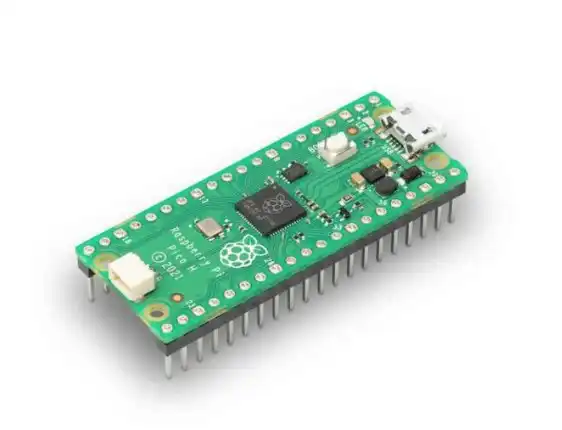
Drake even joked that in the future, the computational effort to verify ZK proofs will be so small that a $7 Raspberry Pi Pico (with performance less than a tenth of a normal Raspberry Pi) could handle it, without needing large data centers.
zkEVM: Roadmap to 10,000 TPS
... (rest of the text continues in the same manner)Initially, only a few validators will first switch to the new verification mode to identify and fix potential issues early on.
Ladislaus from the Ethereum Foundation protocol coordination team stated, "Switching to a snark-based EVM will be a gradual process" - where "snark" refers to adopting SNARK-type zero-knowledge proofs.
Users will primarily gradually experience the increase in L1 Gas ceiling, which means the network's economic activity capacity will enhance. Although the transition of L1 to ZK verification will take time, the Gas ceiling expansion is almost imminent.
Last week, the L1 Gas ceiling was just raised by 22%, reaching 45 million. Researcher Dankrad Feist proposed an EIP suggesting that clients automatically adjust the Gas ceiling three times annually, and according to this plan, the Ethereum mainnet could achieve around 2,000 TPS in four years.
Justin Drake even further proposed extending this pace by two years, potentially reaching 1 gigagas throughput by 2031, achieving approximately 10,000 TPS.
Click to learn about BlockBeats job openings
Welcome to join the BlockBeats official community:
Telegram Subscription Group: https://t.me/theblockbeats
Telegram Communication Group: https://t.me/BlockBeats_App
Official Twitter Account: https://twitter.com/BlockBeatsAsia