By McKenna, Source: Arete Capital, Translator: Shan Ouba, Jinse Finance
introduction
From 2024 to 2025, Hyperliquid sparked a surge in excitement in the digital asset space, ultimately driving a long-awaited market transformation: from a market dominated by centralized institutions to a fully permissionless, transparent, and global perpetual futures market. In a short period of time, Hyperliquid became the highest-grossing blockchain, surpassing all other general-purpose networks, a feat built and driven by a team of just 11. This technological feat is truly impressive and a testament to the ingenuity of Hyperliquid's core team of contributors. We believe that, alongside the explosive growth of stablecoin issuers following the regulatory clarity provided by the GENIUS Act, Hyperliquid remains the project with the greatest growth potential in the digital asset space.
Despite Hyperliquid's success, we believe it's necessary to step back and fundamentally reevaluate its rationale and establish a realistic valuation framework. In this process, we'll review Hyperliquid's rise, capturing significant perpetual swap market share from centralized competitors, and outline its broader vision for the future: building an "inclusive financial ecosystem."
1. Hyperliquid’s Growth
Perpetual Contract Trading
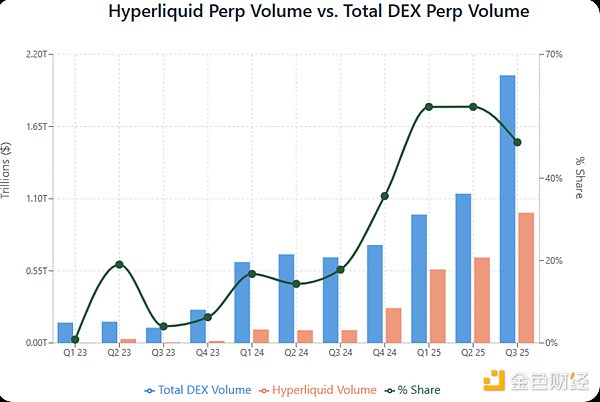
Hyperliquid trading volume compared to total decentralized exchange (DEX) trading volume
Hyperliquid's rise is due to its sophisticated protocol architecture tailored for perpetual futures trading. HyperCore, the underlying trading and settlement engine of the Hyperliquid protocol, leverages session key technology to allow traders to place orders without waiting for confirmation, ultimately achieving an off-chain trading experience comparable to centralized exchanges—with sub-second trade execution and a seamless process. The following is a brief review of its core perpetual futures trading data since its launch:
Since the platform went online, Hyperliquid has executed a cumulative transaction volume of US$2.77 trillion and 165 billion user transactions.
The trading volume of perpetual contracts in each quarter of 2025 increased month-on-month: in the first quarter of 2025, it increased by 110.72%, in the second quarter, it increased by 16.27%, and in the third quarter, it increased by 41.29%.
In August 2025, Hyperliquid perpetual contract clearing volume reached $398 billion, a record high.
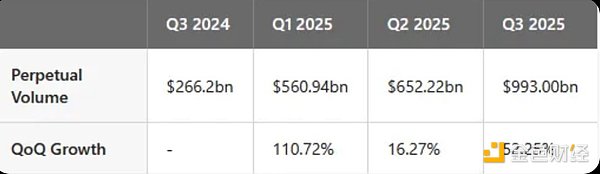
Comparison of Hyperliquid and CEX Competitors
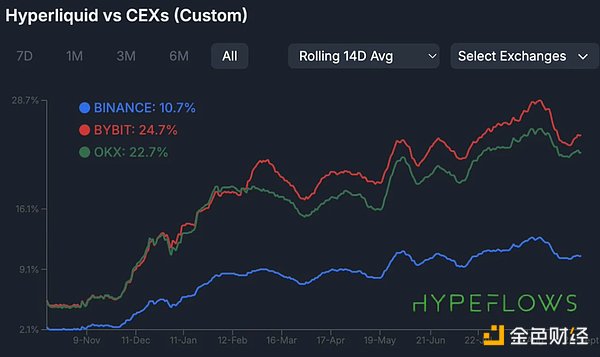
Based on the 14-day rolling average data, in terms of perpetual contract market share, Hyperliquid's current trading volume has reached 10.7% of Binance, 24.7% of ByBit, and 22.7% of OKX; in the global market, Hyperliquid's trading volume accounts for 5.1%.
Open interest is a key metric for measuring an exchange's attractiveness. It refers to the total number of currently unsettled contracts and reflects traders' affinity for the platform as their primary trading venue, driven by factors such as platform performance and liquidity depth. Throughout 2025, Hyperliquid's open interest increased 479% from $3.19 billion to $15.3 billion. Currently, its open interest accounts for 5.3% of the total open interest of all cryptocurrency exchanges.
Fee Structure
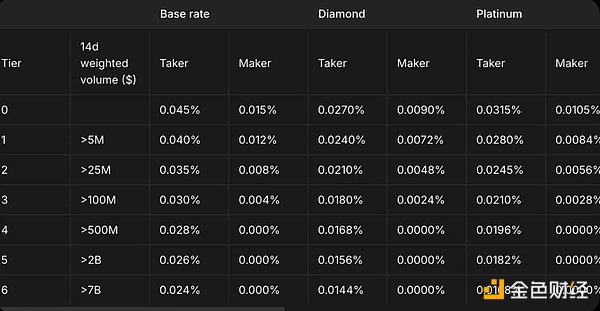
Hyperliquid’s fee structure is set at 0.45% for takers and 0.015% for makers, with fees adjusted in tiers based on a 14-day weighted trading volume threshold – taking fees can be reduced to as low as 0.024% and maker fees can be reduced to as low as 0%. This incentivizes market makers to provide sufficient liquidity for the HyperCore order book.
In addition, Hyperliquid uses a "staking tier" mechanism to link trader fees to the amount of HYPE staked: users who stake 10,000 to 500,000 HYPE can enjoy a 5%-40% fee discount.
Overall, Hyperliquid's revenue as a percentage of trading volume remains stable at around 0.0258%.
Hyperliquid Assistance Fund (AF)
The Hyperliquid Assistance Fund (AF) is a programmatic execution engine responsible for repurchasing HYPE tokens on the secondary market. 99% of Hyperliquid protocol revenue is directed to the AF. All fees, including taker and maker fees, spot trading fees, liquidation fees, and HIP-1 token listing fees, are fully reinvested into the AF.
To date, AF has repurchased 32.2 million HYPE tokens in the secondary market, investing a total of $692 million. These tokens are currently valued at $1.48 billion, with a cumulative unrealized profit of $788 million and an unrealized return of 113%. AF's holdings represent 9.56% of the current circulating supply of HYPE tokens.
Compared with the traditional market: In 2024, Robinhood’s financial report showed that its annual net revenue was US$2.95 billion, and it repurchased US$257 million of HOOD shares, and the repurchase amount accounted for 8.7% of its annual net revenue; even Apple, which had the highest repurchase ratio among the US "MAG7" (seven major technology giants) in 2024, its US$95 billion stock repurchase amount only accounted for 24.3% of its net revenue that year.
We list the above data to illustrate two points: first, there is no "value diversion" at Hyperliquid (all core revenue flows back to the ecosystem); second, its buyback structure is unique, both in the digital asset space and in the traditional stock market.
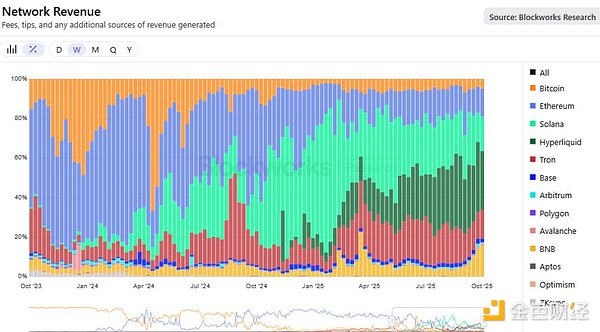
Driven by demand for superior decentralized exchange products, Hyperliquid has quickly become the highest-grossing Layer 1 protocol. Not only is it the largest protocol in the digital asset space by revenue, but it also uses nearly all of its revenue to accumulate its own tokens on HyperCore.
HyperUnit Spot Market
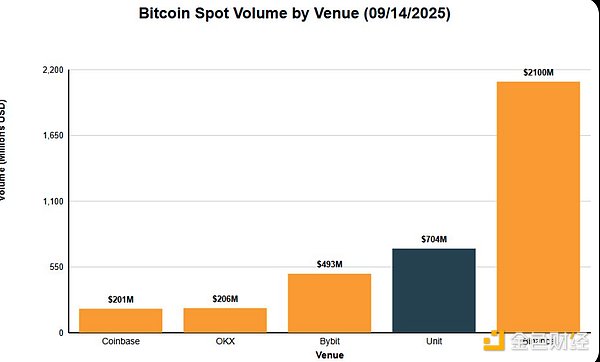
Comparison of Bitcoin spot trading volume on major CEXs (HyperCore ranked second, data as of September 14, 2025)
HyperUnit is an asset tokenization and cross-chain bridging layer, enabling seamless spot trading of native assets like Bitcoin (BTC), Ethereum (ETH), and Solana (SOL) on the HyperCore order book. Assets transferred across chains via HyperUnit are converted into "u-assets" (e.g., uBTC, uETH), which can be traded on the HyperCore order book and used within the emerging HyperEVM ecosystem (e.g., as collateral in money market protocols like Felix).
Its operating mechanism is: after the assets are sent to the HyperUnit address on the protogenesis chain and locked, Hyperliquid will mint the corresponding u tokens at a 1:1 ratio, thereby achieving "1:1 anchoring of native spot assets" on HyperCore and HyperEVM.
From August 20 to 25, 2025, a Bitcoin whale deposited 22,769 BTC (valued at $2.59 billion) into Hyperliquid via HyperUnit and exchanged uBTC for 472,920 uETH (valued at $2.22 billion). This was one of the largest public asset swaps to date, seamlessly and permissionlessly completed entirely through the HyperCore spot market.
As of now, HyperUnit has received a total of US$718 million in asset deposits (covering BTC, ETH, SOL, FARTCOIN), providing users with a way to "trade spot assets without permission on a high-performance order book"; since its launch, HyperUnit's spot market has accumulated a trading volume of US$40.5 billion, of which Bitcoin spot trading volume has reached US$21.4 billion.
HyperUnit also provides first-day trading access for prominent tokens during their TGEs through its spot order book, with recent examples including PUMP and XPL. We expect this trend to continue: as increased asset deposits boost liquidity and more high-profile projects choose to list on HyperUnit on the same day as their TGEs, spot order book trading volume will continue to grow.
Developer Code: Hyperliquid's Liquidity and User Growth Flywheel
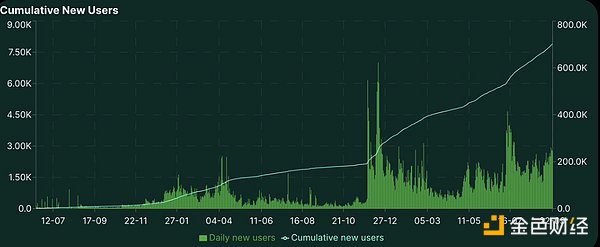
HyperCore's daily and cumulative number of new users
Developer Code is a core component of the Hyperliquid protocol. It expands distribution channels for new users and allows third parties to directly access HyperCore's high-performance trading engine and liquidity. Third-party applications can develop their own front-end interfaces and use HyperCore as a direct backend to natively provide perpetual contract trading services to their users. To date, Developer Code has generated over $30 million in revenue and brought 169,900 new interactive wallets to HyperCore.
Paxos Labs' recent USDH proposal explicitly states that Hyperliquid will become the default liquidity infrastructure, providing seamless and low-cost trading services for spot and perpetual contracts. Based on this proposal, we believe the next phase of growth in developer code will come from direct integrations with fintech platforms (and brokerage platforms).
Developer Code has already achieved significant success integrating with crypto-native wallets (such as Phantom) and has also partnered with crypto-native projects like Axiom and BasedApp. Since fintech platforms and institutional brokers currently don't offer perpetual swaps to their users, integrating Developer Code provides a zero-barrier path for them to offer perpetual swaps to a large and well-funded user base without having to build backend infrastructure or generate liquidity.
For businesses with crypto-native user bases, or fintech giants like Revolut, this opportunity to access high-yield business lines at a low cost is irresistible. Phantom alone generated $18.8 million in revenue in the third quarter of 2025 through this integration. We anticipate that several major fintech platforms and brokerages will integrate the developer code, potentially bringing millions of new users to Hyperliquid and significantly increasing trading volume. For example, Interactive Brokers, currently exploring stablecoin deposits, may be able to access perpetual contract trading for its 3.3 million clients through Hyperliquid's developer code. Another potential partner is Revolut, with its 65 million users.
Analysis of Developer Code Growth in 2026
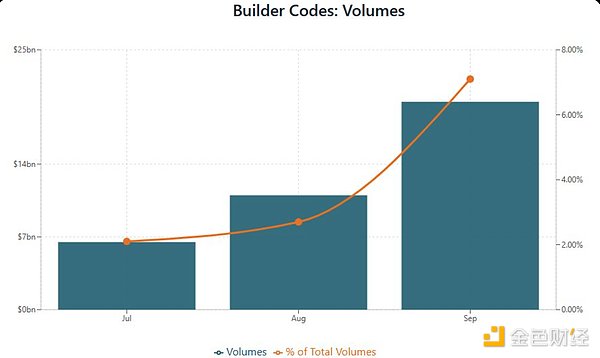
Assuming a developer fee of 0.05%, in September 2025, the monthly trading volume brought by the developer code Hyperliquid reached US$20 billion, accounting for 7.1% of the total perpetual contract trading volume that month, and is rapidly becoming an important source of protocol trading volume.
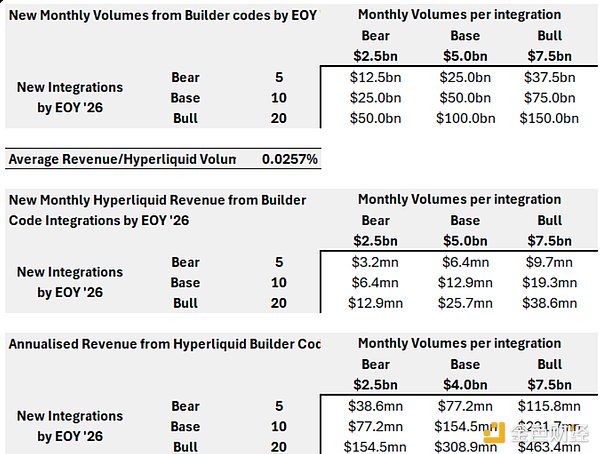
We conducted a scenario analysis of the impact of developer code on Hyperliquid's revenue: assuming an average revenue of 0.026% per unit of trading volume and 10 large developer code integrations by the end of 2026 (each with an average monthly trading volume of $5 billion), these integrations will generate an additional $154 million in annualized revenue for Hyperliquid by the end of 2026 - this is equivalent to a 15.6% increase in protocol revenue, excluding organic growth of Hyperliquid's perpetual contract exchange and overall perpetual contract market growth.
2. Hyperliquid joins the stablecoin craze
USDH: Hyperliquid's native stablecoin
Total USDC cross-chain to HyperCore
Hyperliquid recently launched its native stablecoin, USDH, officially tapping into the upcoming stablecoin boom. USDH is a fiat-collateralized stablecoin that serves as both the quote asset and collateral in HyperCore.
Currently, major stablecoin issuers like Circle and Tether are the primary beneficiaries of the yield generated by the government bonds behind their stablecoins. USDH aims to change this dynamic by injecting 50% of USDH earnings into the Assistance Fund (AF), which will be used to repurchase HYPE on the secondary market.
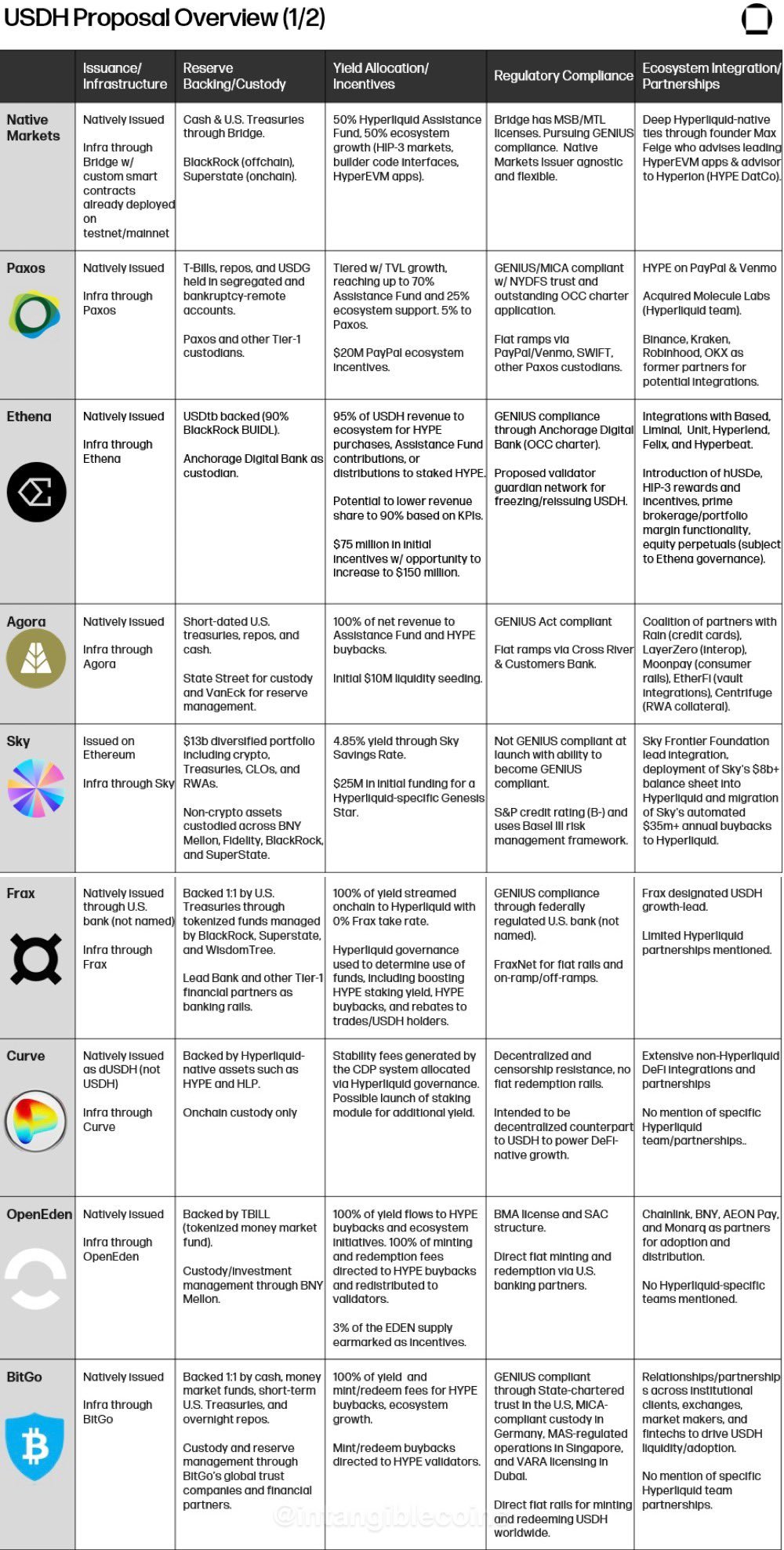
Several prominent institutions submitted proposals for USDH, including Paxos/PayPal, Agora, Ethena, BitGo, and Native Markets. These proposals detailed their respective custody solutions, bond yield distribution methods, compliance measures for the newly passed GENIUS Act, and proposed partnerships. Ultimately, Hyperliquid governance approved Native Markets' proposal.
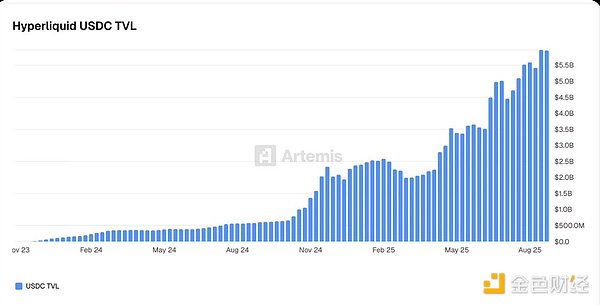
To date, HyperCore has received approximately $5.6 billion in Circle USDC deposits, with the earnings from these deposits primarily flowing to Circle and Coinbase, rather than the Hyperliquid ecosystem. Based on the Federal Reserve's latest "dot plot" forecast (a 75 basis point interest rate cut by the end of 2025), if 100% of these USDC were converted into USDH, the protocol would generate $98 million in annual revenue, which would be used to fund HYPE buybacks.
In response to USDH, Circle recently launched native USDC and CCTP V2 (Cross-Chain Transfer Protocol) on HyperEVM, began buying back HYPE on the secondary market, and plans to become a validator for Hyperliquid. This move is significant: it demonstrates the full synergy between Circle and Hyperliquid. Circle will provide institutional users with complete on-chain and off-chain deposit and withdrawal channels through Circle Mint, and provide liquidity support for HyperEVM DeFi protocols, particularly those in emerging money markets. In the future, the two parties plan to enable seamless deposits and withdrawals between HyperEVM and HyperCore and 14 other blockchains through CCTP V2.
While some prominent institutions' USDH proposals were rejected, many continue to plan to launch stablecoins under other tickers. This means Hyperliquid will eventually accommodate multiple fiat-collateralized stablecoins, all with established deposit and withdrawal channels and enterprise-grade infrastructure. We anticipate that major payment providers like PayPal and Venmo will join the Hyperliquid stablecoin ecosystem by integrating direct deposit and withdrawal channels—potentially providing Hyperliquid with access to 400 million PayPal users and 35 million merchants.
2. Hyperliquid aligned stablecoins
The Hyperliquid Foundation recently proposed a new proposal focusing on the stablecoin field - providing stablecoin issuers with permissionless basic components to support their issuance of stablecoins.
If a stablecoin is used as a quote asset in a spot trading pair on HyperCore or as collateral in a HIP-3 deployment market, its issuer will enjoy the following benefits: a 20% reduction in taker fees, a 50% optimization in maker fees, and a 20% increase in the contribution of trading volume to the fee tier.
This mechanism will further accelerate Hyperliquid's liquidity flywheel: it will not only incentivize the liquidity supply and trading volume of aligned stablecoins, but also promote the conversion of USDC to USDH, thereby increasing the revenue brought by aligned stablecoins to the protocol.
To qualify for Hyperliquid's aligned stablecoins, issuers must meet the following requirements: the stablecoin must be approved as a "permissionless quote asset"; the deployer must stake 800,000 HYPE; the quote token deployment must stake 200,000 HYPE; and the issuer must have a cumulative stake of 1 million HYPE to qualify for the aforementioned benefits. Furthermore, issuers must share 50% of their off-chain proceeds with the protocol, which will be directly invested in the Assistance Fund (AF) for secondary market buybacks of HYPE.
The stablecoin proposal aims to lay the foundation for Hyperliquid to become the "settlement layer for the next generation of payments and personal finance technology." Building an "all-encompassing financial ecosystem" means fully embracing the stablecoin boom—as Hyperliquid stated in its announcement: "The blockchain that powers the future of finance should also be a top stablecoin chain."
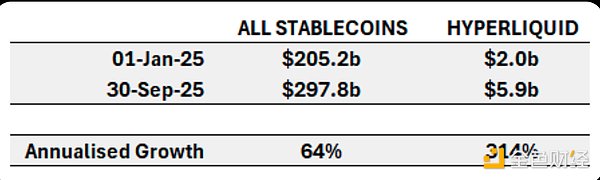
Similar to the developer code, we conducted a scenario analysis of the Hyperliquid stablecoin market size by the end of 2026: in 2025, the scale of stablecoin deposits on the Hyperliquid chain increased from US$2 billion at the beginning of the year to US$5.9 billion at the end of the third quarter, with an annualized growth rate of 314%, far exceeding the overall annualized growth rate of 64% of the stablecoin market.
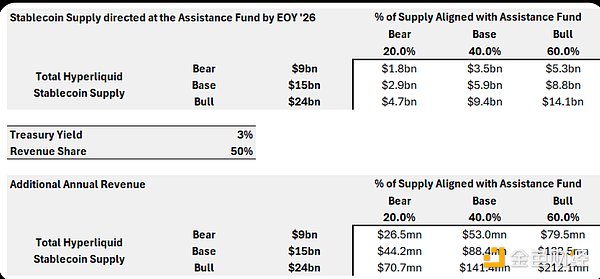
In our baseline scenario, given the scale Hyperliquid has already reached this year, we expect its stablecoin deposit growth to slow to 150% in 2026. Key Trend: Driven by the aforementioned USDH proposal, we expect the market to shift significantly from a “USDC-dominated” to a “Hyperliquid-aligned stablecoin-dominated” market.
Revenue Calculation: Based on the latest Federal Reserve interest rate forecast (Treasury yields falling to 3%), and assuming that 50% of the Treasury bond income generated by stablecoin collateral is injected into the aid fund (in line with the USDH proposal), by the end of 2026, this part of the income will bring the protocol an additional annualized revenue of US$110 million.
3. HIP-3: Developers deploy perpetual contracts
HIP-3 is a new improvement proposal from Hyperliquid that aims to transform perpetual swap listings on exchanges into an on-chain infrastructure, eliminating the traditional process of validator approval. This change allows anyone to create a native perpetual swap market on HyperCore without any permission.
Through HIP-3, new markets (each with its own order book) will be deployed on HyperCore via a Dutch auction every 31 hours. Based on this, HIP-3 can support the deployment of 282 new markets per year. Participating institutions in the auction to deploy order books on HyperCore must stake 500,000 HYPE.
HIP-3 provides deployers with extremely high market customization flexibility, including: integrating oracles, specifying collateral assets, setting fee parameters, and adding an additional "deployer fee" on top of the base rate.
HIP-3 expands HyperCore’s coverage to traditional markets, including indices, stocks, foreign exchange, commodities, bonds, as well as specialized markets such as political prediction markets and pre-IPO markets.
We are entering an era of digital dollar preference: the process of transferring assets off-chain and into brokerage accounts is full of friction; and traders are accustomed to using perpetual swaps, which are the most easily understood and easily expressed derivatives contracts for end users. Hyperliquid's goal is to "enable a comprehensive financial ecosystem," and this statement should be taken literally—any market that can access an oracle will be able to trade on HyperCore.
Although HIP-3 has not yet been officially launched, making it difficult to accurately estimate its potential trading volume, several outstanding teams have announced plans to launch perpetual contract markets through HIP-3:
Kinetiq Launch: Kinetiq, the leading liquid staking protocol on Hyperliquid, announced Launch in July 2025 - an "Exchange as a Service" infrastructure product based on HIP-3 designed to help other teams deploy new perpetual contract markets.
Ventuals: On October 6, 2025, Ventuals announced that it would launch a "Pre-IPO Enterprise Perpetual Contract Exchange" through HIP-3, supporting 10x leverage.
HyperUnit’s trade.xyz: As mentioned earlier, HyperUnit is the core component of the Hyperliquid ecosystem that supports HyperEVM spot trading. It recently announced the launch of trade.xyz, and the market speculates that this will be a perpetual contract DEX based on HIP-3.
These three teams will immediately generate new perpetual swap trading activity for Hyperliquid, contributing to its revenue. Notably, the HIP-3 market offers higher fee potential—Hyperliquid will charge the same fees as existing perpetual swap markets, with deployers receiving up to a 50% premium. Therefore, HIP-3 serves as a "scaling mechanism" for Hyperliquiquid without compromising its unit economics.
Because HIP-3 supports the creation of new perpetual contract markets, we believe its impact could surpass that of the developer code (which merely provides access to existing HyperCore perpetual contract markets). HIP-3 perpetual contract markets will not only cover crypto assets but are also expected to expand to commodities, stocks, indices, and pre-IPO/special markets.
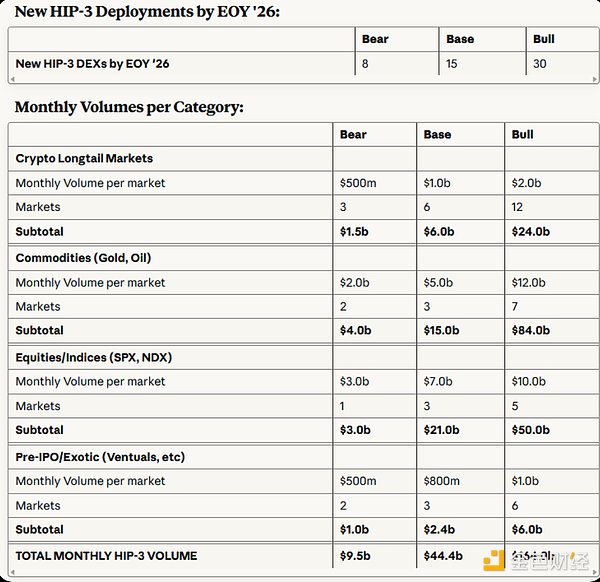
Under the baseline scenario, we believe that by the end of 2026, 15 high-quality HIP-3 perpetual contract integration projects will be launched, bringing the protocol over US$40 billion in monthly trading volume; based on Hyperliquid's 0.0225% fee rate, this will bring the protocol an additional US$120 million in annualized revenue.
IV. HIP-4: Event Markets and Betting
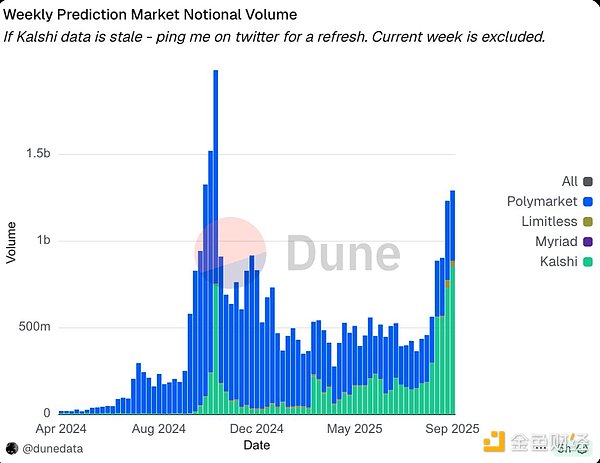
Prediction market weekly trading volume (Polymarket and Kalshi platform data)
HIP-4 is an innovative improvement proposal for the Hyperliquid protocol that will introduce binary markets (similar to prediction markets such as Kalshi and Polymarket). Currently, Kalshi and Polymarket have achieved widespread adoption, mainly driven by the demand for political predictions.
Prediction markets such as Kalshi and Polymarket are highly attractive: their nominal weekly trading volume exceeds $11 billion, and their cumulative trading volume reaches $8.2 billion (Kalshi) and $27.9 billion (Polymarket), respectively.
The previously launched HIP-3 developer-deployed perpetual contract order book currently cannot support prediction markets - because its mark price increase is limited to within 1% per tick, it cannot meet the needs of a binary income structure.
In response to this issue, Jeff, head of the Hyperliquid team, said that event perpetual contracts are more appropriately considered as permissionless spot deployments, and must meet the conditions of "full collateralization, no liquidation, and no continuous funding fees."
In addition, HIP-4 will also introduce a parlay feature – a combination bet consisting of multiple independent single bets, commonly seen in sports betting, which can achieve convex returns without the need for leverage.
In summary, HIP-4 aims to redefine the way markets are deployed on Hyperliquid, paving the way for Hyperliquid to enter the emerging prediction market, enabling it to compete with platforms such as Polymarket and Kalshi.
5. Hyperliquid Digital Asset Treasury (DATs)
Like other prominent protocols, Hyperliquid is well-positioned to capitalize on the wave of digital asset treasuries (DATs)—treasuries designed to acquire underlying assets and add them to their balance sheets. The Nasdaq-listed shares will provide accredited investors with access to HYPE without the need for self-custody. Currently, HYPE's limited distribution through CEXs limits its accessibility, particularly for US users. DAT projects like Hyperliquid Strategies Inc. aim to address this accessibility issue by the end of 2025.
1. Hyperliquid Strategies Inc. (NASDAQ: PURR)
Hyperliquid Strategies Inc. is a newly formed treasury company whose core business is the acquisition of HYPE. It was formed by the merger of Sonnet BioTherapeutics and Rorscach I LLC and will be listed on the Nasdaq under the new stock symbol "HSI".
The company is led by Atlas Merchant Capital co-founder Bob Diamond (formerly CEO of Barclays and a senior executive at Credit Suisse and Morgan Stanley) and Atlas Merchant Capital Chief Investment Officer David Schamis (formerly Managing Director of JC Flowers).
Upon completion of the merger, Hyperliquid Strategies Inc. will hold approximately 12.6 million HYPE tokens (valued at $578 million) and have invested a total of at least $305 million in cash. The transaction is expected to close in the fourth quarter of 2025.
Institutions involved in this transaction include Paradigm, Galaxy Digital, Pantera, D1 Capital, etc.
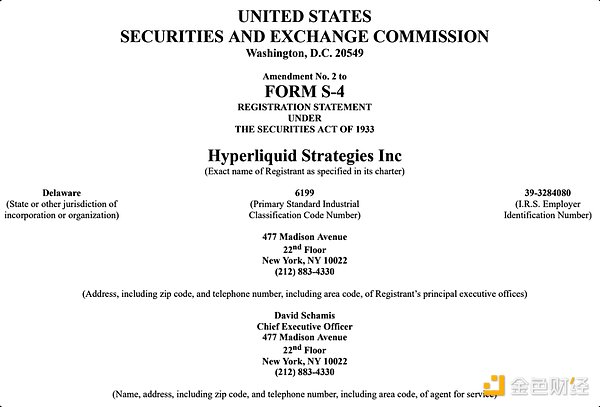
On September 4, 2025, Hyperliquid Strategies Inc. submitted an S-4 filing to the U.S. SEC, meaning the merger has entered the stage of formal shareholder confirmation.
2. Hyperion DeFi (NASDAQ: HYPD)
Hyperion DeFi was formerly known as Eyenovia Inc. After the reorganization, its core business is "acquiring HYPE" and "generating income through staking and income strategies in the HyperEVM ecosystem."
According to a newsletter report on September 25, 2025, Hyperion DeFi holds 1.71 million HYPE with an average purchase price of $38.25.
Currently, Sonnet and Hyperion DeFi hold a total of 18.43 million HYPE, with a valuation of US$834 million. These tokens will be permanently withdrawn from circulation.

6. Unlocking of Core Contributor Tokens
Hyperliquid core contributors hold 238 million HYPE, representing 23.8% of the total supply, which will be unlocked monthly starting November 29, 2025.
We believe the assumption that 23.8% of the token supply will be allocated entirely to the 11 team members is unreasonable. Core contributors' tokens are subject to a one-year lockup period following the genesis event, with the VES unlocking scheduled to occur between 2027 and 2028, with some tokens potentially unlocked beyond 2028. We believe that tokens unlocked after 2028 will be allocated to future core contributors, potentially accounting for 3%-6% of the total token supply for core contributors.
Hyperliquid core contributors certainly have the right to sell their tokens, but it's also unreasonable to assume they'll impact the market by dumping their tokens on the spot order book. Core contributors can transfer their tokens through various channels to larger institutions looking to increase their HYPE holdings—such transfers are purely hand-to-hand and won't directly cause selling pressure on the spot order book.
We don't mean to suggest that core contributors won't sell directly on the spot order book; rather, we want to highlight the existence of multiple token transfer methods without direct sell pressure. Some believe that selling pressure is overstated based on monthly unlocks. The Hyperliquid team has demonstrated strong synergy with the ecosystem from the outset and has not deviated from this alignment to date.
Take Robinhood founder Vlad Tenev as an example: he has sold 3.8 million Class A shares of Robinhood and still holds 50.2 million unconverted Class B shares, while Robinhood's current market capitalization is $111.2 billion. We make this comparison because we believe Hyperliquid's future growth potential is comparable to Robinhood's.
Given Hyperliquid's ambitious long-term vision and the significant work still to be done, we expect Jeff and other core contributors to remain engaged with the ecosystem. Token sales can be anticipated by unlocking HYPE tokens, and if sold directly on the spot order book, they will be executed in batches. In a worst-case scenario, assuming core contributors wish to retain 50% of their HYPE holdings and HYPE trading at $44, the potential value of tokens sold between November 29, 2025, and the end of the unlock period in 2027/2028, would be approximately $5.2 billion.
VII. Valuation Framework
Earlier in this report, we calculated the revenue potential of Hyperliquid's three core growth catalysts using multiple scenarios:
The continued expansion of developer code;
Hyperliquid is aligned with the launch of a stablecoin, with proceeds shared with the aid fund;
With the launch of the HIP-3 market, monthly trading volume is expected to exceed US$40 billion by the end of 2026.
Beyond this, we believe that Hyperliquid's core perpetual swap exchange will continue to experience organic growth. The current trend is clear: decentralized perpetual swap exchanges (DEXs) are taking significant market share from centralized exchanges (CEXs)—DEX perpetual swap trading volume increased by 125% year-over-year in the first three quarters of 2025.
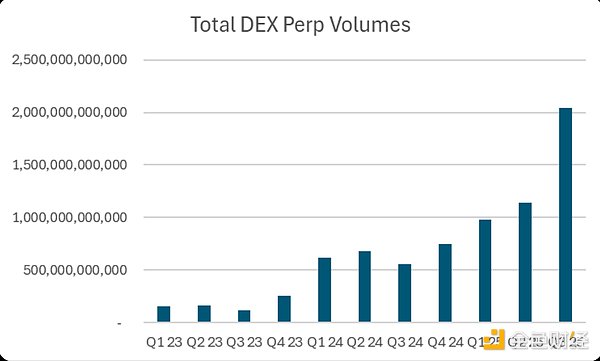
We expect this trend to continue, and despite the emergence of several competitors in recent weeks, Hyperliquid will maintain a 40% market share in perpetual swaps trading. Below is a scenario analysis of total DEX perpetual swaps trading volume and Hyperliquid's market share by the end of 2026. This analysis only includes the current platform's organic growth, excluding trading volume driven by HIP-3 and developer code:
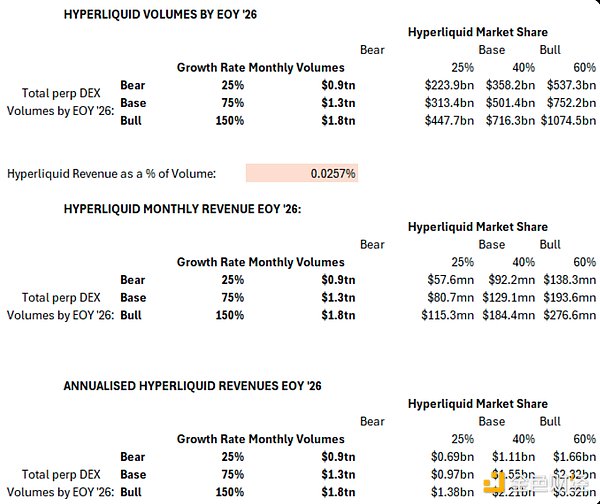
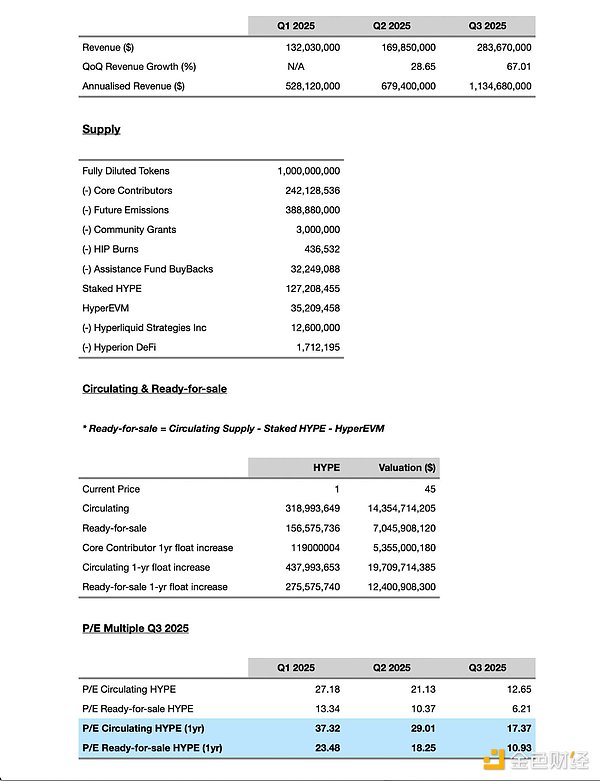
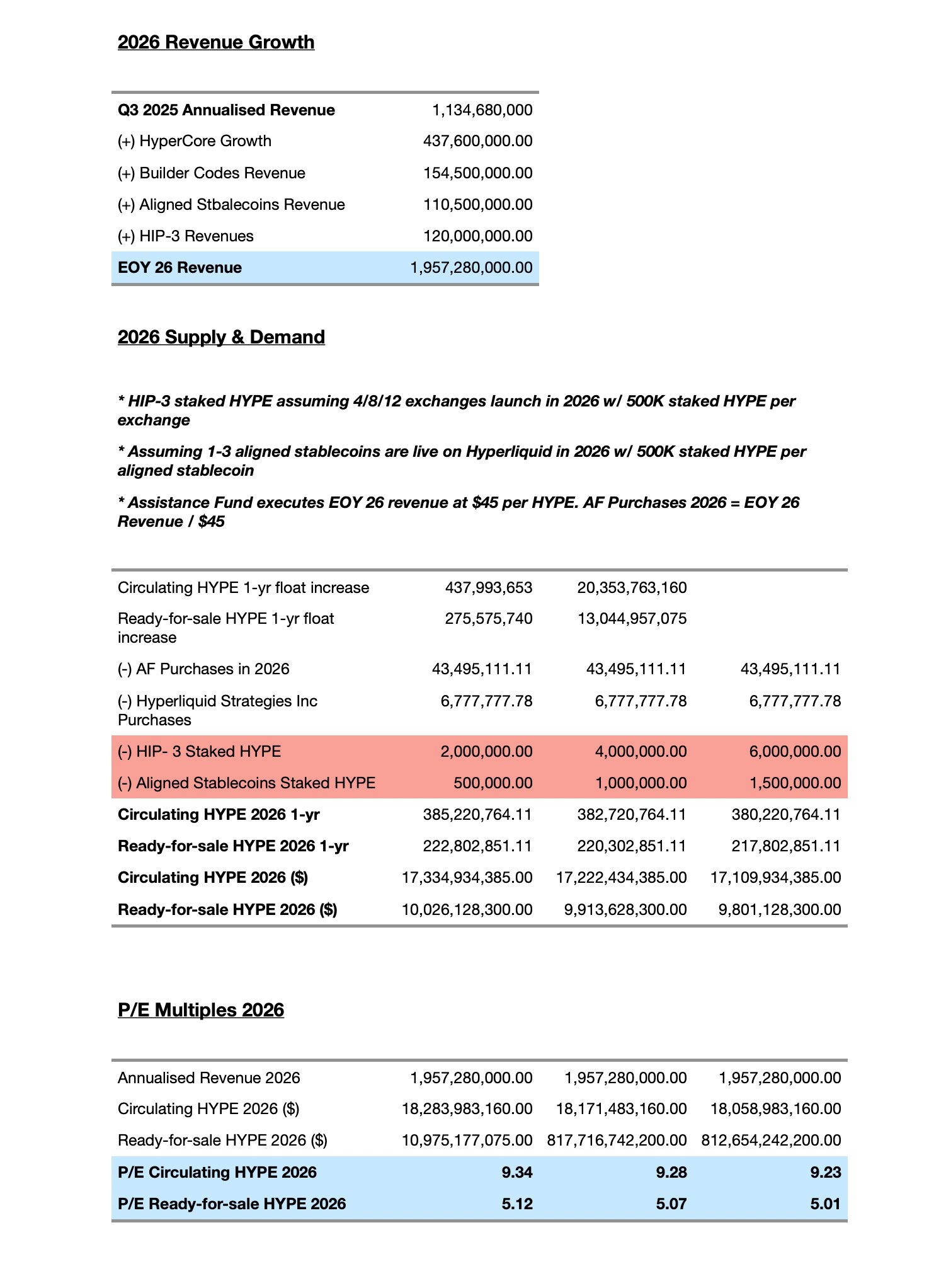
Taking all the above factors into account, under our baseline scenario, we believe that Hyperliquid's annualized revenue will reach US$1.9 billion by the end of 2026, a 70% increase from the annualized revenue in the third quarter of 2025.
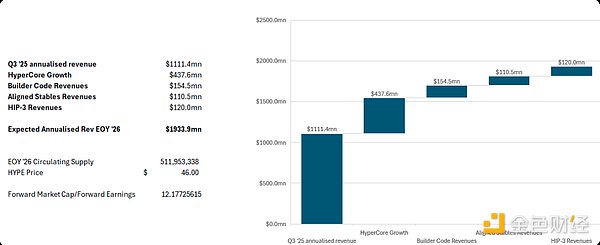
Hyperliquid Q3 2025 Annualized and One-Year Core Contributor Floating Rate Growth
Hyperliquid 2026 Revenue Forecast and 1-Year Core Contributor Float Growth
8. Forecast for 2026
Perpetual Contract Market Share Increases: Driven by its liquidity flywheel, Hyperliquid will continue to capture perpetual contract market share from CEXs; developer code will further accelerate capital inflows. It is projected that by the end of 2026, Hyperliquid's perpetual contract trading volume will reach 15%-25% of Binance's, and account for 7.5%-15% of the total trading volume of the three major CEXs (Binance, ByBit, and OKX).
Fintech and brokerage platform integration: Well-known fintech platforms and brokerages will provide perpetual contract trading services to users by directly integrating developer code; developer code integration will bring substantial growth to the protocol revenue.
Multi-aligned stablecoin ecosystem: Hyperliquid will host multiple fiat-collateralized stablecoins, with 50% of the Treasury bond returns generated by these stablecoins going toward the bailout fund. Furthermore, we expect most institutions involved in the USDH proposal to proceed with plans to issue fiat-collateralized stablecoins on Hyperliquid. By the end of 2026, USDH issuance will exceed $5 billion, and the combined issuance of other Hyperliquid-aligned stablecoins will exceed $2 billion.
HIP-3 covers traditional markets: HIP-3 will accommodate multiple active perpetual contract markets, focusing on index, stock, foreign exchange, and commodity trading; most HIP-3 markets will use USDH as the quote asset, further consolidating USDH's position and promoting the conversion of USDC on HyperCore to USDH.
Entering the Real-World Assets: Hyperliquid will expand into the “real-world assets” space, supporting tokenized stocks to be traded on the spot order book; it will become the platform with the deepest liquidity for accessing on-chain traditional markets through perpetual contracts, and will attract a new user base through the promotion of developer code.
Hyperliquid-specific DATs are outperforming: Digital asset treasuries (DATs) focused on Hyperliquid are poised to perform well, becoming a natural beta tool for HYPE's appreciation. We anticipate that more DATs will be announced and launched in 2026, with increasingly differentiated strategies, particularly focusing on HIP-3 and the HyperEVM ecosystem.
Spot ETF Applications: Multiple Hyperliquid spot ETF applications are likely to be filed in 2026, increasing HYPE's accessibility to qualified investors. Given that Hyperliquid is the highest-grossing protocol in the digital asset space, with annualized revenue potentially exceeding $2 billion, we expect institutional interest in Hyperliquid to increase significantly.
IX. Summary
We believe that as institutions gradually adopt digital assets, the public markets are primed for growth-oriented investments. Previous cycles have had a negative psychological impact on market participants, but we are now approaching an inflection point where several core companies will begin to expand significantly, generating substantial cash flow, attracting top talent, and expanding their user-facing product portfolio. Against this backdrop, investment strategies should focus on elite teams that have demonstrated exceptional execution and accompany their growth over the long term.
Arete Capital's liquidity investment strategy isn't about actively trading in the open market, but rather identifying a small number of high-quality, highly valuable assets and taking a long-term perspective to realize their value. Hyperliquid perfectly aligns with our growth investment philosophy and is a core liquidity investment target. With the launch of HIP-3, bringing traditional markets on-chain through perpetual contracts, and tapping into the growing stablecoin market with USDH, HyperCore and HyperEVM are gradually integrating key components of the financial system. Hyperliquid's grand vision of building an all-encompassing financial ecosystem is now clearer than ever.