Author: Panterafi
There's been a lot of discussion about the stability of stablecoins, but very little about their risks. I think that's the key issue that needs to be addressed, and it's something I've been thinking about for months. I'm happy to finally be able to share my thoughts with you all.
summary
The Future and Past Discussions of Stablecoins
Main categories of stablecoins
Comparative analysis of risk indicators
Solana's current ecological development status
The Future and Past Discussions of Stablecoins
This section highlights insightful perspectives from prominent figures on the development of stablecoins. Their discussions primarily focus on several pathways for DeFi to achieve widespread global adoption through stablecoins.
"Global adoption requires on-chain FX" -- haonan
This promises to improve global trade settlement. On-chain foreign exchange transactions can handle cross-border payments, remittances, and exchanges with local stablecoins or fiat currencies, without being subject to regulatory barriers. It can replace the slow traditional system with an instant, low-cost exchange method.
For widespread adoption, on-chain forex requires deep AMM liquidity pools capable of handling, for example, $11 billion in trading volume over 30 days. Slippage management will soon become a challenge, along with scalable infrastructure and payment systems built upon it. The stablecoin ecosystem for forex trading must also prioritize robust security.
For widespread adoption, on-chain forex trading requires deep AMM pools capable of handling up to $11 billion in trading volume over 30 days. Slippage management will soon become a challenge, along with the need to build scalable infrastructure and payment systems. The stablecoin ecosystem for forex trading must also prioritize robust security.
"Proxy payment can significantly improve the user experience for small online transactions" -- hazeflow_xyz
x402 is an open-source, internet-native payment protocol developed by Coinbase. It utilizes the HTTP 402 "Payment Required" status code to enable instant, small-amount payments in stablecoins such as USDC.
The x402 has the following advantages:
Autonomous operation: AI agents can independently pay for services, data, computing, or tools in real time, thereby enabling machine-to-machine economics without human intervention.
Instant settlement: Transactions are confirmed within seconds, are final, have no chargebacks, and zero protocol fees, making them ideal for high-frequency, low-value payments.
Frictionless integration: Agents can attach stablecoin payments to any web request with minimal setup, thus overcoming traditional payment barriers such as API keys or intermediaries.
Compliance and security: Built-in verification and settlement mechanisms ensure compliance with regulatory requirements while leveraging stablecoins to maintain price stability in a volatile cryptocurrency environment.
The scalability of the AI ecosystem: It supports proxy markets where proxies can autonomously trade resources, thereby facilitating the growth of stablecoin-based infrastructure supported by facilitators such as Coinbase or PayAI.
“Blockchain and public transaction networks can enhance trust and transparency, thereby reducing illicit transactions.”
Traditional banks such as Deutsche Bank, as well as auditing firms such as Deloitte and Ernst & Young, have faced serious charges for auditing errors or money laundering. Many politicians have also been convicted of embezzling public funds.
I believe a major advantage of using blockchain-based stablecoins is their ability to reduce corruption, illicit transactions, and money laundering. Financial police will be able to track any flow of funds, and auditors will have a clearer understanding of how businesses are operating. This could also create new wallet tracking/data analytics jobs (such as Dune). A deeper understanding of fund flows and more precise data analysis promises to give rise to new concepts and economic models.
For me, blockchain is not just a practical revolution (from a business perspective), but it has also regained public trust in governments and their elites by empowering the public with control and transparency in oversight.
"Stablecoin infrastructure will eventually become invisible" -- Suhail Kakar
He emphasized that blockchain stablecoins will remain unknown to the public. Retail users don't care about the underlying technology; they just need a fully functional payment system. He cited the example of Telegram, initially developed as an instant messaging application, which later integrated the TON network. Users seamlessly gained wallets and payment services without realizing it was cryptocurrency or blockchain. The payment infrastructure being built by companies like Circle, Tether, Coinbase, and Stripe operates similarly, allowing merchants to accept cryptocurrency payments without any cryptocurrency knowledge. Merchants receive USD, the infrastructure handles all blockchain-related tasks, and customers enjoy a seamless checkout experience.
The greatest success of cryptocurrency will come from people no longer talking about it, but rather from it becoming an invisible infrastructure that supports the experiences people truly want.
"Market capitalization of yield-generating stablecoin protocols surges" -- Jacek_Czarnecki
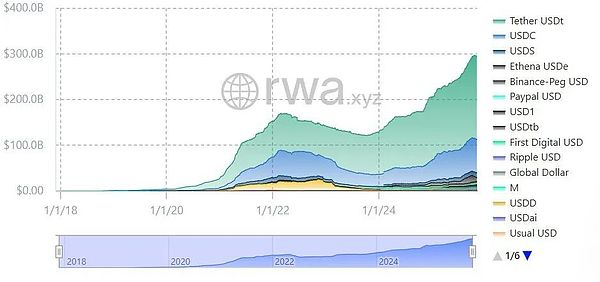
Their total market capitalization increased 13-fold, from $666 million in August 2023 to $8.98 billion in May 2025, peaking at $10.8 billion in February.
They currently account for 3.7% of the entire stablecoin market (totaling $300 billion).
There are currently over 100 yield-generating stablecoins on the market; among them, mainstream stablecoins such as Ethena's sUSDe and Sky's sUSDS/sDAI account for 57% of the market share ($5.13 billion). Since mid-2023, they have distributed nearly $600 million in yields.
The recent surge in new yield-generating stablecoins is primarily driven by two factors:
The first point comes from its core concepts: delta-neutral hedging (Ethena USDe) and soft liquidation mechanism (Curve crvUSD), which allowed the stablecoin to recover from the Luna crash and grow to a market capitalization of $300 billion.
The second point comes from the government level, where the recognition of certain types of crypto assets as financial instruments paves the way for innovation. Regulatory advancements, such as the US GENIUS Act (signed in July 2025, requiring 1:1 reserves, implementing anti-money laundering/know your customer processes, and banning uncollateralized algorithmic stablecoins), the EU's MiCA, and related frameworks in the UK and Asia, all contribute to institutional adoption and trust.

"New Revenue Models and White Label Distribution" -- hazeflow
In low-interest-rate environments, such as those with government intervention, new reward models can be established. Governments can incentivize user adoption by issuing stablecoins. In high-interest-rate environments, stablecoins, especially decentralized stablecoins, can gain an advantage by offering returns or incentives through their reserve assets. Users can earn annual returns sufficient to offset inflation simply by holding stablecoins. These returns can be converted into cash rebates or utility benefits through close collaboration with partners.
Stable infrastructure and companies like Apple or Microsoft can mutually benefit. Businesses can gain new revenue streams, while stablecoins can acquire a large user base, thereby promoting global development.
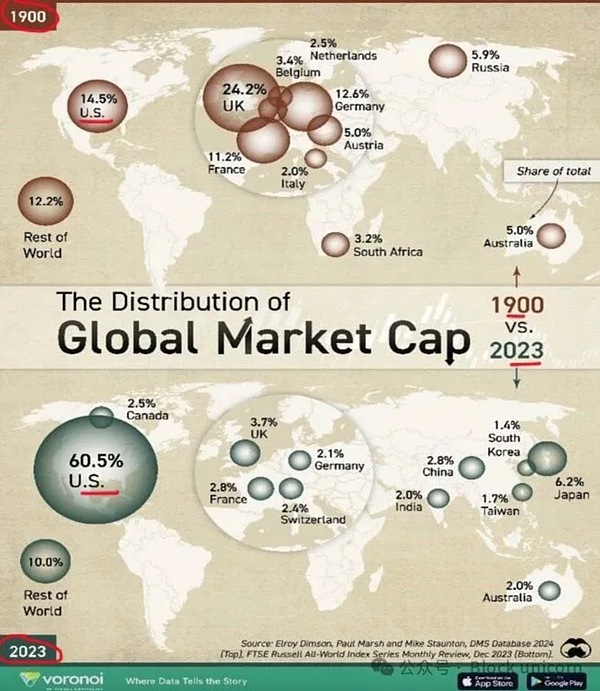
The United States is the most fertile ground for the growth of stablecoins, with regulation on track and the largest market size. In terms of the practicality of stablecoins, poorer countries, due to their weaker currencies, are actually more willing to use them.
Now let's delve into the specific characteristics of each stablecoin to understand their risk metrics and yield mechanisms. I've compiled and created these charts to help you gain a comprehensive understanding of the various mechanisms, enabling you to identify more robust, higher-yielding, or lower-yielding options.
Stablecoins are the backbone of DeFi. Putting all your idle funds into one protocol is not the best option. Diversity is key, but to obtain stable returns, diversity is limited, and you must make trade-offs between different stablecoins.
Stablecoin category
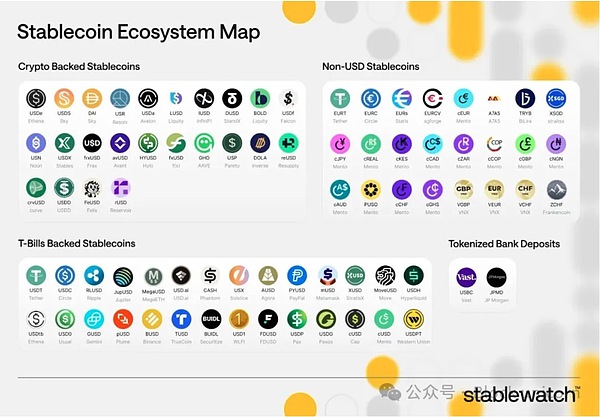
Collateralized stablecoins (over-collateralized using cryptocurrency or RWA):
Reward Mechanism: Users borrow and lend with collateral (ETH, BTC) exceeding the value of the issued stablecoin, and earn rewards through lending fees, RWA interest (US Treasury bonds), or protocol profits. Excess collateral serves as a buffer.
For example: USDS (Sky, yields from RWA and lending), GHO (Aave, yields from lending fees), USR (Resolv, yields from tokenized assets), USDe (Ethena, yields from staked ETH and futures), USD0 (Avalon, yields from RWA interest), and cUSD (Celo, yields from natural resource backing).
How income is generated: The interest generated by the collateral (staking rewards or RWA returns) is distributed to the holder or staker through modules such as savings rates.
Algorithmic or hybrid stablecoins:
Revenue mechanism: The supply is adjusted (minting/burning) based on demand through an algorithm to maintain stability. Revenue comes from seigniorage (minting fees) or incentives (governance tokens).
For example: USDF (Falcon, a hybrid product whose returns come from perpetual futures) and USDO (Avalon, which combines algorithmic elements with RWA).
How returns are generated: Dynamically adjusting to create arbitrage or reward opportunities, often amplified through DeFi integration such as staking and providing liquidity.
How returns are generated: Dynamic adjustments create opportunities for arbitrage or rewards, and DeFi integrations (such as staking or liquidity provision) often amplify these opportunities.
Fiat-backed or centralized stablecoins (for comparison only):
Revenue Mechanism: Backed 1:1 by fiat currency or equivalent, with revenue derived from reserves (government bonds). The base revenue is typically not distributed to users but retained for corporate purposes.
For example: USDC (Circle), USDT (Tether)
How returns are generated: Low-risk interest is obtained from reserves, but the degree of decentralization is the lowest.
Risk indicators
Decoupling Risk
De-pegging occurs when a stablecoin fails to maintain its predetermined peg to $1, typically due to extreme market stress, supply-demand imbalances, or a sharp decline in the value of the underlying collateral. This risk is inherent to the stablecoin model, as it relies on economic incentives, algorithmic mechanisms, or reserves, factors that can fail during cryptocurrency market crashes or broader financial turmoil. Collateralized stablecoins may de-peg when reserves are insufficient or liquidity is poor, while algorithmic stablecoins rely on fragile arbitrage mechanisms that can collapse during panic selling.
Other important additions:
Types of Decoupling Mechanisms: There are various types of decoupling mechanisms, and it is crucial to distinguish between temporary decoupling (due to short-term liquidity shortages) and permanent decoupling (a death spiral in an undercollateralized system). Metrics that need to be monitored include the anchoring deviation rate (the frequency with which the tracking price deviates from ±0.5% within 24 hours), reserve ratio transparency achieved through on-chain audits, and redemption speed during stress tests.
Market contagion effect: The decoupling of a stablecoin can trigger a chain reaction throughout the DeFi ecosystem (similar to a "bank run"), as stablecoins are often used as collateral in lending protocols, thus amplifying losses.
Mitigation strategies include regularly auditing reserves, maintaining an overcollateralization ratio above 100%, and using a hybrid model combining fiat backing and algorithmic adjustments. However, even stablecoins with ample reserves are not entirely immune. For example, during periods of high market volatility, arbitrageurs may have their trades delayed due to high gas fees or network congestion.
Latest developments: As of 2025, with increased adoption, forecasting models have incorporated decoupling risks into their key monitoring. These models use factors such as collateral volatility, issuance volume, and macroeconomic indicators (which affect interest rate changes in government bond-backed reserves).
Typical event: In May 2022, TerraUSD (UST) decoupled from the US dollar and plummeted from $1 to near $0, causing algorithm failure and market panic, triggering the collapse of an ecosystem worth over $40 billion.
Smart contract vulnerabilities
Code vulnerabilities or exploits in the protocol could lead to hacking attacks or data loss. The longer a stable protocol has been running, the stronger its ability to withstand these vulnerabilities. Newer protocols, on the other hand, face higher risks associated with smart contracts (which have not been tested in real-world scenarios).
Smart contracts form the backbone of stablecoin protocols, but they may contain code vulnerabilities, logical flaws, or exploitable weaknesses that could lead to unauthorized access, fund loss, or protocol failure. Mature, battle-tested protocols typically perform better due to repeated audits and real-world application experience, while newer protocols face higher risks due to unverified code.
Other important additions:
Auditing and Testing Practices: Emphasis is placed on identifying issues before and after product release through multiple independent audits (e.g., using tools like Quantstamp or Trail of Bits), formal verification tools, and ongoing bug bounty programs. Metrics include the number of audits, the time elapsed since the last major update, and historical attack incidents.
Oracle dependency: Relying on external data sources (oracles) for collateral pricing can lead to manipulation. For example, a flash loan attack could temporarily distort prices, triggering unnecessary liquidations (and thus causing a temporary decoupling).
Ecosystem-wide impact: Vulnerabilities do not exist in isolation. The hacking of one protocol can affect all stablecoins integrated with it, triggering a chain reaction of liquidations across the entire stablecoin protocol (because they support each other/use similar collateral), leading to a collapse in trust and decreased adoption. The SVB collapse, which caused USDC to temporarily decouple and subsequently impacted the entire DeFi ecosystem, is a case in point.
A prime example is the Ronin Network hack in March 2022, where attackers exploited a vulnerability to steal $620 million worth of ETH and USDC from the Axie Infinity bridge.
Regulatory risks
Stablecoins face increasingly stringent government scrutiny regarding anti-money laundering (AML), know-your-customer (KYC) requirements, securities classification, and fiat currency backing transparency. This could lead to operational restrictions, asset freezes, or even outright bans, especially for stablecoins that integrate real-world assets (RWA) or conduct international business. In jurisdictions with evolving cryptocurrency policies, these risks are amplified, impacting their global availability.
Other important additions:
Global regulatory differences: In the EU, the Crypto Asset Markets (MiCA) regulations require stablecoin issuers to hold reserves in licensed banks and maintain liquidity buffers, while the US focuses on classifying some stablecoins as securities and subjecting them to regulation by the US Securities and Exchange Commission (SEC). Emerging markets may implement capital controls, restricting cross-border capital flows. The agreement must comply with relevant regulations to interact with citizens, increasing the complexity of its development. Furthermore, the agreement must choose a jurisdiction for legal development, and the EU is not a preferred option…
Compliance metrics: Tracking issuer license status, reserve reporting frequency, and connections with sanctioned entities. Non-compliance may result in delisting by exchanges, leading to a loss of trust and user base.
Geopolitical factors: Stablecoins pegged to the US dollar face risks from changes in US policy, such as export controls on technology products or expanded sanctions against cryptocurrency entities. Most stablecoins are pegged to the dollar, but what would happen if the US collapsed or lost its financial influence in Asia or the EU? I think of the Swiss franc, a fairly strong currency! Developing a stablecoin backed by one of the most stable countries could potentially enable diversified investments, enhance trust, and facilitate foreign exchange swaps.
On the positive side: regulation can enhance legitimacy, but over-regulation may stifle innovation and force users to turn to unregulated alternatives.
Typical case: In August 2022, the U.S. Treasury Department’s Office of Foreign Assets Control (OFAC) imposed sanctions on Tornado Cash, blacklisting its address, prohibiting U.S. citizens from interacting with it, and freezing $437 million in assets.
Liquidity risk
Liquidity risk arises when users are unable to buy or sell stablecoins without significant price slippage. This is exacerbated in markets with low trading volume, during periods of panic, or on exchanges with low trading volume. Mature stablecoins with high Total Value Locked (TVL) and deep liquidity pools tend to perform better because their long-term existence builds network effects and reduces slippage.
Other important additions:
Metrics: Use on-chain data such as TVL (DefiLlama), the 24-hour trading volume to market capitalization ratio, and slippage rates on major decentralized exchanges (DEXs) during periods of high volatility. A healthy ratio is daily trading volume exceeding the circulating supply by 5-10%.
Market depth issue: In a bear market, redemptions may exceed the new liquidity reserves, thus depleting liquidity reserves.
Chain liquidation: Similar to a bank run (I'll say it again), massive withdrawals create a self-fulfilling prophecy, turning perceived liquidity shortages into reality.
Improvement measures: Integration with Automated Market Makers (AMMs) and liquidity incentives (liquidity mining rewards, Merkl, Turtle) can enhance resilience, but over-reliance on incentives may cause artificial liquidity to disappear during a crisis.
Typical event: In November 2022, FTX crashed, causing an $8 billion liquidity shortage, halting withdrawals, and leading to bankruptcy amid massive capital outflows.
Counterparty risk
Stablecoins typically rely on third parties, such as custodians responsible for RWA, oracles for price data, or cross-chain bridges for cross-chain functionality. This can lead to problems such as bankruptcy, fraud, or operational errors, thus creating points of failure.
Other important additions:
Custodian and oracle failures: Custodians may default, and oracles (such as Chainlink) may provide inaccurate data during network issues, leading to incorrect collateral pricing.
Evaluation metrics: Assess the diversity of the custodian, insurance coverage, and the degree of decentralization of the oracles. High centralization of the API can increase risk. For example, CURVE's crvUSD relies on multiple stable data sources to maintain the accuracy of its oracle prices.
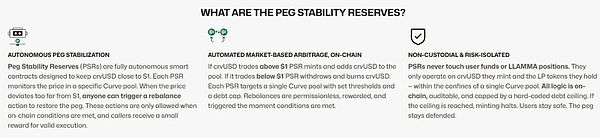
Interdependence: In tokenized assets, counterparty chains can amplify problems; for example, a hack in a linked protocol could freeze the redemption of stablecoins.
Legal protection: Holders may be considered unsecured creditors in bankruptcy proceedings, with virtually no chance of recovering any assets; this underscores the necessity of diversified reserves. In my chart, you'll notice that some stablecoins rely on some form of collateral, which they don't even actually hold (the collateral is typically short-term government bonds, so the risk of default is practically zero). Other protocols may be overly reliant on ETH-LST, BTC-LST, or SOL-LST, which is particularly concerning given the potential for yield volatility.
Typical case: In June 2022, Celsius Network went bankrupt, freezing $4.7 billion in user funds due to bad investments and counterparty defaults.
Return volatility
Stablecoin yields typically come from lending protocols or government bond investments, and fluctuate with market conditions, lending demand, and interest rate changes, reducing the predictability for users seeking stable passive income.
Other important additions:
Influencing factors: In a low-volatility environment, yields tend to fall due to reduced borrowing; conversely, yields tend to rise during bull markets. Another yield factor related to RWA is external interest rates (such as the federal funds rate).
Risk indicators: Monitoring historical yield ranges, correlation with the cryptocurrency volatility index (CVIX), and protocol utilization are key to predicting potential yield volatility and closing positions early (a loan-to-deposit ratio above 80% indicates higher yields, but also carries risk).
Sustainability considerations: High yields may foreshadow potential risks such as excessive leverage. Sustainable development models prioritize delta-neutral strategies to minimize directional risk exposure, as exemplified by Ethena, which explains part of its success.
User impact: Volatility can lead to opportunity costs, as users may miss out on higher returns elsewhere, or suffer from inflation if the yield is lower than the statutory savings rate.
Typical event: During the 2022 Crypto Winter, Aave/Compound yields plummeted from over 10% to below 2% due to a drying up of lending demand.
Sky Dashboard Metrics
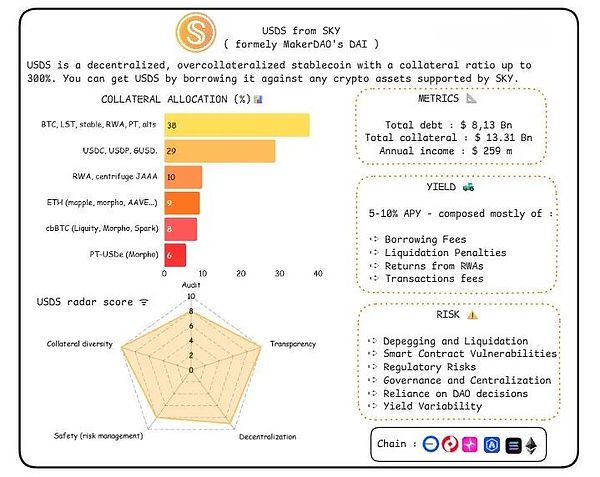
Specific risks: smart contract vulnerabilities (due to complex lending modules), regulatory risks (RWA’s exposure to U.S. government-backed securities is subject to scrutiny), and yield volatility (dynamic savings rates may decline).
GHO Dashboard Indicators
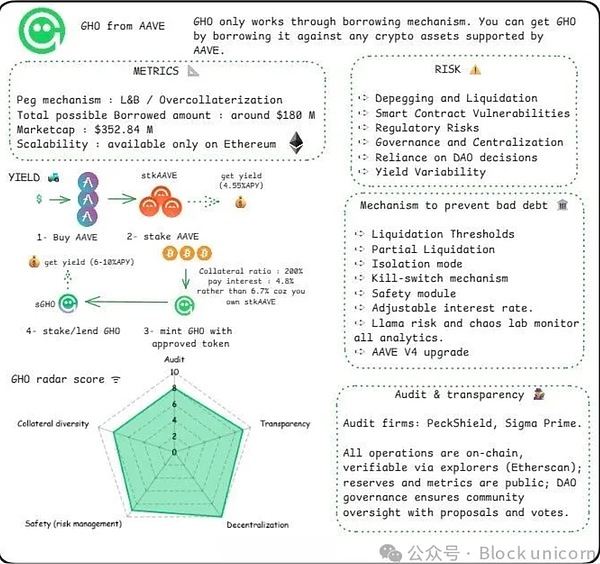
Specific risks: Vulnerability of the lending mechanism (over-collateralization may lead to a chain of liquidations), failure of yield generation (if lending demand decreases, the yield will drop to zero).
USR Dashboard Indicators
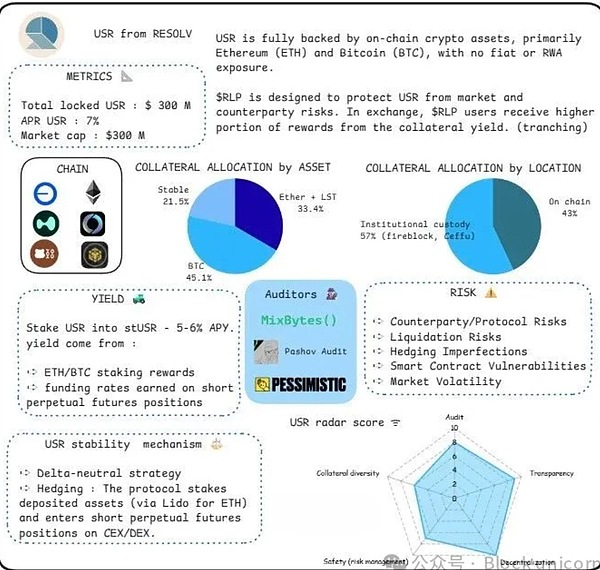
Specific risks: undercollateralization risk (if RWA depreciates), liquidation threshold (high volatility of underlying ETH/BTC), security module failure (insurance-like buffers may be insufficient).
Dinero Dashboard Indicators
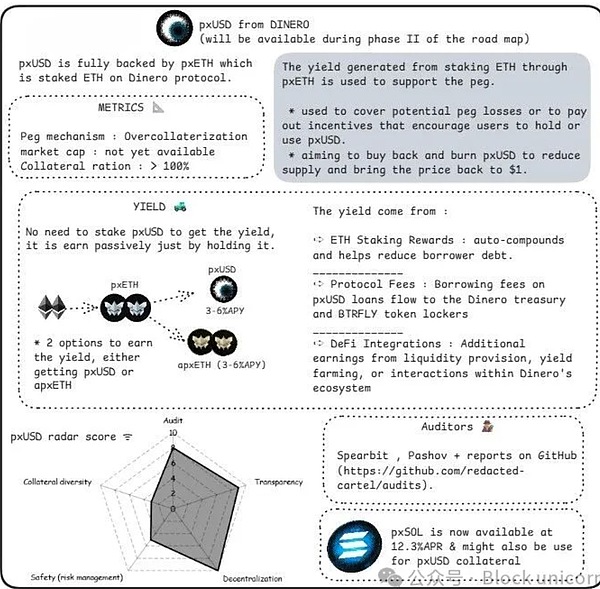
Unique Risks: Unlike fully overcollateralized tokens, the yields of auto-compound staking rewards make them vulnerable to Ethereum penalty events or periods of low yields.
crvUSD Dashboard Indicators
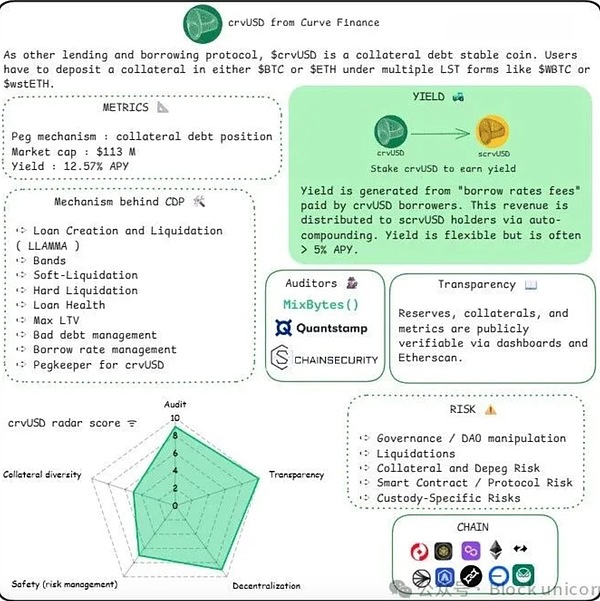
Specific risks: crvUSD's CDP model (health ratio 150-167%, backed by BTC/ETH LST) focuses on lending, so during periods of market volatility, the risk of cascading liquidations becomes the main risk. While fee income is flexible, it is typically higher than the 3.5% annualized yield (APY).
Falcon dashboard indicators
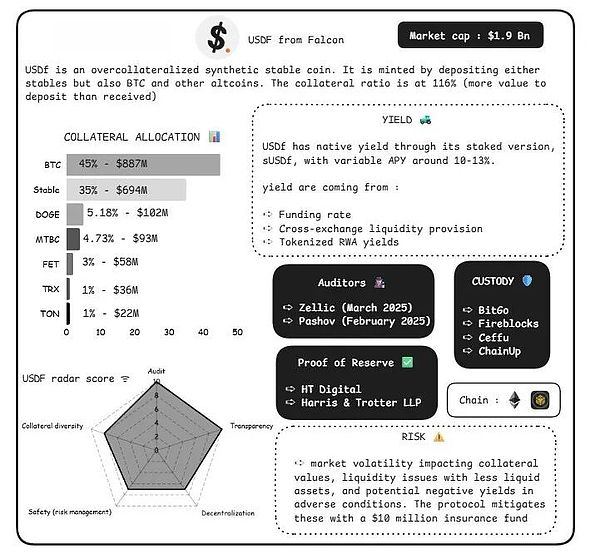
Specific risks include: market volatility of the underlying asset (futures may lead to rapid losses), regulatory compliance issues (as a currency pegged to PPI), and counterparty risk on the exchange.
Angle Analysis
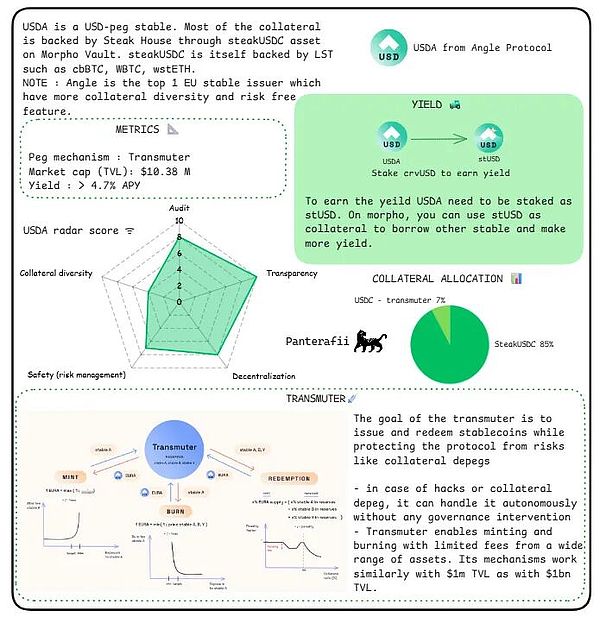
Unique Risks: The USDA’s conversion goal is to prevent de-pegging by allowing minting/burning at a limited cost (1 million TVL is equivalent to $1 billion), but this introduces autonomy risks, such as governance allowing it to happen without intervention, making it vulnerable to hacking or collateral failures, with 85% of its backing being steakUSDC.
Coinshift Analysis
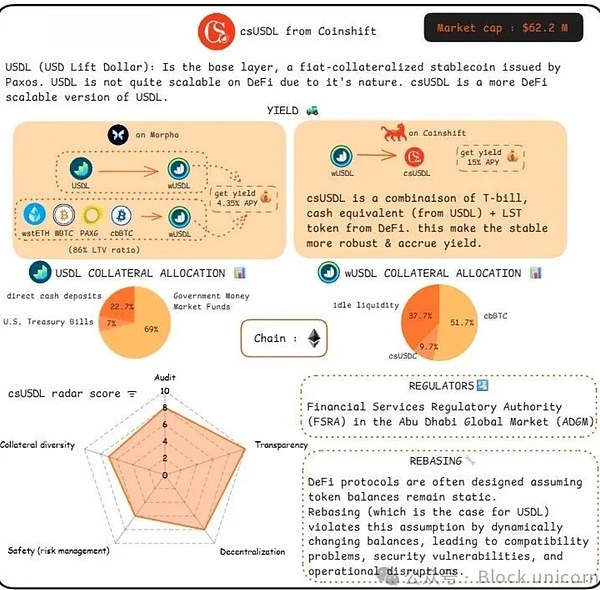
Unique Risks: csUSD’s three-party market (holders, generators, and restakers) is unique because of its yield rebasing (from Treasury bonds/LST), but it also carries the risk of balance changes, which could lead to compatibility issues with DeFi protocols.
Avalon Analysis
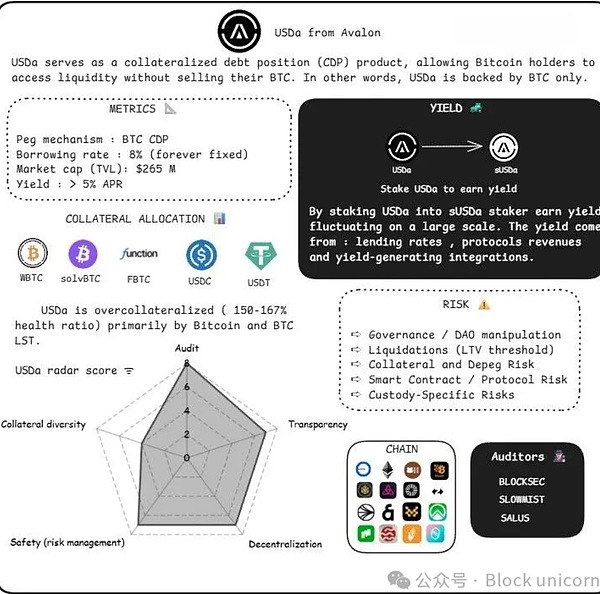
Specific risks: The USDA’s fixed borrowing rate (8%) and the CDP model that uses Bitcoin as collateral only (with an annualized return of over 5%) expose it to the risk of Bitcoin price volatility, which is different from diversified collateral, and there is no mention of an overcollateralization buffer.
USDai Analysis
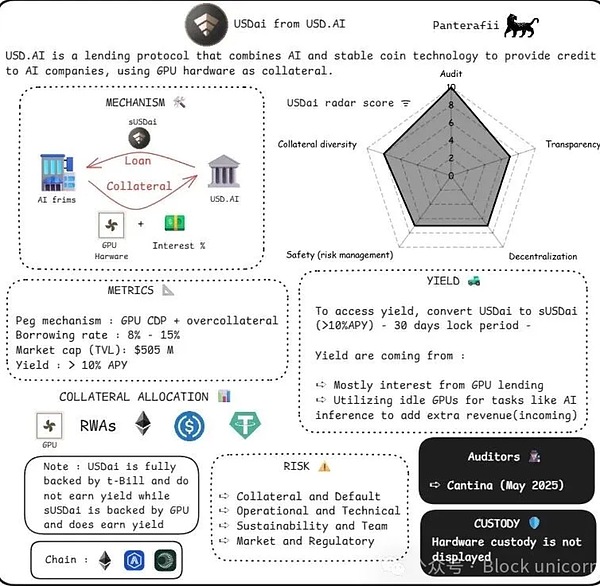
Specific risk: GPU CDP collateral is illiquid assets.
Ethena (USDe) Analysis
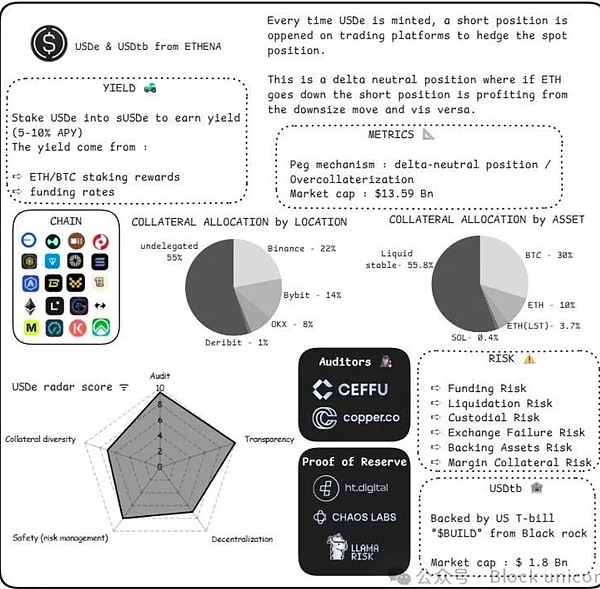
Specific risks: sharp rise in interest rates (futures positions may lose value), fluctuations in financing rates (negative interest rates will erode yields), and perpetual futures risk (market crashes may lead to liquidation).
Usual Analysis
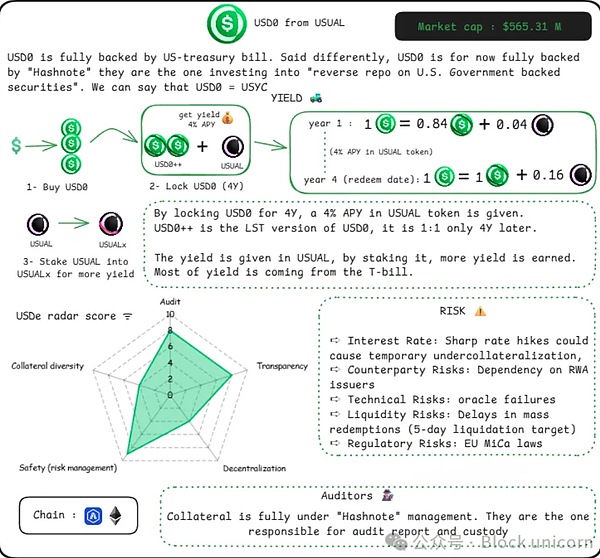
Specific risks: Hosting-specific risks (RWA is managed by Hashnote).
Frax Analysis
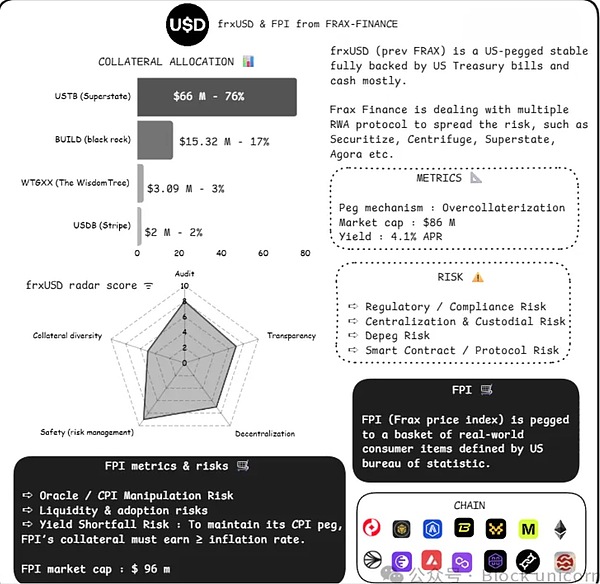
Specific risk: Hybrid mechanisms may exacerbate the failure of linkage mechanisms during economic transition.
Paxos Transparency Report
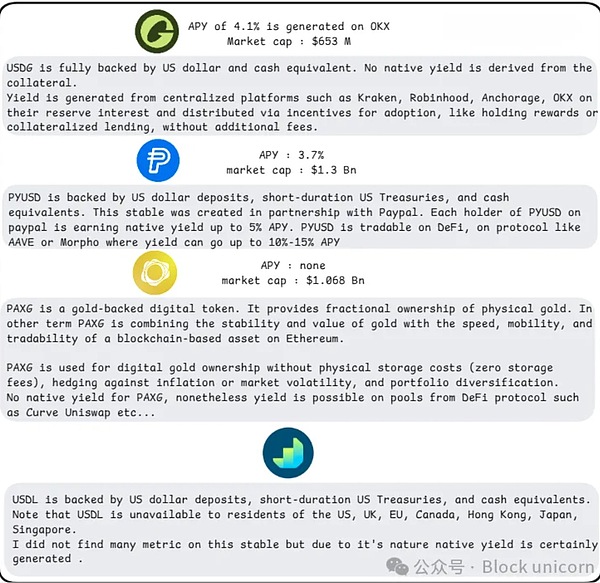
Cap (cUSD)
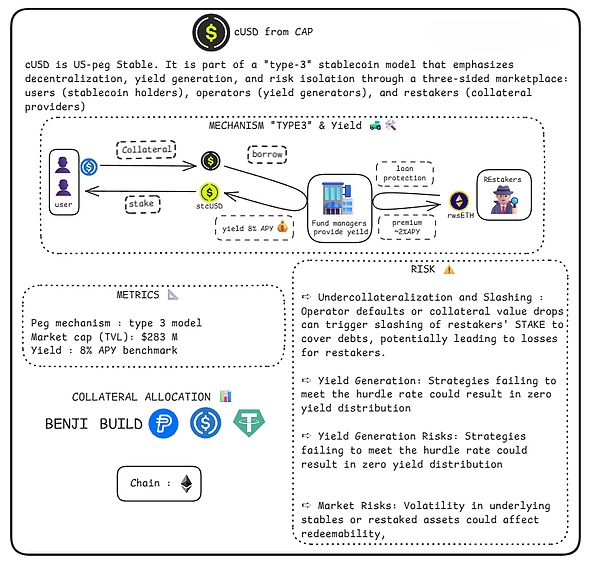
Unique Risks: cUSD emphasizes decentralization, yield generation, and risk isolation through a three-party market (holders, generators, and recollateralizers), which brings unique penalty risks to recollateralizers. The yield (8% annualized benchmark yield) depends on the failure of loan protection.
Current ecological status of Solana
As rumors continue to circulate about Solana issuing an ETF, Solana's steady growth momentum is also beginning to strengthen.
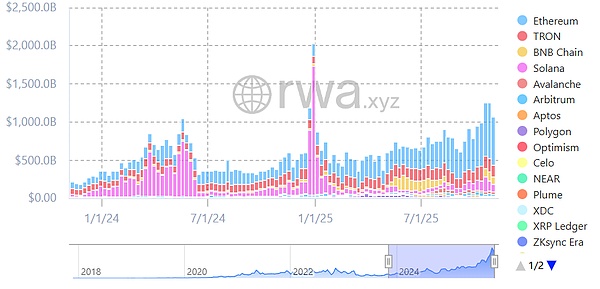
Solana ranks among the top five in on-chain transaction volume.
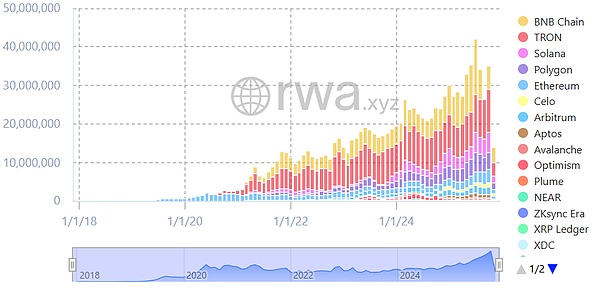
Solana's active stablecoin addresses
Several noteworthy native stablecoins are emerging (such as Jupiter's jupUSD, Solstice's USX, and Hylo's hyUSD). They all possess clever algorithmic mechanisms to maintain a stable peg. They are worth paying attention to.
Conclusion
Sometimes the yield and the value of the collateral don't match. Terra Luna is an example; its annual yield is consistently around 20%, but the returns are significantly lower. It's crucial to closely monitor the correlation between the yield and the value of the collateral, as this is often where suspicion lies.
For example, a friend of ours raised an interesting point here about stablecoins for the US dollar:
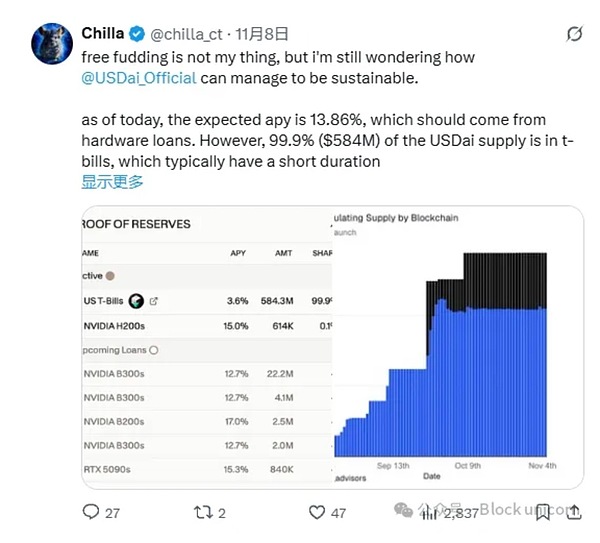
USDai has issued a statement indicating that the GPU loan will be delayed. The borrower wants USDai, while the lender is struggling to deliver the collateral, creating a gap between the two. News reports state: "NVIDIA B200 graphics card stuck in French customs after leaving Taiwan."

I hope you enjoyed this content. I firmly believe that DeFi will one day become a core driving force of the entire financial system. I will continue to share strategies, concepts, and truly innovative protocols.