introduction
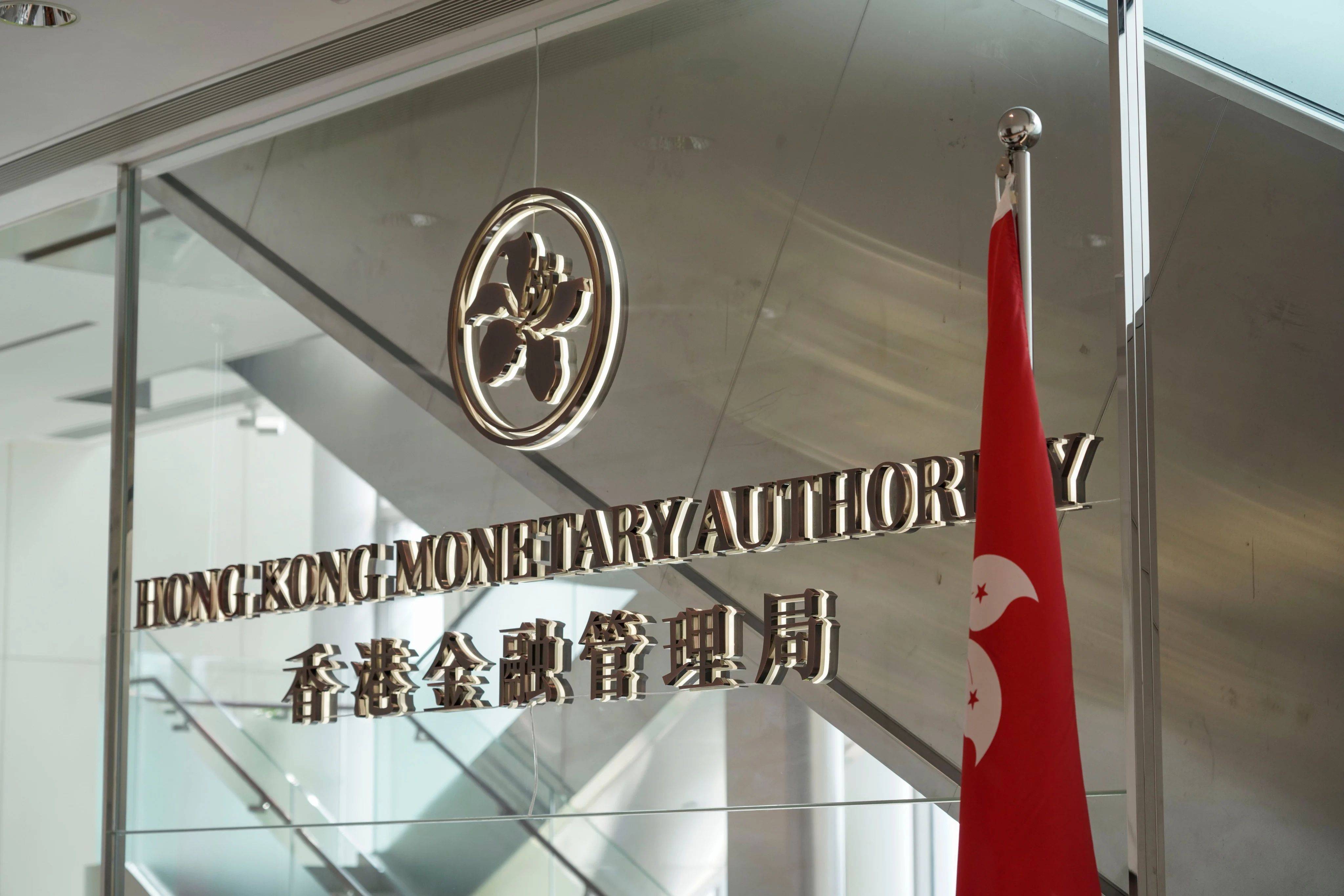
If the past two years have been a period of "training" in the field of RWA (Real-World Application) simulations, then in the late autumn of 2025, the call to "real-world application" has already sounded. A few days ago, the Hong Kong Monetary Authority dropped a bombshell – EnsembleTX. This codename signifies that the "Ensemble Sandbox" is no longer just a simulation exercise, but has begun to transmit real commercial value.
Meanwhile, a "red whirlwind" from the north swept into the southern market—China Resources Longdation Company Limited, the asset management flagship under the trillion-yuan state-owned enterprise China Resources Group, took the lead in completing the first industrial RWA project of a state-owned enterprise in Hong Kong on October 20 this year.
With state-owned enterprises taking the lead, the Hong Kong Monetary Authority paving the way, and the launch of practical platforms, these three forces are converging and reshaping the landscape of Hong Kong's digital finance.
I. EnsembleTX in Practice: From Demo Account to Live Account
To understand what Ensemble TX is, we must mention its predecessor, Project Ensemble Sandbox. In this "testing ground," banks and technology companies continuously tested and refined processes; however, the funds they used to purchase tokenized assets were merely "experimental." The upgrade of Ensemble TX lies in its use of real tokenized deposits to settle real data assets. Its core mission is to support " real-value transactions ."
Ensemble TX possesses two core technological advantages:
First, there's atomic settlement . Tokenized money market funds (MMFs) convert fund units into digital tokens on the blockchain, enabling transactions to be executed directly on the blockchain via smart contracts. This means institutional investors no longer need to wait for the T+2 business day settlement period as before; they can directly enjoy the simultaneous delivery versus payment (DvP) of off-chain funds and on-chain assets. This solves the pain point for institutional investors in managing liquidity on-chain.
Secondly, it offers 24/7 settlement . By connecting to the existing Hong Kong Dollar Real-Time Payment Settlement System (RTGS) and with plans to gradually upgrade to support tokenized central bank digital currencies (wCBDC), EnsembleTX aims to achieve uninterrupted transaction settlement. This is particularly beneficial for mainland companies engaged in cross-border trade, as fund transfers will break through the traditional "9-to-5" banking hours, enabling "instant funds arrival" even in the early hours of Sunday morning.
II. State-owned enterprises enter the fray: China Resources Longdi's "first shot"
On November 14th, China Resources Longdi announced a partnership with digital asset platform EVIDENT, successfully completing the first RWA tokenization project in the industrial sector of a central state-owned enterprise, marking the first time a central state-owned enterprise has entered the Ensemble TX market. This is not just a simple token issuance, but a textbook example of a business model.
1. The inevitability of central state-owned enterprises entering the market
China Resources' entry into RWA at this time is not accidental, but inevitable. Its strategic considerations can be summarized in three points:
First, it broadens financing channels : With traditional financing channels becoming increasingly tight, central state-owned enterprises hold a large amount of high-quality resources (such as new energy) and urgently need to export them. RWA is a more flexible and globally oriented path than REITs.
Secondly, it plays a paradigmatic role : Under the grand context of the "Digital Hong Kong" strategy, China Resources, as a centrally-administered state-owned enterprise based in Hong Kong, is actively responding to the policy and powerfully promoting the development of Hong Kong's Web 3.0 ecosystem.
Third, it relies on authoritative infrastructure : the Ensemble project has settlement facilities endorsed by the Hong Kong Monetary Authority, which can effectively solve the problems of traditional settlement and allow central enterprises to "test the waters" without any worries.
2. New models for revitalizing existing assets
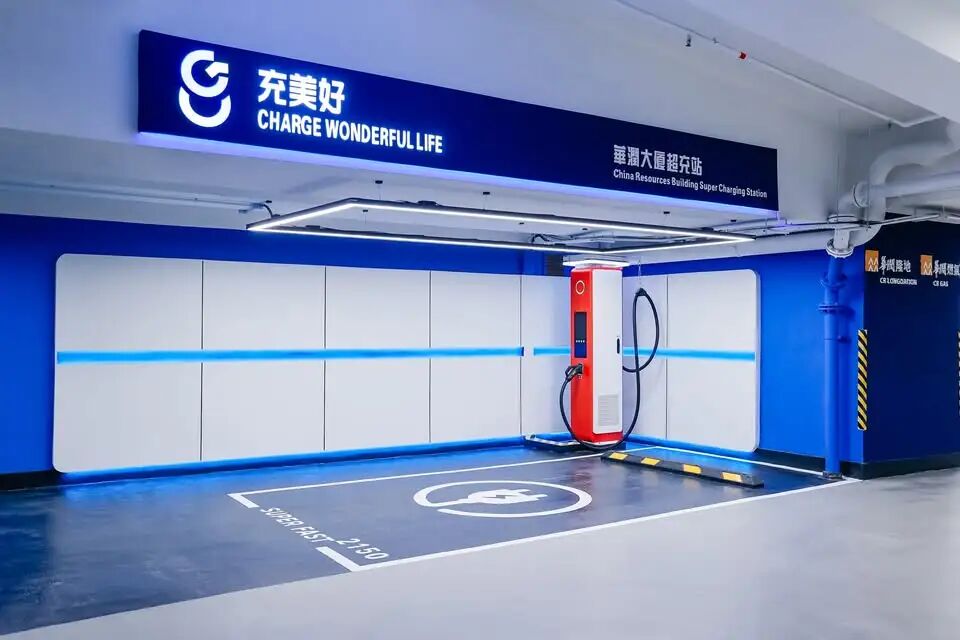
In simple terms, the core model of this project is the " tokenization of revenue rights in a light-asset model "—safely and compliantly converting the cash flow generated by the "heavy assets" (charging pile hardware) under the name of central state-owned enterprises into "light assets" (tokens) that can be traded on the blockchain:
On the asset side : The underlying asset is the future operating revenue rights of the "Chong Meihua" electric vehicle charging stations under China Resources Longdi, which does not involve the transfer of ownership of the charging piles.
On the technology side : By utilizing Internet of Things (IoT) technology, every charging record of each charging station can be directly uploaded to the blockchain through the IoT module, ensuring the authenticity and immutability of revenue data.
On the financial side : Future earnings will be packaged into tokenized products and issued to professional investors (PIs) through EVIDENT's licensed structure.
As China Resources Group's flagship property management company in Hong Kong, China Resources Land holds a large number of high-quality commercial properties and infrastructure, forming a vast portfolio of physical assets. The launch of this project not only allows China Resources Land to lock in revenue in advance and achieve low-cost financing, but also sends a clear signal to the market: from commercial real estate to new energy facilities, the physical asset portfolio of central state-owned enterprises is expected to be " digitally revitalized " in Hong Kong, an international window, through the RWA pathway.
III. Hong Kong's "RWA" National Team: Emerging Territory
Expanding our perspective beyond China Resources Longdi and observing from a more macro perspective, within the EnsembleTX ecosystem, a "RWA national team" is beginning to take shape.
1. Bank of China (Hong Kong) : Cornerstone Role
In the Ensemble project, Bank of China (Hong Kong) plays a cornerstone role with its dual core identity: as the issuer of tokenized deposits, it provides the ecosystem with trustworthy settlement assets; as the RMB clearing bank, it elevates the project to a strategic high ground in the internationalization of the digital RMB.
This means that future RWA transactions on EnsembleTX will not be limited to Hong Kong dollars, but will also innovatively introduce offshore RMB (CNH) and even digital RMB as pricing and settlement currencies. When mainland physical assets go global through this channel, a brand-new cross-border financial closed loop will emerge.
2. Ant Financial and Langxin Technology : A Collaboration Between Private Enterprises and State-Owned Enterprises
The case of China Resources Longdi is reminiscent of the star project in the first phase of the Ensemble Sandbox—a charging pile financing case jointly created by private enterprise Ant Financial and state-owned Langxin Technology. Both cases belong to the new energy charging pile asset sector and both successfully raised nearly 100 million yuan. The emergence of the China Resources Longdi project further strengthens the successful paradigm of " mainland green assets + Hong Kong digital finance + global capital ".
IV. Opportunities and Challenges: Balancing Liquidity and Compliance
According to the Boston Consulting Group, RWA is initiating the "third revolution in asset management" after ETFs, and the global tokenization of illiquid assets is expected to reach $16 trillion by 2030. This is not only a trillion-dollar blue ocean market, but also indicates that releasing liquidity through RWA will become an important trend, from real estate to central state-owned enterprise infrastructure. Hong Kong is leveraging EnsembleTX to compete for pricing and settlement power, consolidating its status as an international financial center.
However, behind the opportunities lie equally formidable challenges:
1. Limited Liquidity: The Leap from Private Non-Standard Funds to Public Fund Standards
Currently, most RWA products are considered privately offered securities, accessible only to accredited investors. This results in limited market participation, fragmented trading venues, and difficulties in efficient asset pricing and circulation, thus limiting their ability to attract broader capital. Developing regulated secondary trading platforms and promoting product standardization are key to attracting wider capital in the future.
2. Legal Confirmation of Rights: The Leap from On-Chain Certificates to Judicial Recognition
This involves RWA's most fundamental trust issue—the on-chain token must unequivocally represent legal ownership of the underlying assets (such as real estate and bonds). This can be achieved by using a special purpose vehicle (SPV) structure to bind off-chain asset rights to on-chain tokens, and by employing blockchain notarization technology to ensure legal validity.
In cross-border scenarios, differences exist in the recognition, bankruptcy remoteness, and enforcement procedures for digital assets across different jurisdictions, creating significant legal friction. Therefore, promoting cross-border regulatory sandboxes and mutual recognition arrangements, and reaching consensus on the applicable law and dispute resolution mechanisms for specific asset classes, is crucial.
3. Technological Interoperability: The Leap from Heterogeneous Isolated Islands to a Unified Ecosystem
Different financial institutions have different technology choices, with some using public blockchains and others using consortium blockchains, resulting in inconsistent underlying protocols and data standards. Although projects like EnsembleTX are committed to building a unified settlement layer, the inability to guarantee interoperability between application layers (such as wallets and DeFi protocols) will severely restrict user experience and the scale effect of the ecosystem.
These challenges cannot be solved overnight, but each breakthrough will open up new growth opportunities for the RWA market, pointing towards a future global digital asset market that is legal, compliant, seamlessly connected, and deeply liquid.
Conclusion: The winds of change are blowing in Hong Kong; the brave are the first to step forward.
By 2025, Hong Kong's role is shifting from an "observer" to a "rule-maker" and "infrastructure driver" in the crypto world. EnsembleTX marks a generational upgrade of its financial infrastructure, while the early entry of central state-owned enterprises such as China Resources Land and Longdi Group injects valuable assets and confidence into this new system. At this crossroads of old and new finance, Hong Kong is demonstrating through its actions that Web3.0 is not merely a celebration for tech geeks, but a serious transformation that serves the real economy and reshapes asset value.
Appendix: Key Timeline of the Ensemble Project
March 2024: The Hong Kong Monetary Authority officially launched Project Ensemble and established an structuring working group.
August 2024: The Ensemble Sandbox was officially launched, initially covering four major themes including fixed income and green finance.
November 13, 2025: EnsembleTX launches, entering the pilot phase of real transactions, focusing on money market funds and cross-border payments.
November 14, 2025: China Resources Longdi announced the completion of the first RWA tokenization project of a central state-owned enterprise.
Some of the information comes from the following sources:
The Hong Kong Monetary Authority (HKMA) announced a new phase of the Ensemble project to support tokenized deposits and real-world transactions of digital assets.
China Resources Longdi and EVIDENT Join Hands to Promote the Tokenization of Green Infrastructure
Bank of China (Hong Kong) completes production validation with EnsembleTX, enabling tokenized asset trading and inter-institutional transfers of tokenized deposits.
"Talking about RWA: Langxin x Ant Financial: Opening up a new 'on-chain' pathway for new energy assets"
[Disclaimer] This article is for informational purposes only and does not constitute a universal guarantee of investment decisions for any specific project. Investment decisions should be made with caution.
Author: Fan Kaiwen
Editor: Zhao Yidan
About the RWA Research Institute
The RWA Research Institute (RWARI) was jointly initiated by several senior financiers, Web3 practitioners, industry innovators and technology experts, and was officially launched in Hong Kong on June 25, 2024.
As one of the earliest established professional RWA research institutions internationally, the RWA Research Institute focuses on the Real World Assets (RWA) field, dedicated to promoting the integration of traditional financial assets with blockchain technology. Through in-depth research and practice, the Institute provides innovative solutions for investors and enterprises, promotes the digitization and tokenization of physical assets, and builds a bridge between traditional finance and digital assets.
The core mission of the RWA Research Institute is to combine policy research, standards development, and ecosystem building to help enterprises achieve digital asset transformation and provide technical support and strategic synergy for global compliant development. In the future, the Institute will continue to deepen the integration of digital technology and the real economy, jointly host global industry summits with international organizations, explore application scenarios in multiple fields, and inject new momentum into high-quality globalization.
In May 2025, the RWA Research Institute, in conjunction with authoritative institutions such as China Search and the China Electronics Digital Scene Technology Research Institute, launched the "China RWA Industry Think Tank," focusing on the global compliant development of the asset digitization field. The think tank empowers the real economy through three core directions: first, leading the compilation of international cooperation standards such as the "RWA Project Evaluation Standard"; second, constructing a digital service chain integrating blockchain and artificial intelligence technologies, encompassing "asset on-chain – cross-border circulation – global transactions"; and third, establishing cross-border compliance channels with Hong Kong and Shenzhen as hubs to promote green finance and cross-border investment and financing innovation. Simultaneously, the think tank strengthens technological autonomy and data security, and deepens cross-border collaboration and compliance governance, relying on a "dual-chain integration architecture" (national-level alliance chain and cross-chain protocol collaboration mechanism).