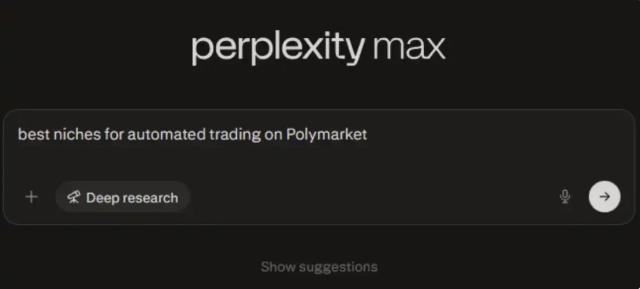
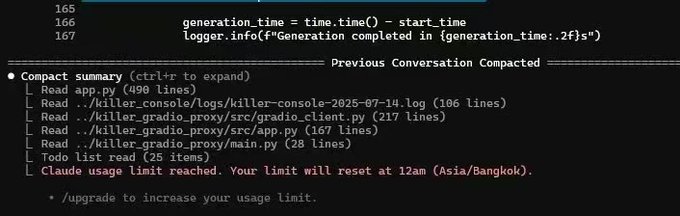
Looking back on this year's Vibe Coding journey, it can be roughly divided into three stages: Cursor $20 → Claude Code $20 → Claude Code $99 0) At the turn of 2024-2025, Claude 3.5 Sonnet already demonstrated impressive logical reasoning capabilities, standing out among the mainstream models at the end of 2024. I had already used it to implement some complex DeFi mechanisms and to port and replicate old code from a small game. It basically met my expectations. 1) Therefore, after New Year's Day, the first version of Potato Survivor was a hybrid of manual and Vibe development. At that time, I was still manually developing the backend; only the on-chain deposit mechanism polling/anti-cheating scheme and some cumbersome CRUD endpoints used Claude's solution. 2) Then, after the New Year, version 3.7 was released. At that time, the Cursor's limits were quite high, and it seemed that overall, its performance hadn't declined. However, Cursor's illusions were still quite strong at the time. Without a history rollback mechanism, entire pages of code could be replaced by these illusions without warning. Therefore, building an application from scratch was still very nerve-wracking. Submitting even the smallest progress to GitHub was basic practice. Around that time, AI Town/AI Werewolf was quite popular. I developed an AI Werewolf version, but I didn't understand many concepts like agent/token consumption/distillation/models. I consulted documentation while using Vibe Code. I created an AI Werewolf game, a game of AI versus AI, not a human-machine interaction. I even had to pay extra for the GPT API, but the token consumption was too fast; even for internal testing, it was too expensive. No wonder AI Town-like products require users to enter their own API keys. My first profound realization was how difficult it is to start an AI product business. Leaving aside model training, just testing alone is costly. Compared to blockchain, blockchain is much more suitable for startups. Frontend IPFS, backend EVM—you can launch it from scratch. 😂 3) By mid-year, Opus 4 + Claude Code was released. It was incredibly powerful, and it seemed Cursor prices started to rise. My 20 USDT subscription was gone in less than five days. I decisively switched to Claude Code, still 20 USDT per month, which would last a while. At this point, Vibe Coding could already build web application front-ends and back-ends from scratch. Then I wanted to further explore AI-generated games. I found some text-to-image and image-to-3D model generators. Then I deployed them locally and integrated them into a web application. The same problem persisted! Expensive! Really too expensive. To run the models, I used Huggingface, paid extra for a shared GPU subscription, and got the powerful H200. But I only had a few minutes of usage per day. Even so, the AI-generated game assets were still unsatisfactory. Training them myself would incur continuous computing costs. Although the technical solutions were available, my finances wouldn't allow it! After sifting through all the pitfalls, it's still very difficult to realize a product in the direction of AI-generated commercial game assets/batch asset generation. 4) By the time version 4.5 launched around October, I had already upgraded to a 99U VIP member. I've tried many things in the last two months. Also, I was still using V0 for the web interface in the middle of the year, but later I felt I could create a decent interface using prompts in Claude 4.5. Claude is inherently free of fancy features, but if you find the codebase, define the boundaries, and let it implement, it's still OK. Now I have time every day to review my startup ideas, operational strategies, and life. And any ideas I have can be acted on immediately, such as automated trading scripts, backtesting frameworks, trading strategies—all sorts of terms that previously sounded like gibberish get immediate feedback. Even if I were to say I wanted to replicate Hyperliquid, technically speaking, I'd probably already be thinking about prompts. 5) Therefore, the large-scale Vibe Coding model has smoothed out the huge information gap and human laziness. When technical costs approach zero, the cycle from idea to MVP is compressed from three months to three days, and the competition shifts from "who can make it first" to "who can figure it out first." The density of thought is more important than the speed of execution. I really want to be a truly thoughtful mind. 🧠🧠
This article is machine translated
Show original

From Twitter
Disclaimer: The content above is only the author's opinion which does not represent any position of Followin, and is not intended as, and shall not be understood or construed as, investment advice from Followin.
Like
Add to Favorites
Comments
Share