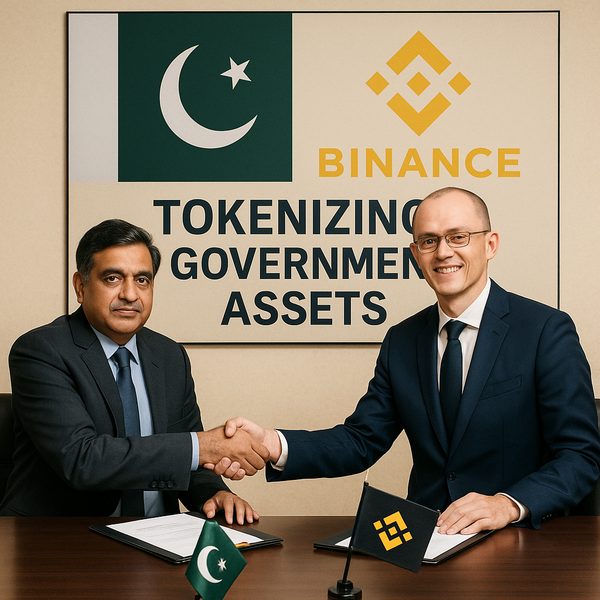
Binance, the world's largest virtual asset exchange, is partnering with the Pakistani government to tokenize large-scale state-owned assets. Reuters reports that Pakistan and Binance have signed a memorandum of understanding (MOU) to explore converting approximately $2 billion worth of state-owned assets into blockchain-based tokens.
The core of this collaboration is the idea of issuing government bonds and raw material reserves held by the Pakistani government in the form of digital tokens. This strategy is interpreted as one that aims to increase liquidity and expand access to global investors by transferring traditional financial assets onto the blockchain.
Pakistan is one of the countries suffering from chronic foreign exchange shortages and fiscal pressures. Tokenizing sovereign assets is emerging as a novel alternative, as it can simultaneously generate collateral value and attract investment without having to sell them. In particular, given that government bonds and raw material reserves are assets directly linked to sovereign credit, this project is being evaluated as an attempt at structural financial innovation, going beyond a simple experiment.
Binance will provide infrastructure and serve as technical advisor. Having already accumulated experience in government cooperation related to digital assets in several countries in the Middle East and Asia, Binance will establish a new reference for "national RWA tokenization" through this Pakistan project.
The market is focusing on the possibility that this case will spread to emerging countries. This is because countries are experimenting with tokenization of real assets and blockchain payment infrastructure to move away from the dollar-centric international financial system. This trend also coincides with recent discussions on Kyrgyzstan's gold-backed stablecoin and the tokenization of government bonds and raw materials in the Middle East.
However, regulation and ensuring trust remain challenges. How national asset tokens are linked to real-world assets and how investor protection measures are designed are key variables that will determine the project's success or failure.
This Pakistani case demonstrates that RWA tokenization is expanding beyond private financial products to encompass national finance and public assets. It remains to be seen whether blockchain can establish itself as a financial strategy for emerging economies and a means of attracting global capital.