HashKey's IPO is not merely the success of a single trading platform, but rather a validation of an eight-year Web3 path centered on compliance. Against a backdrop of increasingly clear regulations, this Hong Kong-based crypto firm has become the first to successfully transition from a crypto company to a publicly listed company.
Article author: 0xArthur
Article source: ME News
HashKey's "Compliance Long March" to IPO
While the global crypto asset industry is still in a critical stage of regulatory competition and institutional restructuring, HashKey has taken eight years to forge a rare growth path that is almost entirely centered on "compliance," and has finally reached the doorstep of the capital market.
Compliance Starting Point from Hong Kong (2018–2019)
HashKey began operations in Hong Kong in 2018, and from the outset, it clearly positioned itself as a provider of services to compliant institutions.
In 2019, HashKey launched HashKey OTC , a compliant over-the-counter trading platform for institutional clients , and simultaneously launched HashKey Cloud , providing secure infrastructure and node management services for blockchain projects and institutions. During this phase, the group chose to lay the foundation for institutional-grade services and underlying capability development.
The licensing process has officially begun (2020–2022).
In 2020, HashKey Capital Limited obtained a Type 9 license from the Hong Kong Securities and Futures Commission , becoming one of the few licensed institutions authorized to manage investments related to virtual assets, marking the group's formal inclusion in Hong Kong's traditional financial regulatory framework.
In June 2021, Tokyo Hash Co., Ltd., a subsidiary of the group , was approved by the Japanese Financial Services Agency to legally provide cryptocurrency trading services, marking its first step out of Hong Kong in terms of compliance.
In November 2022, HashKey Exchange was granted Type 1 and Type 7 licenses by the Hong Kong Securities and Futures Commission , authorizing it to conduct securities trading and operate automated trading platforms, laying a key institutional foundation for its subsequent virtual asset trading business.
Retail establishment and global expansion (2023–2024)
In August 2023, HashKey Exchange became the first Hong Kong virtual asset trading platform approved to serve both professional and retail investors , marking a significant milestone in the formal implementation of virtual asset regulation in Hong Kong. That same year, the group launched HashKey Tokenisation , extending its business reach to the on-chain issuance and management of real-world assets (RWA).
In December 2023, HashKey Capital Singapore Pte. Ltd. was granted a CMS license by the Monetary Authority of Singapore (MAS) and officially began providing fund management services.
Entering 2024, HashKey's global compliance footprint has further accelerated its expansion:
In February, HashKey Technology Services Pte. Ltd. obtained a large payment institution license in Singapore ;
In April, HashKey Bermuda Limited was granted a digital asset business license by the Bermuda Monetary Authority; in the same month, the group launched HashKey Chain , an Ethereum Layer 2 network positioned as regulatory-friendly .
In November, HashKey's Gas token HSK was officially launched, marking the entry of its public chain ecosystem into the substantive operational phase.
The final mile to reach the capital market (2025)
In May 2025, HashKey MENA FZE was granted a VASP license by the Virtual Asset Regulatory Authority (VARA) of Dubai , officially launching its business in the Middle East.
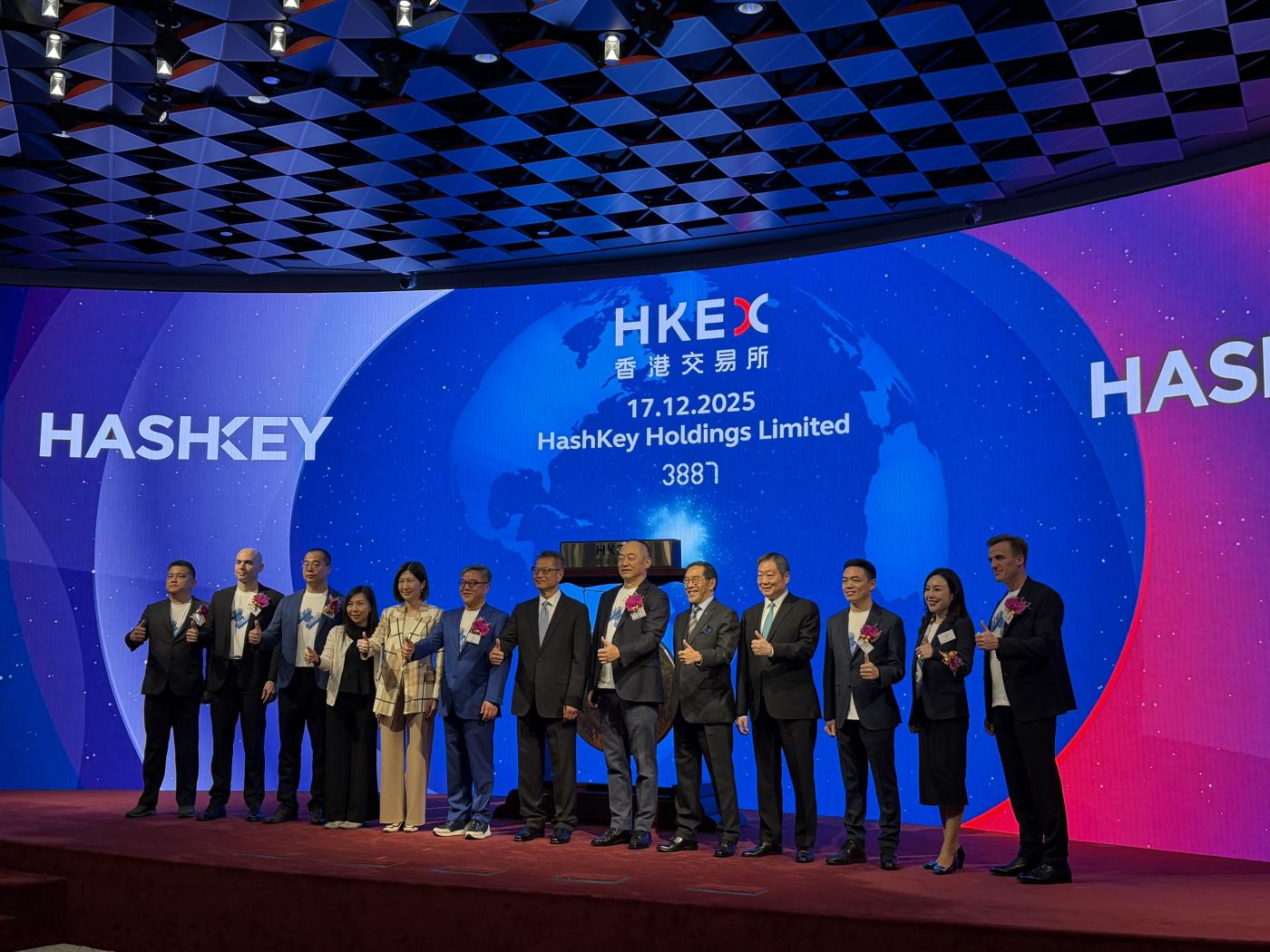
In December of the same year, HashKey passed the Hong Kong Stock Exchange's listing hearing and entered the capital market as the "first Hong Kong cryptocurrency stock" (stock code: 3887), and will be officially listed on December 17 .
Starting in Hong Kong, then obtaining licenses in multiple jurisdictions, and finally going public, HashKey's listing is not the result of a single business expansion, but rather a long-term "compliance march" spanning several years. In the context of the global crypto asset industry gradually becoming more institutionalized, this path itself may be one of its most important assets.