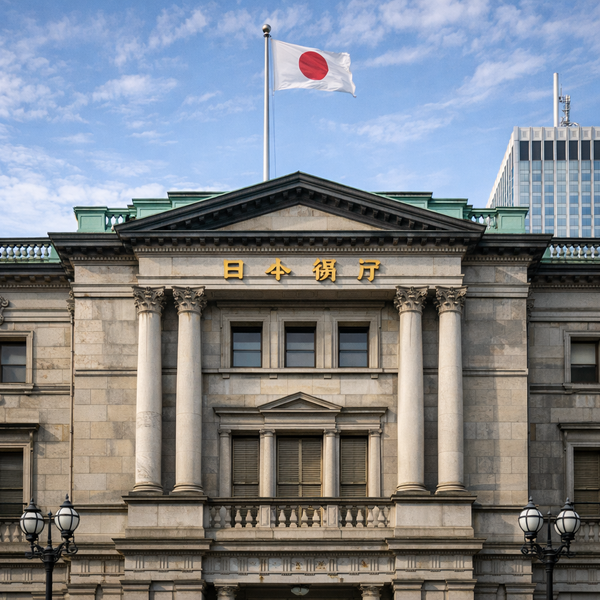
Bitcoin is being tested by macroeconomic variables ahead of the Bank of Japan's (BOJ) potential interest rate hike. Analysts suggest that a reversal of the yen carry trade funds that have fueled the global risk asset rally for years could strain liquidity in the virtual asset market.
The Bank of Japan (BOJ) is expected to raise its key interest rate for the second time this year after concluding its two-day monetary policy meeting this week. While the increase itself will be limited, it signals a shift away from ultra-low interest rates and a further step toward monetary policy normalization, raising market tensions. There are even projections that Japan's key interest rate could rise to its highest level in 30 years.
The market is focusing on the possibility that this change will lead to a reduction in the yen carry trade. The carry trade, a strategy that involves borrowing the low-interest-rate yen and investing in high-yield dollar assets, stocks, and cryptocurrencies, has served as a major source of global liquidity expansion. If the BOJ raises interest rates, this structure could be shaken, leading to a withdrawal of funds across risky assets.
Bitcoin is already in a correction phase. The price has fallen approximately 30% from its all-time high reached in early October. This, coupled with the year-end period of low market liquidity, makes it more susceptible to macroeconomic variables.
However, assessments of the impact are mixed. Some analysts believe the BOJ's policy shift, coupled with a stronger dollar, could exert a short-term burden on risky assets. Others argue that the interplay of conflicting global trends—the US interest rate cuts, the Federal Reserve's liquidity injections, and the European economic slowdown—could offset the long-term effects.
In particular, some believe that the recent BOJ interest rate hike has been largely priced into the market. Nevertheless, some argue that the headline "Japan's interest rates at 30-year high" itself could have a psychological impact, triggering short-term selling pressure. In the low trading volume environment typical of the end of the year, even small capital movements can increase price volatility.
The market sees the BOJ's interest rate decision this week, along with its guidance on the path of future hikes, as key variables. Analysts say that if the direction of yen carry funds becomes clear, it could significantly impact the short-term movements of global risk assets, including Bitcoin.