Creating a domestic stablecoin Peg to a country's fiat currency is not technologically difficult. Government agencies or businesses can issue their own domestic stablecoins in a short time because the technology is readily available…
Ms. Le Vu Huong Quynh, Director of Market Development for Asia-Pacific at Tether (the world's largest stablecoin , USDT ), affirmed in response to the question: "At the present time, has the technology addressed the need to develop a VND - pegged stablecoin, such as VNDT like USDT, to secure transactions?" at the in-depth seminar "Operating and Monitoring the Digital Asset Market" organized by the National Cyber Security Association (NCA) in collaboration with Vietnam Television (VTV) and the State Securities Commission (SSC) on December 18th.
IT IS IMPORTANT FOR THE NATION TO HAVE A MECHANISM FOR ISSUING STABLECOINS
According to Ms. Quynh, countries and territories in the region are also starting with legal frameworks related to stablecoins, especially Singapore, Hong Kong (China), and several other countries that are in the process of building them, such as South Korea, Malaysia, Thailand, and Indonesia. "Technologically, creating a domestic stablecoin Peg to the national fiat currency is not difficult," Ms. Quynh affirmed.
According to representatives from Tether, government agencies and businesses alike can issue their own domestic stablecoins in a very short time because the technology is now readily available. Tether itself even has a platform that allows all regulatory bodies and businesses to create a Token or stablecoin Peg to local fiat currency within 10-15 minutes.
Currently, several European businesses are also applying this platform to create a stablecoin that complies with MICA regulations. Some countries have already issued them. That's the technological aspect.
However, according to Ms. Quynh, to create a stablecoin Peg to the domestic currency, the most important thing is to comply with the legal framework for stablecoins in the host country. That legal framework includes many features such as: reserves, transparency, and reporting. The country itself must have a mechanism in place to issue stablecoins.
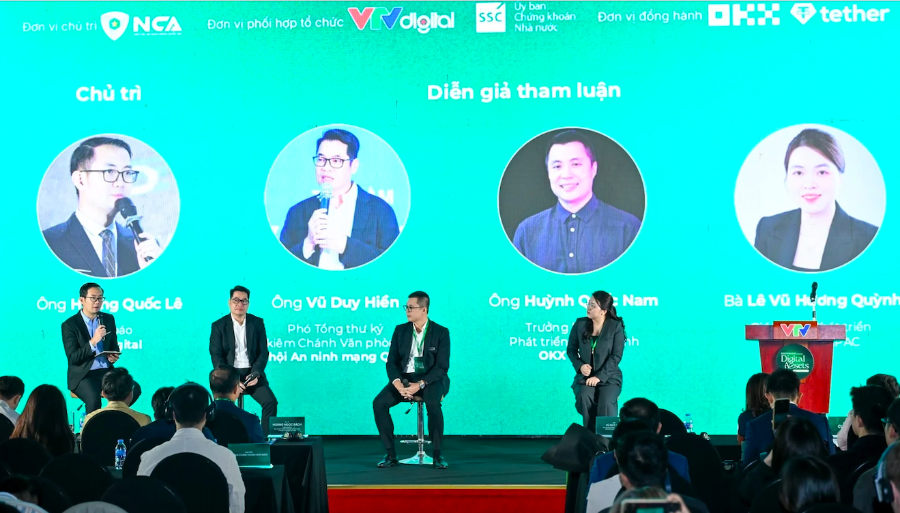 In-depth workshop "Operating and Monitoring the Digital Asset Market".
Ms. Quynh also stated that issuing a stablecoin requires, firstly, finding a suitable use case for that stablecoin; secondly, ensuring the stablecoin's liquidation ; and thirdly, establishing a distribution system. These are the core characteristics that explain why USDT has become so popular, due to its high liquidation and global distribution network, according to Ms. Quynh.
The representative from Tether also stated that Vietnam is in a very different position in the region, with the application and use of cryptocurrencies consistently ranking among the top 5 largest markets in the world, boasting approximately 17-18 million users according to Chainalysis statistics, equivalent to nearly 20% of the population.
Vietnam also has enormous potential to effectively apply Blockchain technology and cryptocurrencies to serve economic growth. Vietnam is also a major recipient of remittances worldwide, receiving up to 16-17 billion USD annually, while also exporting significantly to other countries and territories. This creates significant economic potential for Vietnam to apply cryptocurrencies and Blockchain technology to remittance processing and cross-border payments, a trend expected in the next two to three years.
According to Ms. Quynh, currently Vietnam only has Resolution 05 (pilot resolution on the cryptocurrency market) and Resolution 222 on international financial centers, therefore "the door will open" for cryptocurrency exchanges, presenting a great opportunity to effectively apply Blockchain technology to serve economic growth.
However, the opportunity lies in applications related to crypto assets, namely, firstly, cross-border money transfers, and secondly, Tokenize of real assets. These are two pillars with great potential, given Vietnam's stable, sustainable, and highly compliant legal framework, and the potential for economic development based on these pillars.
THREE KEY REQUIREMENTS FOR DEVELOPING THE CRYPTOCURRENCY MARKET
Mr. Vu Duy Hien, Deputy Secretary General and Chief of Office of the National Cybersecurity Association, believes that digital assets today are not just a new form of finance, but are becoming an important component of the global digital economic infrastructure. Blockchain technology, with its ability to verify transparency, facilitate instant transactions, and reduce intermediary costs, is opening up many application opportunities in fields such as finance, logistics, asset management, and public services.
According to Mr. Hien, Vietnam's pilot implementation of a cryptocurrency market is necessary and in line with the global trend of financial innovation. "If we are slow to adopt new management and operational models, Vietnam risks falling behind in the development flow," he said.
The pilot mechanism allows the State to control risks within safe limits, while simultaneously accumulating practical data to gradually refine policies. More importantly, if operated properly, the digital asset market can contribute to expanding growth opportunities, attracting technology investment, promoting innovation, and creating new value-added services for the economy.
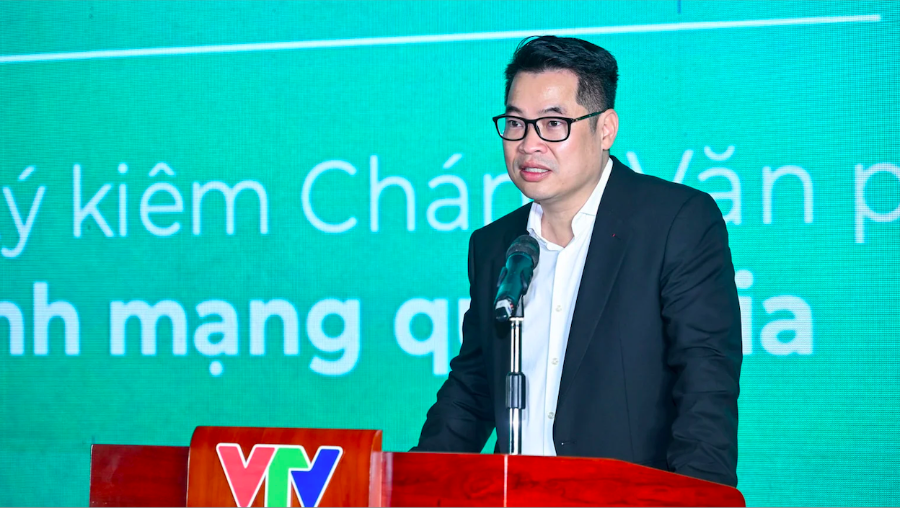 Mr. Vu Duy Hien, Deputy Secretary General and Chief of Office of the National Cybersecurity Association.
According to Mr. Vu Duy Hien, the digital asset market can only develop sustainably when it is built on a solid foundation of cybersecurity and transparent monitoring mechanisms. In the context of implementing Resolution 05/2025/NQ-CP, he believes there are three key requirements that need to be prioritized.
Firstly, it is essential to ensure cybersecurity for the entire market operation chain , from trading platforms, custody systems, key management, risk management to user data protection.
Secondly, it is necessary to build a transparent and responsive monitoring mechanism that allows for tracking cash flow, assessing system health, identifying liquidation risks, and promptly detecting unusual activities.
Thirdly, we need to promote domestic and international cooperation to learn from management experiences, Chia effective operating models, and apply them appropriately to Vietnam's conditions.
Sharing Mr. Hien's viewpoint, Ms. Vu Tran Ai Tam, Business Development Director of OKX Global, added that all parties need to evaluate the digital asset market in a way that is safe, transparent, and responsible, meeting higher requirements for system security, market transparency, user protection, and regulatory compliance. Ensuring safety, transparency, and responsibility is a crucial foundation for building trust and promoting the sustainable development of the digital asset market.