The banks are not malicious; they are simply institutions that have fallen behind the times.
Written by: Boaz Sobrado
Compiled by: Chopper, Foresight News
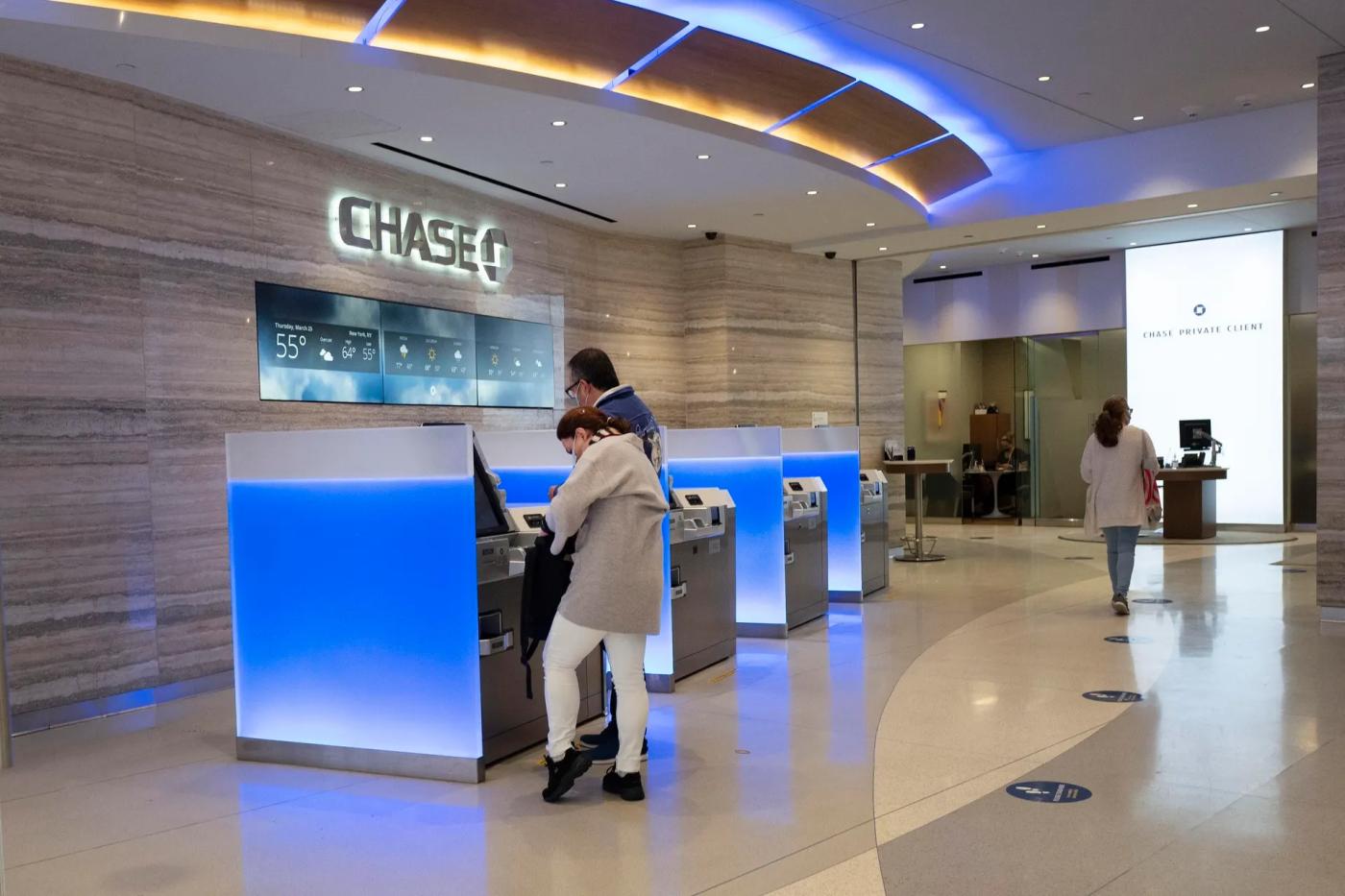
March 25, 2021, a Chase Bank branch in New York, USA.
On December 19th, about four weeks after I arrived in the United States and opened a Chase Bank account, a bank email appeared in my inbox. The notification was utterly impersonal, just a generic template: "We are writing to inform you that we have decided to close your account."
The bank offered no explanation, only a series of instructions: destroy the bank card, cancel the automatic debit agreement, update the e-wallet information, and await written notification. The letter claimed that a subsequent letter would provide a full explanation. However, to this day, that letter remains undelivered.
I have several thousand dollars in my account, and all my bills are set up for automatic deductions. I recently moved to a foreign country, and Christmas is just around the corner.
I'm not the only one who's had this terrible experience. That November, Jack Mallers, CEO of Bitcoin payment company Strike, had a similar ordeal. Chase Bank abruptly closed his personal and corporate accounts, citing "questionable transaction activity" as the only reason. Even more shockingly, Mallers' father had been a private banking client of the bank for years.
Similarly, Russian lawyer Anya Chekhovich, who worked for Alexei Navalny's anti-corruption foundation, had her bank account frozen after the Russian government designated the foundation as an "extremist organization." Although Chase Bank eventually rescinded the decision following strong public condemnation, the damage was irreparable. The wording of these account closure notices was strikingly similar, sending chills down one's spine.
JPMorgan Chase is not an isolated case. In December, a preliminary investigation by the Office of the Comptroller of the Currency revealed that between 2020 and 2023, nine major banks (JPMorgan Chase, Bank of America, Citigroup, Wells Fargo, U.S. Bancorp, Capital One, PNC Bank, TD Bank, and Bank of Montreal) engaged in systemic account closures. The targeted companies included cryptocurrency firms, arms dealers, oil and gas companies, and various political groups.
The Trump administration has made this issue a priority. In August, Trump publicly stated that Chase Manhattan Bank and Bank of America had refused to accept more than $1 billion in deposits from him, which directly prompted him to issue an executive order directing regulators to thoroughly investigate such "politically manipulated or potentially illegal account closures."
Most media reports have overlooked a crucial point: the nature of this event is far more complex than a simple political or ideological contest.
The Institutional Dilemma Behind the Account Closure Controversy
In his influential paper, " Looking at the Problem from a Banking Perspective ," Patrick McKenzie, a veteran in the payments industry, provides the answer. He incisively points out the shortcomings of the banking system: banks are very good at tracking ledgers and confirming the ownership and flow of funds, but they are simply incapable of effectively monitoring other information.
The root of the problem lies in the bank's underlying system architecture. The bank's core processor needs to interface with numerous subsystems, which creates multiple points of failure in information transmission. For example, the decision to close an account might be generated in system A, archived in system B, and then sent as a notification via system C. When you contact customer service for assistance, the staff member handling the issue has no access to any of the relevant systems.
To control costs, banks employ a tiered customer service system. Level 1 customer service representatives can only read from a script, Level 2 representatives have slightly higher authority, while Level 3 professionals, who can truly explain the root of the problem, do not handle inquiries at all. This tiered model is an inevitable product of the low-profit nature of retail banking. It allows even a high school student to easily open a checking account, but it also means that the account could mysteriously disappear due to system malfunctions.
At the same time, banks face stringent regulatory requirements. They are required to submit Suspicious Transaction Reports in various situations, including international wire transfers and customers with multiple nationalities. Ironically, sometimes simply the customer's awareness of the Suspicious Transaction Report is enough to trigger the bank's reporting mechanism.
Under 12 CFR § 21.11(k), if a bank has already submitted such a report regarding a customer's situation, the law prohibits it from informing the customer. The law requires banks to remain silent, and they are simply unable to provide any explanation.
A typical microcosm of personal experiences
When Chase Bank sent that harshly worded account closure notice without giving a reason, they might have been acting in accordance with the law, or they might have made a decision based on algorithmic risk assessment. This assessment seems reasonable within the algorithm's logic, but in layman's terms, it's absurd. A customer with multiple nationalities, an overseas background, and a relatively low account balance is simply not worth the bank's investment. I perfectly fit this high-risk profile.
This tiered customer service system also has special channels for VIPs such as human rights activists and regulatory officials with large social media followings. They can directly connect with a powerful technical support team. Ordinary people, on the other hand, can only wander around in circles in the voice navigation menu. Naturally, I didn't bother calling to inquire.
For me, having my account frozen and being unable to access my funds for weeks is just a minor inconvenience that I can manage. But for those already struggling financially, it's nothing short of a lingering nightmare. Banks serving the general public is a necessary requirement of social development. However, the high costs of covering everyone ultimately create a system that is extremely unfriendly to "outlier" customers. When inclusive finance becomes the norm, the number of these "outlier" customers is actually far greater than imagined.
Cryptocurrency: An alternative to the banking system?
When I received the account closure email on December 19th, what flashed through my mind wasn't the Federal Reserve's policies or the debate about decentralization, but rather the tangible advantages of cryptocurrency. I had several thousand USDC stablecoins stored in my self-custodial wallet, funds that I could access at any time: no need to repeatedly press buttons on a voice navigation system, no need to wait anxiously for checks to arrive, and no need to worry about when I could get my money back.
For immigrants, expatriates, and globally mobile professionals whose lives span national borders, traditional banks view the complexity of their identities as a risk. A multinational background means undergoing multiple compliance reviews, triggering multiple risk warnings, and leading algorithms to deem it "too cumbersome, not acceptable."
Stablecoins were originally designed to provide a dollar-denominated value carrier for this group of people. They can circulate freely across national borders, characteristics that traditional banks consider "risk signals," making stablecoins an ideal solution to address this need.
The Trump administration's heightened focus on "illegal account closures" may inadvertently accelerate the adoption of cryptocurrencies. The fact that an influential cryptocurrency executive like Mallers has faced an account closure scandal will likely draw even more attention to this issue. However, the core driving force behind the widespread adoption of cryptocurrencies is not political factors, but rather the abysmal experience ordinary people have with the traditional banking system.
I'm still waiting for Chase Bank's explanation letter, hoping it will clarify the whole story. But most likely, it will be just like that vague email, merely citing company policies and procedures that seem reasonable on paper but are arbitrary and unfair when applied to specific individuals.
Banks don't act maliciously; they're simply outdated institutions attempting to manage the complex financial ecosystem with outdated systems. These systems often generate false risk warnings, and sometimes, those warnings happen to fall on someone right before Christmas.