Is the Base App a consumer-level revolution of Web3, or a magnificent garden behind closed walls?
Article author and source: KarenZ, Foresight News
On December 18th, Coinbase officially announced the end of its Beta testing phase for its Base App, making it fully available to users in over 140 countries and regions worldwide. This marks a key step for Coinbase in building an on-chain ecosystem gateway and realizing its vision of democratizing Web3.
Evolving from the early purely utility-based "Coinbase Wallet" to today's "Base App," this product is attempting to define a new form of on-chain "super app"—deeply integrating social interaction, transactions, payments, and complex on-chain interactions.
Its core vision, as Base's head Jesse Pollak stated, is to "make on-chain interactions as simple as online interactions."
The All-Round Landscape of Base Apps
Base App is no longer limited to traditional asset management, but is a comprehensive platform that integrates social networking, payment, and chat.
I previously provided a detailed introduction to the Base App in my article " Base Major Upgrade: Coinbase's Blockchain Ambitions " during the Base official A New Day One event in July 2025. The Base App has the following four core features:
- A closed loop of social interaction and the creator economy: Integrating the Farcaster and Zora protocols. Every post a user makes can be converted into tradable digital assets via Zora, achieving true "monetization of posts." Simultaneously, curated trading posts are directly integrated into the social feed, making "on-chain discovery" intuitive and socially engaging.
- On-chain functionality and payment experience: Supports buying and selling cryptocurrencies, explore built-in mini apps (such as trading platforms, prediction markets, lending platforms, games, and content tipping platforms), and also supports free and instant USDC transfers using NFC, and allows you to earn rewards by holding USDC.
- Ecosystem-connected Mini Apps: Similar to WeChat Mini Programs, the Base App includes mini applications covering DeFi, prediction markets, games, and other fields.
- Smart Wallet and Quick Pay: Upon registration, users automatically receive a Base account (a smart wallet identity that supports multiple chains) and Base Pay (a quick payment method based on USDC).
- Privacy-preserving communication and AI collaboration: The chat function is based on the XMTP encryption protocol to ensure privacy and security. Users can not only send and receive USDC directly in the conversation or form a community of up to 250 people, but also call upon AI agents to assist in executing complex combination trades or portfolio management.
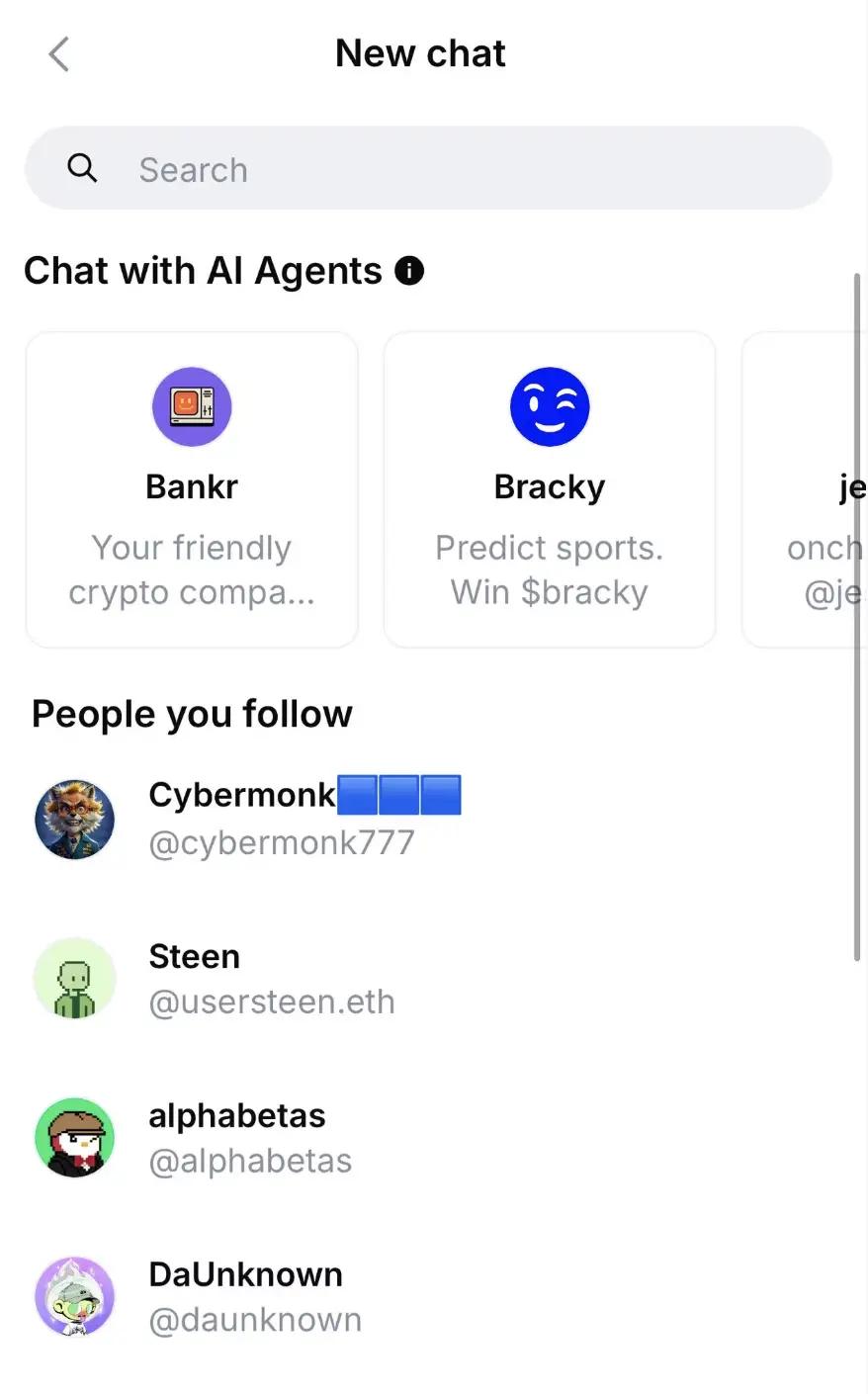
How is the user experience? What kind of app is this?
In practice, the Base App features a minimalist UI design and relatively smooth interaction.
Seamless Onboarding: Say Goodbye to Seed Phrase Anxiety. For beginners, the most convenient thing is having no seed phrase and no need to back up 12 words. Private key management is completely handled by Passkeys, and users can create on-chain accounts in seconds. This experience is almost identical to registering a regular Web2 social media account, significantly lowering the entry barrier for non-encrypted users.
The seamless integration of social and financial services is evident in the main feed of the trading section. Creators who enable earnings will see a real-time market quote button below their posts, allowing them to jump directly to the trading page.
The platform will also highlight large transactions or concentrated buying by multiple people, making it easier for users to copy trades. In addition, there is a convenient "hidden feature"—double-clicking on posts or creator coins of interest allows for quick purchases of preset amounts.
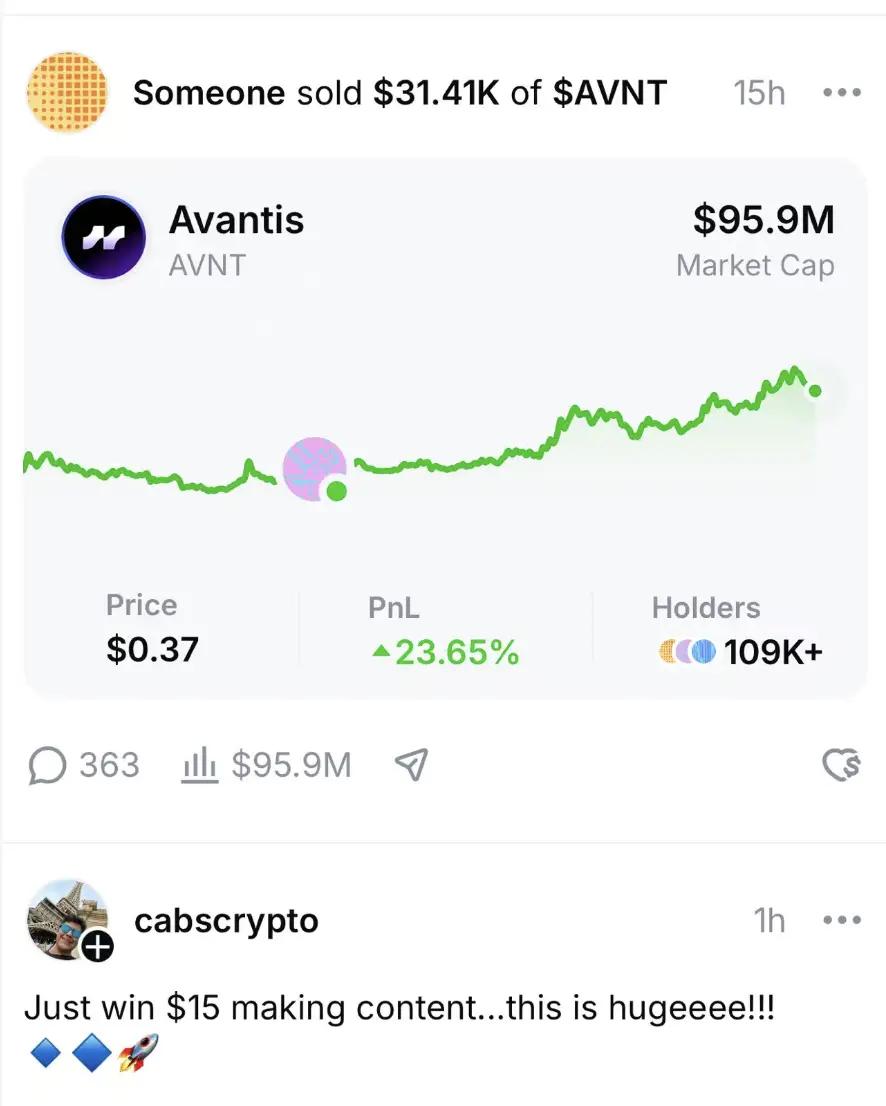
The discussion section focuses on pure content information feeds that have not yet enabled monetization.
According to the official description, the Feed algorithm combines user interactions (likes, comments, follows), interest test results, and content timeliness, relevance, and diversity to make personalized recommendations. Users can also interact directly with others through shared links in the Feed or via the Mini App.
Opening the Base App with a "person"-centric on-chain identity, you no longer see a cold string of 0x... code, but Basenames. The Base App is deeply integrated with the on-chain identity system, making fund transfers as simple as sending a red envelope to a WeChat friend. Names are no longer just symbols, but "digital ID cards" that pass through the entire ecosystem.
Transactions: Gas Sponsored To achieve the best user experience, the Base App employs a "Gas Sponsored" model in many scenarios, with network fees borne by the official team. However, it's important to note that this convenience is not entirely free: when performing token swaps or cross-chain operations within the App, approximately 1% transaction fees (on Base) still apply.
Abundant Mini Apps
The Base App's "Search" section encompasses all integrated Mini Apps, covering applications across multiple sectors including trading, gaming, creator platforms, DeFi platforms, prediction markets, and music. The Mini Apps homepage currently features selected derivatives protocol Avantis, the Web3 football fantasy game Football.Fun, the DeFi protocol Gauntlet, and lending protocols Morpho and Moonwell.
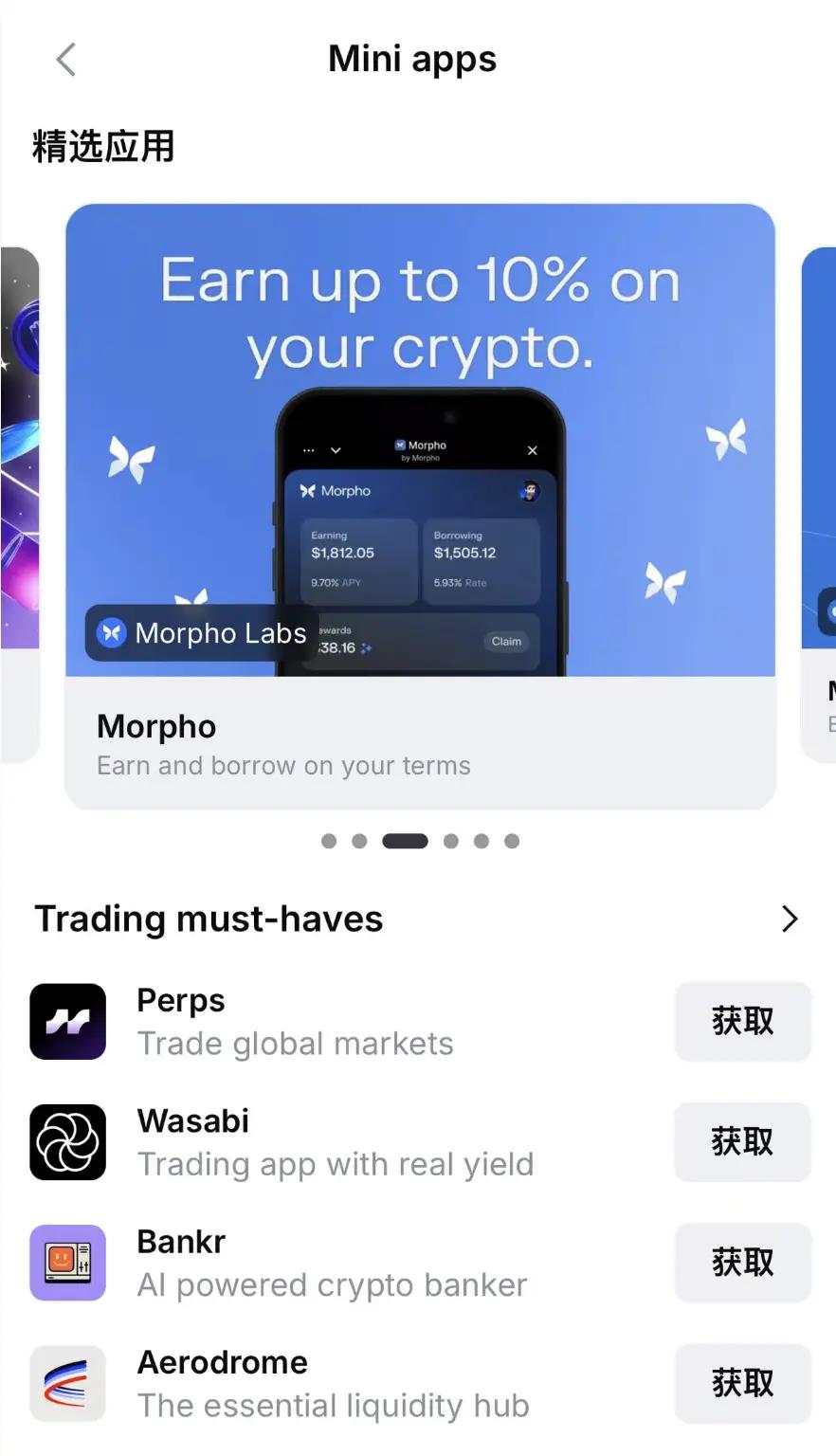
USDC holding rewards are automatically distributed weekly. The Base App wallet page supports one-click activation of USDC rewards, currently at approximately 3.35% APY (adjusted by Coinbase). Rewards are accumulated daily and distributed weekly (US users need to link a Coinbase account).
What are the challenges?
As an emerging platform, Base App still faces some significant pain points or challenges in practical use:
- The "Island Effect" of Social Features : For a product positioned as an "on-chain super app," user scale is its lifeline. If the base app's user base is insufficient, it will directly lead to its core functions falling into a "negative cycle." If there are few active users, the content updates in the information feed will be slow, and the retention rate will gradually decline.
- Information feed quality needs optimization : The current social feed algorithm is not transparent, and the content pool is filled with a lot of speculative content and useless information, while high-quality in-depth interaction is relatively scarce.
- The "liquidity trap" of on-chain transactions : its social trading section relies on displaying "multi-person concentrated purchases" to encourage copy trading. If the user base is too small, this trend discovery loses statistical significance, and users may only see the random operations of a few people.
- The Boundaries of Security Defense : Convenience comes with risks. Phishing links disguised as attractive social media posts still exist. For novice users accustomed to Web2 security protections, accidental actions can lead to authorization leaks, which remains a serious challenge in the on-chain world.
Of course, for the Base App at this stage, the biggest challenge it faces is not the lack of powerful features, but how to leverage Coinbase's hundreds of millions of users for efficient conversion and maintain a stable retention rate.
summary
The full opening of the Base App signifies that the focus of the Base ecosystem has shifted from "building roads and bridges" to "competing for existing users" and "user onboarding".
It integrates wallets, transactions, social features, creator economy, payments, mini-program ecosystem, and revenue into a powerful on-chain traffic portal. For developers, the Mini Apps framework provides a shortcut to directly reach Coinbase's massive user base.
While there is still a long way to go in terms of content governance and user attraction, Base App has undoubtedly provided a clear template: the future of Web3 should not be an isolated wallet, but a warm, interactive, and rewarding on-chain society.