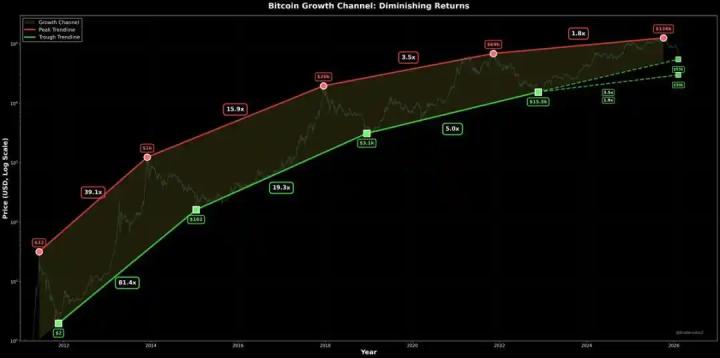
As Bitcoin prices retreated after hitting an all-time high in October, global capital markets are shifting their focus to precious metals. According to Forbes, several market analysts point out that after a strong rally in 2025, gold and silver still have significant upside potential into 2026, and this surge in precious metals could be a key catalyst for a new Bitcoin price surge.
Structural transformation of the monetary system
Currently, Bitcoin's price is fluctuating around $90,000, a significant pullback from its previous all-time high of $126,000. In contrast, gold and silver have performed exceptionally well recently, repeatedly hitting new all-time highs, indicating that funds are rapidly flowing into traditional safe-haven assets.
In response to this situation, Ramnivas Mundada, Director of Economic and Corporate Research at GlobalData, points out that this is not simply a safe-haven market, but rather a deeper structural shift. He believes that the international monetary system is gradually moving from a unipolar structure centered on the US dollar towards a more multipolar pattern. According to his forecast, by 2026, gold prices still have room to rise by 8% to 15%, while silver prices could rise by 20% to 35%.
Mondada further analyzed that factors supporting this trend include: slowing US economic momentum, escalating geopolitical risks, ongoing global trade frictions, and central banks around the world accelerating "de-dollarization," gradually reducing the proportion of the US dollar in their foreign exchange reserves. In addition, the market's widespread expectation that the Federal Reserve may further cut interest rates in 2026 also provides medium- to long-term support for precious metal prices.
Furthermore, political uncertainty in the United States has also deepened market concerns about the dollar's prospects. President Trump is evaluating potential candidates for Federal Reserve chairman, and it is widely believed that the candidate favors a more aggressive interest rate cut policy, which could further weaken the dollar's appeal.
Against this backdrop, some market observers have issued more aggressive warnings about the long-term status of the US dollar. Peter Schiff, a well-known gold bull and chief economist at Europac Asset Management, bluntly stated that the dollar's dominance is facing structural challenges, and gold may once again become a core reserve asset for central banks.
Bitcoin is expected to see a catch-up rally.
It's worth noting that while gold and silver have continued to rise, Bitcoin has not followed suit recently, sparking discussions about whether it is "undervalued." For example, Yu Hasegawa, an analyst at the Japanese cryptocurrency exchange Bitbank, pointed out that with signs of overheating in traditional assets such as US stocks and precious metals, Bitcoin's current valuation is relatively conservative, and it may attract value-based funds in the future.
Overall, analysts believe that with the gradual adjustment of global capital allocation and the challenge to the dollar's status, if gold and silver continue their strong performance, a catch-up rally in Bitcoin may only be a matter of time.