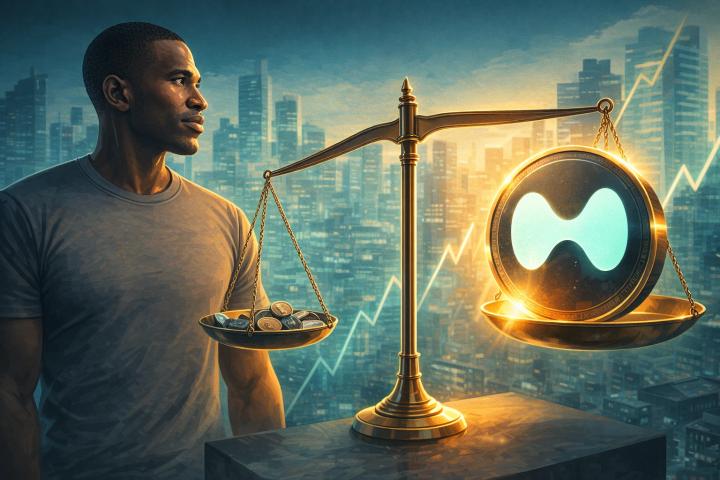
As 2025 draws to a close, the extreme concentration of global wealth has once again ignited political and social debates. According to Forbes, just ten billionaires amassed a staggering $730 billion in wealth in a single year. This staggering figure prompted Senator Bernie Sanders, a long-time advocate for addressing wealth inequality, to issue a strong condemnation, arguing that the United States is sliding towards "oligarchic rule." Meanwhile, Elon Musk, the world's richest man, countered, insisting that this wealth comes from genuine innovation and production, criticizing politicians for "taking without creating." This debate between "creation vs. redistribution" has become one of the most representative economic issues of 2025.
Sanders angrily denounced the 10 billionaires who earned $730 billion in a year, calling it "extremely unethical."
In late December, Bernie Sanders posted on the social media platform X, stating : "The biggest economic crisis of our time is the continued widening of income and wealth inequality. While millions of Americans struggle to pay rent, food, and healthcare, 10 billionaires will become even richer by 2025, adding a total of $730 billion to their wealth. This is unethical and unsustainable. We must defeat the oligarchic system."
This data comes from a Forbes report in December 2025, which listed a list of top billionaires whose wealth has increased dramatically, including Elon Musk, Amazon founder Jeff Bezos, Meta CEO Mark Zuckerberg, and Oracle founder Larry Ellison. Their wealth primarily stems from the soaring market capitalization of their holdings, closely linked to the full recovery of the technology industry in 2025.
Musk retorted: My wealth comes from production, not exploitation.
Musk did not remain silent in the face of criticism. He posted on X, emphasizing that almost all of his wealth comes from his shares in Tesla and SpaceX, and that the value of these shares is based on actual production results.
"My wealth will only increase as we deliver more cars and launch more satellites," Musk wrote. "I am a maker, not a politician who only collects taxes."
He further cited the theory of "creative destruction" proposed by economist Joseph Schumpeter, arguing that innovation and entrepreneurship are the core drivers of social progress, rather than relying on the government to carry out zero-sum wealth redistribution.
Solana's founder chimed in: "Instead of talking about inequality, let's talk about who can actually build society."
Not only Musk spoke out, but Anatoly Yakovenko, co-founder of Solana, also shared his views on X. He pointed out that the value of tech stocks like Musk's is not readily available cash, but rather "unrealized potential value," which only truly creates wealth when these companies actually produce tangible products.
Yakovenko criticizes that some left-wing politicians ignore the real problem when talking about wealth inequality: "Many times they are unable to organize the workforce to create the social infrastructure that society needs, such as housing, which instead leads to debt and inflation."
He argued that the focus should be on improving productivity and organizational efficiency, rather than simply relying on taxation to redistribute wealth.
Employees also earn money? Tesla workers receive an average of $400,000 in stock.
Musk's supporters point out that innovative companies like Tesla benefit more than just top management. According to some industry observations, in 2025, Tesla employees held an average of $400,000 worth of vested stock, demonstrating that increased corporate value can benefit employees through equity distribution. However, this data has not yet been confirmed by official financial reports, and the actual distribution and scope remain to be clarified.
These remarks were intended to refute the argument by Sanders and others that "tech giants exploit workers," and instead emphasize how equity incentives can allow employees to grow together with the company.
Value creation or wealth plunder? The two opposing viewpoints continue to stalemate.
This debate over "creation vs. plunder" and "innovation vs. taxation" reveals the fundamental contradictions of the contemporary capitalist system. On one side are the free market proponents, who argue that innovators should enjoy the wealth that comes with success; on the other side are progressive politicians who believe that extreme wealth concentration will lead to the collapse of the democratic system and that institutional checks and balances are necessary.
2025 will be a year of explosive wealth growth for Silicon Valley and Wall Street, but also a year of continued pressure on the American middle class. As the 2026 election season heats up, policy battles over "billionaire taxes," "UBI," and "responsibility of tech giants" will become hot topics.
This article, "Ten Billionaires Earned $730 Billion in One Year: Musk, Sanders, and the Century-Old Debate on Wealth Inequality," first appeared on ABMedia ABMedia .