
Financial stability warnings over stablecoins
);)
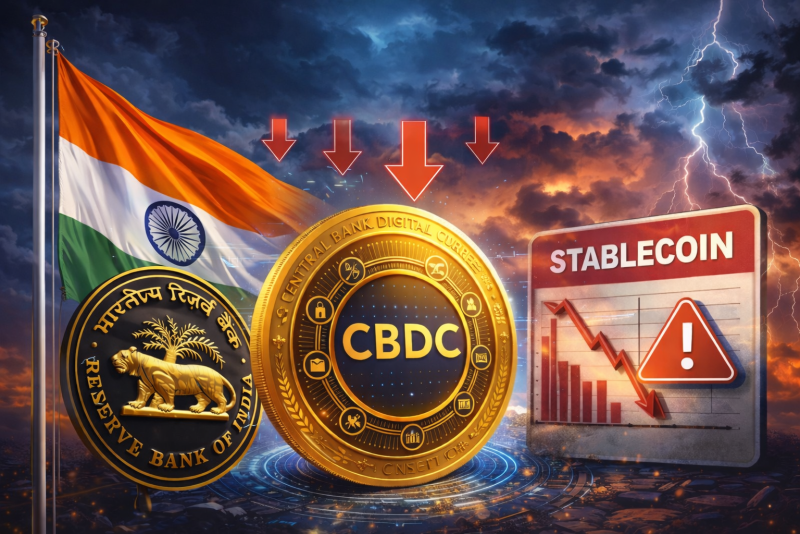
The RBI explained that CBDCs should serve as the "ultimate settlement asset" and serve as a focal point for trust in currencies. The RBI also stated that the introduction of stablecoins could increase financial stability risks, especially during periods of market stress, and urged regulators around the world to carefully assess the associated risks.
In its report, the RBI explained that CBDCs can achieve the instant settlement, efficiency, and programmability offered by stablecoins while maintaining the trustworthiness and security of central bank money. The RBI reaffirmed its existing position that private digital currencies, including cryptocurrencies, require a cautious approach to protecting monetary sovereignty and maintaining financial stability.
The Indian government mentioned the possibility of introducing stablecoin regulations in its 2025-2026 economic survey, but the RBI maintains a conservative stance on cryptocurrencies overall. As the central bank shapes the financial order through monetary policy and regulation, the RBI's stance is expected to be a key guiding light for India's future cryptocurrency policy.
The use of stablecoins is rapidly expanding in global markets. According to data aggregator DefiLlama, the market capitalization of stablecoins is projected to increase from $205 billion (KRW 295.856 trillion) in early 2025 to $370 billion (KRW 33.984 trillion) by the end of the year.
Meanwhile, the pace of CBDC adoption is relatively slow. According to the Atlantic Council, a US think tank, only three countries—Nigeria, the Bahamas, and Jamaica—have officially launched CBDCs. Another 49 countries are in the pilot phase, 20 are in the technology development phase, and 36 are in the research phase.
The RBI emphasized in its report that each country should prioritize the stability of the overall financial system and currency trust over short-term efficiency, and that building a digital payment infrastructure centered on CBDC is a safer option in the long term.
Reporter Jeong Ha-yeon yomwork8824@blockstreet.co.kr